Camping in Iceland is affordable, flexible and one of the best ways to see the country in summer. You can pitch a tent or park a campervan at campsites all around the island, but wild camping is limited and campervans must stay on organised sites. Here is what you need to know about the rules, costs, seasons and the best campsites.

Why camp in Iceland
Camping is a real tradition here. On summer weekends many Icelanders load the car and head to a campsite with family and friends. For visitors, it is one of the cheapest ways to travel in a country where hotels are expensive, and it lets you plan your days around the weather rather than a booking.
There are around 170 campsites spread across the whole country, so there is usually one within reach wherever you end up. After a whale watching trip in Húsavík, for example, you can stay at the town campsite, a short walk from the supermarket and the swimming pool, rather than drive on. In June and July you can sit outside your tent in the midnight sun, and in late summer and autumn you have a chance of Northern Lights overhead. Camping also goes hand in hand with hiking: many of the best trails start at a campsite.
Tent, campervan or motorhome
There are three main ways to camp in Iceland, and the choice affects your budget, comfort and route.
- Tent camping: the cheapest option, the most flexible for hikers and the closest you get to nature. Pitching and packing a tent at every stop is some work, and you need good gear, as wind and rain are the real challenge.
- Campervan camping: a van with a bed and basic cooking kit. There is no tent to pitch: you park on your pitch and you are done, sheltered from the weather. It has become very popular with visitors driving the Ring Road.
- Motorhome: a larger vehicle with a kitchen, seating area and beds. More comfortable, but more expensive to rent and to run, and harder to drive in strong wind.
Is wild camping allowed in Iceland?
Only in a limited way. If you are hiking or cycling and there is no campsite nearby, you may put up to three tents on uncultivated land for one night, unless the landowner has posted a sign saying no. Larger groups need the landowner's permission. Do not camp near farms without asking.
Campervans, motorhomes, caravans and tent trailers are different. You may not spend the night in them outside organised campsites or towns unless the landowner gives permission. In practice this means one thing: if you travel by vehicle, sleep at a campsite. Parking overnight in a lay-by or viewpoint car park is not allowed.
Inside national parks and nature reserves, such as Skaftafell and Þingvellir, you must use the designated campsites.
Can you build a campfire in Iceland?
Iceland's safety agency is clear: campfires are not allowed in Iceland. There is very little wood, the moss and grass burn easily and take decades to recover. Bring a camping stove for cooking. A few campsites have their own fire spots or organised campfires. Only use a fire where the campsite has set one up and says it is allowed.
Is camping in Iceland expensive? Fees and the Camping Card
No. In a country where almost everything costs more than at home, camping is one of the cheapest ways to stay. Expect to pay roughly 1,500 to 3,000 ISK per adult per night. You pay per person, not per tent, and children often stay free or at a lower rate. Showers, electricity and laundry are sometimes charged separately, and an accommodation tax of about 400 ISK per tent or vehicle per night is usually added. Most campsites take chip-and-PIN cards, and some ask you to pay online or through an app.
What is the Camping Card? It is a prepaid discount card valid at participating campsites around the country. For 2026 it costs €179 and covers two adults and up to four children under 16 for up to 28 nights, with a limit of four nights in a row at any one site. It expires on 15 September. You can buy it online, and it is also sold at some petrol stations, at participating campsites and by some campervan rental companies.
The card is only accepted at participating campsites, about 30 out of the national total, and the nightly accommodation tax is paid on top even when you use it. It only pays off if you camp for more than a few days and your route passes plenty of sites that accept it. Check the list of participating campsites against your itinerary before you buy.
What facilities do campsites have?
Facilities vary a lot. Simple sites in the highlands may offer little more than toilets, cold drinking water and bins. Larger campsites in towns and popular areas usually have hot showers, a kitchen or cooking shelter, washing-up sinks, electricity for vehicles, laundry and sometimes Wi-Fi and a playground. Many town campsites are within walking distance of the local swimming pool, which is often the best shower in town.
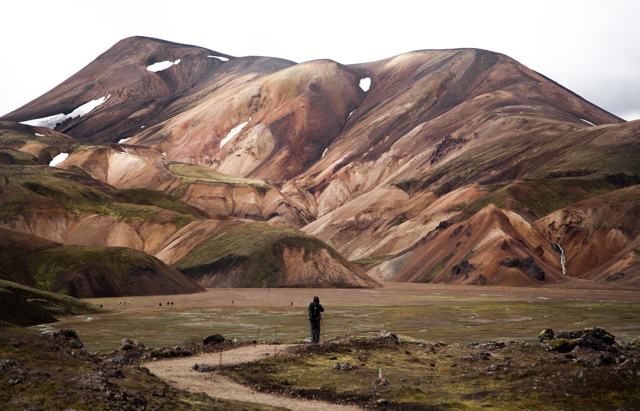
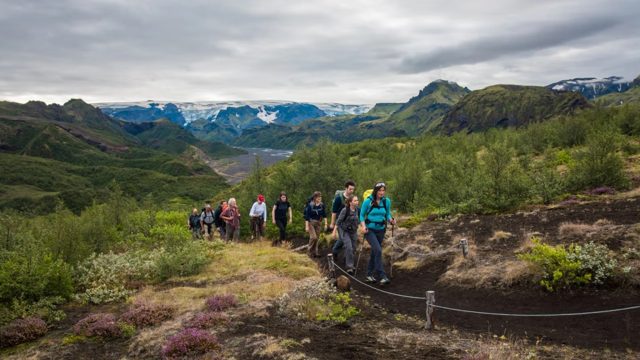
Along popular hiking routes, such as the trails around Landmannalaugar and Þórsmörk, there are campsites next to the mountain huts, with toilets and water.
About the weather: the best time to go camping
Summer is by far the best time. Most campsites open from late May or June to mid-September, the weather is at its mildest and most settled, and you have long, light evenings. June to August is also the busiest period, so popular campsites fill up on sunny weekends. Late May and September are quieter, with cooler nights. There is no fixed rule, though: the right time depends on what you want to see.
If you want Northern Lights, the dark season runs from late August to mid-April. Late August and early September are a good compromise, with dark nights, open campsites and still-bearable temperatures. From October to April, tent camping is only for experienced winter campers. Only a few campsites stay open, facilities may be limited, and storms can be severe. A heated campervan at an all-year campsite is a more realistic way to camp in winter. See our Iceland in September and Northern Lights guides.
Staying safe while camping
Iceland is very safe, but nature is not forgiving. Much of the country is thinly populated, so be ready to look after yourself for a while if something goes wrong.
- Check the weather at vedur.is and road conditions at road.is every morning. Wind warnings matter more than rain.
- Leave a travel plan with SafeTravel, Iceland's official safety service, and use its app for alerts.
- Carry spare food and water. In the emptier parts of the country you can drive a long way without passing a shop or another person.
- Carry a first aid kit, a power bank and a head torch. Mobile coverage is patchy in the highlands and remote fjords.
- Practise putting up your tent at home, ideally in wind. Iceland is not the place to try camping for the first time.
- In an emergency, call 112.
What to pack
The short version: a strong tent with extra pegs, a warm sleeping bag, a waterproof shell and warm layers, a stove (buy the gas in Iceland, as you cannot fly with it) and an eye mask for the bright nights. The checklist below covers the basics, and our full camping packing list for Iceland goes through everything item by item.
- Campsite basics: tent, sleeping bags, sleeping mats and pillows, a lamp or head torch, and folding chairs and a table if you travel by car.
- Kitchen: stove and fuel, pots, plates and cutlery, washing-up kit, matches or a lighter, rubbish bags, and groceries bought fresh along the way.
- Clothing: quick-drying trousers and shirts, long sleeves, a light warm jacket, thermal underwear, something warm to sleep in, hiking boots, a raincoat, hat and gloves, and a swimsuit for the pools.
- Hygiene and health: toilet paper, toiletries, sanitary products, wipes, a first aid kit and any medicines you need.
Eight of the best campsites in Iceland
There are campsites in almost every town and many rural areas. These eight are good bases for sightseeing, spread around the country.
Skaftafell, South-East Iceland
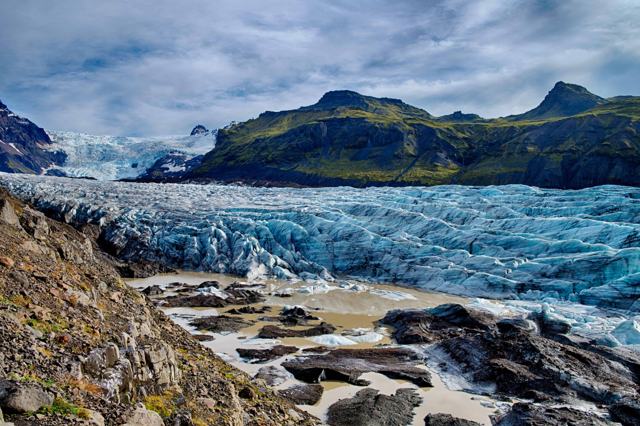
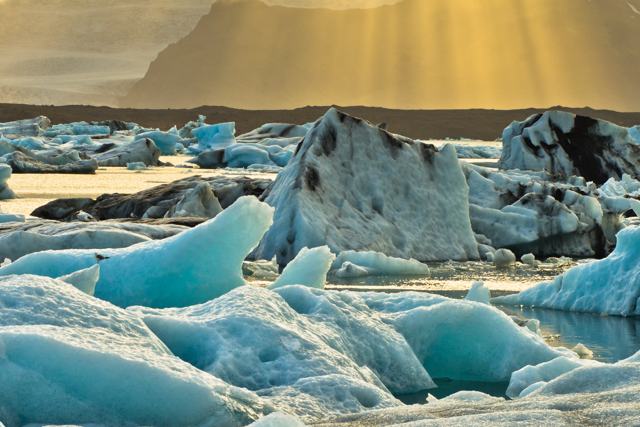
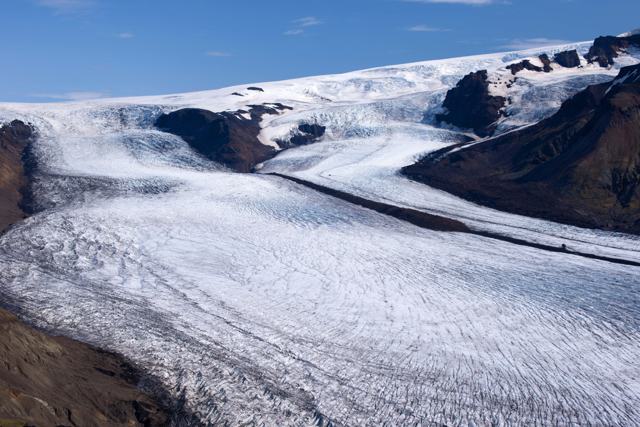
The campsite at Skaftafell, in Vatnajökull National Park, sits right by the visitor centre and is divided into separate areas for tents, campervans and motorhomes. The visitor centre has an information desk, an exhibition, a shop and a café, and the campsite has showers. Walking trails start from the campsite, including the popular path to Svartifoss and routes towards the glacier tongue. Jökulsárlón is under an hour's drive east, so you can visit early or late when the tour buses have gone, without being tied to a tour schedule. GPS: about 64.016, -16.967.
Skaftafell is also the starting point for many glacier walks and, in winter, ice cave tours. From the campsite, the Skaftafell Glacier Hike fits in well. See all our glacier hiking tours.
Húsafell, West Iceland
The Húsafell campsite lies in a birch wood, one of the few real forests in Iceland. It is family-friendly, with a swimming pool, golf course, playground, shop and restaurant within walking distance. Nearby you can visit Hraunfossar and Barnafossar, the Víðgelmir lava cave and Langjökull, where you can go inside the glacier. The Eiríksjökull glacier rises to the north-east, and guided trips go to the Canyon Baths (Giljaböð), geothermal pools in a nearby gorge. Our Into the Glacier tour from Húsafell starts right there. See also our Into the Glacier tours and West Iceland tours. GPS: about 64.699, -20.869.
Þakgil, near Vík
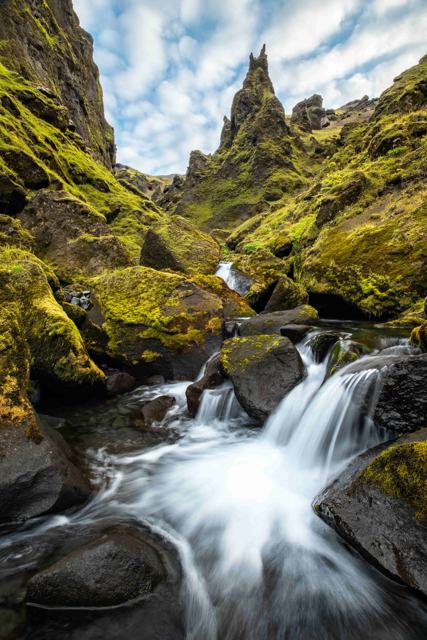
Þakgil is a small campsite in a green, sheltered canyon north-east of Vík, below the Mýrdalsjökull glacier. It has toilets, showers and small cabins, and a cave next to the campsite that is used as a dining room, where you can cook and eat out of the weather. Vík is the nearest place for groceries, so shop before you drive up. Walking trails lead into the surrounding canyons, see our guide to the Þakgil and Remundargil canyons. It makes a quiet base for Reynisfjara, Dyrhólaey and the Sólheimasandur plane wreck. The access road is a gravel track, so drive slowly and check conditions. GPS: about 63.530, -18.887.
Ásbyrgi, North Iceland
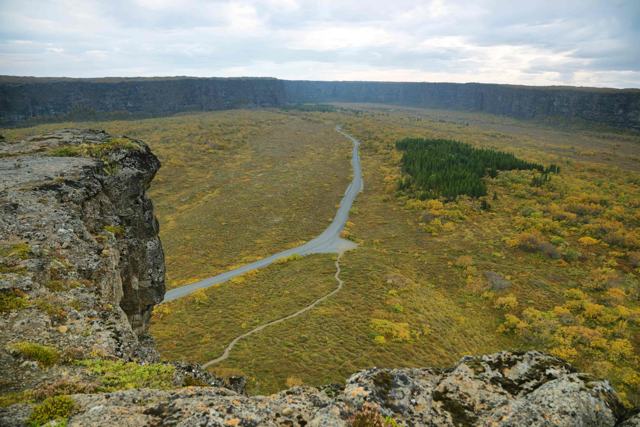
The horseshoe-shaped canyon of Ásbyrgi is part of Vatnajökull National Park, and its campsite is a good base for the north. From here you can walk in the Jökulsárgljúfur canyon, visit Dettifoss and Hljóðaklettar, and drive on to Húsavík for whale watching or Mývatn. The canyon is one of the best places in the north for hiking, and in autumn the dark sky above the cliffs is good for Northern Lights. Camping is paid online or through the park's payment app. See our North Iceland tours. GPS: about 66.027, -16.495.
Egilsstaðir, East Iceland
The town campsite in Egilsstaðir is a practical stop on the Ring Road, with shops, a pool and fuel close by. It is well placed for day trips to Seyðisfjörður, Hengifoss, Stuðlagil and Hallormsstaðaskógur, Iceland's largest forest. The eastern highlands are also within reach for a day trip in summer. Legend says the lake Lagarfljót, next to town, is home to a monster called the Lagarfljótsormur, and a video said to show it made the news around the world in 2012. See our East Iceland tours. GPS: about 65.260, -14.408.
Úlfljótsvatn, close to Reykjavík
If you want to camp without driving far from the capital, Úlfljótsvatn is about an hour from Reykjavík, by the lake of the same name just south of Þingvallavatn. It is run by the Icelandic Scouts and welcomes campers all year, but check ahead outside the summer months. It is a family-oriented site with a service desk, barbecue and cooking facilities. Activities include boating and fishing on the lake, hiking and a tall climbing tower, and there are organised events in high summer. It is also a handy base for the Golden Circle, with Þingvellir close by. GPS: about 64.095, -21.048.
Látrabjarg and the Westfjords
The Westfjords are quiet, wild and ideal for camping. Látrabjarg, Europe's westernmost point, is a huge sea cliff where puffins nest in summer. The nearest campsite to the cliffs is at Breiðavík, a wide sandy bay between the mountains that faces the open Atlantic, with showers, a kitchen, laundry and a barbecue (GPS: about 65.549, -24.352). There are also campsites in nearby villages such as Patreksfjörður, and the golden beach at Rauðisandur is close. Roads in this corner are long and partly gravel, so allow plenty of time. See our Westfjords tours and puffin guide.

Hellissandur, Snæfellsnes
The small campsite at Hellissandur, at the tip of the Snæfellsnes peninsula, has toilets, showers and power outlets for charging. On a clear day you look straight up at the Snæfellsjökull glacier. It sits close to Snæfellsjökull National Park, with Djúpalónssandur, Lóndrangar and Kirkjufell all a short drive away. See our Snæfellsnes tours. GPS: about 64.913, -23.889.
Camping in the highlands
Landmannalaugar and Þórsmörk have popular campsites next to their mountain huts, and they are the start and end of the Laugavegur trail. Highland roads usually open in June or early July, depending on snow, and need a 4×4. They include river crossings that standard rental cars and insurance do not cover.
Many people take a bus or a guided tour into the highlands and camp from there. If you would rather have the route, food and huts organised, our guided Laugavegur & Fimmvörðuháls Trek walks from Landmannalaugar to Þórsmörk over six days. Read our guides to hiking in Landmannalaugar, hiking in Þórsmörk and the Fimmvörðuháls hike, or see our highland tours and hiking tours.
Prefer a roof over your head?
Camping is not for everyone, and the weather can change a plan quickly. Our self-drive trips come with accommodation booked along the route, and our summer Ring Road tours and multi-day trips let you see the same places with a guide. You can also mix the two: camp in good weather and book a few nights indoors.
A few trips that cover the same ground with the nights booked:
- South Coast & Glacier Lagoon in 5 Days: car, hotels and a day-by-day plan from the South Coast to Jökulsárlón.
- 6 Day Iceland Ring Road Tour: a guided summer trip around the country, including a glacier hike at Skaftafell and Lake Mývatn.
- Laugavegur & Fimmvörðuháls Trek: the highland trail with guides, meals and nights in mountain huts instead of a tent. Runs mid-June to mid-September; the 2026 season is over and we are now taking bookings for 2027.
Questions people ask
Is wild camping legal in Iceland?
Only for hikers and cyclists, and only in a limited way. You may put up to three tents for one night on uncultivated land if there is no campsite nearby and no sign forbids it. Campervans and motorhomes must stay on organised campsites unless the landowner agrees.
How much does it cost to camp in Iceland?
Roughly 1,500 to 3,000 ISK per adult per night, with showers, electricity and accommodation tax sometimes extra. The 2026 Camping Card costs €179 for two adults and up to four children, for up to 28 nights at participating sites.
Can I sleep in my campervan anywhere in Iceland?
No. Overnight stays in campervans, motorhomes and caravans are only allowed on organised campsites, in towns where permitted, or on private land with the owner's permission.
Are campfires allowed in Iceland?
No, not in general. Bring a camping stove. A few campsites have their own fire spots, and you should only use a fire where the campsite allows it.
When are campsites open in Iceland?
Most open from late May or June to mid-September. A few stay open all year, but facilities may be limited in winter, so check before you go.
Is camping in Iceland expensive?
No. It is one of the cheapest ways to stay, at roughly 1,500 to 3,000 ISK per adult per night, and children often stay free or at a lower rate.
What is the Camping Card and is it worth it?
A prepaid card that covers campsite fees for two adults and up to four children for up to 28 nights at participating campsites. It is worth it on a longer trip if your route passes enough of those sites. The accommodation tax is paid on top.
What amenities do campsites in Iceland have?
Even simple highland sites usually have toilets, drinking water and bins. Larger sites add hot showers, a kitchen or cooking shelter, electricity, laundry and often a playground.