SNÆFELLSJÖKULL NATIONAL PARK IN SHORTSnæfellsjökull National Park covers about 170 square kilometres at the western tip of the Snæfellsnes peninsula in West Iceland, centred on the glacier-topped volcano Snæfellsjökull. It is about 170–190 km (2.5–3 hours) from Reykjavík, free to enter, and open all year, though the glacier itself needs a guide and proper equipment.
About Snæfellsjökull National Park
The park was established in 2001 and takes in the volcano and glacier Snæfellsjökull, a 1,446-metre stratovolcano, along with the lava fields, cliffs and small fishing villages around it. It is best known outside Iceland as the setting for Jules Verne's 1864 novel Journey to the Centre of the Earth, in which the characters descend into the earth through the volcano's crater.
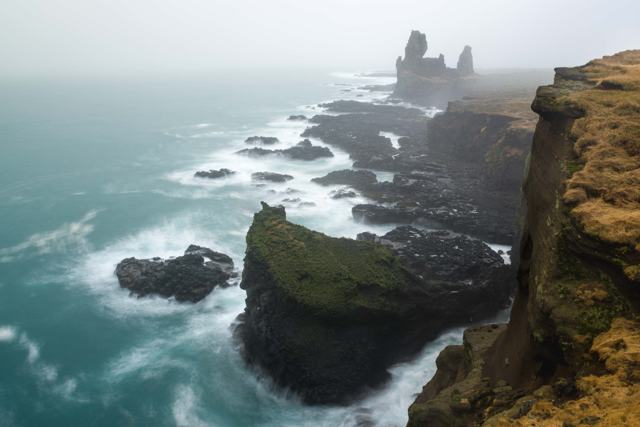
Beyond the glacier, the park protects a stretch of dramatic coastline: black lava cliffs at Lóndrangar, a black pebble beach at Djúpalónssandur, and, at its south-eastern edge, the villages of Arnarstapi and Hellnar, linked by a coastal walking path along basalt cliffs and sea caves. The park has two visitor centres, one at Malarrif on the south coast and one in Hellissandur, with maps, trail information and details on current conditions.
It is one of Iceland's three national parks, and the smallest, but it packs a lot in: a glacier, lava fields, craters, sea cliffs, beaches, plant and bird life and the remains of old fishing stations. It was the first national park in Iceland to stretch from the top of a mountain all the way down to the sea, and it was set up to protect both the landscape and the historical relics along the coast.
Quick facts
RegionWestern tip of Snæfellsnes peninsula, West Iceland
Established2001
SizeAbout 170 km²
Glacier height1,446 m (Snæfellsjökull summit)
From ReykjavíkAbout 170–190 km, around 2.5–3 hours by car depending on the route
EntryFree to the park; guided glacier tours are paid separately
Opening hoursOpen all year; visitor centres at Malarrif and Hellissandur are open daily
Time neededHalf a day to a full day to see the coastal highlights
Visitor centresMalarrif (south coast) and Hellissandur (north coast)
A volcano in books and folklore
In Journey to the Centre of the Earth, Jules Verne sent his characters down through the crater of Snæfellsjökull to begin their journey to the centre of the earth, even though he had never visited Iceland himself. The connection has stuck, and the mountain is often described as one of Iceland's most recognisable landmarks partly because of it.
Iceland's Nobel Prize winner Halldór Laxness also set a novel here, Under the Glacier, which is sometimes translated as Christianity Beneath the Glacier. Painters and writers have been drawn to the mountain for a long time.
Locals have their own stories about the mountain too. It has long been considered one of Iceland's seven main sources of energy in folk belief, and many visitors still come specifically because of that reputation, alongside the more straightforward appeal of the glacier and coastline.
How to get to Snæfellsjökull National Park
On a guided tourSnæfellsnes day tours from Reykjavík typically cover the park's coastal highlights, Arnarstapi, Djúpalónssandur and Lóndrangar. Glacier hiking or snowmobiling on Snæfellsjökull itself needs a specialist tour with a guide.
By carRoute 54 runs along the peninsula, with Route 574 circling the park itself past Arnarstapi, Hellnar and Djúpalónssandur. Roads are paved and generally open all year, though winter driving needs care.
By public transportThere is limited scheduled bus service to towns on Snæfellsnes, but no regular public transport around the park itself, so a car or tour is the practical option.
Do not walk onto the glacier without a guide. It is crevassed, and weather on the summit can change fast even when the coast below is clear.
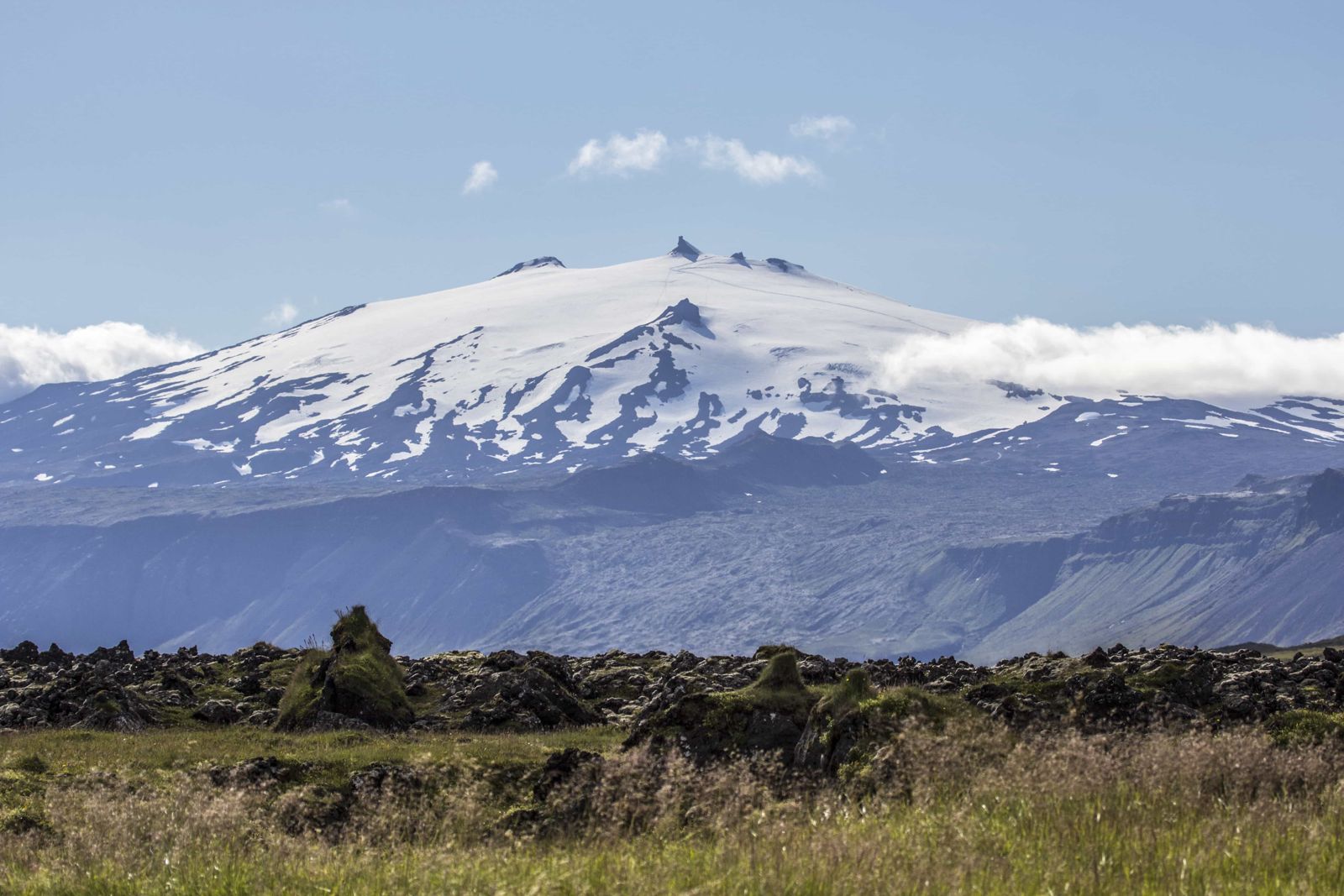
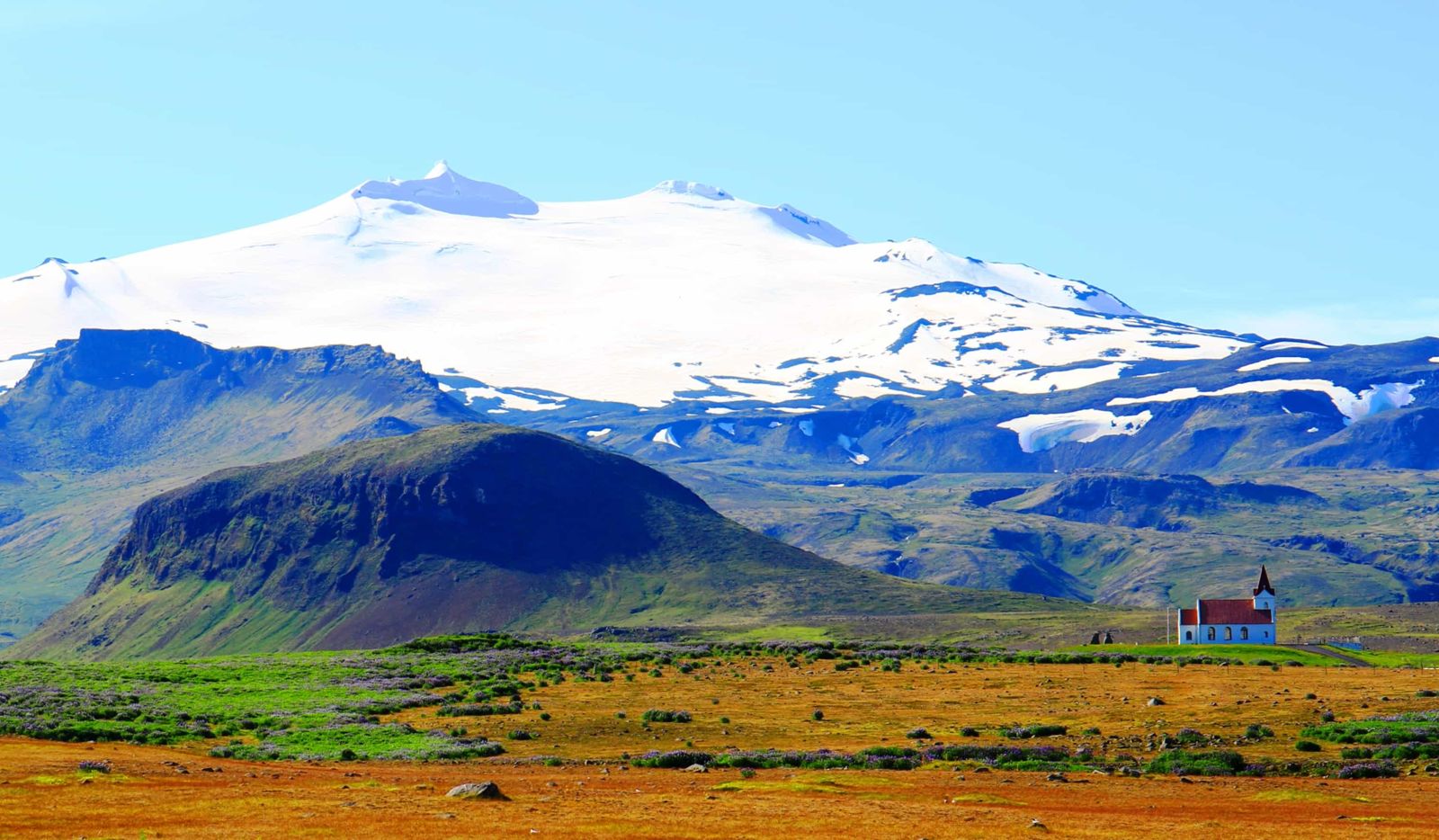
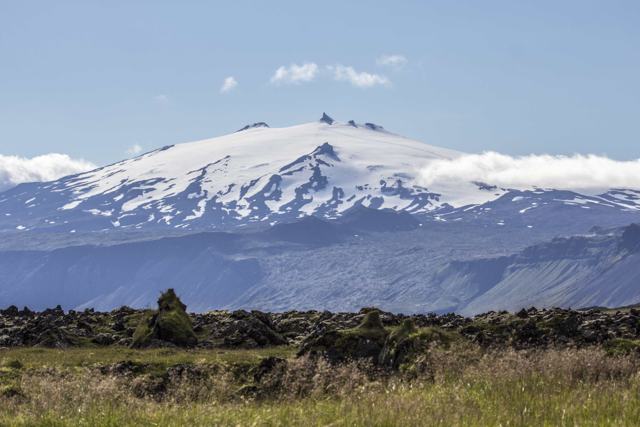
Snæfellsjökull, the glacier-capped volcano
The centrepiece of the park is Snæfellsjökull itself, a volcano with a glacier on top, standing at the very tip of the peninsula. On a clear day you can see its white cap from Reykjavík, across Faxaflói bay.
The mountain is a favourite with people who want to get onto the ice, on a guided glacier hike or a tour by snowcat or super jeep. Whether tours run depends on the snow and the weather, and the glacier has been shrinking, so check what is on offer for your dates.
What to see in the park
The park's main sights sit along or just off Route 574, and most people visit several in one loop of the peninsula.
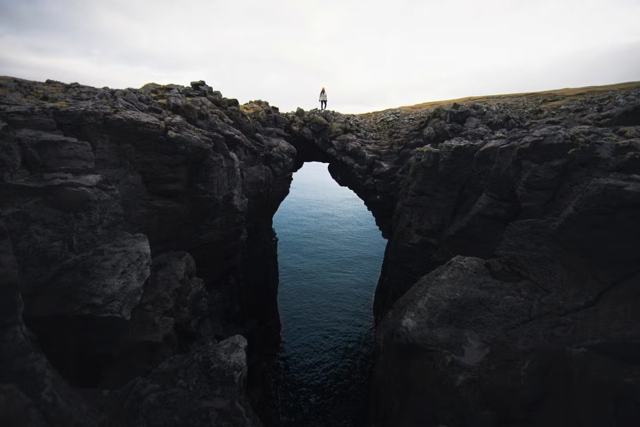
Arnarstapi and HellnarTwo small fishing villages linked by a coastal path along dramatic basalt cliffs and sea arches, with a resident colony of Arctic terns and fulmars in summer.
DjúpalónssandurA black pebble beach ringed by cliffs and odd-shaped lava rocks, with rusting shipwreck remains and four old lifting stones once used to test fishermen's strength. The coves here were once a busy seasonal fishing station with dozens of rowing boats; today they are empty. The smooth, shiny pebbles are called Djúpalónsperlur, "pearls of the deep lagoon". They are protected, so leave them on the beach.
LóndrangarTwo tall basalt sea stacks, the remains of an old volcanic crater, in the south-west of the park not far from Djúpalónssandur. A viewpoint sits just off the road, and it is worth a short break to walk towards the cliffs.
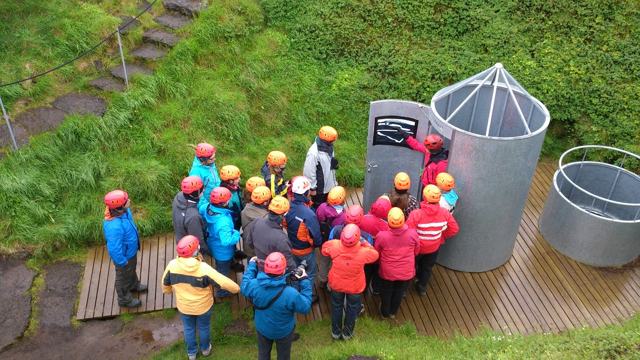
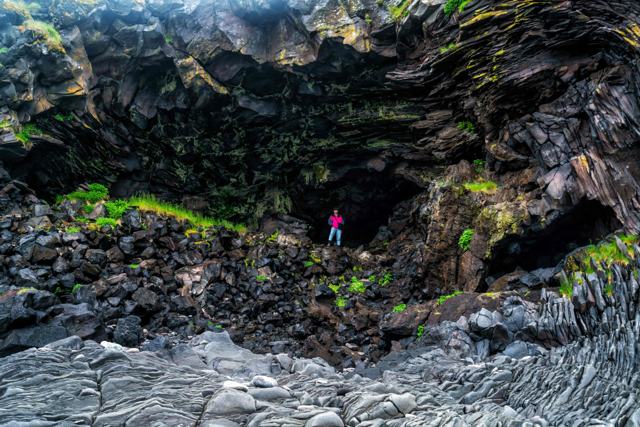
Vatnshellir lava caveAn 8,000-year-old lava tube inside the park, near Malarrif and about a 10-minute drive from Hellnar. It was opened to the public in 2011, can only be visited on a guided tour, and has its share of folklore attached.
Saxhóll craterA volcanic crater about 40 metres high beside the road, with a set of steps to the rim and a wide view over the lava fields to the sea.
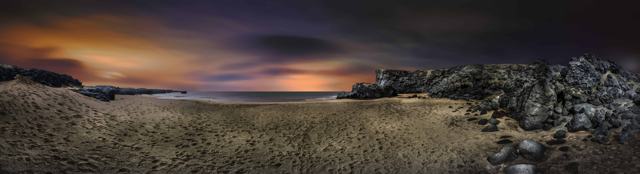
Skarðsvík golden beachA small cove of golden sand framed by dark basalt, on the north-west tip of the park. There is a signed car park and a short path down. A Viking-age grave was once found by the beach.
Sönghellir caveA small cave on the mountain road above Arnarstapi, known for its echo. The name means "the singing cave".
Places around Snæfellsjökull National Park
Snæfellsnes is often called Iceland in miniature for the variety of landscape packed into one peninsula. These stops are on the way to or from the park.
Búðahraun lava field and BúðirEast of the park on the south shore. You can walk among sandy, moss-covered lava, see the black church at Búðir and stroll along the pale sand beach.
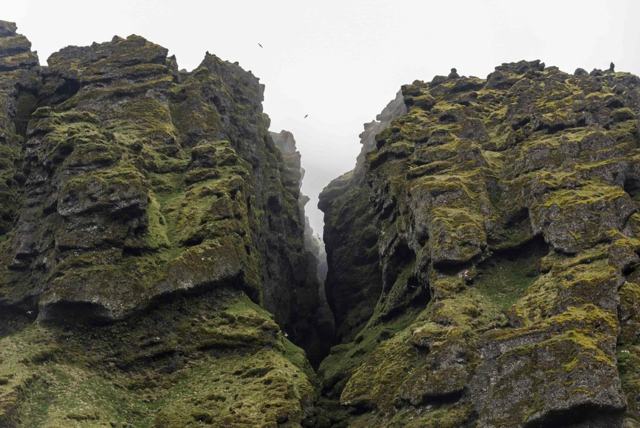
Rauðfeldsgjá gorgeThe name means "Red-Cloak rift". From the car park it is a short walk up to the opening in the cliff, then a narrow path along the stream. Going further in means scrambling through water, so you need to be fit and have proper hiking shoes and clothes.
ArnarstapiA small village that was once a busy fishing and trading post. Today it is where most visitors stop for a break and a walk along the bird cliffs before heading into the park.
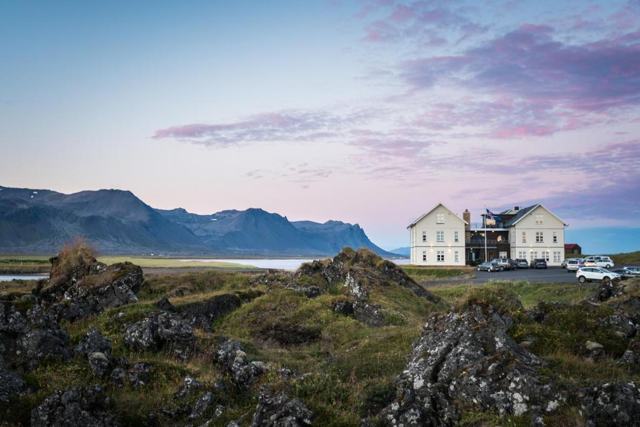
HellnarOne of the oldest fishing stations in the country, with records going back to 1560. It was once a trading hub with farms around it, and had 38 houses in 1703. Fishing and trade later moved away and the place emptied; visitors have since brought it back to life as a quiet place to stay.
HellissandurA village just north of the park, known as the street art capital of Iceland for its murals, with views of the glacier, sea cliffs and plenty of bird life.
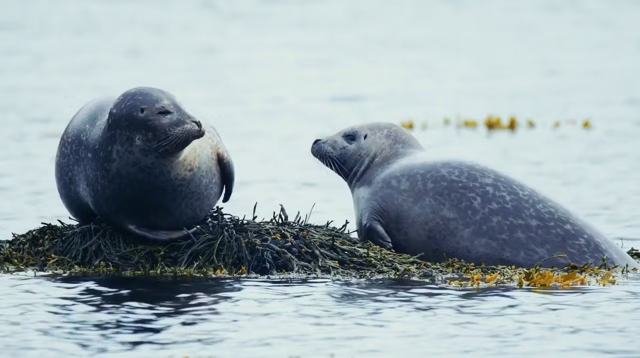
Ytri-TungaA golden sand beach on the south coast where seals rest on the rocks close to shore, most reliably in summer.
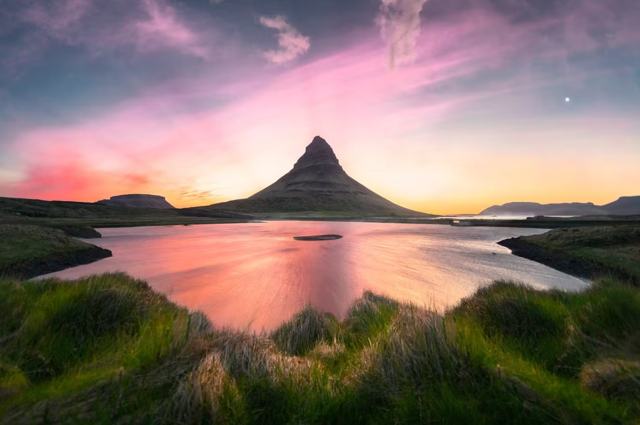
KirkjufellThe 463-metre "Church Mountain" near Grundarfjörður on the north coast, the most photographed mountain in the country.
Best time to visit Snæfellsjökull National Park
Summer (June–August)Full access to trails, boat tours from Arnarstapi and the longest daylight for exploring the coast.
Winter (November–March)Coastal sights stay accessible, but glacier tours depend on conditions and daylight is short.
Safety and practical tips
- Never go onto the glacier without a guide, crevasses are hidden under snow.
- The coastal path between Arnarstapi and Hellnar is easy but exposed, bring a windproof layer.
- Weather can differ sharply between the coast and the glacier, check both before you set out.
- Respect the ropes and marked paths at Djúpalónssandur and Lóndrangar, the cliffs and rock are unstable in places.
- Do not take pebbles from Djúpalónssandur. They are protected.
- Rauðfeldsgjá gets wet and slippery beyond the entrance. Wear waterproof boots or stop at the opening.
- Stop at one of the visitor centres first for trail maps and the day's conditions.
Facilities and accessibility
The park's visitor centres are at Malarrif and in Hellissandur, with exhibitions, information and toilets. Arnarstapi has cafés, a car park and toilets. Fuel is available in the towns around the peninsula, not inside the park itself.
Nearby places worth a stop
Where to stay near Snæfellsjökull National Park
Arnarstapi, Hellnar and the town of Ólafsvík all have guesthouses and hotels, making Snæfellsnes an easy overnight base if you want more time in the park than a day trip allows.
Snæfellsjökull National Park FAQ
Can you climb Snæfellsjökull without a guide?
It is not recommended. The glacier is crevassed and conditions change quickly, so most visitors join a guided glacier tour.
Is there an entrance fee for the park?
No, entry to the national park is free. Guided activities like glacier tours or the lava cave are paid separately.
How far is the park from Reykjavík?
About 170–190 km, roughly 2.5–3 hours by car.
What is the connection to Jules Verne?
Snæfellsjökull was the setting for the descent into the earth in his 1864 novel Journey to the Centre of the Earth.
What is there to see in Snæfellsjökull National Park?
The glacier-capped volcano, Djúpalónssandur beach, the Lóndrangar sea stacks, Saxhóll crater, Skarðsvík beach, Sönghellir cave and Vatnshellir lava cave, with Arnarstapi, Hellnar and Rauðfeldsgjá gorge just outside.
Can you see Snæfellsjökull from Reykjavík?
Yes, on a clear day the glacier is visible across Faxaflói bay, about 120 km away.
When was the park established?
In 2001, to protect the landscape and the historical remains around the glacier. It was the first Icelandic national park to reach from mountain top to sea.
 Iceland Travel GuideLOCAL TRAVEL AGENCY IN ICELAND
My trip
Talk to a local