Iceland Travel GuideLOCAL TRAVEL AGENCY IN ICELAND
My trip
Talk to a local
Iceland Travel GuideLOCAL TRAVEL AGENCY IN ICELAND
My trip
Talk to a local
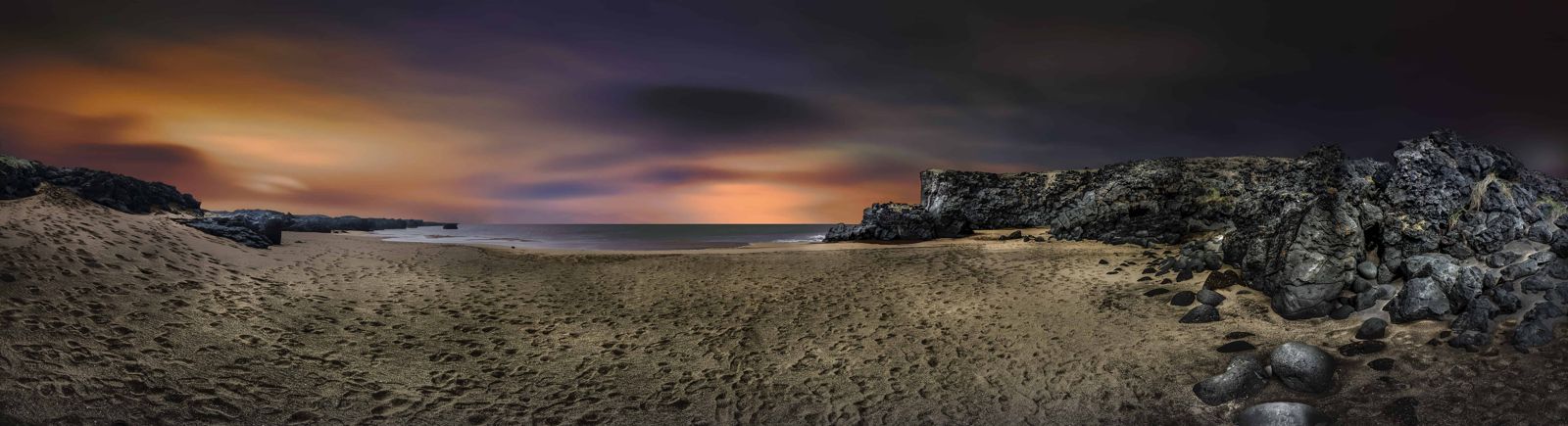
Skarðsvík is a small cove with pale golden sand on the far western tip of the Snæfellsnes peninsula, inside Snæfellsjökull National Park, a short drive west of Hellissandur. It is free to visit, open all year, and most people stay 20–45 minutes. Swimming is not recommended because of strong currents.
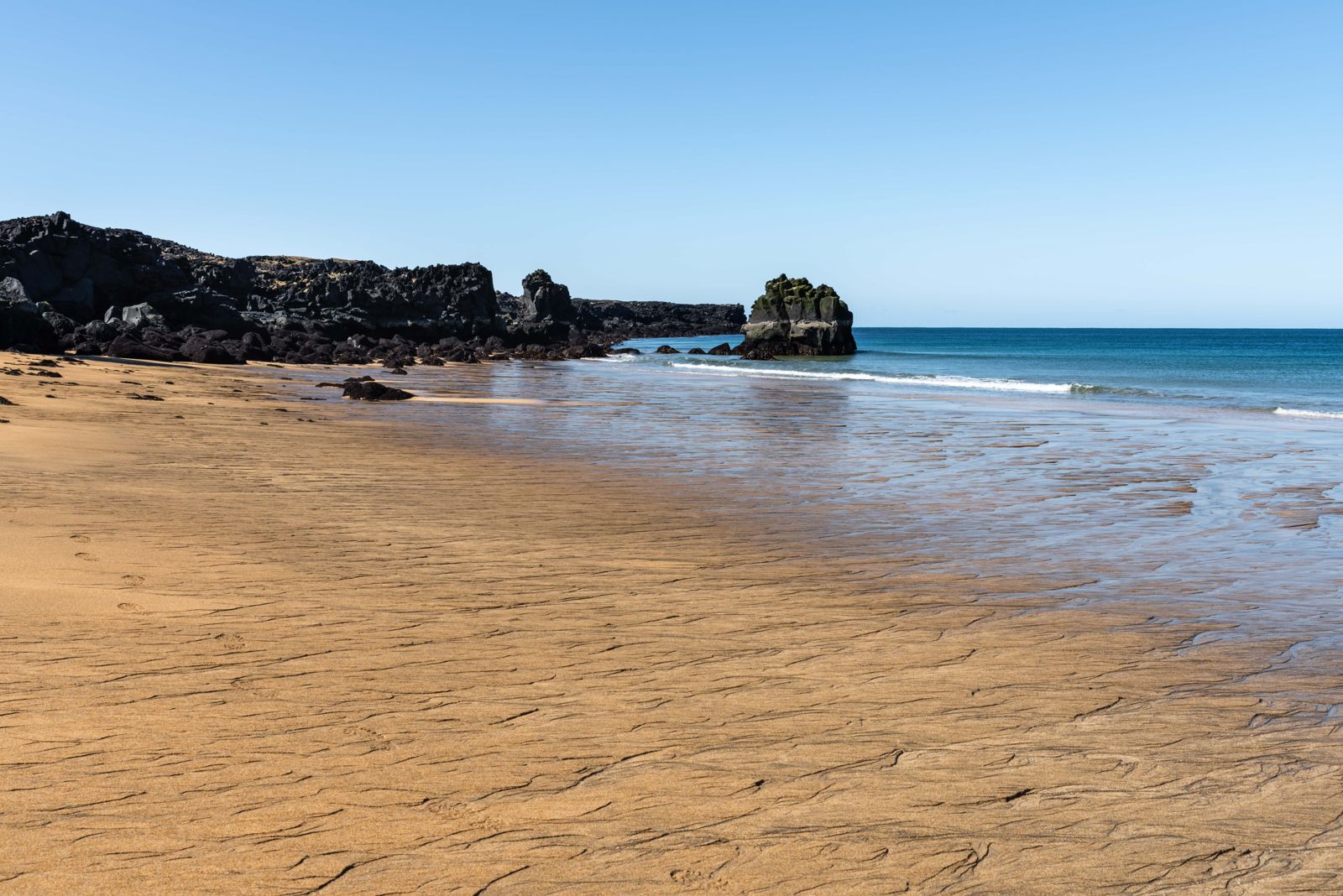
Most beaches in Iceland are black. Skarðsvík is different: a small bay with golden-yellow sand, turquoise water and black lava on both sides. The colour contrast is the reason people come. On a calm, clear day it can look almost Mediterranean, although the water is icy and the wind is often strong.
The beach lies at the end of a short side road on the Öndverðarnes area, on the western end of the peninsula. The parking area is close to the sand, and wooden steps lead down to the beach. It is much quieter than the beaches on the south coast, and it is a good place for a walk, a picnic and photographs.
The beach also has a piece of history. In 1962, while workers were building a road nearby, they found a pagan Viking-age grave by a small cave at the north end of the beach. It held the remains of a young man buried with a sword and a spearhead in the 10th century.
In 1962, workers building a road near the cove uncovered a grave in a small cave at the northern end of the beach. Archaeologists found the remains of a young person buried in the pagan style, with a sword and a spearhead beside them. The burial is more than a thousand years old, from the early settlement period.
The finds were taken to the National Museum of Iceland in Reykjavík.
Road conditions on Snæfellsnes can change quickly in winter. Check umferdin.is and vedur.is before you set out.
From the car park, with its information signs and picnic table, a path and wooden steps lead down to the sand.
Do not bathe or paddle here. Currents are strong and unpredictable, so keep back from the waterline, and time your walk to the cave for low tide.
Small car park, information signs, a picnic area and wooden steps down to the beach. There are no toilets, café or shop at the beach that we could confirm, so use the facilities in Hellissandur or Ólafsvík first.
Hellissandur, Rif and Ólafsvík have guesthouses, hotels and campsites, all within a short drive. Grundarfjörður and Stykkishólmur have more options if you are exploring the whole peninsula.
It is not recommended. Currents are strong and unpredictable, and the water is cold. Paddling near the edge of the sea is risky too.
Yes. There is no entry fee. A parking fee may apply, so check the signs.
The pale colour makes it stand out from the black lava and black sand elsewhere in Iceland. We have not confirmed exactly what the sand is made of.
About 20–45 minutes for a walk on the beach and photos. Add time for a picnic.
The road from Route 574 is short and passable for most cars in good conditions, but take care after rain and in winter.
By the small cave at the northern end of the beach, to the right as you face the sea. A young man was buried there in the 10th century with a sword and a spearhead. The finds are now in the National Museum of Iceland.
From Route 574 (Útnesvegur) west of Hellissandur, turn west onto Öndverðarnesvegur (Route 579). The car park is a short way along, and steps lead down to the beach.
Yes. Trails lead from the beach area over the lava field towards Öndverðarnes and Svörtuloft.