Iceland Travel GuideLOCAL TRAVEL AGENCY IN ICELAND
My trip
Talk to a local
Iceland Travel GuideLOCAL TRAVEL AGENCY IN ICELAND
My trip
Talk to a local
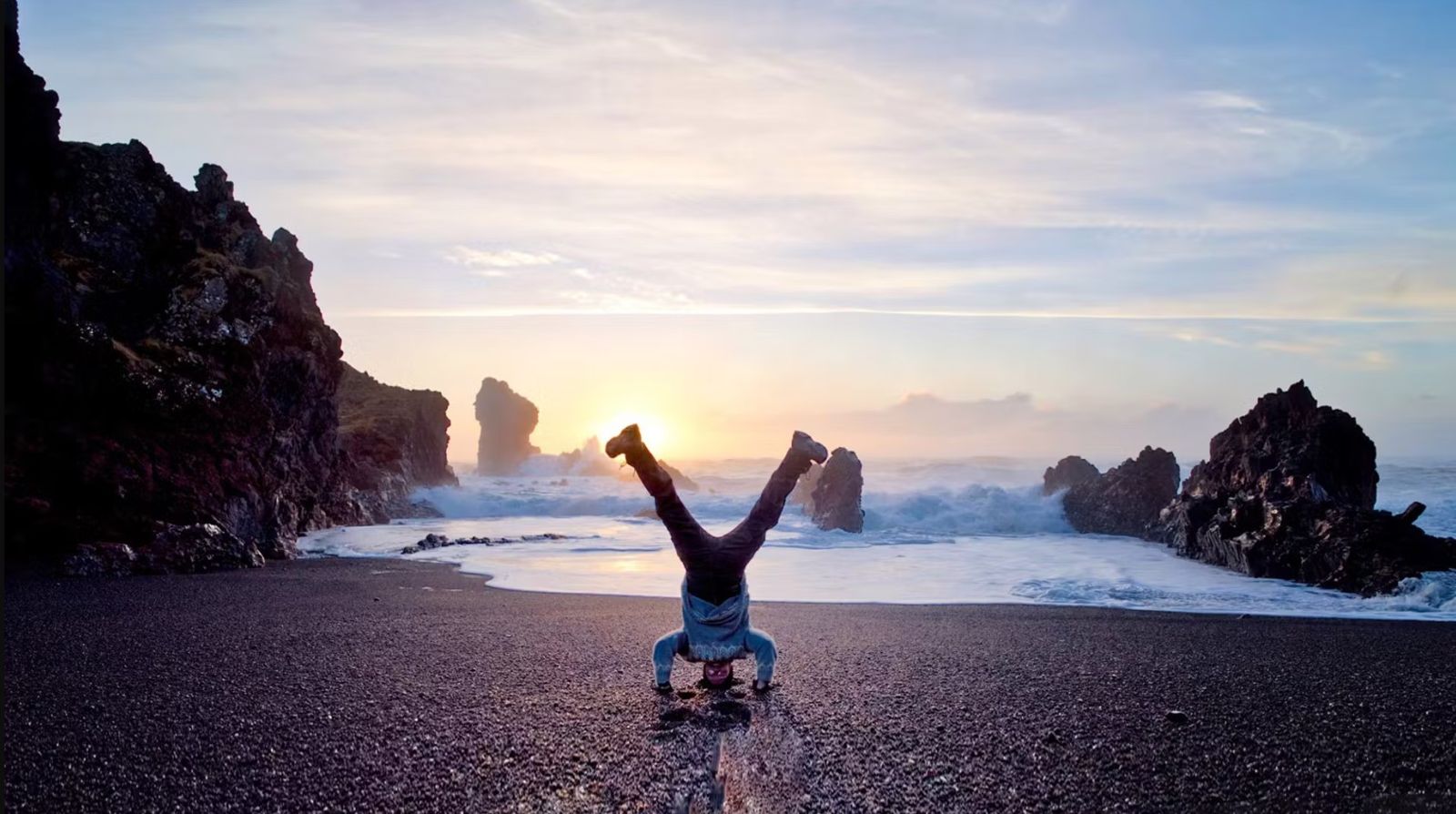
Djúpalónssandur is a black pebble beach on the south coast of the Snæfellsnes Peninsula, inside Snæfellsjökull National Park, known for dramatic lava rock formations, the rusted remains of a 1948 shipwreck, and four lifting stones once used to test fishermen's strength. It is about 200 km (around 2 hours 45 minutes) from Reykjavík, free to enter, open all year, and most people spend 45–60 minutes there.
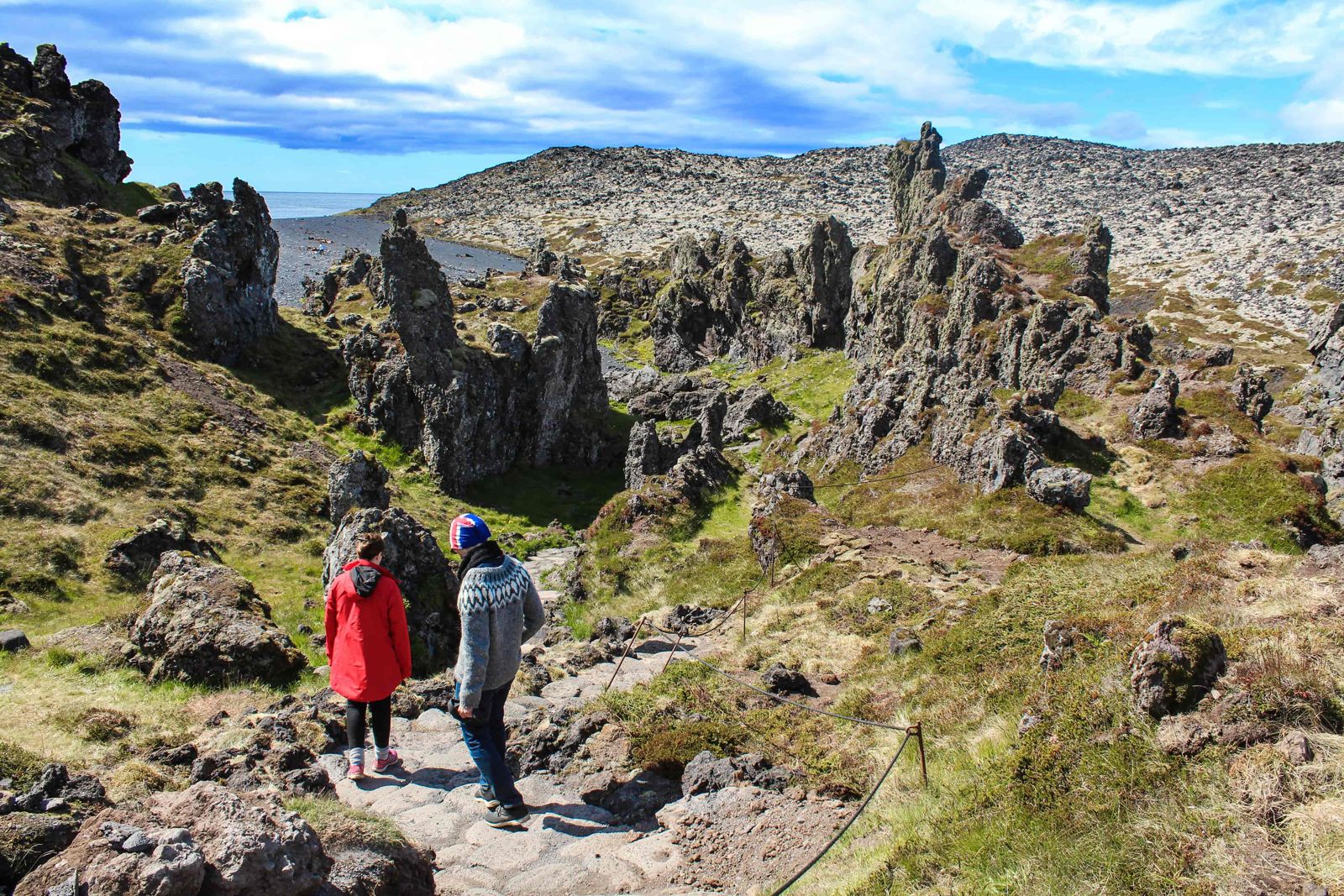
Djúpalónssandur is an arched bay of black pebbles at the foot of Snæfellsjökull, at the end of a short walk down from the car park through black lava formations, some named for their odd shapes. The beach is made of smooth black pebbles rather than fine sand. They are lava, broken up and polished by the surf of the open Atlantic on this exposed stretch of coast.
The walk from the car park to the beach is about 300 metres and takes 5 to 10 minutes each way. It is an easy, well-kept path that suits most ages and fitness levels, and about 20 minutes covers the round trip if you do not stop. Most people stop a lot.
Scattered across the pebbles are rusted pieces of the British trawler Epine GY7 from Grimsby, which ran aground here in a snowstorm on 13 March 1948. The wreckage has been left in place as a memorial rather than cleared away.
Near the main path stand four lifting stones of different weights, historically used by fishing crews to test a man's strength and fitness before he was taken on for a boat's crew. Visitors still try their hand at lifting them today.
The waves here are tall and strong, and they run far up the beach without warning. This is a place to walk, look and take photos from a safe distance, not a place to swim.
The four lifting stones at Djúpalónssandur, known individually as Fullsterkur ("full strength"), Hálfsterkur ("half strength"), Hálfdrættingur ("weakling") and Amlóði ("useless"), were used by fishing crews based at this cove to judge a young man's fitness for work at sea. The test was to lift a stone onto a rock ledge at about hip height. A man who could not manage Hálfdrættingur, at 54 kg, was not taken on as an oarsman.
The work was rowing heavy open boats out into the Atlantic, so the test made sense. The men who could lift the heaviest stones were seen as the strongest and the best suited to it.
The cove of Dritvík, just around the headland, was one of the busiest fishing stations in Iceland from the mid-1500s to the mid-1800s. In the spring season 50 or more rowing boats worked from it, with several hundred men. Little remains of that settlement today beyond scattered ruins, but the lifting stones are a direct, physical link to that working past.
The turn-off is on the south-west side of the national park, between Hellnar and Hellissandur. In winter, check road.is before driving around the tip of the peninsula.
The path from the car park is called Nautastígur, the Path of the Bull. It runs down a narrow lava gully to the beach, and there is something to look at every few steps.
The lava is sharp and the pebbles roll underfoot. Stay on the marked path and do not climb the rock formations.
The stones lie together at the foot of the path, just where you come onto the beach.
You are welcome to try, but lift with care. The stones are round, smooth and often wet, and a dropped stone can break a foot.
The beach takes its name from the lagoons behind it. Djúpalónssandur means the sand of the deep lagoons. The lagoon called Djúpalón lies behind the beach among the lava, and another called Svörtulón, the black lagoon, lies close to the car park.
People once believed the lagoons were bottomless. In fact they are only a few metres deep. They are still, dark and clear, and on a calm day they reflect the lava around them, which makes them a good subject for photos and a quiet spot to watch sea birds.
The lagoons are not for bathing or swimming. Stay on the paths around them and keep out of the water.
Djúpalónssandur lies inside Snæfellsjökull National Park, and everything on the beach is protected. That includes the lava formations, the shipwreck and the pebbles themselves.
The smooth black stones are known as Djúpalónsperlur, the pearls of Djúpalón. Please do not take any home. A pocketful seems harmless, but with thousands of visitors a year it would change the beach. Do not climb on the rock formations or stack stones either.
Icelanders take this seriously, and the reason the beach still looks the way it does is that people have left it alone.
There are toilets at the car park. No café or shop on site; the nearest services are in Hellissandur or Ólafsvík.
Hellissandur and Ólafsvík, both a short drive away, have guesthouses and small hotels convenient for exploring this part of Snæfellsnes.
No, the surf is powerful and unpredictable on this open coastline. Stay well back from the water's edge. The lagoons behind the beach are not for bathing either.
About 200 km, around 2 hours 45 minutes by car.
About 300 metres from the car park, 5 to 10 minutes each way on an easy path. Allow 45–60 minutes for the whole visit.
They were historically used to test the strength of men seeking work on fishing crews based at this cove.
Amlóði is 23 kg, Hálfdrættingur 54 kg, Hálfsterkur 100 kg and Fullsterkur 154 kg. You had to lift Hálfdrættingur to get a place on a boat.
Yes, there is no entrance or parking fee.
No. The pebbles and the wreckage are both protected. Please leave them in place.
Tours and trips that include Djúpalónssandur, booked directly with a local travel agency in Iceland.
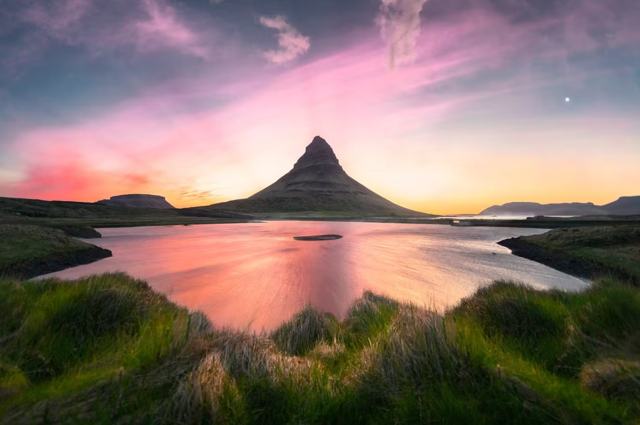 PRIVATESnæfellsnes Private TourFrom 150,000 ISK per group
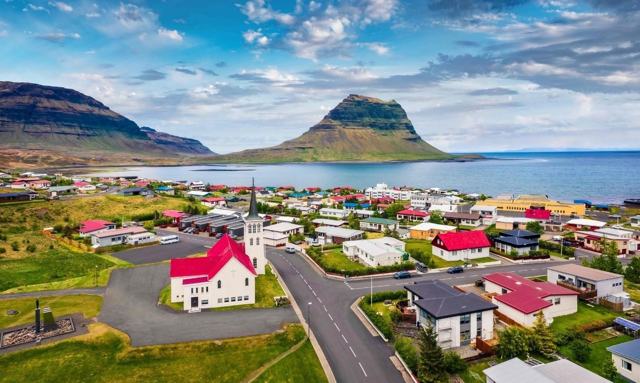 SHORE EXCURSIONSnæfellsnes PeninsulaFrom 150,000 ISK per group
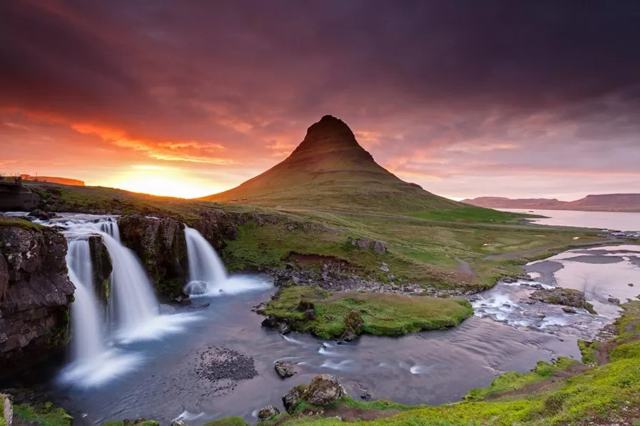 DAY TOURSnæfellsnes Peninsula Small Group TourFrom 17,074 ISK per person
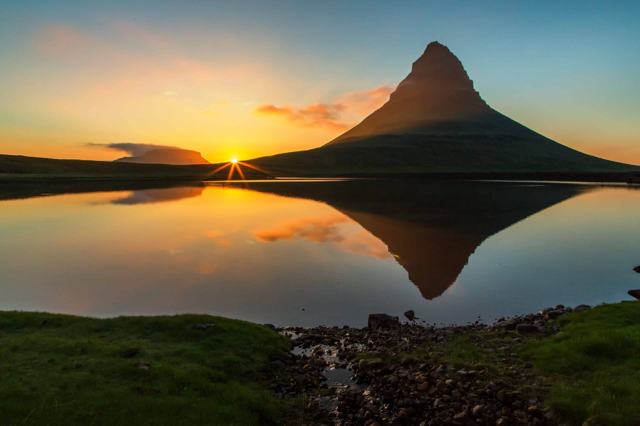 SHORE EXCURSIONSnæfellsnes Peninsula TourFrom 26,240 ISK per person
 SHORE EXCURSIONSnæfellsnes Peninsula Shore Excursion from GrundarfjörðurFrom 25,340 ISK per person
 DAY TOURSnæfellsnes PeninsulaFrom 27,900 ISK per person