Iceland Travel GuideLOCAL TRAVEL AGENCY IN ICELAND
My trip
Talk to a local
Iceland Travel GuideLOCAL TRAVEL AGENCY IN ICELAND
My trip
Talk to a local
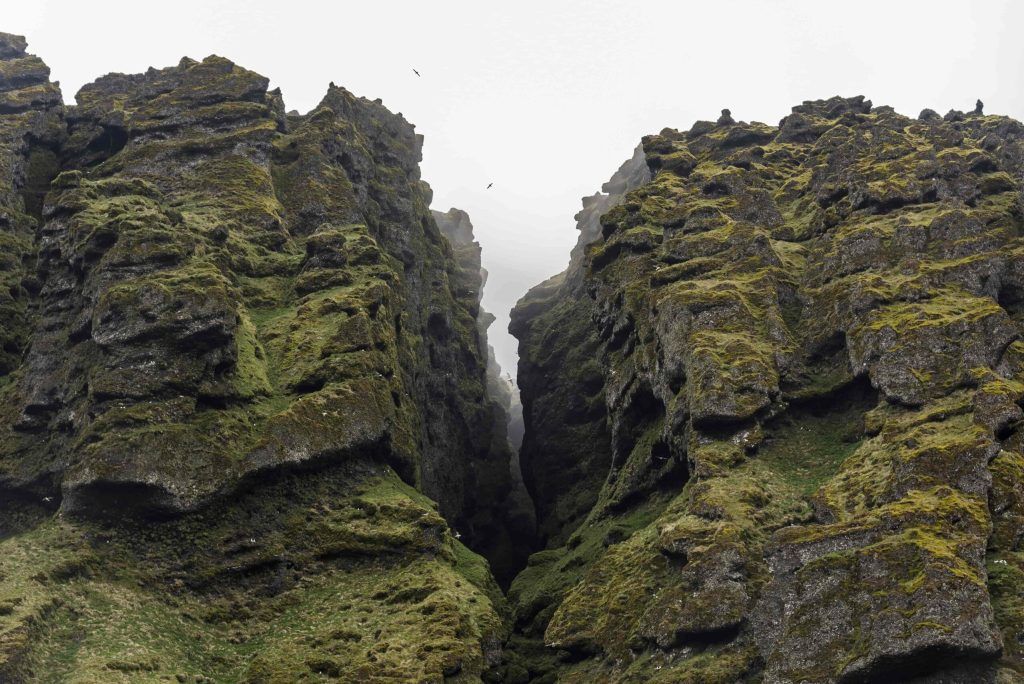
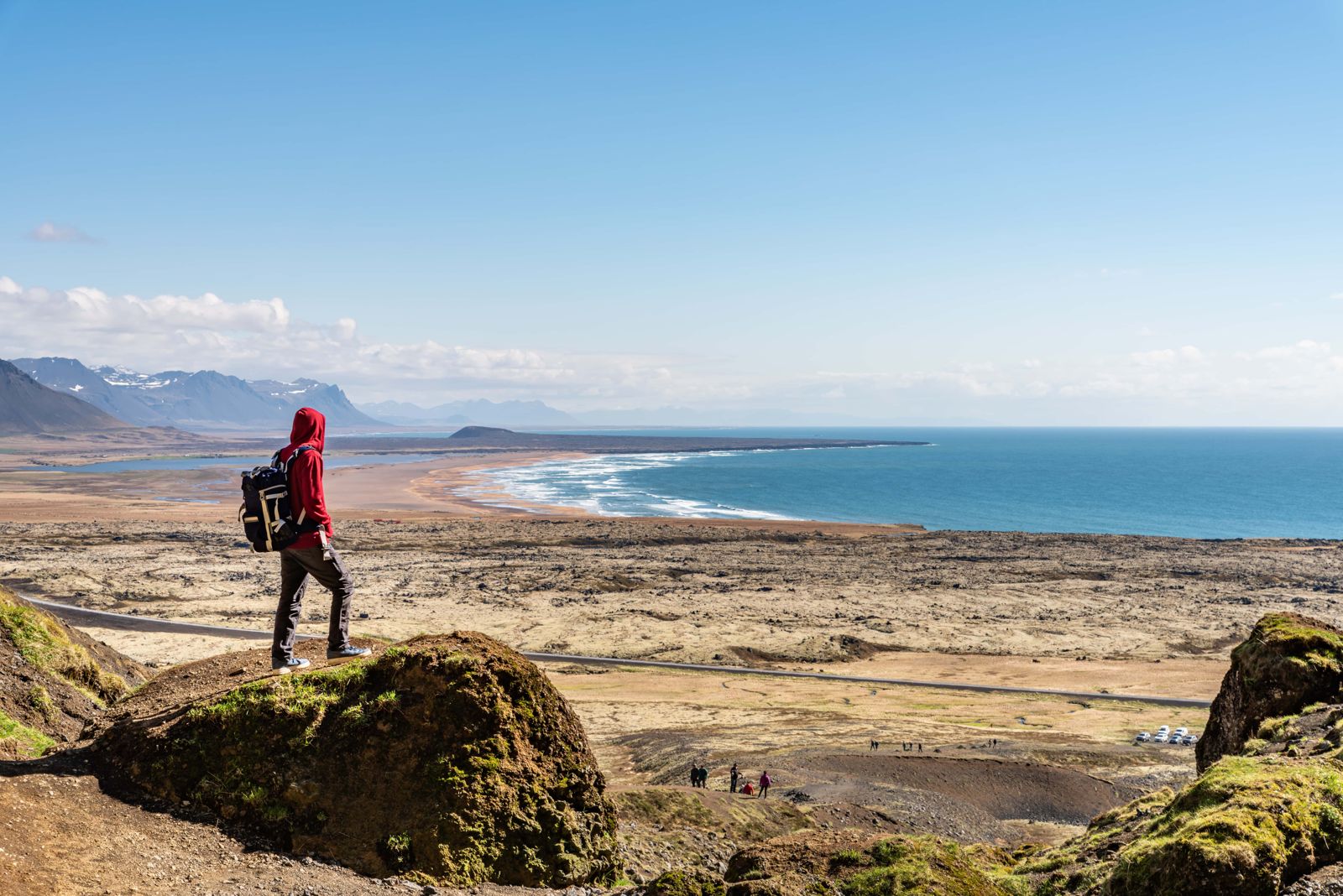
Rauðfeldsgjá is a narrow gorge, often called Rauðfeldsgjá canyon, cut into the side of Botnsfjall mountain near Arnarstapi on the Snæfellsnes peninsula, about 190 km (2.5 hours) from Reykjavík. It is free to enter and open all year. The walk from the car park to the entrance takes 10–15 minutes, and a visit takes 30–60 minutes depending on how far inside you go.
From the road, Rauðfeldsgjá looks like nothing more than a dark crack in the mountainside. From the small car park, a short path leads uphill to the mouth of the gorge, where the rock walls close in and a stream runs along the narrow floor. Walking further inside means wading through shallow water and stepping carefully over wet rock, so most people go just far enough to see daylight narrow to a strip above them before turning back.
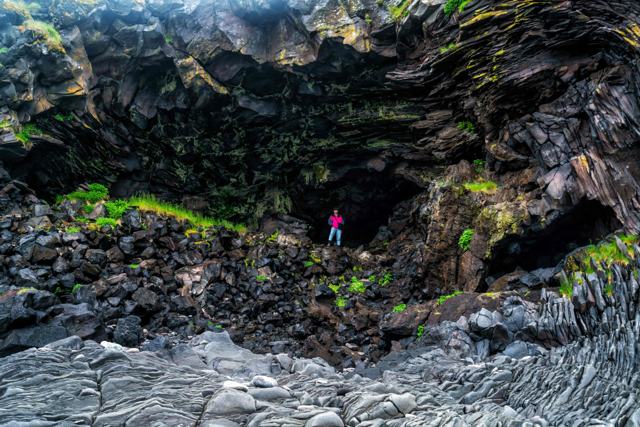
Inside, the air is cool and damp. The walls rise steeply on both sides, covered in thick green moss and dripping with water, and light filters down from the opening high above. Those who keep going scramble over boulders to a small waterfall, which is where most visitors turn round.
The gorge is named after Rauðfeldur, a figure from the saga of Bárður Snæfellsás, a half-troll, half-human guardian spirit said to live on the mountain above. According to the story, Bárður threw his nephew Rauðfeldur into the gorge in anger, and the name has stuck to the place ever since.
It is one of the few sights on Snæfellsnes that you walk into rather than look at from a viewpoint, which is the reason to stop. It is also quick, free and close to Arnarstapi, Hellnar and Snæfellsjökull National Park, so it fits easily into a day on the peninsula.
Bárður Snæfellsás is one of the best-known figures in Snæfellsnes folklore, part man and part troll, said to have become the guardian spirit of the Snæfellsjökull area after disappearing into the glacier. The saga that carries his name, Bárðar saga Snæfellsáss, names him as an ancestor of local families and a protector of the region.
The story goes that Bárður lived in this area with his daughters, and that his brother's sons, Rauðfeldur and Sölvi, often played with them by the shore at Arnarstapi. One day, as a prank, Rauðfeldur pushed Bárður's daughter Helga out to sea on a drifting iceberg. The ice carried her all the way to Greenland, where she came ashore unharmed.
Bárður did not know that, and he was furious. He carried Rauðfeldur up the mountain and threw him into this gorge, which has been Rauðfeldsgjá, 'Rauðfeldur's gorge', ever since. He then threw the other brother, Sölvi, off a high cliff on the coast nearby, which is still called Sölvahamar. After that Bárður turned his back on people and walked into Snæfellsjökull glacier.
The car park is small and fills around midday in July and August. Come in the morning or late afternoon if you can.
The walk is short, but it has three distinct parts, and you can stop after any of them.
Loose stones can fall from the walls, so do not linger under overhangs, and do not go further than you are comfortable climbing back down.
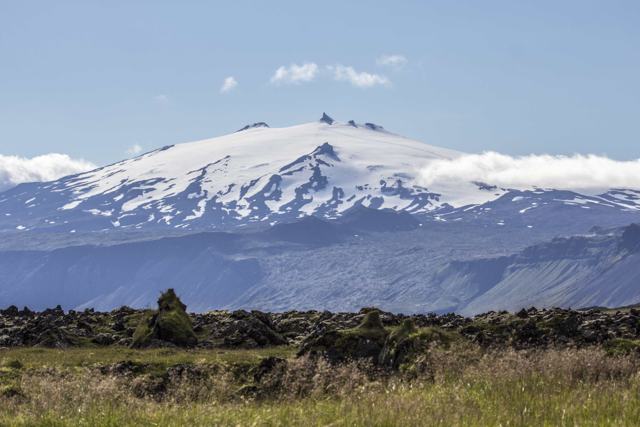
Snæfellsnes is often called 'Iceland in miniature' because it has a little of everything: a glacier, waterfalls, lava fields and black beaches. These are the closest sights.
There are no restrooms, shops or other amenities at Rauðfeldsgjá. The nearest facilities are in Arnarstapi.
Arnarstapi and Hellnar have guesthouses within a few minutes of the gorge, making them a convenient base for exploring this part of Snæfellsnes.
No, it is free to visit, and the car park is free.
On the south side of the Snæfellsnes peninsula in West Iceland, in the side of Botnsfjall mountain, a few minutes' drive from Arnarstapi on Route 574.
About 500 m and 10–15 minutes each way from the car park to the entrance. Allow 30–60 minutes in total if you go inside.
To go beyond the entrance, yes, a shallow stream runs through the gorge floor and stepping through ankle-deep water is usually needed.
Most people go as far as the small waterfall, a few minutes in. Beyond that it is a wet climb that needs proper footwear and care.
It means Rauðfeldur's gorge. In the saga of Bárður Snæfellsás, Bárður threw his nephew Rauðfeldur into it after the boy pushed Bárður's daughter out to sea on an iceberg.
Yes, but the gorge is often full of snow and ice, so most people view it from the entrance rather than going in.
Tours and trips that include Rauðfeldsgjá, booked directly with a local travel agency in Iceland.