Iceland Travel GuideLOCAL TRAVEL AGENCY IN ICELAND
My trip
Talk to a local
Iceland Travel GuideLOCAL TRAVEL AGENCY IN ICELAND
My trip
Talk to a local
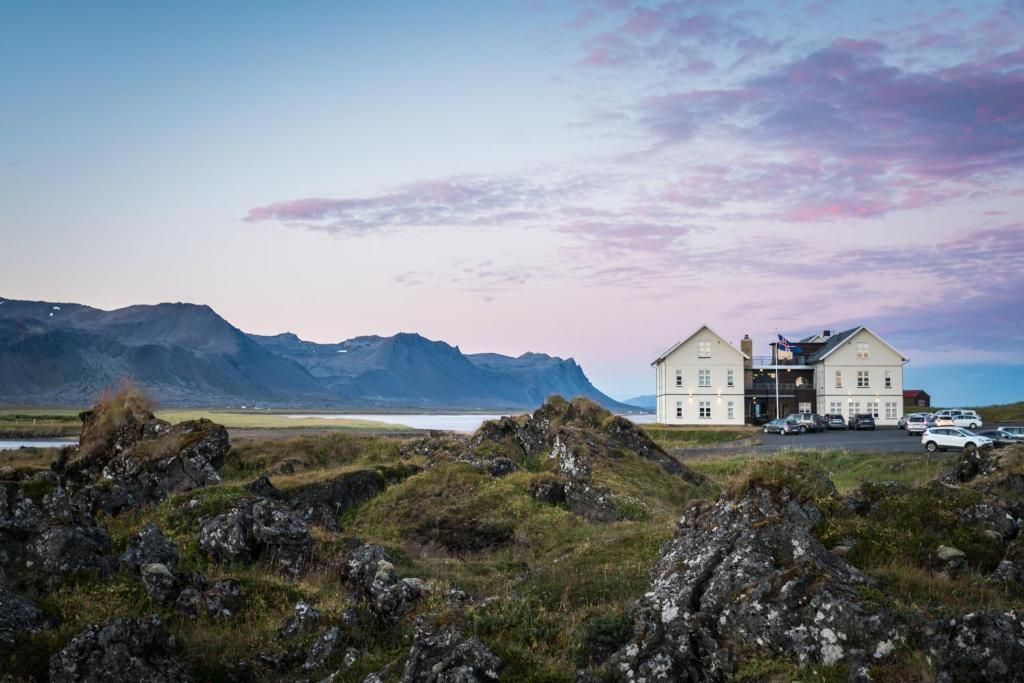
Búðir is a tiny hamlet on the south side of the Snæfellsnes Peninsula in West Iceland, built around a black wooden church, a country hotel and the Búðahraun lava field. It is about 200 km (around 2 hours 30 minutes) from Reykjavík, free to visit, open all year, and most people spend 20–30 minutes at the church and beach.
Búðakirkja, the black church at Búðir, is one of the most photographed churches in Iceland. It stands alone on a stretch of grassy coastline with the Búðahraun lava field on one side and a beach of pale sand scattered with black lava rock on the other. The current building dates from 1848, though a church has stood here since 1703, and it is still a working parish church used for services, weddings and the occasional concert.
Búðir itself is not really a village. Aside from the church there is Hótel Búðir, rebuilt in the original style after a fire in 2001, and not much else, which is part of the appeal: a quiet, wide-open spot with sea on one side and the Búðahraun lava field, a protected nature reserve since 1977, on the other. The lava field supports around 130 plant species and hides a lava cave, Búðahellir, with an entrance on the southwest side of the Búðaklettur crater.
The Búðahraun lava field reaches east to the sea at Faxaflói bay and west to the reef of Hraunlandarif. Its source is Búðaklettur, an 88-metre volcanic crater that erupted several thousand years ago. The crater is open on its south-west side, and that is where you find the entrance to Búðahellir, a lava cave 382 metres long.
Between the lava and the sea there is a field of tall, pale grass and a beach of light-coloured sand dotted with jet-black lava rocks, which is rare on a coast where most beaches are black. Behind it all, in clear weather, stands Snæfellsjökull, the glacier-capped volcano that Jules Verne used as the way in for Journey to the Centre of the Earth.
Local folklore explains why the church stands exactly where it does. According to the story, when a permit for a new church was granted, an old woman was asked where it should be built. She told the men to spin a man round until he was dizzy and have him shoot three arrows into the air; wherever the third arrow landed, that is where the church should stand.
Whether or not the story is true, the black-painted wooden church has stood on this open stretch of coast ever since, and it is unusually plain for an Icelandic church: no bright colours, just black timber against green grass, black sand and grey sea.
The name Búðir means booths or huts, the temporary shelters of traders and fishermen, and it tells you what this place was. The sagas suggest ships were landing and trading here as far back as the settlement of Iceland, and for centuries Búðir was one of the main trading posts and fishing stations on Snæfellsnes. In 1703, more than 100 people lived here.
Trade and fishing later moved to better harbours, and almost all of the old settlement has gone. What is left is the church, the hotel and, out in the lava at Frambúðir, the grassed-over ruins of the old fishing and trading station. Walking among them is the closest you get to the busy place Búðir once was.
The small black church is the reason most people stop at Búðir. Its history is longer than the building looks.
The black colour comes from tar on the timber, the same protection that was used on boat hulls. It stands out against snow in winter and green grass in summer.
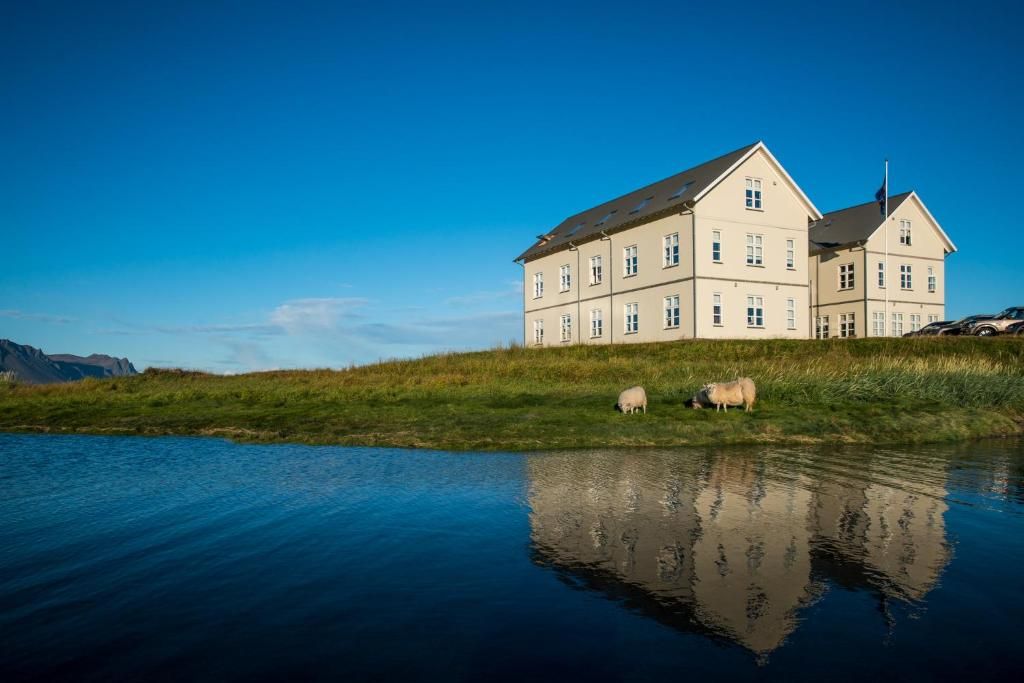
Hótel Búðir is one of only two buildings at Búðir and one of the best-known country hotels in Iceland. The old hotel burned down in 2001 and was rebuilt in the same style. Large windows look out over the lava field, the church and, in clear weather, Snæfellsjökull.
You do not need to be a guest to use the restaurant, lounge and bar. The kitchen is known for local lamb and fish, and it is the only place to eat at Búðir, so book a table in summer if you plan to have dinner here.
Hótel Búðir has a restaurant open to non-guests. There are no shops at Búðir itself; the nearest services are in the villages further round the peninsula.
Hótel Búðir, right beside the church, is the obvious choice for staying in the area. Otherwise the villages of Hellnar, Arnarstapi and Grundarfjörður have guesthouses and hotels within easy driving distance.
A hotel we know and book close by: Hótel Búðir. See all places to stay.
The timber is coated in black tar to protect it from the weather, in the same way as boat hulls. The church was built in 1848, and its plain black walls, unlike the white and brightly painted churches found elsewhere in Iceland, are what made it well known.
It is a working parish church and is not always open to visitors outside services, weddings or events.
About 200 km, around 2 hours 30 minutes by car via Route 54 on the south side of Snæfellsnes.
Yes. The Búðahraun lava field next to the church has a marked walk of one to two hours to Frambúðir and the Búðaklettur crater, and there is a pale sand beach and a hotel restaurant.
The present church was built in 1848 on the initiative of Steinunn Sveinsdóttir. The first church on the site dates from 1703, and the building was restored and reconsecrated in 1987.
Yes, it is a popular church for weddings. It holds about 50 people and has no heating or running water. Arrange it directly with the church.
Not any more. It was a busy trading post and fishing station for centuries, but today there is only the church and the hotel.
Tours and trips that include Búðir, booked directly with a local travel agency in Iceland.
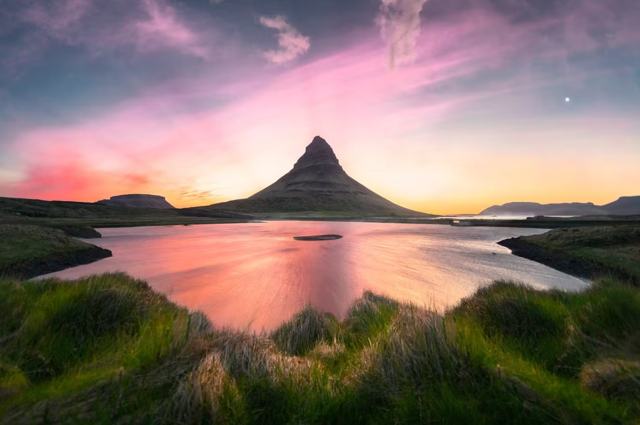 PRIVATESnæfellsnes Private TourFrom 150,000 ISK per group
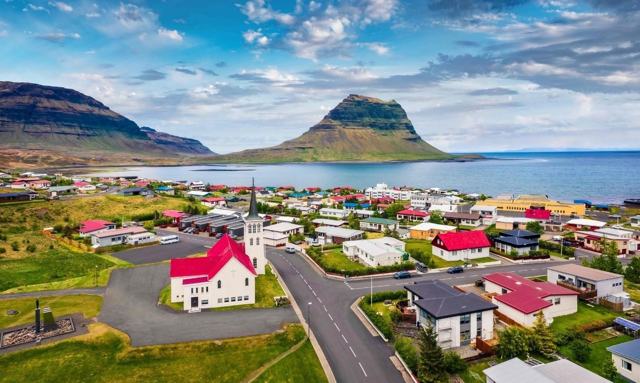 SHORE EXCURSIONSnæfellsnes PeninsulaFrom 150,000 ISK per group
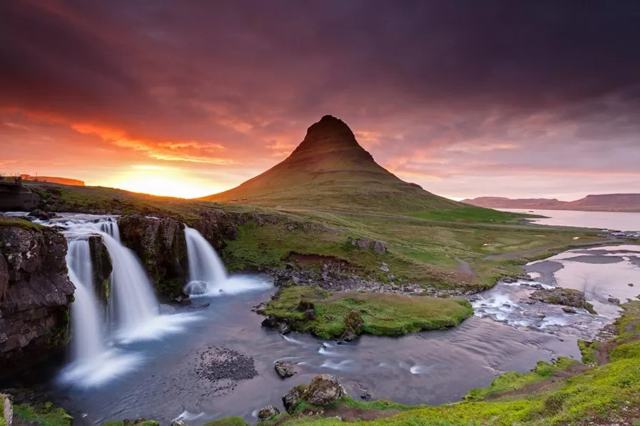 DAY TOURSnæfellsnes Peninsula Small Group TourFrom 17,074 ISK per person
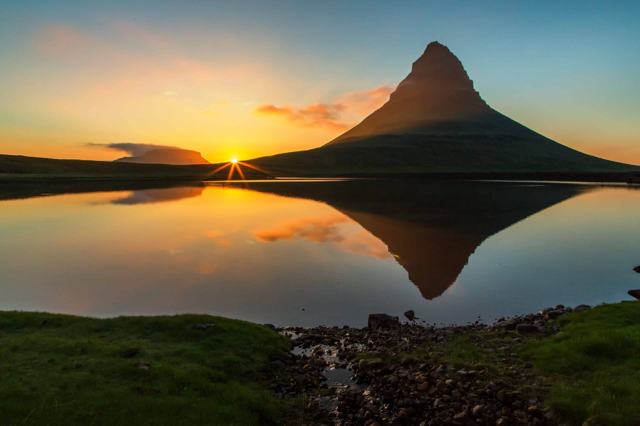 SHORE EXCURSIONSnæfellsnes Peninsula TourFrom 26,240 ISK per person
 SHORE EXCURSIONSnæfellsnes Peninsula Shore Excursion from GrundarfjörðurFrom 25,340 ISK per person
 MULTI-DAY2 Day Snæfellsnes Peninsula TourFrom 69,990 ISK per person