Iceland Travel Guide logo Iceland Travel GuideLOCAL TRAVEL AGENCY IN ICELAND My trip Talk to a local
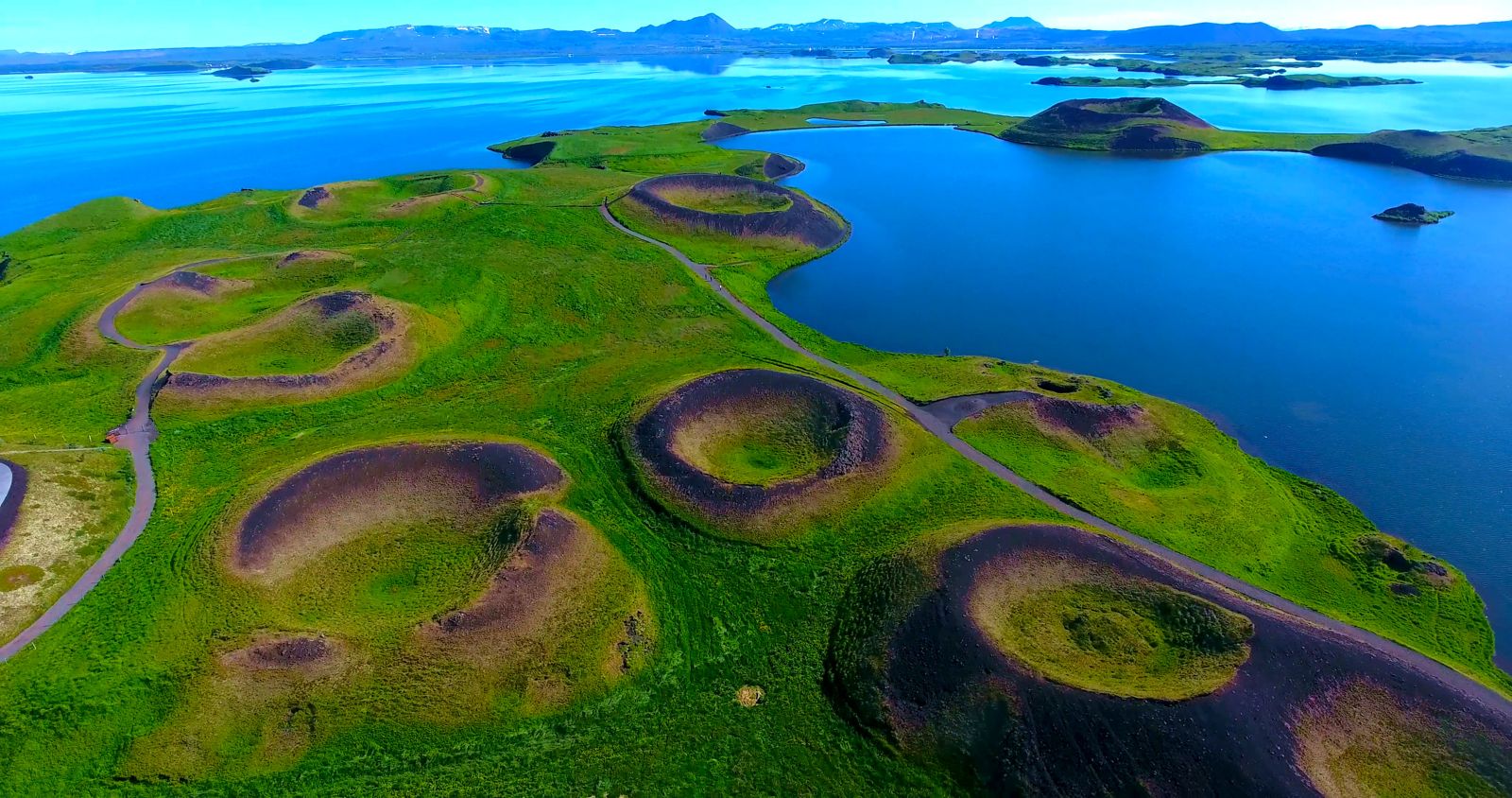
Lake Mývatn

North IcelandLakeFree entryOpen all year

See it on one of our Ring Road tours

MÝVATN IN SHORT

Lake Mývatn is a shallow, volcanically formed lake in North Iceland, about 480 km (6–7 hours) from Reykjavík but only around 100 km (1.5 hours) from Akureyri. The lake itself is free to visit and open all year; the surrounding sights take a full day or more to see properly.

ON THIS PAGE
Quick factsHistoryGetting thereSightsBest time to visitSafety tipsFacilitiesMapNearbyWhere to stayFAQ

About Mývatn

Lake Mývatn lies in North Iceland, about 100 km east of Akureyri, the main town of the north, and right on the Ring Road (Route 1). That makes it an easy stop for anyone travelling the north, and a natural base for the Diamond Circle.

Mývatn formed around 2,300 years ago from a large basalt lava eruption and is shallow, rich in birdlife and surrounded by volcanic features rather than being a single sight in itself. The name means "midge lake", after the swarms of small, harmless midges that appear around the water in calm summer weather; they are a nuisance more than a danger, and a headnet solves the problem.

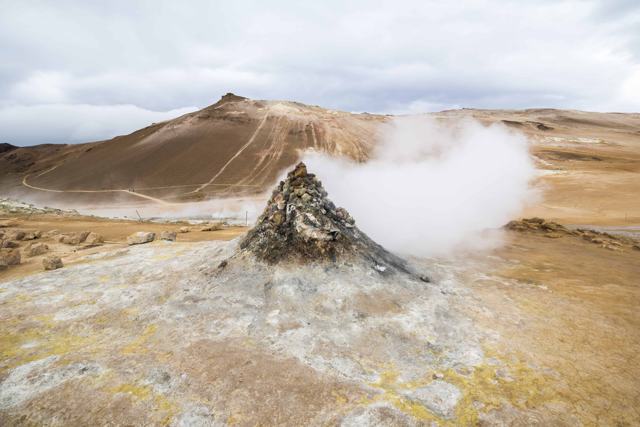
The area around the lake concentrates an unusual amount of geology in a small space: pseudocraters formed when lava flowed over wet ground and steam explosions punched through the surface, the dramatic lava field and rock formations at Dimmuborgir, the tuff crater Hverfjall, and boiling mud pools and fumaroles at Hverir and Námafjall on the road to Krafla.

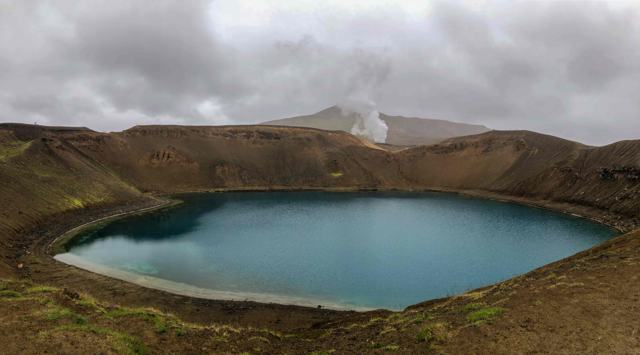
Krafla, the volcanic system northeast of the lake, has erupted repeatedly in recorded history, most recently in the 1975–1984 Krafla Fires, and its crater lake Víti still shows the bright blue-green colour typical of Icelandic volcanic craters.

There is a lot to do and see around Lake Mývatn in a small area: soak in the nature baths, walk through the lava at Dimmuborgir, climb the rim of Hverfjall, watch the birds on the south shore and drive up to Krafla. The sights below are the ones we send people to first.

Quick facts

FormedAbout 2,300 years ago by a basalt lava eruption
NameMývatn means "midge lake"
RegionNorth Iceland
From ReykjavíkAbout 480 km, around 6–7 hours by car
From AkureyriAbout 100 km, around 1.5 hours by car
EntryFree to visit the lake and most sights
Mývatn Nature BathsNow called Earth Lagoon Mývatn; water around 36–40°C, entry fee applies
Opening hoursOpen all year; some side roads may be affected by snow in winter
Time neededA full day to see the main sights, more with hikes

A volcanic landscape shaped by fire

Much of what visitors see around Mývatn was formed within human memory of Icelandic geology: the Mývatnseldar (Mývatn Fires) of 1724–1729 opened the Krafla fissure and created the crater Víti, while the more recent Krafla Fires of 1975–1984 produced fresh lava flows that are still bare and black in places. Fewer than fifty years separate some of this lava from the present day.

The lake's rich birdlife, including more species of breeding duck than almost anywhere else in Europe, is closely tied to the volcanic chemistry of the water, which supports large populations of midge larvae that in turn feed the birds. It is one of the reasons Mývatn is a protected conservation area as well as a geological one.

How to get to Mývatn

On a guided tourMývatn is usually visited as part of multi-day North Iceland or Diamond Circle tours, or as a long day trip from Akureyri, since it is too far from Reykjavík for a comfortable single day.
By carFrom Reykjavík, follow Route 1 north and east around the country, or fly to Akureyri and continue on Route 1 east. Roads around the lake are paved and generally kept open, though winter driving needs care.
By public transportScheduled buses connect Akureyri and the Mývatn area in summer, but a car gives far more flexibility to reach the scattered sights around the lake.
ParkingParking is generally free at the main sights around the lake, with small car parks at Dimmuborgir, Skútustaðagígar, Hverir and the Nature Baths.

The sights around Mývatn are spread over a wide area, so plan on driving between several stops rather than walking everywhere from one car park.

Things to do and see around Lake Mývatn

A loop around Mývatn takes in several very different volcanic landscapes, a geothermal lagoon and some of the best birdwatching in Iceland.

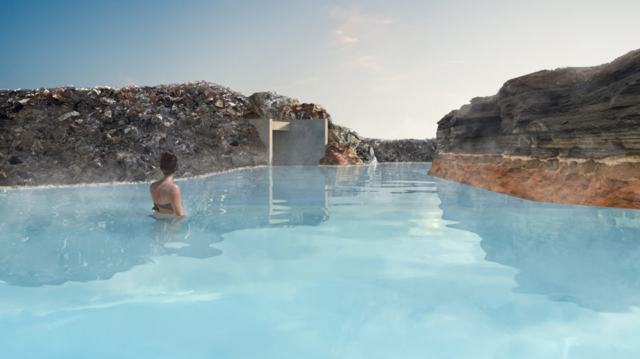
1. Mývatn Nature BathsOften called the Blue Lagoon of the North, this is a man-made geothermal lagoon east of Reykjahlíð, with milky blue, mineral-rich water and views over the lava fields. The water is kept at around 36–40°C, warm enough for a long soak even when the air is cold. The baths have been rebuilt and now go by the name Earth Lagoon Mývatn. Go in the evening: you bathe under the midnight sun in summer and have a chance of Northern Lights in winter.
2. Dimmuborgir lava fieldDimmuborgir, the "dark fortress", is a lava field of dark, twisted rock towers, arches and pillars, with several marked walking loops of different lengths. In Icelandic folklore it is the home of the Yule Lads, the thirteen mischievous Christmas figures.
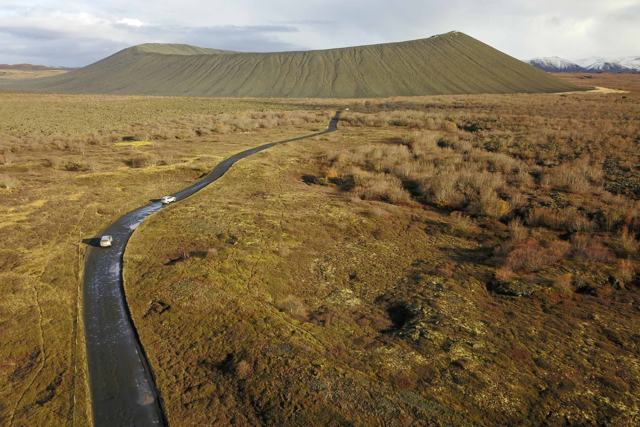
3. Hverfjall craterA large tephra crater on the east side of the lake, about 1 km across and roughly 2,500 years old. A path leads up to the rim in about 20 minutes, with wide views over the lake and the lava around it. The trail is loose and rocky in parts, so wear sturdy hiking shoes.
4. Skútustaðagígar pseudocratersThese craters on the south shore are not true volcanic craters. They formed when hot lava flowed over wetland and steam explosions burst through it. The area is protected, with an easy loop path between the craters, and it is a good place for birdwatching in summer when many migratory birds nest here.
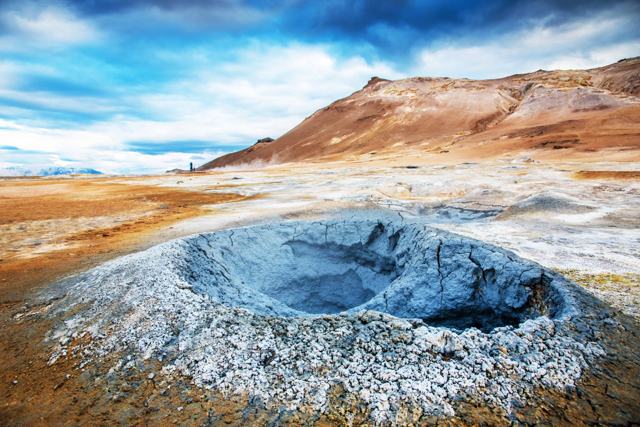
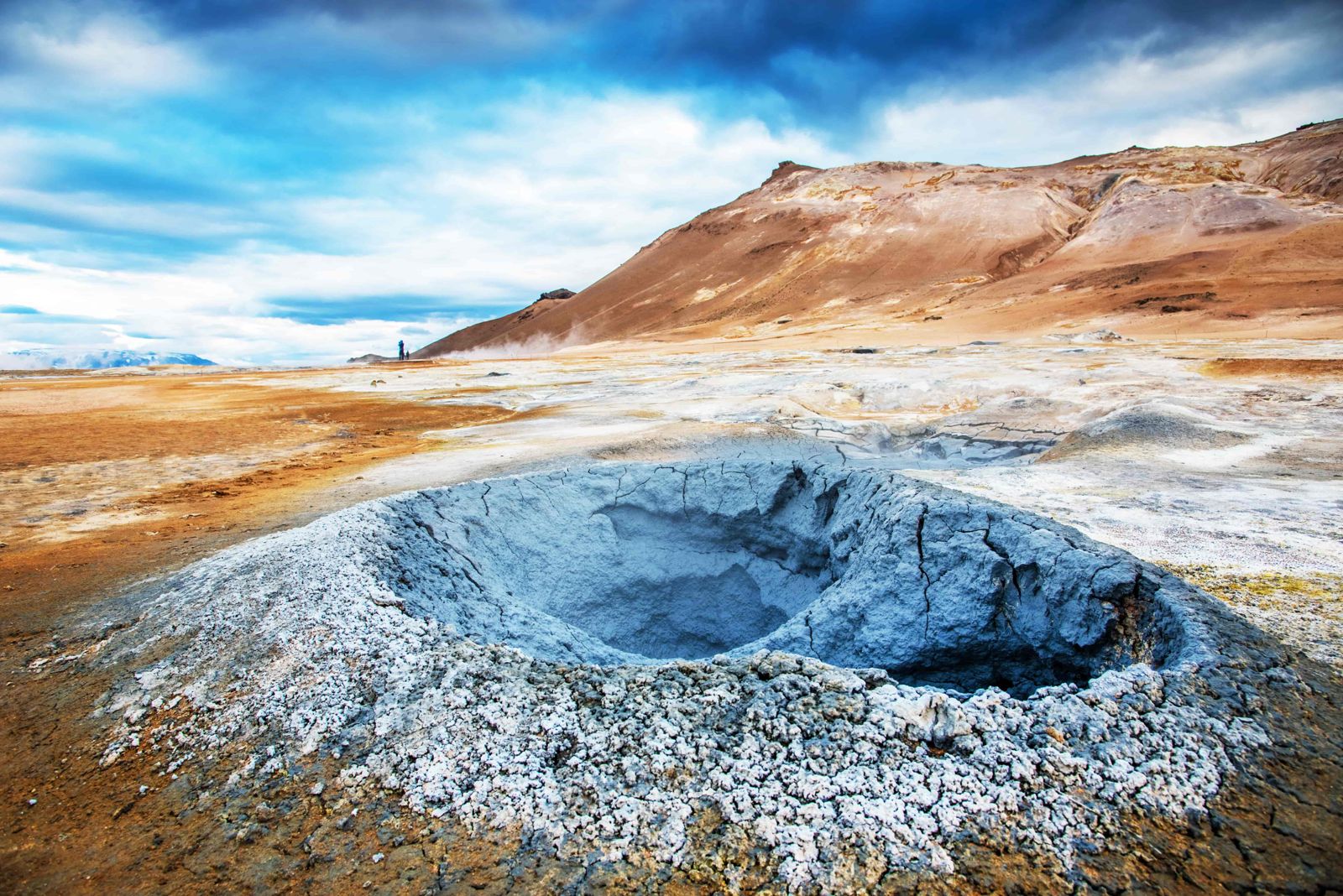
5. Hverir and NámafjallA geothermal area at the foot of Námafjall, just east of the lake, with boiling mud pots, steam vents, sulphur deposits and bare, mineral-coloured hills. Expect a strong smell of sulphur. No bathing here; the mud and ground are dangerously hot, so stick to the marked paths.
6. Krafla volcano and Víti craterNortheast of the lake, the Krafla area is an active volcanic zone. Víti is a crater lake with blue-green water, formed in an eruption in 1724. Trails nearby cross lava fields, hot springs and steaming ground at Leirhnjúkur. The weather at Krafla can change suddenly, so bring warm clothing and check conditions before heading up.
7. Birdwatching at the lakeMývatn is known for its birdlife. More than 100 species have been recorded around the lake and its wetlands, including many kinds of duck, swans and waders. Late spring and early summer, when the birds are nesting, is the best time. Watch from the observation points and paths around the lake and keep your distance from nests.
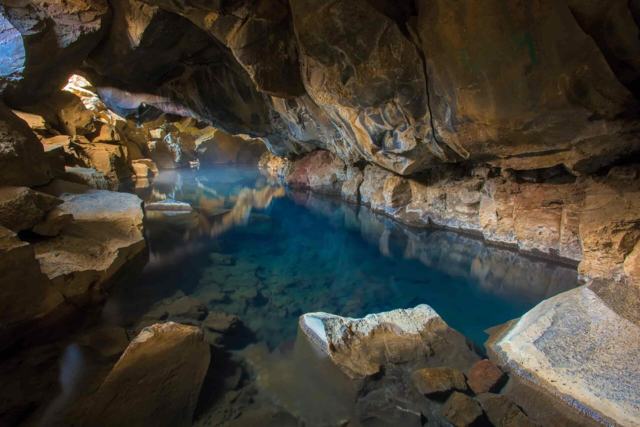
GrjótagjáA small lava cave with a geothermal pool, no longer open for bathing because the water is too hot, but worth a quick look inside.

Wear sturdy shoes at Hverir and Dimmuborgir, and keep to marked paths; the ground in geothermal areas can be unstable and scalding just below the surface.

Best time to visit Mývatn

Summer (June–August)Long days, mild temperatures and the most birdlife. The best time for hiking, birdwatching and the geothermal sites, but there are midges around the lake on calm days, so pack a head net if that bothers you.
Autumn (September–October)Autumn colours in the birch and heath, cooler weather and the start of the Northern Lights season. The midges are gone, there are fewer tour buses and the main sights are still easy to reach.
Winter (November–March)Quiet, snow-covered landscapes and dark skies for Northern Lights. Some sights and side tracks can be hard to reach or closed, but the nature baths are especially popular in the cold.
Spring (April–May)The migratory birds return, the land thaws and the days get longer quickly. Good for birdwatching, though snow can linger on trails and side roads.

Safety and practical tips

  • Bring a head net for calm summer days if midges bother you; they are harmless but can be dense near the water.
  • Do not step off marked paths in the geothermal areas at Hverir; the crust can be thin over scalding ground.
  • The Mývatn Nature Baths are a quieter, cheaper alternative to the Blue Lagoon and a good way to end a day of hiking.
  • Fuel up before heading out around the lake, since fuel stations are limited to Reykjahlíð village.
  • Allow a full day if you want to properly cover Dimmuborgir, Hverfjall, Skútustaðagígar and Hverir.
  • The weather in North Iceland is unpredictable. Dress in layers and bring waterproof clothing, even in summer.
  • Go to the nature baths in the evening, after the day's walking, when the light is best.

Facilities and accessibility

Reykjahlíð, on the lake's northeast shore, has fuel, a small grocery shop, restaurants, cafés, a visitor centre and hotels. Toilets and small cafés are available at the main sights, including the Nature Baths.

On the map

Open in Google Maps →

Nearby places worth a stop

DimmuborgirLava rock formations on the lake's east side
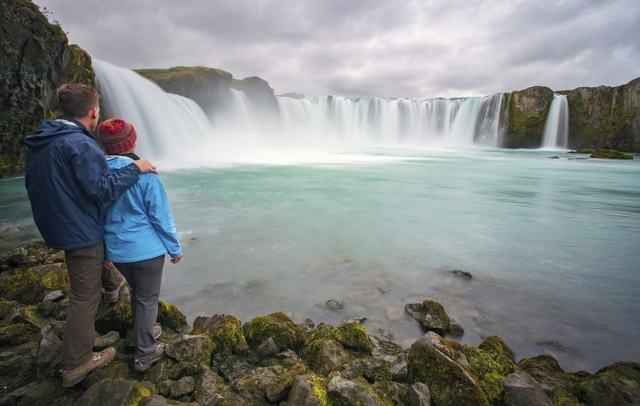
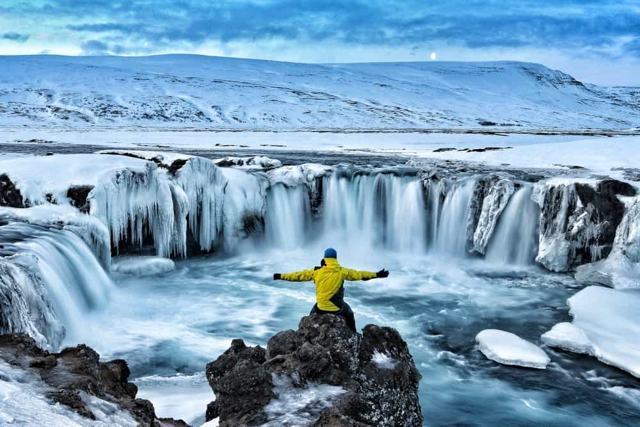
HverfjallHverfjallTephra crater with a path up to the rimNámafjallNámafjallGeothermal area east of the lakeGrjótagjáGrjótagjáSmall lava cave with a geothermal poolKrafla and Víti craterKrafla and Víti craterVolcanic system north of the lakeGoðafossGoðafossWaterfall on the way from AkureyriSkútustaðagígarSkútustaðagígarPseudocraters on the south shoreLeirhnjúkurLeirhnjúkurSteaming lava field in the Krafla areaHúsavíkHúsavíkWhale watching town on the north coast

Where to stay near Mývatn

Reykjahlíð, right on the lake, has the widest choice of hotels and guesthouses in the area, with Akureyri a good alternative if you want a larger town with more services.

Mývatn FAQ

How far is Mývatn from Akureyri?

About 100 km, around 1.5 hours by car, which makes it an easy day trip from Akureyri.

Is there an entrance fee for Mývatn?

No, the lake and surrounding natural sights are free; the Mývatn Nature Baths charge a separate entry fee.

Can you swim in Lake Mývatn itself?

It is not a swimming destination; most visitors bathe at the nearby Mývatn Nature Baths instead.

Are the midges dangerous?

No, they do not bite, but they can be annoying in swarms on calm summer days.

How much time do I need at Mývatn?

A full day is realistic if you want to see Dimmuborgir, Hverfjall, Skútustaðagígar and Hverir without rushing.

What does the name Mývatn mean?

It means "midge lake", after the swarms of small midges that appear around the water in summer.

How warm are the Mývatn Nature Baths?

The water is around 36–40°C. The baths are now called Earth Lagoon Mývatn and charge an entry fee.

When is the best time to visit Lake Mývatn?

It is a year-round destination. Summer is best for hiking and birds, autumn and winter for Northern Lights, and spring for returning migratory birds.

See Mývatn with a local

Tours and trips that include Mývatn, booked directly with a local travel agency in Iceland.
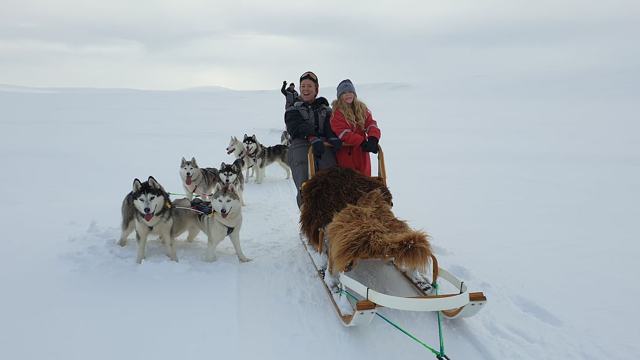
Snow Dog Sledding in MyvatnDAY TOURSnow Dog Sledding in MyvatnFrom 40,000 ISK per personDiamond Circle & Geo SeaDAY TOURDiamond Circle & Geo SeaFrom 38,900 ISK per personDiamond Circle Tour with Lake Myvatn & Asbyrgi Canyon from AkureyriDAY TOURDiamond Circle Tour with Lake Myvatn & Asbyrgi Canyon from AkureyriFrom 39,900 ISK per personBiking & Hot Spring Tour in MyvatnDAY TOURBiking & Hot Spring Tour in MyvatnFrom 18,900 ISK per personLake Myvatn Day Tour & Goðafoss WaterfallDAY TOURLake Myvatn Day Tour & Goðafoss WaterfallFrom 23,000 ISK per personLake Myvatn & GoðafossSHORE EXCURSIONLake Myvatn & GoðafossFrom 25,300 ISK per person
More places in North Iceland