Iceland Travel GuideLOCAL TRAVEL AGENCY IN ICELAND
My trip
Talk to a local
Iceland Travel GuideLOCAL TRAVEL AGENCY IN ICELAND
My trip
Talk to a local
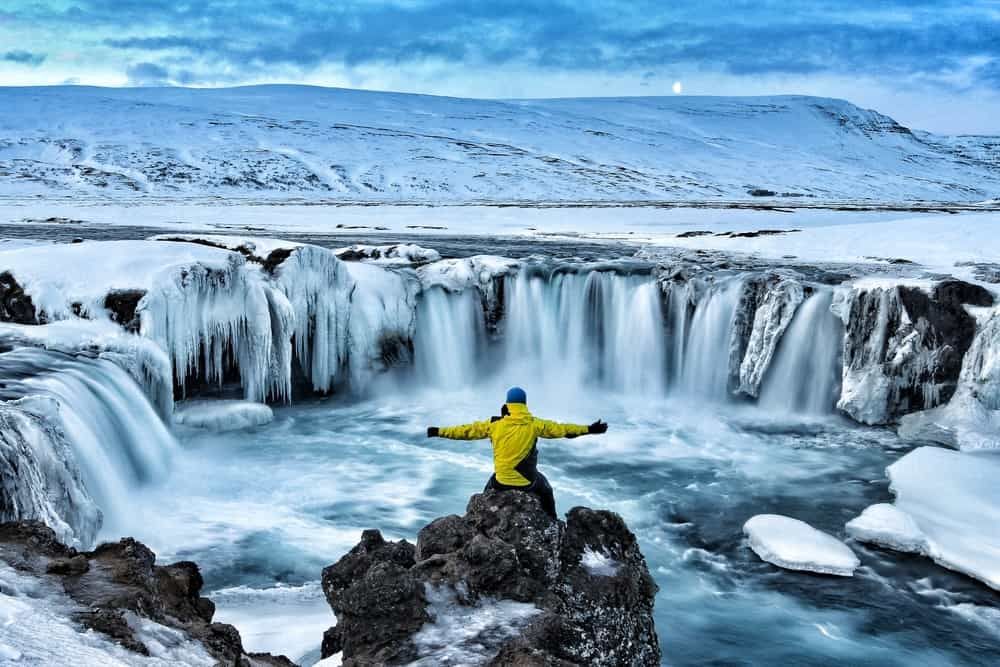
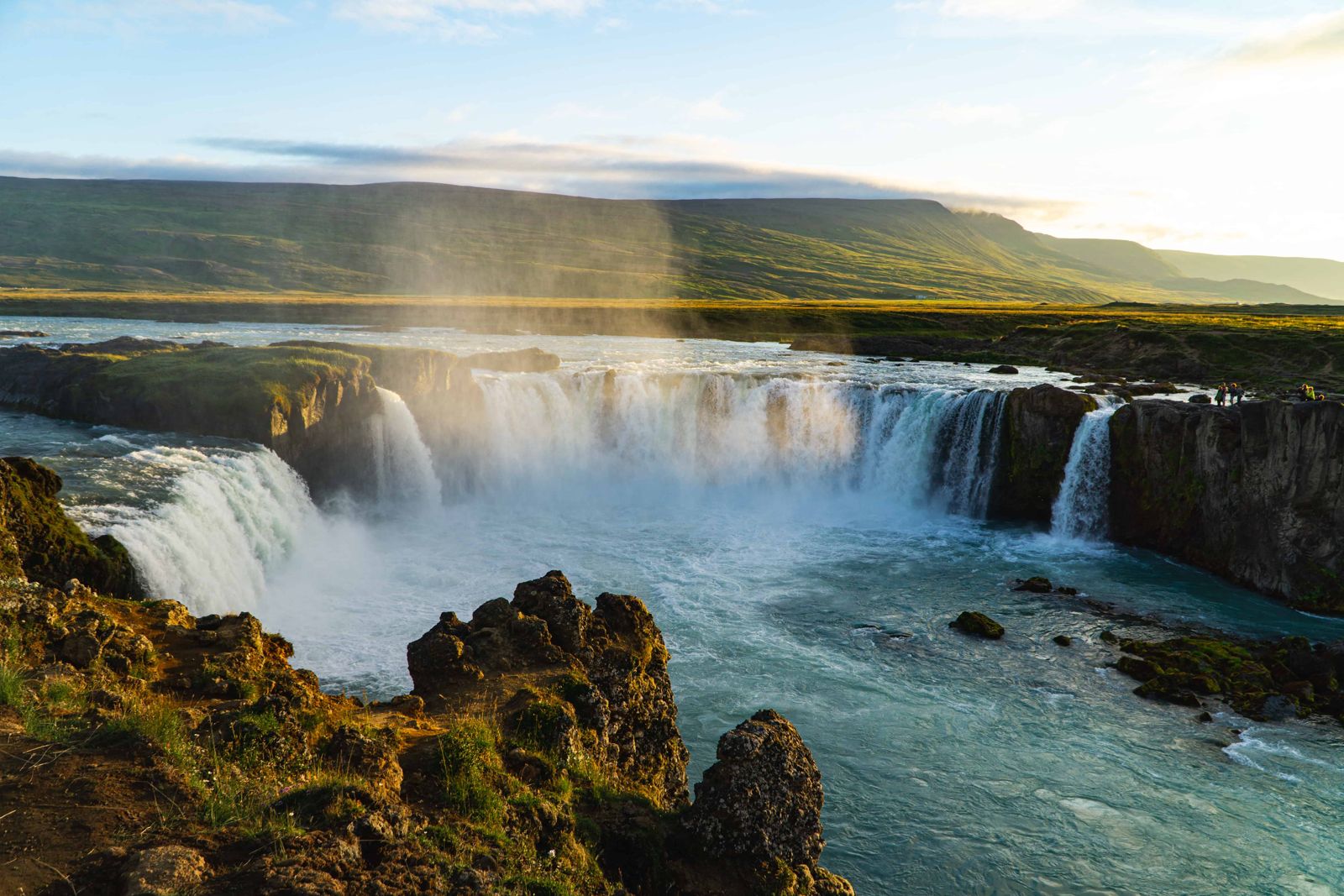
Goðafoss is a horseshoe-shaped waterfall on the Skjálfandafljót river in North Iceland, about 12 metres high and 30 metres wide, right beside the Ring Road near the turn-off to the Sprengisandur highland route. It is about 35 km and 30–45 minutes from Akureyri, depending on the route, free to enter, open all year, and most visitors spend 20–30 minutes at the viewpoints on either bank.
Goðafoss means "waterfall of the gods", and the name is tied to a well-known story about Iceland's conversion to Christianity around the year 1000. Whatever the true history behind the name, the falls themselves are one of the more accessible big waterfalls in Iceland, visible from a car park just off the Ring Road with paths on both the east and west banks giving different views of the horseshoe curve.
The Skjálfandafljót is one of Iceland's longer rivers, and Goðafoss is a relatively gentle stop compared with some of the country's more dramatic canyon waterfalls, which is part of its appeal: you can get close to the water without a long hike, on paths suitable for most visitors.
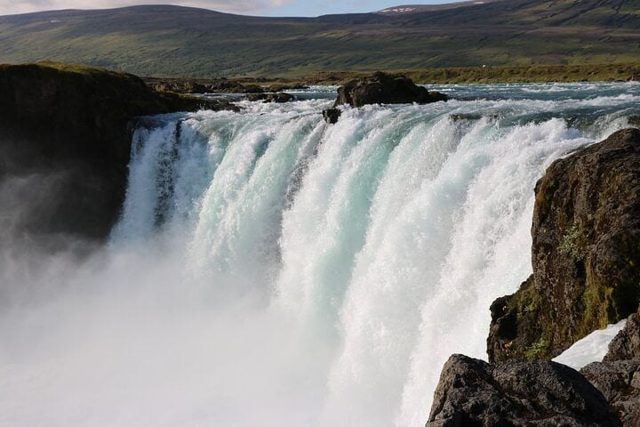
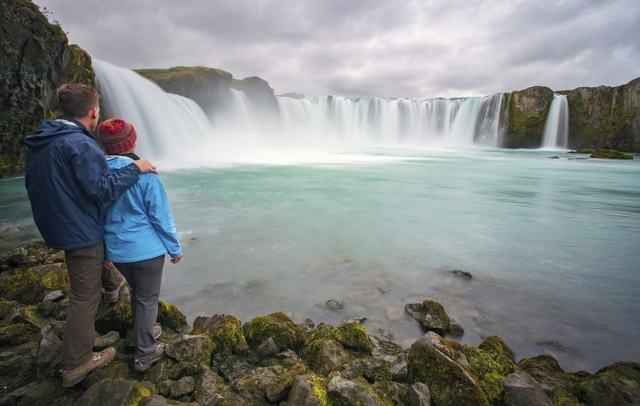
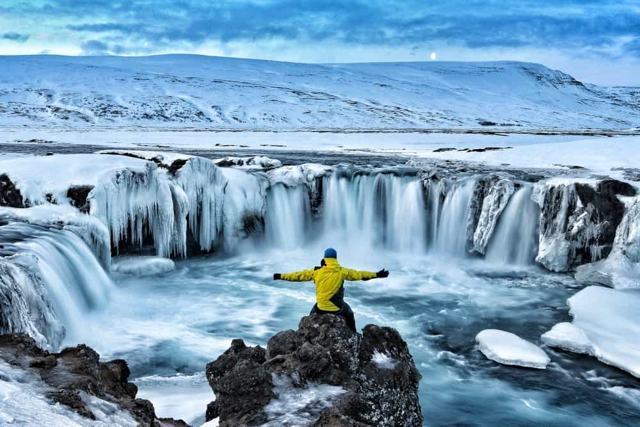
The river divides around a block of rock in the middle of the ledge, so the water comes down in two broad curtains with a narrower chute between them. The Skjálfandafljót is a glacial river, so the colour shifts with the season: milky grey-green when meltwater is high in summer, clearer and bluer in cold, dry spells, and edged with ice in winter. Low birch, grass and old lava surround the falls, and the sound carries well before you see the water.
According to a story that has circulated since at least the 19th century, the lawspeaker Þorgeir Ljósvetningagoði threw statues of the old Norse gods into the falls after Iceland's parliament, the Alþingi, decided around the year 1000 to adopt Christianity as the country's official religion, giving the waterfall its name. Historians note that the earliest written versions of this story appear centuries later, so it may be a later addition to the saga tradition rather than a contemporary account, but it remains one of the best-known waterfall legends in Iceland and is depicted in a stained-glass window in Akureyri's church.
Þorgeir was himself a pagan chieftain, and his farm at Ljósavatn lies a short drive west of the falls. The older written account of the conversion says he lay under a fur cloak for a day and a night before giving his ruling at the Alþingi, a compromise meant to keep the country under one law. The story goes that he passed the waterfall on his way home and gave up his own idols there. Standing at the edge, it is easy to see why the tale stuck to this place.
In winter, check road.is before you set off. Route 1 between Akureyri and Mývatn is kept open most of the time, but wind and drifting snow can close it at short notice.
You can walk up to the falls on either side of the river, and the two banks give quite different views. If you have 45 minutes, do both.
Stay behind the barriers and off the wet rock at the edge. There are no railings on parts of the east bank.
Goðafoss is one of the main stops on the Diamond Circle, a signed touring route of about 250 km through North Iceland. Coming from Akureyri, it is usually the first stop of the day.
The whole circle is a long day by car. If you only have half a day from Akureyri, Goðafoss on its own, or Goðafoss with Mývatn, is a realistic plan.
There are toilets at the main car park. A café and shop are nearby at the Fosshóll site. Fuel is available at Fosshóll as well.
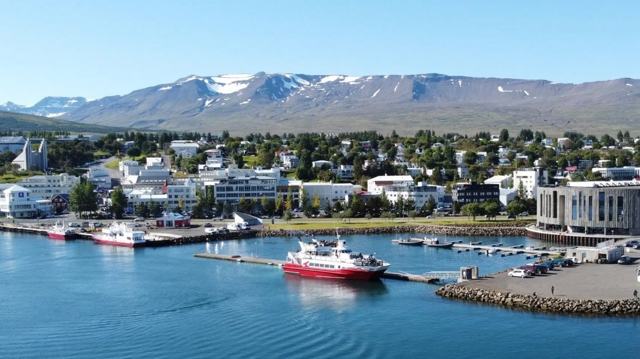
Akureyri is the most practical base, with Goðafoss an easy 30–45 minute drive away. Guesthouses also operate closer by, around Fosshóll and near Mývatn.
About 35 km. It takes around 30 minutes through the Vaðlaheiði toll tunnel or about 45 minutes by the old road over Víkurskarð, so it is an easy half-day trip or a stop on the way to Mývatn.
Yes, there is no entrance fee, and free parking is available on both banks.
The name means "waterfall of the gods" and is linked to a story about statues of Norse gods being thrown into the falls after Iceland adopted Christianity around the year 1000.
About 20–30 minutes is enough for one bank. Allow 45–60 minutes to see both sides and walk across the footbridge.
The west bank has the bigger car park and the classic wide view from above. The east bank gets you closer and lower. A footbridge downstream links the two, so you can see both on one stop.
Yes. The Diamond Circle is a route of about 250 km in North Iceland that links Goðafoss, Lake Mývatn, Dettifoss, Ásbyrgi and Húsavík.
Yes, it is open all year and sits right by the Ring Road. Expect ice on the paths, short daylight and the chance of road closures in bad weather.
Tours and trips that include Goðafoss, booked directly with a local travel agency in Iceland.
 DAY TOURLake Myvatn Day Tour & Goðafoss WaterfallFrom 23,000 ISK per person
 DAY TOURGoðafoss Waterfall & Whale Watching from AkureyriFrom 26,990 ISK per person
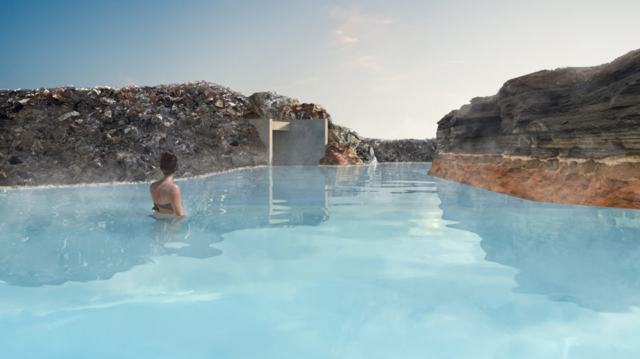
 DAY TOURGoðafoss & Forest Lagoon from AkureyriFrom 26,400 ISK per person
 SHORE EXCURSIONLake Myvatn & GoðafossFrom 25,300 ISK per person
 SHORE EXCURSIONLake Myvatn & GoðafossFrom 21,990 ISK per person
 SHORE EXCURSIONGoðafoss waterfall & Myvatn Nature BathsFrom 28,990 ISK per person