Iceland Travel Guide logo Iceland Travel GuideLOCAL TRAVEL AGENCY IN ICELAND My trip Talk to a local
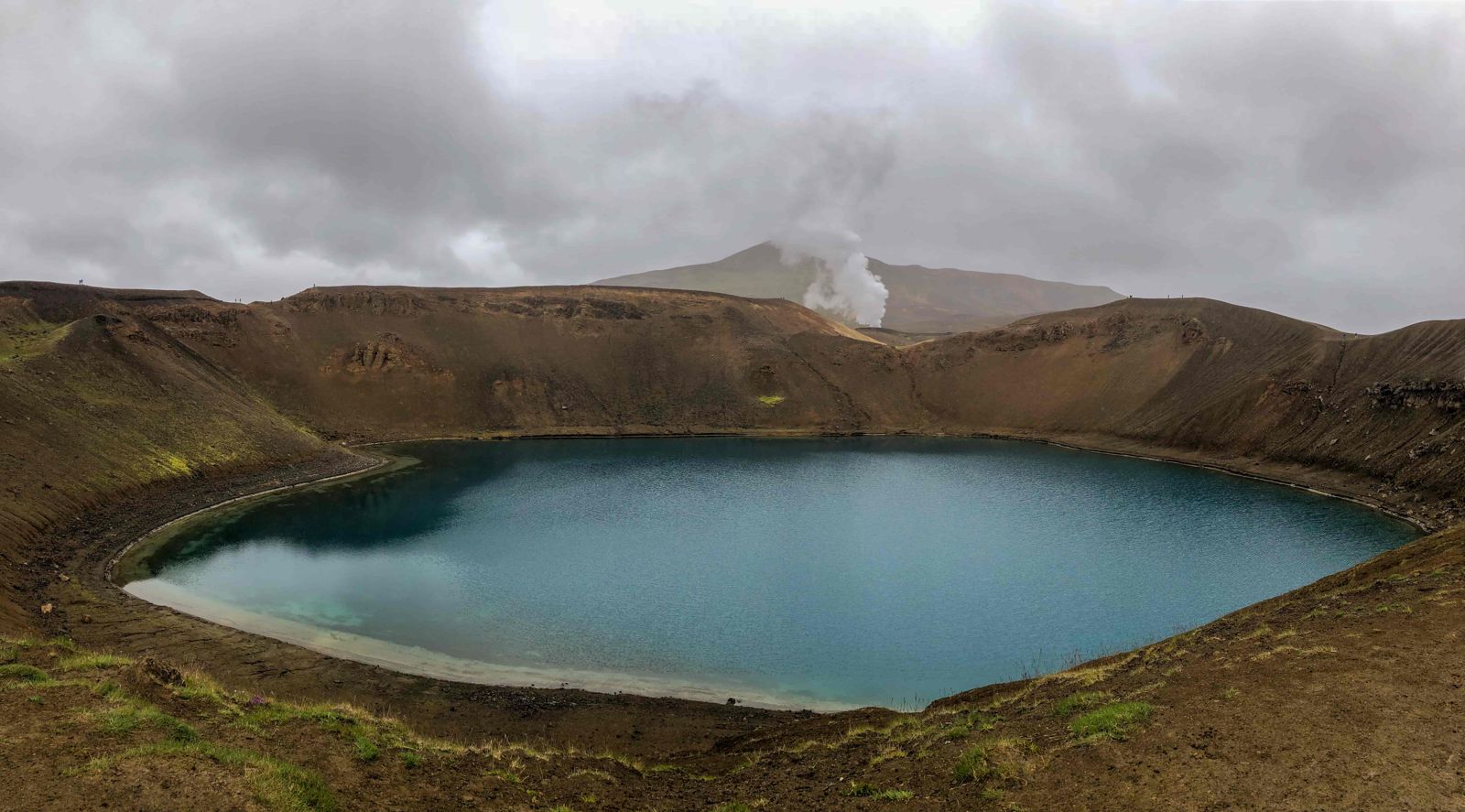
Krafla crater and lava fields

North IcelandVolcanoFree entryOpen all year
KRAFLA IN SHORT

Krafla is an active volcanic area in North Iceland, near Lake Mývatn, best known for the explosion crater Víti and the steaming Leirhnjúkur lava fields. It is free to visit, about 485 km and roughly 6 hours' drive from Reykjavík, and most people spend 1–2 hours there.

ON THIS PAGE
Quick factsHistoryGetting thereExploreBest time to visitSafety tipsFacilitiesMapNearbyWhere to stayFAQ

About Krafla

Krafla is a large volcanic caldera north-east of Lake Mývatn, ringed by mountains and geothermal ground. The caldera is about 10 km across and sits on a fissure zone that stretches roughly 90 km, and the highest point of the volcano reaches 818 metres. It has erupted 29 times since Iceland was settled, which makes it one of the country's most active volcanic systems.

The most famous of these eruptions, the Mývatn Fires of 1724–1729, opened the crater now known as Víti. The most recent, the Krafla Fires of 1975–1984, left the black lava fields you walk beside today. The ground is still warm in places, with fissures, gullies, steaming vents and bubbling mud.

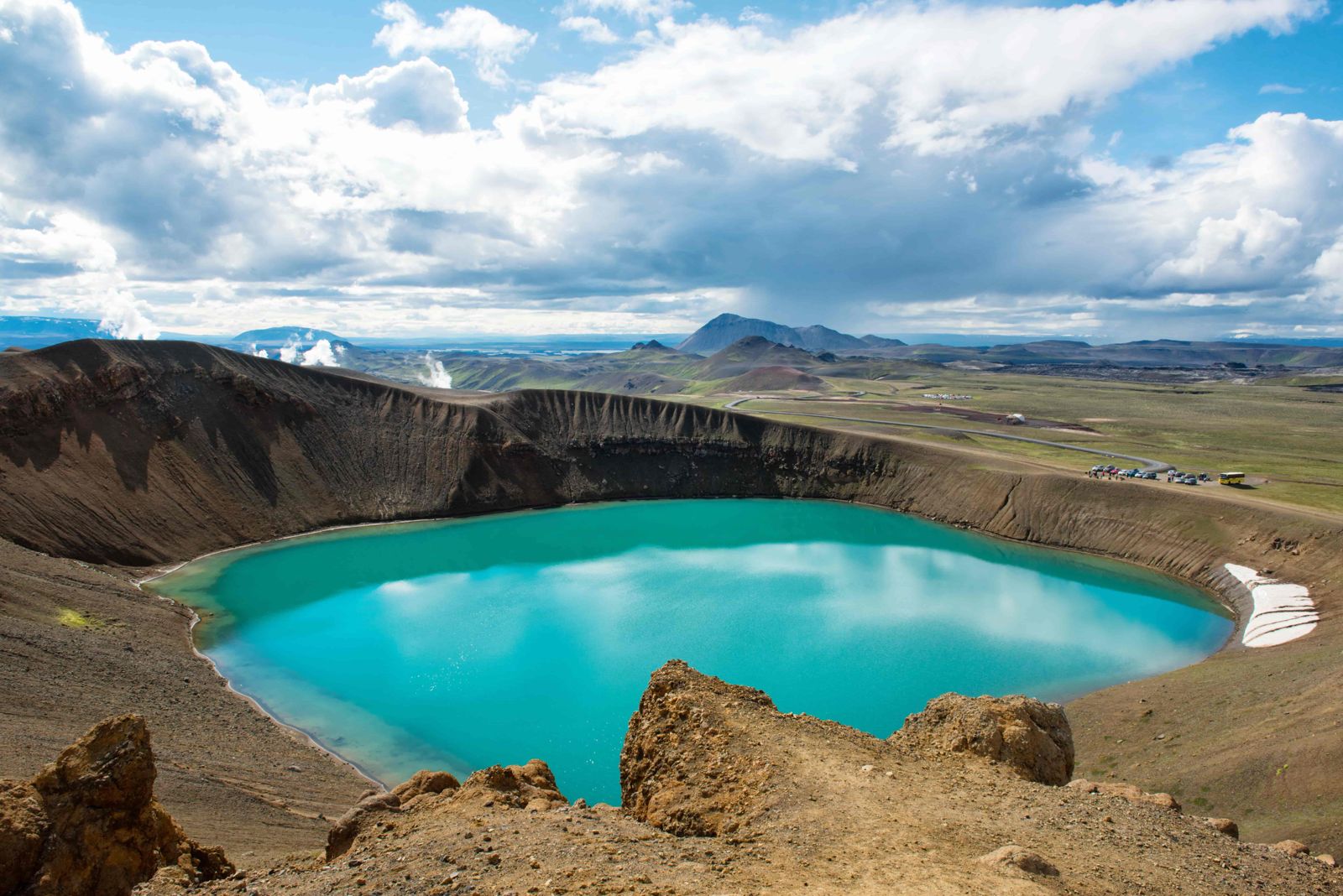
Víti is around 300 metres across and holds a pale green-blue lake that looks like a huge eye staring up from the ground. A trail circles the rim. Close by, the Leirhnjúkur lava field has steaming vents, mud pots and black lava you can walk close to on marked paths. The western side of Krafla is the most active, dotted with fumaroles and sulphur vents.

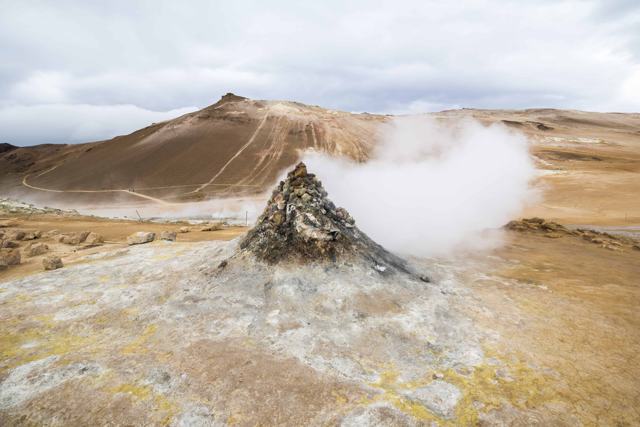
The same heat shows up all around the area. The steam vents and boiling mud pools of Hverir, by the Ring Road at Námafjall, belong to the same volcanic system, and the Krafla Power Station turns the underground heat into electricity. Iceland gets nearly all its electricity and heating from renewable sources, and Krafla is a good place to see how the geothermal part of that works.

Quick facts

RegionNorth Iceland, near Mývatn
From ReykjavíkAbout 485 km, around 6 hours by car without stops
From AkureyriAbout 98 km, around 90 minutes by car
From Lake MývatnAbout 20–25 minutes by car from Reykjahlíð
RoadRoute 863 (Kröfluvegur), paved, about 9 km from the Ring Road to the Víti car park
EntryFree
Víti craterAbout 300 m in diameter, rim walk about 30 minutes
Leirhnjúkur trailAbout 4 km, 1–1.5 hours
CalderaAbout 10 km in diameter, with a roughly 90 km fissure zone
Highest point818 m
Eruptions29 since settlement; latest 1975–1984
Time needed1–2 hours, more if you walk both trails

Fire from the ground

The Mývatn Fires of 1724–1729 were a series of eruptions and lava flows from the Krafla system. Víti crater was blasted open in the first explosion, on 17 May 1724. Fissures opened across the area, and the lava fountains are said to have been seen from the south of the country.

Víti means "hell". The name comes from an old belief that the entrance to hell lay beneath volcanoes, and a steaming crater that had just exploded out of the ground must have looked the part.

Two and a half centuries later, the Krafla Fires of 1975–1984 brought nine more eruptions and repeated rifting in the same area, some of it close to the geothermal power station that was being built at the time.

That power station, Krafla Power Station, has produced electricity since 1977. It taps the same underground heat that drives the region's mud pots and steam vents, and is a reminder that this landscape is still very much active.

How to get to Krafla

By car from Mývatn and AkureyriFrom Reykjahlíð at Lake Mývatn, drive east on the Ring Road (Route 1) over the Námaskarð pass and past Hverir. Shortly after, a signpost marks the turn for Krafla. Turn left onto Route 863 (Kröfluvegur). The paved road runs about 9 km north, past the power station and the Leirhnjúkur car park, and ends at the Víti car park. From Akureyri the whole drive is about 98 km and takes around 90 minutes.
By car from ReykjavíkFollow the Ring Road north and east through Akureyri to Mývatn, then continue as above. It is about 485 km and around 6 hours of driving without stops, so allow 7 hours or more with breaks.
By air and carThe fastest way from the capital is to fly from Reykjavík to Akureyri, which takes about 45 minutes, then rent a car and drive roughly 1.5 hours to Krafla.
By public transportBus route 57 runs from Reykjavík to Akureyri and takes most of a day. There is no regular bus on to Krafla itself, so you need a rental car or a tour for the final stretch.

This is a long drive from Reykjavík. Most visitors combine Krafla with an overnight stay near Mývatn or Akureyri, as part of a trip around North Iceland.

Places to explore around Krafla

The Krafla area has several stops along the same short road. You can see them all in half a day.

Víti craterAn explosion crater about 300 metres wide, filled with green-blue water. The rim is a few minutes' walk from the car park. A trail of about 30 minutes circles the rim and passes a small hot spring area with steaming ground and mud pots on the far side.
Leirhnjúkur lava fieldsA short hike from its own car park leads into a still-warm lava field, the best place to feel the geothermal power of North Iceland. The 523 m Leirhnjúkur peak is surrounded by mud pots and fumaroles, and the black, rough lava from the Krafla Fires spreads out around it. The main loop is about 4 km and takes 1 to 1.5 hours.
Krafla Power StationThe geothermal power station beside the road has a visitor centre with an exhibition on how electricity is made from the heat below. It is open in summer only and is closed in winter.
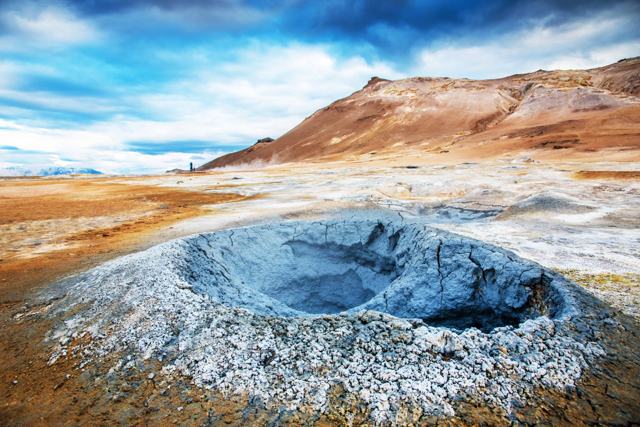
Hverir and NámafjallAt the foot of Námafjall, right by the Ring Road before the Krafla turn-off, Hverir is a bare field of steam vents and boiling mud pools. It is an easy stop on the way in or out.

Stay on marked paths. Ground temperatures near the vents can be dangerously high just below the surface.

Best time to visit Krafla

SummerThe easiest and most comfortable time to visit, with clear trails, long daylight and the power station visitor centre open.
WinterYou can visit in any month, and Route 863 is usually kept open, but the road and the trails become icy and slippery and snow can limit access. Daylight is short. Check road conditions on umferdin.is before you drive up.

Safety and practical tips

  • Stay on marked paths at all times. The ground near vents can be unstable and very hot.
  • Wear sturdy shoes. The terrain is rough lava rock, and the trails are slippery in winter.
  • Bring a rain jacket. Weather at Krafla can turn quickly.
  • Walk the Víti rim first, then drive back down to the Leirhnjúkur car park for the lava field.
  • Do not swim in Víti. The crater lake is for looking at from the rim.
  • Combine with other Mývatn-area sights like Hverir, Grjótagjá and Dimmuborgir on the same day.
  • Stay a night or two near Mývatn so you can also see Goðafoss and Dettifoss without rushing.

Facilities and accessibility

Limited on-site facilities. There are car parks at Leirhnjúkur and at Víti. The Krafla Power Station has a visitor centre in summer. Fuel, food and fuller services are in Reykjahlíð at Lake Mývatn.

On the map

Open in Google Maps →

Nearby places worth a stop

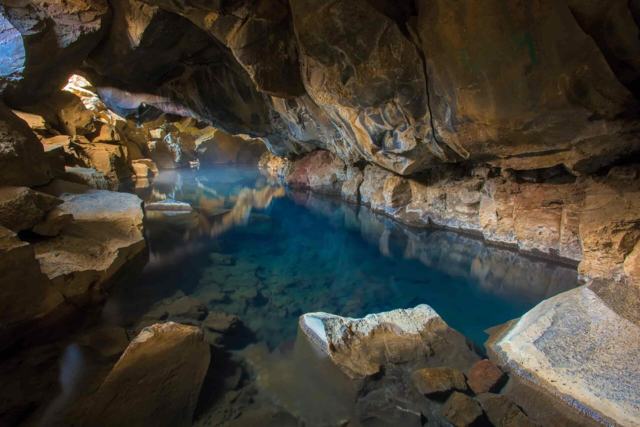
LeirhnjúkurLeirhnjúkurSteaming lava field inside the Krafla calderaHverir (Hverarönd)Hverir (Hverarönd)Steam vents and boiling mud pools by the Ring RoadNámafjallNámafjallColourful geothermal mountain above HverirGrjótagjáGrjótagjáLava cave with a geothermal pool
DimmuborgirThe "dark fortress" of lava pillars and arches
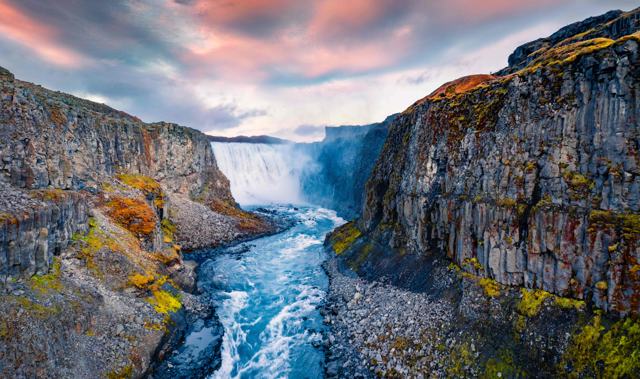
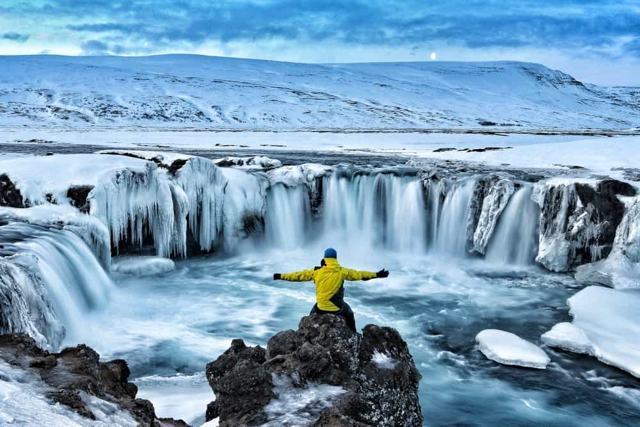
Lake MývatnLake MývatnVolcanic lake with pseudocratersDettifossDettifossOne of the most powerful waterfalls in EuropeGoðafossGoðafoss"Waterfall of the Gods"

Where to stay near Krafla

The Mývatn area has hotels, guesthouses and camping and is the natural base for visiting Krafla. Staying in a nearby town lets you see much of North Iceland in a weekend.

Krafla FAQ

Is there an entrance fee for Krafla or Víti?

No, it is free to visit.

How far is Krafla from Reykjavík?

About 485 km, around 6 hours by car without stops. Flying to Akureyri and driving from there takes about 45 minutes in the air plus 1.5 hours on the road.

How do I get to Krafla crater from Mývatn?

Drive east on the Ring Road past Hverir, turn left onto Route 863 at the Krafla sign and follow it about 9 km to the Víti car park. It takes 20 to 25 minutes.

Is Krafla still active?

Yes, it is an active volcanic system that last erupted in 1975–1984 and continues to power a nearby geothermal plant.

What does Víti mean?

Víti means "hell" in Icelandic. People once believed that hell lay beneath volcanoes.

How long does it take to walk around Víti crater?

About 30 minutes for the rim trail. The viewpoint itself is only a few minutes from the car park.

Can I swim in Víti crater lake?

No, swimming is not permitted; the trail is for walking the rim only.

Can you visit Krafla in winter?

Yes, but the road and trails can be icy or snow-covered and the power station visitor centre is closed. Summer is the more comfortable season.
More places in North Iceland