Iceland Travel GuideLOCAL TRAVEL AGENCY IN ICELAND
My trip
Talk to a local
Iceland Travel GuideLOCAL TRAVEL AGENCY IN ICELAND
My trip
Talk to a local
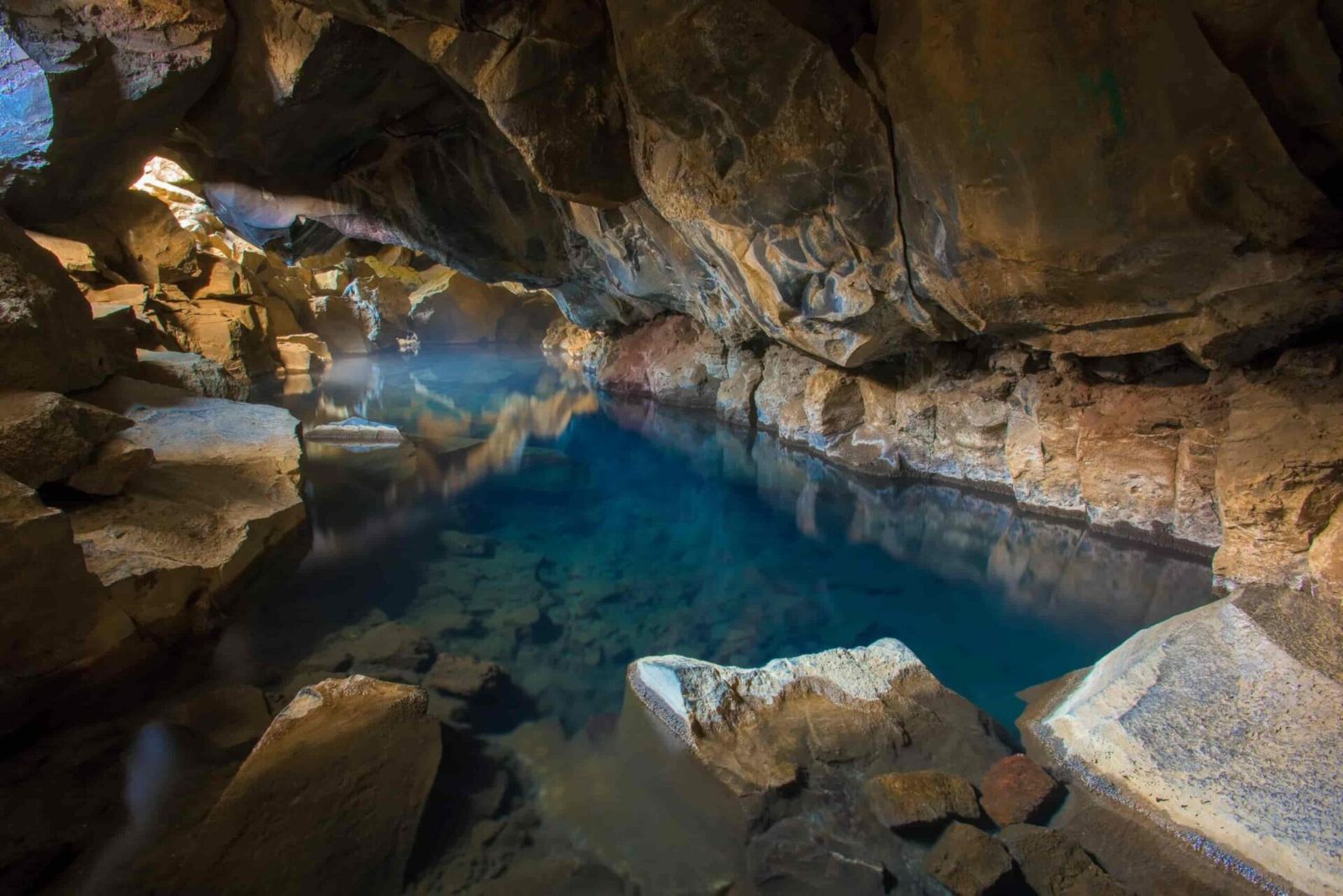
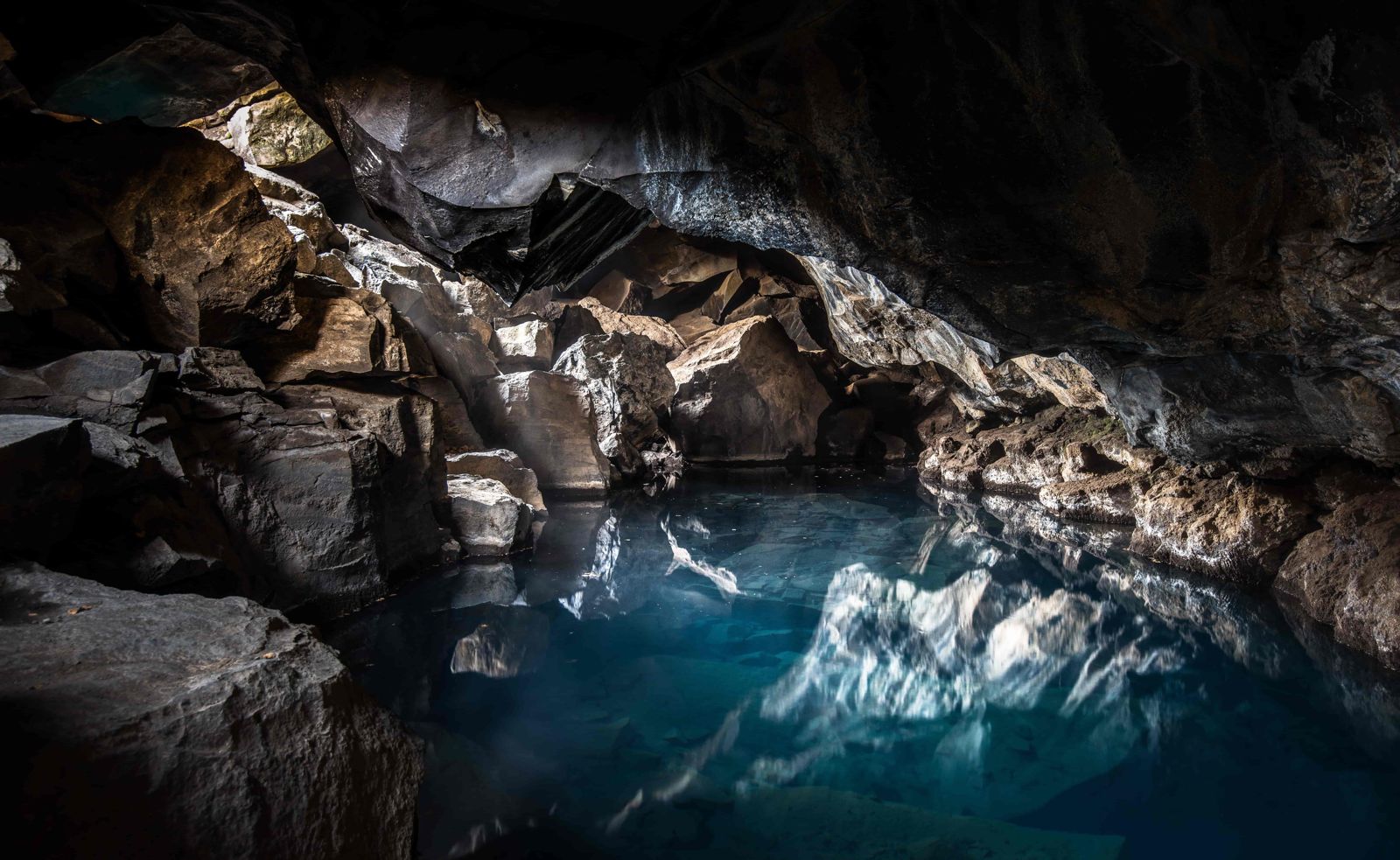
Grjótagjá is a small lava cave near Lake Mývatn in North Iceland, with a geothermal hot spring inside that glows a striking blue. It is free to visit and open all year, but bathing is prohibited because the water is often too hot. Most people spend 10–15 minutes here.
Grjótagjá is a fissure cave a short drive from Reykjahlíð, with clear, mineral-blue water pooling in a chamber below ground level. For much of the 20th century it was a popular bathing spot, small and secluded, reached by climbing down through a crack in the lava.
The cave is small and easy to miss. From the road you see only a low ridge of cracked lava, and in fog or drifting snow even the car park can be hard to spot. The entrances are gaps in the rock, and you climb down a few metres over boulders to reach the edge of the water.
That changed during the Krafla Fires, a series of volcanic eruptions between 1975 and 1984 nearby, which heated the water in Grjótagjá to over 50°C. The temperature has fallen since, but it still fluctuates and can be too hot, or simply unpredictable, for safe bathing, which is why most guidance today is to look rather than swim. The cave later became known internationally as a filming location for Game of Thrones.
Grjótagjá is on private land belonging to the farm Vogar. The family lets visitors in free of charge, but they have closed the cave at times after people bathed against the rules or left rubbish behind, so behave as a guest would.
Grjótagjá has been used for a long time. In the early 18th century the outlaw Jón Markússon is said to have lived in the cave and bathed in its water.
Before the 1970s, Grjótagjá was a well-loved local bathing spot, cool and secluded enough that people swam there for generations. That ended with the Krafla Fires, a decade of volcanic activity at nearby Krafla that pushed the water temperature in the cave above 50°C, far too hot to swim safely.
The water has cooled somewhat since the eruptions stopped, but temperatures still shift and are not consistently safe, which is why swimming is now discouraged here. Locals looking for a bathing cave in the area tend to use Stóragjá instead. Grjótagjá today is best treated as a short, striking stop to look into the fissure rather than a swimming spot.
In fog or drifting snow the low lava ridge is easy to drive past, so use the GPS point rather than looking for a landmark. From the car park the entrance is a short walk, then a climb down a natural staircase of rocks.
This is the question everyone asks, and the answer has changed over the years.
Until the 1970s Grjótagjá was the local bathing place. It has two chambers, a men's cave (Karlagjá) and a women's cave (Kvennagjá), each with its own entrance, and people from the farms around Mývatn used it as a communal bath for generations.
The eruptions at Krafla that began in 1975 pushed the water above 50°C, and bathing stopped. The water has cooled since the eruptions ended in 1984, but it rises and falls with activity underground. In the past the cave was opened for bathing again whenever the water dropped to a comfortable level, then closed when it climbed. Today bathing is prohibited outright.
You can still climb down, sit on the rocks and look at the water, and that is reason enough to come. If you want a warm soak afterwards, the Mývatn Nature Baths are a few minutes' drive away.
The cave and the land around it are family owned. If a sign or a rope says the cave is closed, it is closed.
It is a small place, and the visit is mostly about looking.
Grjótagjá is the cave from season three, episode five of HBO's Game of Thrones, "Kissed by Fire". It is where Jon Snow and Ygritte slip away from the wildlings, the moment Jon breaks his Night's Watch vows.
What you see on screen is not quite what you find here. The waterfall in the background was added digitally, and by some accounts much of the scene was shot on a studio set built to match the cave. The blue water and the dark lava roof are real, and fans recognise them at once.
None at the site. The nearest services are in Reykjahlíð.
Reykjahlíð, on the shore of Lake Mývatn, has the widest choice of hotels and guesthouses for visiting Grjótagjá and the rest of the Mývatn area.
No. Bathing is prohibited. The water temperature has been unpredictable and sometimes dangerously hot since volcanic activity in the 1970s and 80s.
Yes, there is no entrance fee and no parking fee.
Yes. Grjótagjá is the cave in season three, episode five, "Kissed by Fire", with Jon Snow and Ygritte. The waterfall in the scene was added digitally.
The cave is on private land belonging to the farm Vogar. Visitors are welcome as long as they follow the rules on site.
The Krafla Fires, a series of eruptions from 1975 to 1984, heated the groundwater to over 50°C. It has cooled since but still varies.
A short drive of 5–10 minutes on Route 860.
About 10–15 minutes is enough to climb down, look at the water and walk along the rift above.