Iceland Travel GuideLOCAL TRAVEL AGENCY IN ICELAND
My trip
Talk to a local
Iceland Travel GuideLOCAL TRAVEL AGENCY IN ICELAND
My trip
Talk to a local
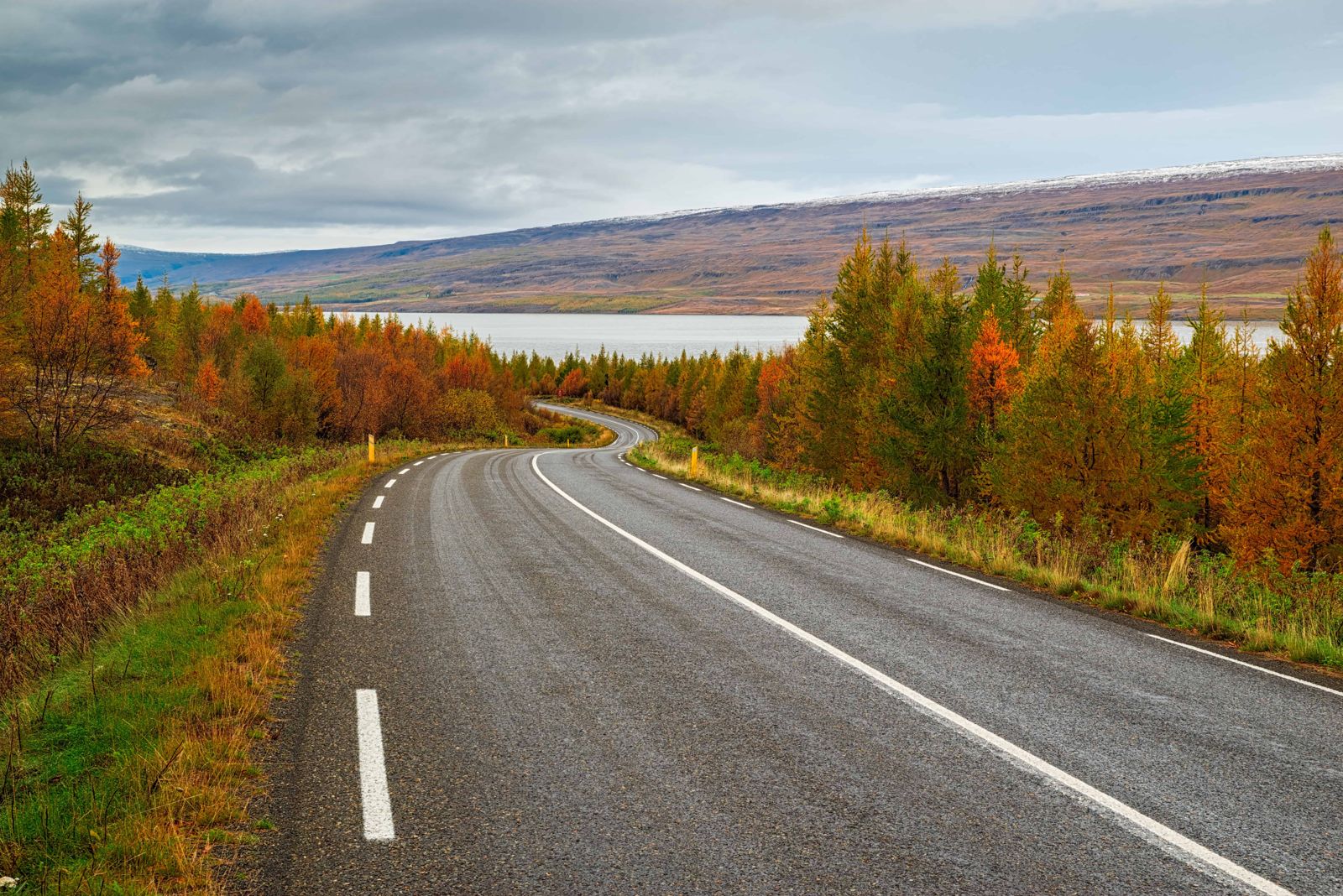
Hallormsstaðaskógur is the largest forest in Iceland, about 25 km from Egilsstaðir on the shore of Lagarfljót lake in East Iceland. It covers around 740 hectares, has marked walking trails and camping, and is free to enter. Allow a few hours for a walk.
Iceland has very little forest, so Hallormsstaðaskógur is an unusual sight. It is a mix of native birch woodland and planted trees, and it lies on the shore of Lagarfljót, a long, narrow lake. The forest is often described as Iceland's largest, at about 740 hectares. The woodland was protected in 1905, and it is counted as the first national forest in the country.
Since the early 1900s, foresters here have tested tree species from many countries to see which can grow in Icelandic conditions. A tree nursery was set up at the start of the century, and planting on a large scale began around 1950. About 85 species from over 600 places now grow in the forest, and there is an arboretum. In autumn the birch and larch turn yellow and orange, and this is a popular time for walks.
The village of Hallormsstaður lies inside the forest. There is a hotel, a café, campsites and marked trails leading to viewpoints, a waterfall and the cove of Atlavík on the lake.
When the Vikings settled Iceland, birch woodland covered a large part of the land. Centuries of grazing and cutting for fuel left very little, and today only about 2% of the country is forested, which makes Iceland one of the least wooded countries in Europe. The remnants at Hallormsstaður were protected in 1905 to save them, and foresters began planting foreign trees to see what would grow.
Some of those experiments succeeded, and you can now walk among larch, spruce, pine and many other species. The forest also carries a Lagarfljót legend: a worm-like monster is said to live in the lake, and people have reported sightings for centuries.
Hallormsstaðaskógur is the best known of the national forests that the Icelandic Forest Service looks after and keeps open to the public around the country, and it shows what reforestation can do here.
There are 11 marked routes of different lengths, and maps are available at the trailheads and at the hotel.
Stay on marked paths. Some trails are steep or muddy after rain.
The forest is a good place for anyone interested in botany or birds, and it suits children well.
Hallormsstaður has a hotel with a restaurant, a café, and two campsites. There is a trail map at the hotel. Fuel and shops are in Egilsstaðir.
Hotel Hallormsstaður and the campsites are inside the forest. Egilsstaðir has more hotels, guesthouses and restaurants and is a good base for the region.
Yes, it is commonly described as Iceland's largest forest, at about 740 hectares.
About 25 km, roughly 25 to 30 minutes by car.
No. The forest is free to enter, though campsites charge.
Two to four hours for a walk and a café stop. Allow a full day if you want longer trails or camping.
Late summer and autumn are lovely, with colour in the trees. Summer is easiest for walking and camping.
Yes, at the two campsites, Atlavík and Höfðavík, which are open from late May to late September. Camping elsewhere in the forest is not allowed.
Tours and trips that include Hallormsstaðaskógur, booked directly with a local travel agency in Iceland.