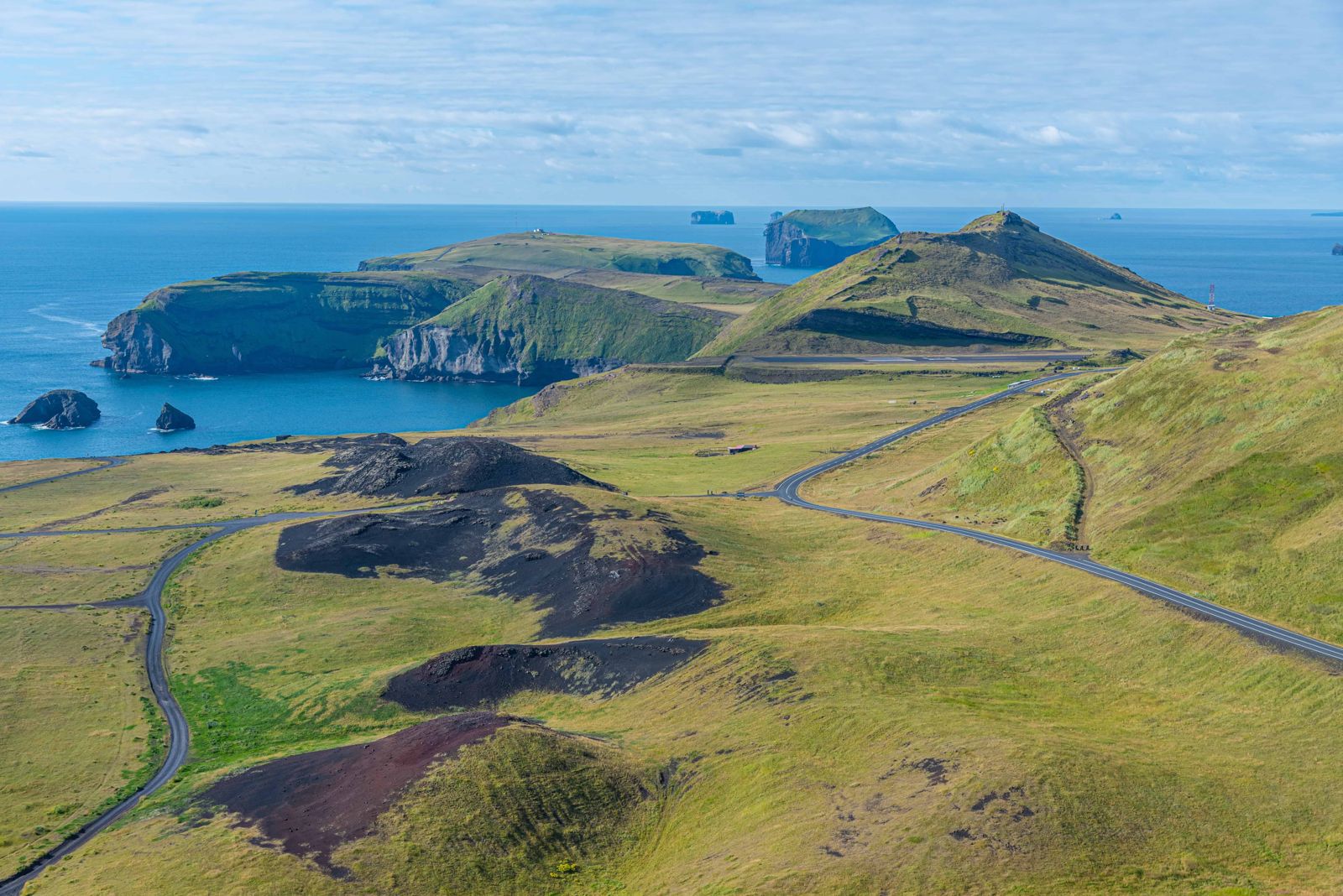
August is late summer in Iceland and one of the best months to visit. Reykjavík averages a high of about 14°C, days are long but real darkness returns at night, the highland roads are open, and whales are close to shore. It is still high season, so book cars, rooms and popular tours early.
New to Iceland? Read our guide for your first time in Iceland.
Weather in August
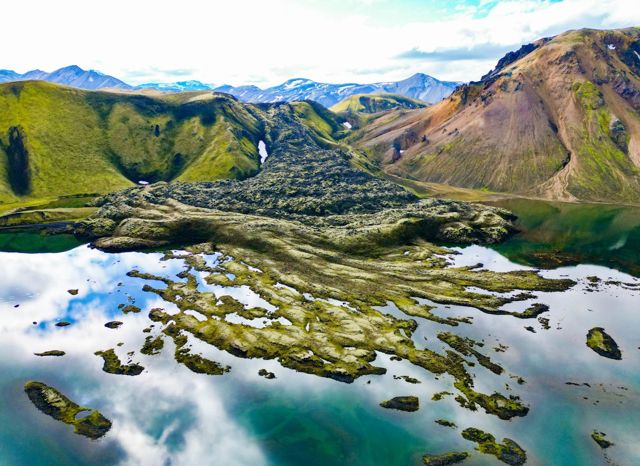
August in Reykjavík averages a high of about 14°C and a low of about 9°C, only a little cooler than July. A sunny, sheltered day can reach 18–20°C, and the record high for the month is close to 25°C. The north, the east fjords and the highlands can be warmer or colder than Reykjavík depending on the wind, and nights in the interior can drop close to freezing.
It is a slightly wetter month than July. Reykjavík gets about 65 mm of rain in an average August, spread over roughly 12 days, and the late-summer weather is changeable. Sun, showers and a cold wind in the same afternoon are normal. Dress in layers, keep a waterproof shell with you, and check the forecast on vedur.is each morning.
Wind is the other thing to plan for. It is usually lighter in August than in the colder months, but sudden gusts are common on the coast, on mountain passes and near glaciers. Hold car doors when you open them, and take care on cliff edges.
Daylight in August
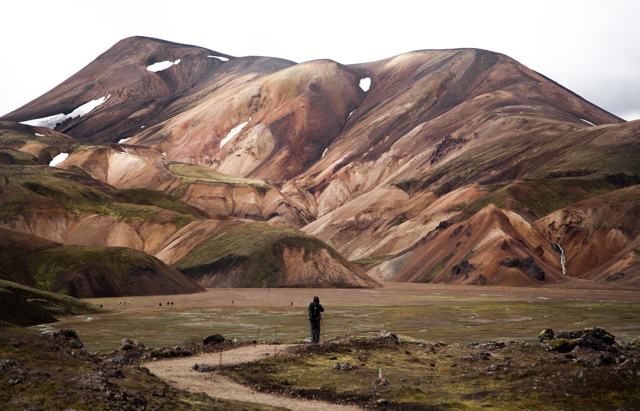
August is the month when the nights come back. On 1 August the sun rises in Reykjavík at about 4:35 am and sets at about 10:30 pm, giving around 18 hours of daylight, with bright twilight in between. By mid-month it rises at about 5:20 am and sets at about 9:45 pm. On 31 August it rises at about 6 am and sets just before 9 pm, giving about 14 hours and 45 minutes.
That is still plenty of light for long days of sightseeing, and the low evening sun is lovely for photos. It also means you can finally sleep in a dark room again by the end of the month. See our daylight hours guide for the whole year.
Northern Lights in late August
From about late August the sky is dark enough at night to see the aurora again, so the Northern Lights season starts at the very end of the month. Your chances are small in early August and grow week by week. You need a clear sky, dark surroundings away from town lights and some solar activity, and you will usually be looking after 11 pm.
Do not plan an August trip around the Northern Lights. Treat them as a bonus if you are here in the last ten days of the month. If aurora is your main goal, September or later is a better choice. See our Northern Lights guide and our Northern Lights tours.
Pros and cons of visiting in August
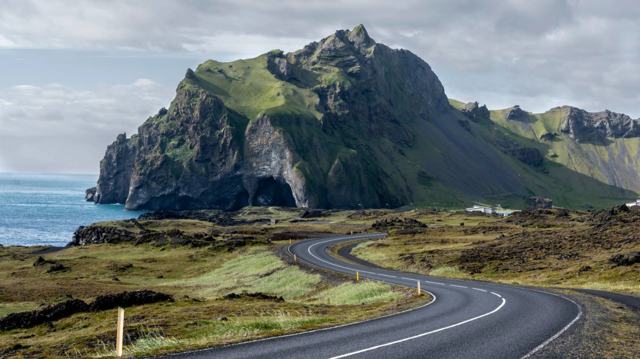
Good reasons to go: warm (for Iceland) weather, long days, every road and region open, highland tours running, whale watching at its best, lots of festivals, and the first chance of Northern Lights at the end of the month.
Things to know: July and August are the busiest and most expensive months, so popular stops are crowded in the middle of the day and good rooms sell out. Puffins start leaving in mid-August. The weather is never guaranteed, and the first autumn storms can arrive in late August. If you can be flexible, September is calmer and cheaper, while July has the brightest nights and the most puffins.
What to do in Iceland in August: the best activities
With every road open and daylight until late evening, August gives you the widest choice of the year. The activities we recommend most are hiking, a trip into the highlands, whale watching, a last look at the puffins, a glacier hike, a round of the big waterfalls and a soak in a geothermal pool. Each has its own section below.
If you are based in Reykjavík, the classic day trips all work well this month: the Golden Circle with Þingvellir, Geysir and Gullfoss, the South Coast as far as Reynisfjara and Vík, and the Snæfellsnes peninsula with Kirkjufell and Snæfellsjökull National Park. Jökulsárlón can be done in one very long day, about 380 km and five and a half to six hours' drive each way, but it is better with a night near the lagoon.
Late August is also berry season. Icelanders head out to the heaths to pick bilberries and crowberries, and restaurants make the most of the summer's lamb, fish and vegetables.
The highlands are open
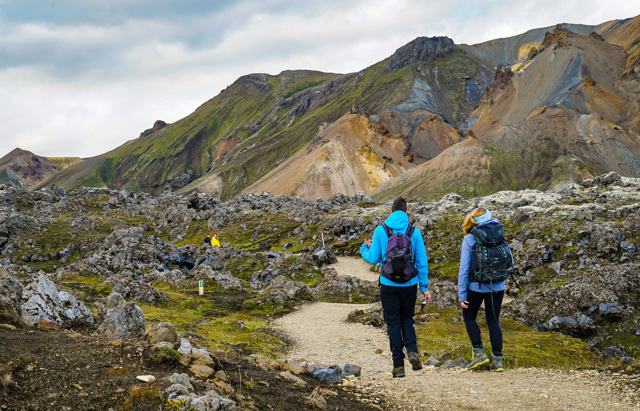
August is usually the best month for the interior. Most highland roads (F-roads) open between mid-June and early July, depending on snow and road damage, and stay open until September. By August the snow has gone from the tracks, and it is the most reliable window for places like Landmannalaugar, Þórsmörk, Kerlingarfjöll, Askja and the Kjölur route.
F-roads need a proper 4×4, and many have unbridged rivers. Glacial rivers run highest on warm afternoons and after heavy rain, and rental insurance does not cover water damage from river crossings. If you are not used to this kind of driving, a guided tour or super jeep tour is the safer choice. See our highland tours and Landmannalaugar tours. Our Landmannalaugar Private Tour goes by super jeep, with a guided hike or a soak in the hot spring.
Hiking in August
Late summer is a very good time to hike. The trails are dry, the huts are open and the days are still long. Popular choices include:
- Laugavegur trail: the classic multi-day hike from Landmannalaugar to Þórsmörk, through coloured rhyolite mountains, lava and black sand. Hut places sell out months ahead. Read our guide to hiking in Landmannalaugar.
- Fimmvörðuháls: a long day hike from Skógar over the pass between Eyjafjallajökull and Mýrdalsjökull, past more than 20 waterfalls and the 2010 lava. See our Fimmvörðuháls step-by-step guide.
- Þórsmörk: green valleys and birch woods between three glaciers, with walks for every level. See our guide to hiking in Þórsmörk.
- Kerlingarfjöll: steaming geothermal slopes in the central highlands. See our guide to hiking in Kerlingarfjöll.
- Easier day walks: Hengifoss in the east, Stuðlagil canyon and Ásbyrgi in the north all make good half-day hikes.
Whales and puffins
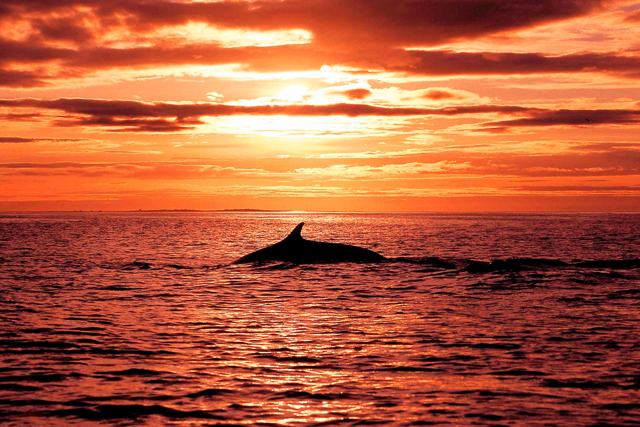
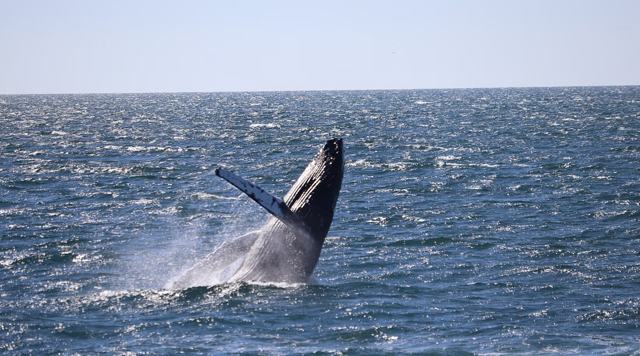
August is one of the best months for whale watching. Humpback whales, minke whales, white-beaked dolphins and harbour porpoises are seen often, and blue whales are sometimes spotted off the north coast in summer. Tours leave from the Old Harbour in Reykjavík, from Húsavík on Skjálfandi bay, often called the whale watching capital of Iceland, and from Akureyri in Eyjafjörður, one of the longest fjords in the country, where humpbacks feed with mountains on both sides, including our Húsavík Whale Watching and Whale Watching from Reykjavík trips. See our whale watching tours.
Dress warmly for any boat trip. It is always colder at sea than on land, and most operators lend you overalls. If you get seasick, take a tablet before you board and choose a larger boat rather than a fast RIB.
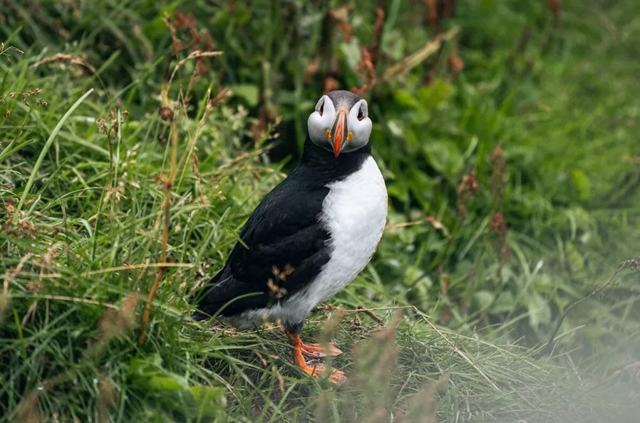
Puffins are still here in early August, but they start leaving the cliffs from around mid-month, and most are gone by early September. The Westman Islands have the largest colony, and our Westman Islands Day Tour from Reykjavík makes them a day trip, and Dyrhólaey on the South Coast and Látrabjarg in the Westfjords are also good. The closest puffins to the capital are on the small islands of Akurey and Lundey, just off Reykjavík, often called the puffin islands. Short boat trips go there from the Old Harbour until the birds leave, usually around mid-August, so check the dates before you book. If puffins are high on your list, come in the first half of the month. Our puffin guide has the details, and you can see our puffin tours.
Glaciers and ice caves
Glacier hikes run all year, and August is a comfortable month for them. Sólheimajökull on the South Coast is the easiest to reach from Reykjavík, and the outlet glaciers of Vatnajökull near Skaftafell are good if you are heading east. Always go with a guide: crevasses are hard to see. See our glacier hiking tours.
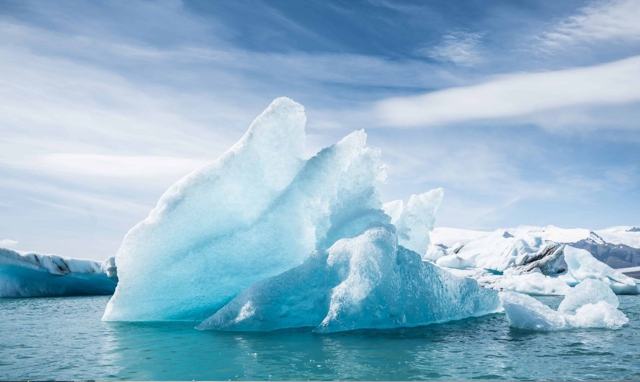
The famous blue ice caves in Vatnajökull are a winter trip, and they are closed in summer. In August you can still visit the ice cave under Katla (Mýrdalsjökull), which is open all year, or go inside the man-made ice tunnel in Langjökull, where you walk several hundred metres into the glacier. See our Katla ice cave tours, Langjökull ice tunnel tours and our guide to the year-round Katla ice cave.

Waterfalls to see in August
Glacial rivers are full of meltwater in late summer, so many waterfalls are at their most powerful. A few favourites:
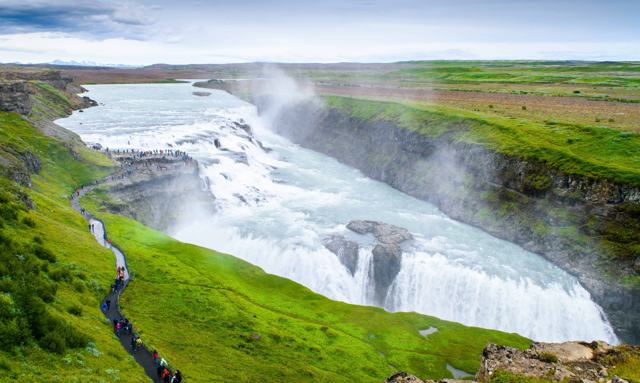
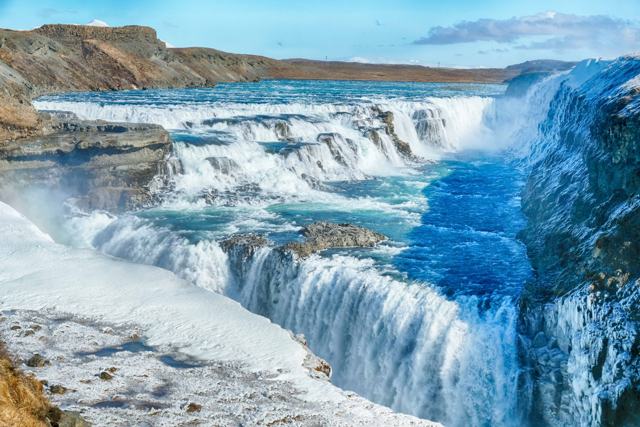
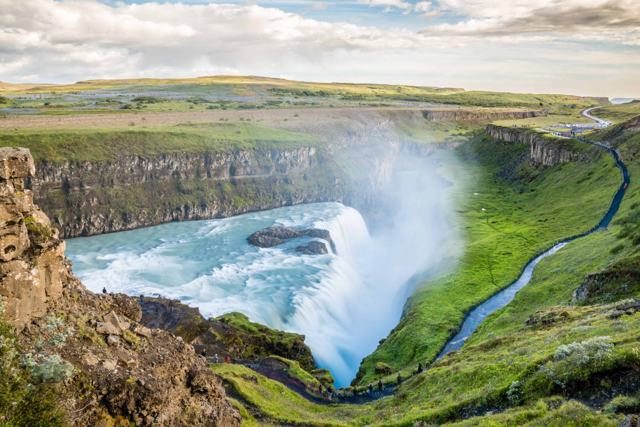
- Gullfoss: the two-step falls on the Golden Circle, dropping into a deep canyon.
- Seljalandsfoss: on the South Coast, with a path that goes behind the water. Bring a rain jacket.
- Skógafoss: a 60-metre curtain of water, with steps up to a viewpoint at the top and the start of the Fimmvörðuháls trail.
- Háifoss: one of Iceland's highest waterfalls, about 122 metres, at the edge of the highlands. The last stretch of road is rough.
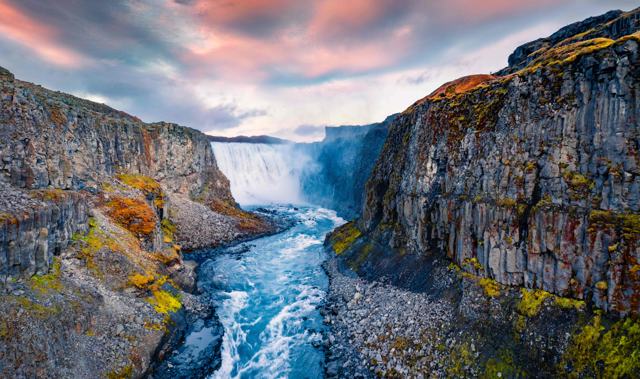
- Dettifoss: in the north, one of the most powerful waterfalls in Europe, thundering into Jökulsárgljúfur canyon.
- Goðafoss: the wide horseshoe-shaped "waterfall of the gods" between Akureyri and Mývatn.
- Hraunfossar and Barnafoss: in West Iceland, where spring water pours out of a lava field next to a narrow, fast gorge.
Hot springs and geothermal pools
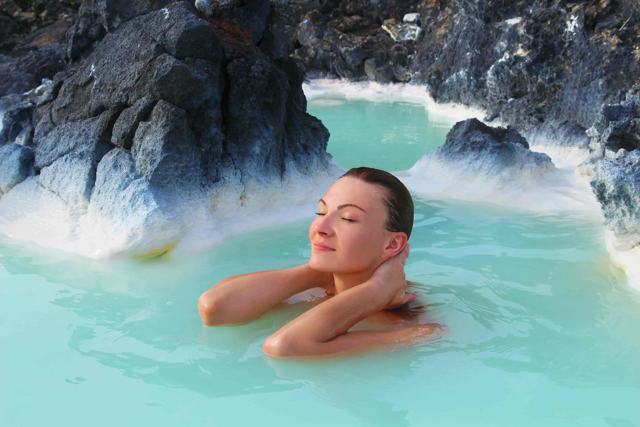
A soak is a good way to end a long summer day, and in August you can do it in daylight well into the evening. Around Reykjavík and the south-west, the choices include the Blue Lagoon and Sky Lagoon (see our Sky Lagoon vs Blue Lagoon comparison), the Secret Lagoon in Flúðir near the Golden Circle, and the seaside pools at Hvammsvík in Hvalfjörður.
In the north, Earth Lagoon Mývatn (the former Mývatn Nature Baths, by Lake Mývatn) and the seawater baths at GeoSea in Húsavík pair well with a whale watching trip. In the east, Vök Baths sits on a lake near Egilsstaðir. Book the popular spas ahead in August, as time slots fill up. See our hot springs tours and our list of hidden hot springs.
- The Blue Lagoon: milky-blue water rich in silica and minerals, in the middle of a lava field on Reykjanes. It is the best known spa in Iceland, so book your time slot well ahead. It can close at short notice during volcanic activity on Reykjanes, so check before you go.
- Sky Lagoon: just outside Reykjavík, with an infinity edge that seems to run into the Atlantic and a seven-step bathing ritual with a sauna, steam room and cold plunge.
- The Secret Lagoon: one of the oldest pools in Iceland, in the village of Flúðir. It is simple and natural, with steaming springs beside the pool, and quieter than the big spas.
- Hvammsvík: a row of pools on the shore of Hvalfjörður, some of them filling with the tide. A calm place with wide views of the fjord.
- Earth Lagoon Mývatn: the former Mývatn Nature Baths and the north's answer to the Blue Lagoon, with mineral-rich water and views over craters and lava. Usually less crowded.
- GeoSea: warm geothermal seawater on the cliff top in Húsavík. You look straight out over Skjálfandi bay, and now and then somebody spots a whale from the pool.
- Vök Baths: floating pools set in Lake Urriðavatn near Egilsstaðir, the main geothermal baths in East Iceland.
Festivals and events in August
August is packed with events. Dates below are for 2026; most events keep the same pattern each year.
- Verslunarmannahelgi (Commerce Weekend): the long weekend ending on the first Monday of August, a public holiday. In 2026 it is 1–3 August, and in 2027 it ends on Monday 2 August. Icelanders go camping and to festivals all over the country, so campsites and roads out of Reykjavík are busy.
- Þjóðhátíð: the big festival in the Westman Islands on the same weekend, with a bonfire, fireworks and the Sunday night hillside singalong. In 2026 it runs from 31 July to 3 August, and in 2027 from 29 July to 2 August. The ferry and flights sell out, so book early.
- Other Commerce Weekend festivals: Innipúkinn in Reykjavík, Neistaflug in Neskaupstaður and Ein með öllu in Akureyri. See our music festivals guide.
- Reykjavík Pride (Hinsegin dagar): a week of events in early August, ending with a big parade through the city centre on the Saturday. In 2026 it runs from 4 to 9 August, with the parade on 8 August.
- Culture Night (Menningarnótt) and the Reykjavík Marathon: both on the same Saturday in the second half of August, 22 August in 2026. Culture Night fills the city centre with free concerts, open houses and events all day, and ends with fireworks over the harbour. The centre is closed to traffic, and hotels fill up, so book early.
Crowds, prices and booking
July and August are the busiest months of the year. The Golden Circle, the South Coast, the Blue Lagoon and Jökulsárlón are crowded from late morning to late afternoon. Visit the big stops early in the morning or in the evening, when the light is better anyway, and consider a small-group or private tour.
Book accommodation, rental cars and popular tours well ahead, especially for the Commerce Weekend and Culture Night. Crowds start to thin in the last week of August, when Icelandic schools go back. If you prefer to leave the planning to us, see our summer Ring Road tours, such as the 8 Day Iceland Tour, multi-day trips and self-drive packages.
Driving in Iceland in August
August is an easy month for a self-drive trip. The Ring Road and the main roads are clear, and every region is open, including the Westfjords and the highland F-roads. A few things to know:
Most highland roads are open by August, but a few of the highest tracks can open late after a snowy winter, and any of them can close again after heavy rain or flooding. Plan your route before you set off, and leave some slack in the day for stops and for weather.
- Check road.is (or phone 1777) and safetravel.is before long drives. Summer storms, flooding rivers and volcanic activity on Reykjanes can close roads at short notice.
- The speed limit is 90 km/h on paved roads, 80 km/h on gravel and usually 50 km/h in towns. Speed cameras are common and fines are high.
- Driving off marked roads and tracks is illegal, and it damages the moss and soil for decades.
- Only drive F-roads in a 4×4, and never cross a river you are unsure about. Wait for another car or turn back.
- Fuel stations are far apart in the east, the Westfjords and the highlands. Many are self-service and need a card with a PIN.
- Watch for sheep on the road, slow down on gravel and at single-lane bridges, and never stop on the road for photos.
- Seat belts are compulsory for everyone in the car, headlights must be on at all times, and the drink-driving limit is so low that the only safe rule is not to drink at all before driving.
- Fill the tank whenever you pass a station before heading into the highlands or a remote area.
What to pack for August
Pack for cool, wet and windy weather, even if the forecast looks good. The countryside and the highlands feel colder than Reykjavík. See our full Iceland packing list.
- A thin thermal base layer for boat trips, glacier hikes and the highlands
- Waterproof and windproof jacket, and rain trousers
- Warm mid-layers, such as a fleece or a wool jumper
- Sturdy, waterproof walking boots
- Hat and gloves for boat trips, glaciers and evenings
- Swimwear and a quick-dry towel for pools and hot springs
- Sunglasses and sun cream
- An eye mask for the bright early-August nights
- A reusable water bottle: tap water in Iceland is clean and cold
Tours to book
August is high season, so these are worth booking early.
- 8 Day Iceland Tour: a summer package around the whole Ring Road, with every region open in August.
- Landmannalaugar Private Tour: the highlands at their most reliable, by private super jeep with your own guide.
- Húsavík Whale Watching: whale watching from the north coast in one of the best months for it.

Questions people ask
What is the weather like in Iceland in August?
Mild and changeable. Reykjavík averages a high of about 14°C and a low of about 9°C, with rain on about 12 days of the month. Bring layers and waterproofs.
Can you see the Northern Lights in Iceland in August?
Only at the end of the month. From about late August the nights are dark enough, and with a clear sky and some solar activity you may see the aurora late at night. Chances are much better from September.
Are there still puffins in Iceland in August?
Yes, in the first half of the month. Puffins start leaving from around mid-August, and most are gone by early September.
Is August a good time to visit Iceland?
Yes. It has warm weather for Iceland, long days, open highland roads, good whale watching and many festivals. It is also high season, so book early and expect crowds at the main sights.
How many hours of daylight are there in August?
About 18 hours on 1 August, falling to about 14 hours and 45 minutes by the end of the month. Nights become properly dark again in late August.
What is there to do in Iceland in August?
Almost everything. Hiking and highland trips are at their best, whale watching is in peak season, puffins are still here in the first half of the month, and glacier hikes, waterfalls and geothermal pools are open as usual. Add Reykjavík Pride, Culture Night and the Commerce Weekend festivals.