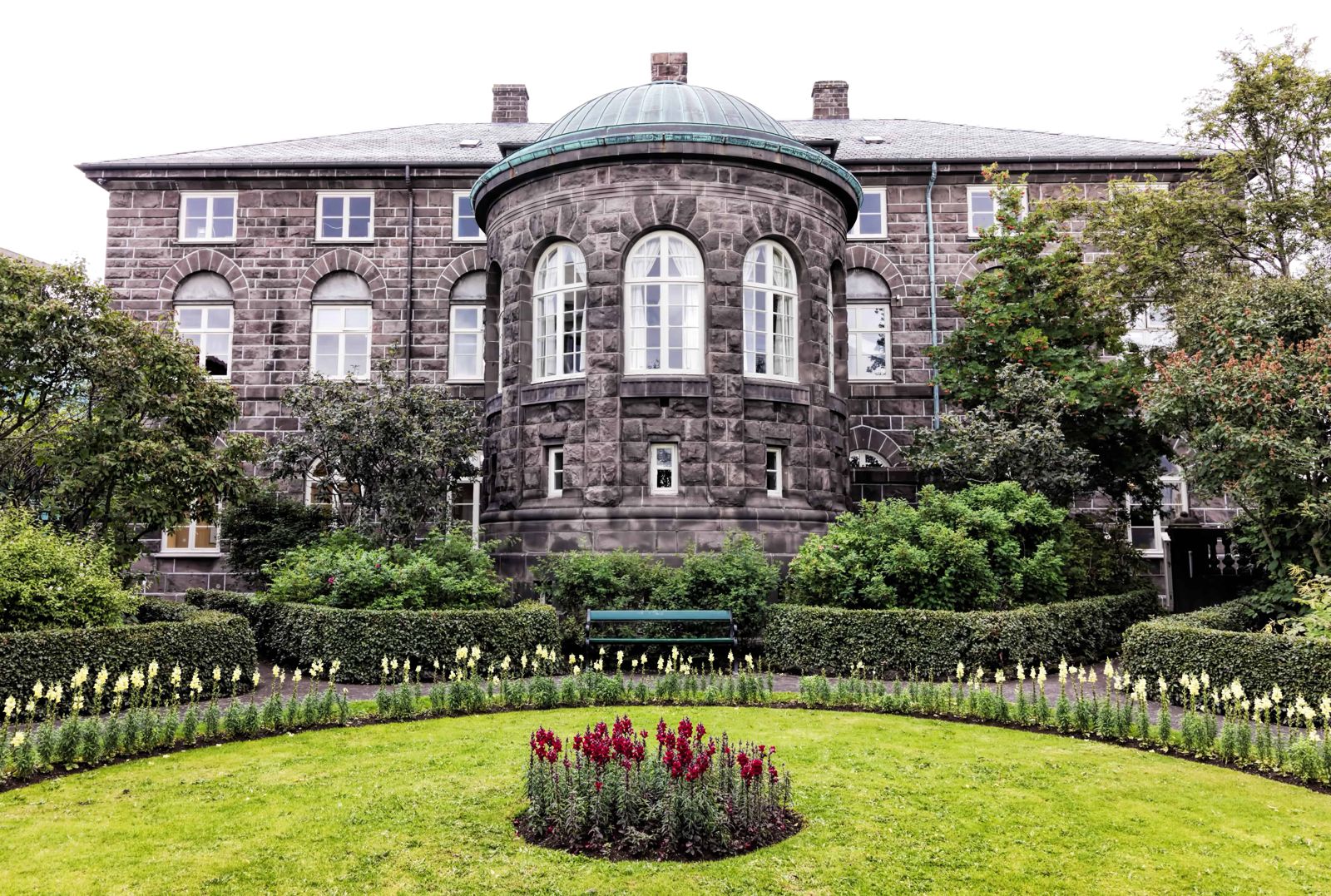
Daylight in Iceland swings more than almost anywhere you are likely to travel. In Reykjavík the shortest day in December has just over 4 hours between sunrise and sunset, while the longest day in June has about 21 hours, and the night never gets properly dark. How much light you get shapes what you can see in a day, so it is worth checking before you plan your route.
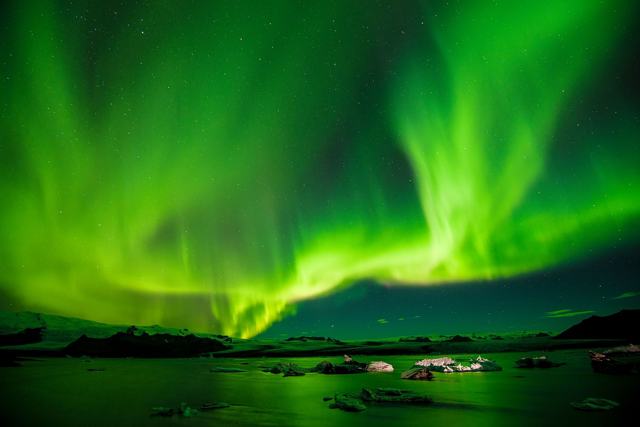

Why daylight changes so much in Iceland
Iceland lies just south of the Arctic Circle, at about 63 to 66 degrees north. At this latitude the tilt of the Earth makes a huge difference between summer and winter. Near the solstices the day length hardly changes from one day to the next, but around the equinoxes in March and September it changes by about 6 to 7 minutes a day.
The Arctic Circle currently crosses Grímsey, the small island off the north coast. It is the only inhabited part of Iceland on the Arctic Circle, and the sun stays above the horizon all night there for about a month around the June solstice. Because the air bends the light, the same happens for a shorter time on the northernmost coast of the mainland, where the view north over the sea is open. Further south, in Akureyri and Reykjavík, the sun dips below the horizon for a short time even in June, but it stays so close that the sky never gets dark.
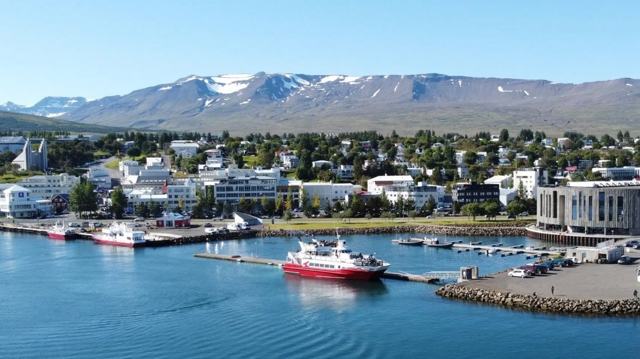
The north gets more extreme light than the south-west. In Akureyri the shortest day is about an hour shorter than in Reykjavík, and the longest day is more than 2 hours longer.
Iceland's clock and why the sun rises so late
Iceland uses GMT (UTC+0) all year and does not change its clocks for summer time. Geographically, the country sits in the UTC−1 time zone, so the clock runs about an hour or more ahead of the sun. The government looked at changing this in 2020 and decided to keep things as they are.
In practice this means that sunrise and sunset are both later than you might expect. In Reykjavík the sun is highest in the sky at about 1:30 pm, not midday. On the shortest days, sunrise is after 11 am and sunset is around 3:30 pm. In summer, sunset is close to midnight.
Daylight hours month by month
The figures below are for Reykjavík in 2026, with sunrise and sunset on the 15th of each month and the day length from the first to the last day of the month. They change by only a minute or so from year to year, so they work for 2027 too. Times are astronomical, so mountains and fjords can hide the sun for longer, especially in narrow valleys and fjord towns in winter.
- January: sunrise about 10:55, sunset about 16:15. Day length grows from about 4 hours 20 minutes to 7 hours. It is usually one of the coldest months, with Reykjavík hovering around freezing (roughly -3 to 3°C). See Iceland in January.
- February: sunrise about 9:25, sunset about 18:00. Day length grows from about 7 to 10 hours. The weather is mixed, with rain, sleet and snow showers, so bring waterproofs and sturdy boots. See Iceland in February.
- March: sunrise about 7:50, sunset about 19:25. Day length grows from about 10 to 13 hours 20 minutes, passing 12 hours at the equinox around 20 March. It is still winter, with enough light for full days out, ice caves and winter sports. See Iceland in March.
- April: sunrise about 6:00, sunset about 21:00. Day length grows from about 13 hours 30 minutes to 16 hours 40 minutes. Spring begins, the migrating birds come back and it is still a quiet month for visitors. See Iceland in April.
- May: sunrise about 4:15, sunset about 22:35. Day length grows from about 16 hours 45 minutes to 20 hours. From mid-May the nights stay bright. The snow melts in the lowlands and the countryside turns green.
- June: sunrise about 3:00, sunset close to midnight. Day length is about 20 to 21 hours, with the longest day around 21 June. There is no darkness at all. This is the start of the main travel season.
- July: sunrise about 3:40, sunset about 23:25. Day length falls from about 21 hours to 18 hours. Nights stay bright until late in the month. It is usually the warmest month, but you will still want a jacket for the wind. See Iceland in July.
- August: sunrise about 5:20, sunset about 21:45. Day length falls from about 18 hours to 14 hours 45 minutes, and real darkness returns at night. See Iceland in August.
- September: sunrise about 6:50, sunset about 19:55. Day length falls from about 14 hours 40 minutes to 11 hours 30 minutes, passing 12 hours at the equinox around 22 September. Summer ends and the autumn colours arrive. See Iceland in September.
- October: sunrise about 8:15, sunset about 18:10. Day length falls from about 11 hours 25 minutes to 8 hours. It gets colder, with more rain and wind storms. See Iceland in October.
- November: sunrise about 9:55, sunset about 16:30. Day length falls from about 8 hours to 5 hours. Winter begins, and long hikes are hard to fit into the light, so plan each day carefully. See Iceland in November.
- December: sunrise about 11:15, sunset about 15:30. Day length falls from about 5 hours to just over 4 hours at the solstice around 21 December. See Iceland in December.
Twilight: more usable light than the numbers suggest
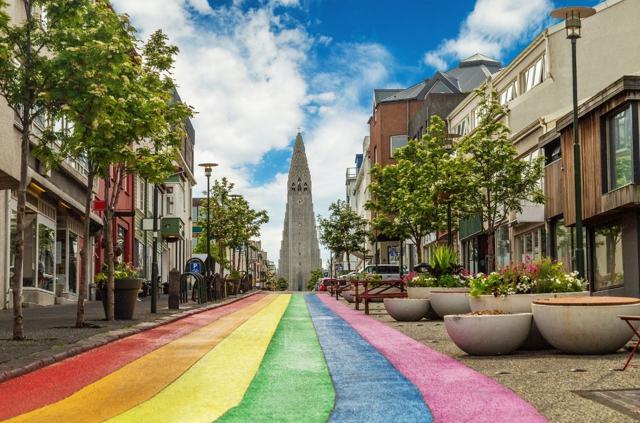
Sunrise and sunset are only part of the story. Because the sun moves at a low angle at this latitude, twilight lasts a long time. On the shortest day in Reykjavík the sky is light enough to see and drive without headlights from about 10 am to about 4:50 pm, so you have close to 7 hours of usable light, not 4.
In winter the sun never climbs high. At noon in late December it is only 2 or 3 degrees above the horizon in Reykjavík. The result is long hours of soft pink and orange light, which is one reason winter is popular with photographers. The flip side is low sun in your eyes when driving, and long shadows on icy roads.
In summer the twilight never ends. From roughly mid-May to the end of July the sky in Reykjavík stays bright all night, even when the sun is just below the horizon.
The midnight sun in summer
Around the June solstice Reykjavík has about 21 hours between sunrise and sunset, and Akureyri about 23. The sun sets briefly around midnight in Reykjavík and barely goes under the horizon in Akureyri. For the real midnight sun, with the sun above the horizon all night, go to Grímsey or the northernmost coast around the solstice.
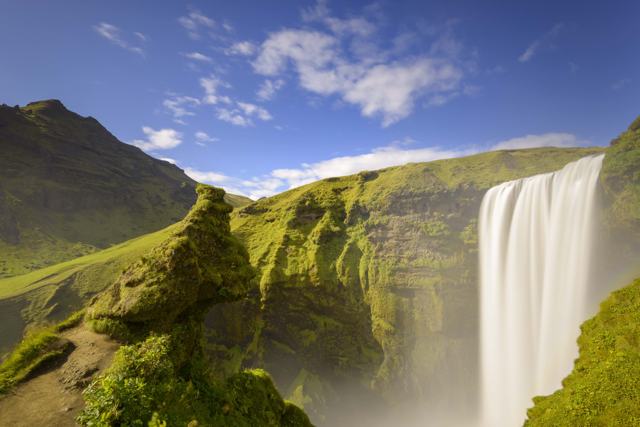
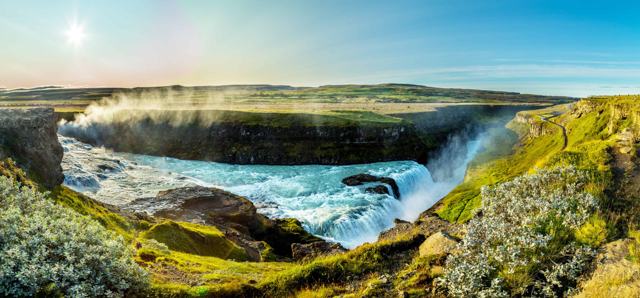
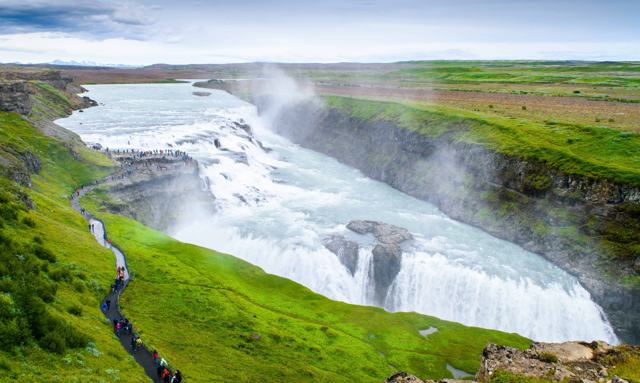
The long light is the big advantage of a summer trip. You can drive late in the evening, hike after dinner and visit popular places such as Gullfoss or Skógafoss when the day-trip crowds have gone. Bird watching, fishing, a late picnic or a long evening walk all work well when it is still light at midnight. Many people find it hard to sleep, though, so bring an eye mask.
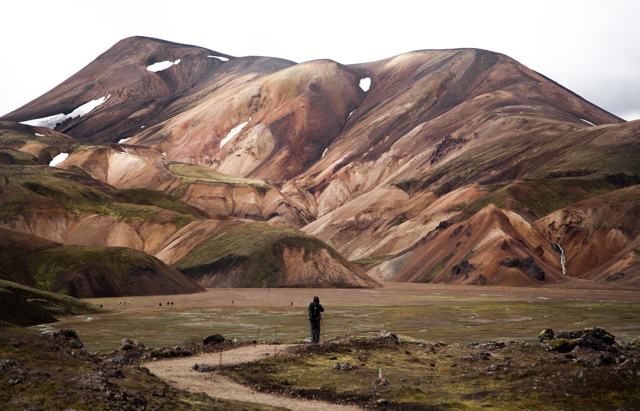
Midsummer is also the time for the highlands, which usually open from mid-June to July depending on snow. See our highland tours, or read about hiking in Landmannalaugar.
Short days in winter
In December and January the days are short, but Iceland does not go completely dark. Even on the shortest day the sun rises in Reykjavík, and the long twilight gives you several hours of useful light. In deep fjords and valleys in the north and east, mountains can block the direct sun for weeks.
The winter solstice around 21 December is the turning point. After that the days grow quickly: by the end of January Reykjavík has close to 7 hours of daylight, and by the end of February 10. Read more in our winter solstice guide.
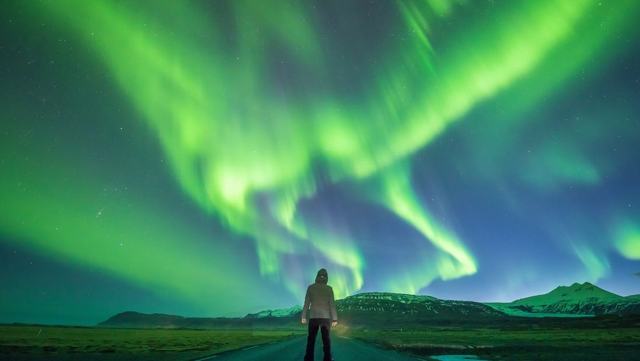
The dark evenings are what make winter the Northern Lights season. The aurora can be seen from about late August to early April, when the sky is dark enough. See our Northern Lights guide and Northern Lights tours, including a Northern Lights private tour from Reykjavík.
How daylight affects your trip plan
In summer you can fit a lot into one day, and long self-drive days are easy. In winter, plan fewer stops and shorter driving distances, and aim to be at the places you most want to see in the middle of the day.
The light decides how much you can fit into a day, not whether the trip is worth it. Every season has its own things to do. Whatever the month, sturdy boots, a waterproof coat and a warm jacket are never wrong.
A few practical points for the darker months:
- Drive the longest stretches in daylight. Roads can be icy, and many rural roads have no lighting.
- Check the road conditions and weather forecast every morning. The Icelandic Road and Coastal Administration and the Icelandic Met Office publish them online.
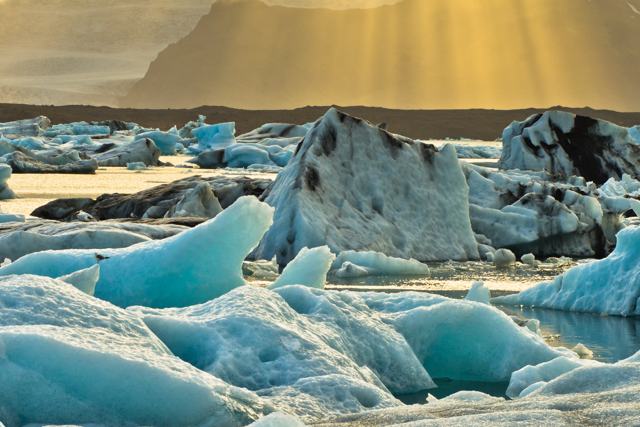
- Keep day trips realistic. A winter day on the South Coast to Jökulsárlón and back from Reykjavík is a long day, with much of the driving in the dark. Our 2 Day South Coast Private Tour splits it over two days.
- Consider a guided tour. The driver knows the roads and the timing, and you can look out of the window instead of at the road. A Golden Circle private tour lets you set the pace around the light. See our Golden Circle tours and South Coast tours.
- Winter has its own activities. Ice caves are only open in the colder months, and short days mean you can watch sunrise and sunset without getting up early. See our ice cave tours.
- Bring a head torch for short walks, and pack warm layers. Our winter packing list has the details.
Which month has the best light for you?
There is no single best month. It depends on what you want to do.
- Long days and the highlands: June to August.
- Northern Lights with reasonable daylight: September to October, or February to March, when days and nights are closer to equal.
- Winter scenery and ice caves: November to March.
- Fewer visitors with good light: April, May and September.
Tours to book
If the season shapes your plans, these trips make the most of the light you have.
- 2 Day South Coast Private Tour: the South Coast over two days, which suits the short winter light.
- 8 Day Iceland Northern Lights Tour Package: a longer trip for the darker months, when the aurora is out.
- Northern Lights Private Tour from Reykjavik: a private aurora hunt on a dark evening, away from the city lights.
Questions people ask
How many hours of daylight does Iceland have in winter?
In Reykjavík the shortest day, around 21 December, has just over 4 hours between sunrise and sunset, with sunrise after 11 am and sunset around 3:30 pm. Twilight adds usable light, so you get close to 7 hours in which you can see without headlights. The north has about an hour less.
Does Iceland have 24 hours of daylight?
Almost. Around the June solstice Reykjavík has about 21 hours between sunrise and sunset, and the sky stays bright all night from mid-May to late July. The sun stays above the horizon all night only on Grímsey, on the Arctic Circle, and for a shorter time on the northernmost coast of the mainland.
Is Iceland dark all day in winter?
No. The sun rises every day, even at the winter solstice, although it stays low in the sky. Some deep fjords and valleys in the north and east lose direct sun for a few weeks because mountains block it.
Does Iceland change its clocks?
No. Iceland uses GMT (UTC+0) all year with no summer time. Because the country lies further west than its time zone suggests, sunrise and sunset are later than you might expect.
When is it dark enough to see the Northern Lights?
From about late August to early April. From May to July the nights are too bright to see the aurora.