Most flights from North America land at Keflavík between about 5 and 7 am, and hotel rooms are rarely ready before mid-afternoon. You do not need to sit in a lobby. You can soak in the Blue Lagoon near the airport, drive the Reykjanes Peninsula, walk around central Reykjavík or join a day tour, and this guide shows how to plan each option.
First, plan the basics
Keflavík Airport is about 50 kilometres from Reykjavík, roughly 45 minutes by road. The Flybus airport shuttle has no fixed timetable into town; it runs to match flight arrivals and stops at the BSÍ bus terminal, about a ten-minute walk from Hallgrímskirkja. Public bus 55 is cheaper but less frequent. Our guide to getting from Keflavík Airport to Reykjavík compares all the options.
Luggage is the other question. There are luggage lockers on the arrivals side of the terminal, and several storage points in Reykjavík. If you are staying in Reykjavík, most hotels and guesthouses will hold your bags before check-in, so ask when you book.
Waiting at the airport is not a good plan. The terminal gets busy from about 4 am, there are few quiet corners, and sleeping there is discouraged. The one thing worth doing before you leave is the duty-free shop in the arrivals hall, beside baggage reclaim. Beer, wine and spirits cost far less there than in the state-run shops in town, so locals stock up there too.
Finally, be honest about how you feel after an overnight flight. If you are picking up a rental car, keep the first drive short. Tired drivers on unfamiliar roads are a real risk, and a guided tour lets you sleep on the bus.
The Blue Lagoon: the classic first stop
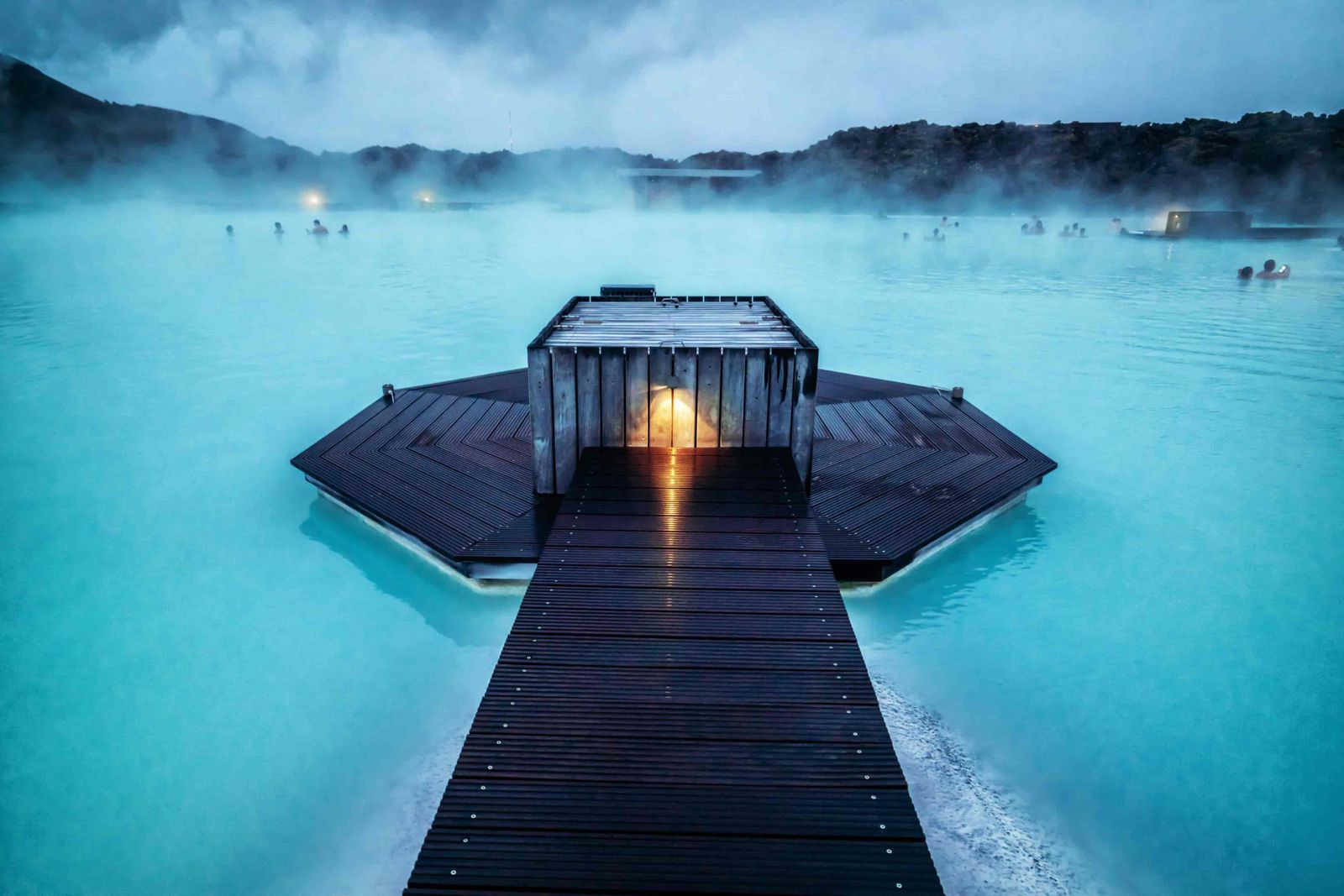
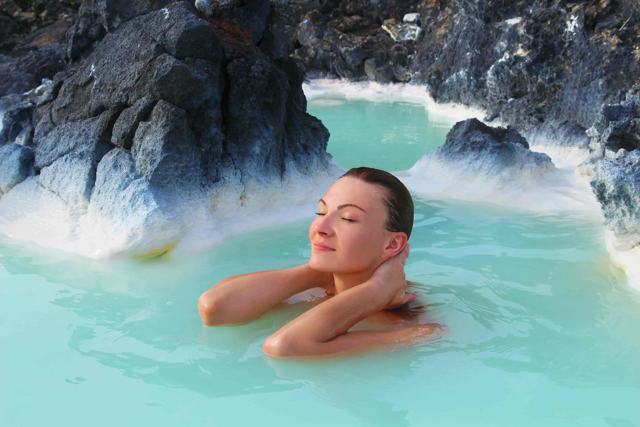
The Blue Lagoon is about 20 minutes from the airport, which makes it the easiest way to spend an early morning. It opens at 7 am in peak summer (15 June to 20 August) and at 8 am the rest of the year. It is open every day of the year, but you must book an entry time in advance.
The lagoon is filled with geothermal seawater, rich in silica, algae and minerals. The silica is what gives the water its milky blue colour. The water stays at about 37–39°C all year, so it is just as pleasant on a cold, dark morning as on a summer one. You shower before you get in, and there is a restaurant, a café and a skincare shop on site.
It lies in a lava field in front of Mount Þorbjörn, beside the Svartsengi geothermal power station, and it is almost on the way from the airport to Reykjavík. That is why it works so well as a first or last stop. If you have no car, airport buses run from the terminal to the lagoon and on to Reykjavík afterwards, and there is luggage storage by the lagoon car park for your suitcases, for a fee. Check that it is available when you book.
The lagoon sits next to the volcanic area near Grindavík. Its opening hours can change at short notice when there is seismic activity or poor air quality, so check the day before you travel. If you would rather relax closer to Reykjavík, Sky Lagoon is another option; see our Sky Lagoon vs Blue Lagoon comparison. Browse our hot spring tours for packages that include transfers.
Explore the Reykjanes Peninsula
The airport sits on the Reykjanes Peninsula, a UNESCO Global Geopark of lava fields, sea cliffs and steaming ground. If you have a car and a few hours, a loop from the airport covers the main sights without long drives.
This is where the Mid-Atlantic Ridge comes ashore. The fissures, crater rows, lava fields and low shield volcanoes all run from south-west to north-east, following the gap between the two plates. Fishing towns such as Njarðvík, Sandgerði and Grindavík sit along the coast, and the Svartsengi power station turns the heat under the ground into electricity and hot water for the whole area.
After about 800 quiet years, the peninsula woke up in 2021 with the eruption at Fagradalsfjall, and there has been a series of eruptions since, most of them near Grindavík. Scientists expect this active period to last for years or even decades. Flights and Reykjavík have not been affected, but roads near an eruption site can close and some areas are hazardous. Walking on new lava is forbidden. Check safetravel.is and road.is before you set off, and read our guide to volcanoes in Iceland.
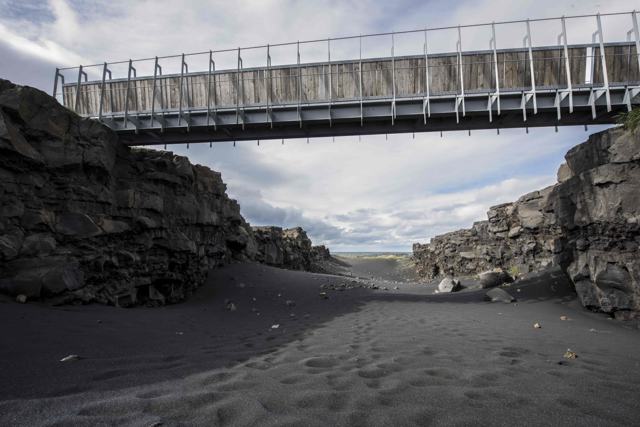
- The Bridge Between Continents: a footbridge over a fissure between the North American and Eurasian plates, once known as the Leif the Lucky bridge. You can walk across from one plate to the other in a few seconds. There is subsidence in the area, so stay on the marked paths.
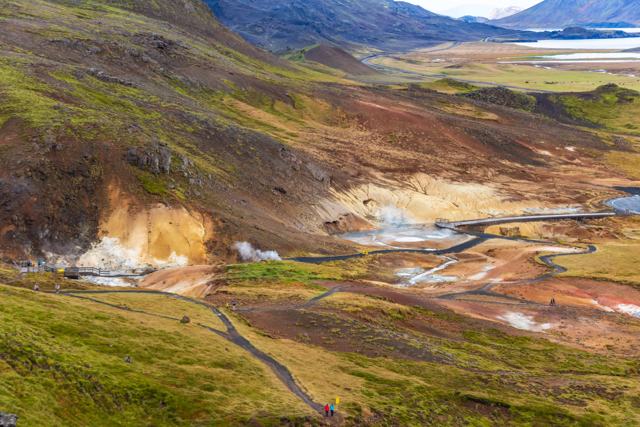
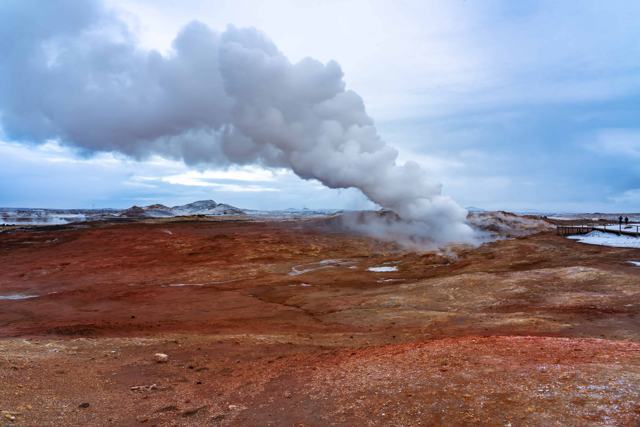
- Gunnuhver: a large, noisy mud and steam area on boardwalks, among the biggest mud pools in Iceland. It is named after Gunna, a ghost said to have haunted the peninsula until a priest tricked her into the spring.
- Reykjanestá and Reykjanesviti lighthouse: the first lighthouse here was built in 1878 and damaged by earthquakes; the current one was built in 1907–1908. Wild coast, sea stacks and seabirds. It is about 25 km from the airport, roughly 25–30 minutes by car through Hafnir, and close to both Gunnuhver and the Bridge Between Continents, so the three make an easy early-morning loop.
- Brimketill: a rock pool in the lava shelf where the Atlantic surf crashes in. Look, do not swim.
- Viking World (Víkingaheimar) in Reykjanesbær: about 5 km and 10 minutes from the airport. The centrepiece is Íslendingur, a full-size replica of the Gokstad ship that was dug up in Norway in 1880. The shipbuilder Gunnar Marel Eggertsson finished it in 1996 and sailed it to New York in 2000 with a crew of nine, to mark a thousand years since Leifur Eiríksson reached North America. The ship hangs in a glass hall facing Faxaflói bay, and there are exhibitions on the Viking voyages, the settlement of Iceland and Norse mythology, plus a café. It opens at 9 am in summer and 10 am in winter, and a visit takes 60 to 90 minutes.
- Garðskagi lighthouse: a quiet headland north of the airport with two lighthouses and good birdwatching.
Spend the morning in Reykjavík
If you take the airport bus into town, you can leave your bags and explore on foot. Central Reykjavík is small, and the main sights are within a 30-minute walk of each other. See our Reykjavík guide for more.
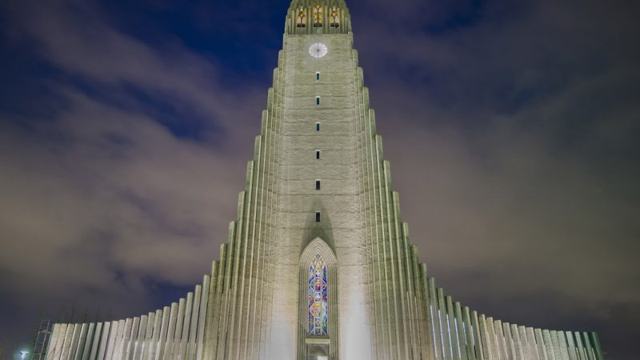
- Hallgrímskirkja: the 74.5-metre church is Reykjavík's landmark. In winter (from 1 September) it opens 10 am to 5 pm, and in summer 9 am to 8 pm. The tower lift gives the best view of the city; tickets are sold at the door and cannot be booked ahead. Hours change for services and concerts.
- Laugavegur and the Rainbow Street: the main shopping street, with cafés that open early for breakfast.
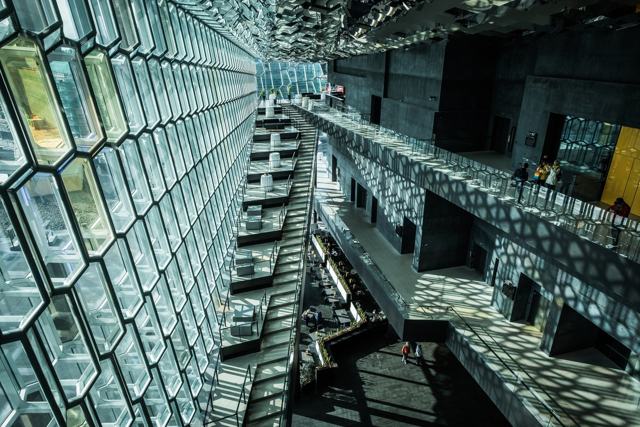
- Harpa: the glass concert hall by the harbour. The building opens at 10 am every day, until 6 pm Sunday to Tuesday and 8 pm Wednesday to Saturday.
- The Sun Voyager: the steel ship sculpture on the seafront, a short walk east of Harpa, with views of Mount Esja.
- Tjörnin: the city pond beside City Hall, with birdlife and an easy walk to the National Gallery of Iceland.
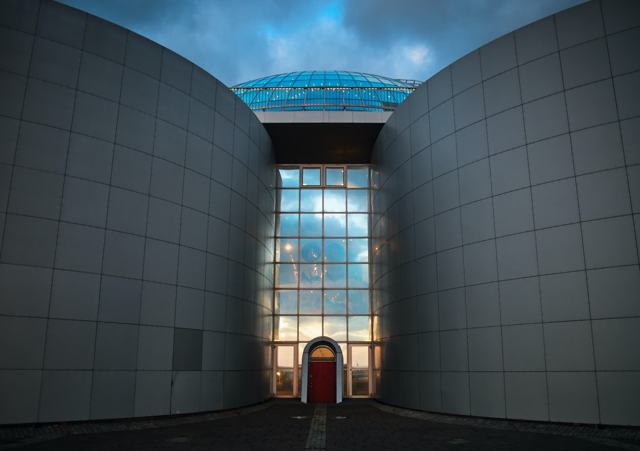
- Perlan: a nature museum on Öskjuhlíð hill with an ice cave exhibit, a planetarium and a 360° observation deck. Exhibitions are open 9 am to 9 pm. It is uphill from the centre, so a bus or taxi helps with tired legs.
Icelandic art and culture: what is open and when
If the weather is poor or you simply want to be indoors, Reykjavík's landmarks and museums fill a morning well. All of these are within walking distance of the BSÍ bus terminal, where the airport buses stop.
Hallgrímskirkja. Reykjavík's Lutheran parish church is the tallest church in Iceland. It is named after Hallgrímur Pétursson, the 17th-century poet who wrote the Passion Hymns, and it took 41 years to build. Inside is a pipe organ by Johannes Klais of Bonn, finished in December 1992. Even before the doors open you can walk around the outside, which is one of the best-known sights in the country, and when the tower opens you get a view over the coloured roofs to the mountains. The church is less than a kilometre from BSÍ.
Harpa. The glass façade is modelled on Iceland's basalt columns, and the building won the European Union's Mies van der Rohe Award for contemporary architecture in 2013. It is the home of the Iceland Symphony Orchestra. You can walk in for free to see the light through the glass, sit down with a coffee and look out at the harbour. It is about 1.8 km from BSÍ, an easy walk through the centre.
The National Gallery of Iceland. At Fríkirkjuvegur 7, beside Tjörnin pond, about 1 km from BSÍ along Sóleyjargata. It shows changing exhibitions of Icelandic and international art and has a café and a shop.
Reykjavík Art Museum. One museum in three buildings. Hafnarhús, an old harbour warehouse on Tryggvagata, shows contemporary art and holds the collection of the pop artist Erró; it is about 1.7 km from BSÍ. Kjarvalsstaðir, about 1.4 km from BSÍ, is devoted to the painter Jóhannes Kjarval and modern art. Ásmundarsafn, further east, is the former home and studio of the sculptor Ásmundur Sveinsson, with a sculpture garden outside.
Perlan. The glass dome on Öskjuhlíð hill is about 1.4 km from BSÍ, around 20 minutes on foot. Its exhibitions cover what you are about to see around the country: volcanoes, earthquakes, glaciers and geothermal heat, with a man-made ice cave and a planetarium show about the Northern Lights. If you have time, walk up through the Öskjuhlíð woods. You may well see wild rabbits among the trees.
Join a tour on your arrival day
Many day tours leave Reykjavík in the morning. If your flight lands early, go straight into town on the airport bus, meet your tour at a pick-up point and spend the day sightseeing instead of waiting. Leave a buffer in case your flight is late, and choose a tour that returns in the late afternoon so you can check in and sleep.
The airport is 40–50 minutes from the city, so the timing is the tricky part. Take the first airport bus you can after you land. Many tours pick up at the BSÍ terminal or at the marked tour bus stops in the centre, so you can wait there with a coffee until your pick-up arrives.
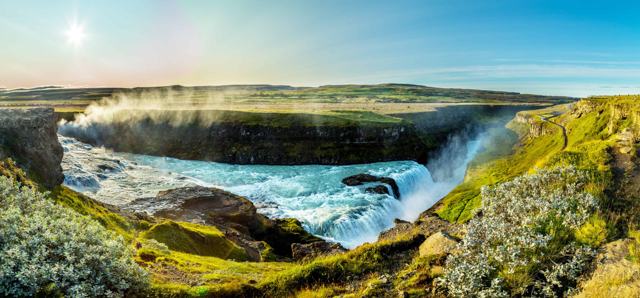
Good choices for arrival day are the Golden Circle with Þingvellir, Geysir and Gullfoss, or a short Reykjavík tour. Our Golden Circle private tour lets you set the pace, which helps after a night flight. In late spring and summer, puffin boat trips and whale watching leave from Reykjavík's Old Harbour; see our puffin tours and whale watching tours, and our puffin guide. Reykjavik Whale Watching & Puffins combines both in one trip.
Longer trips such as a South Coast glacier hike or an ice cave tour mean a very long day after a night flight. They are usually better on day two. Our glacier hiking guide and Katla ice cave guide help you plan them.
Activities you can book for your first day
If you have the energy, almost every kind of day tour in Iceland can start on arrival day. Here is what each one involves, so you can judge what suits you after a night flight.
- Sightseeing tours: the easiest choice, since you sit back and see several places in one day. The most popular day routes are the Golden Circle, the South Coast and the Snæfellsnes Peninsula. Multi-day tours with nights in the countryside cover more ground; see our tour packages.
- Ice cave tours: most natural ice caves are only safe to enter in the middle of winter, so there is more choice from November to March. The Katla ice cave near Vík can be visited all year.
- Glacier hiking: guided walks on crampons run on Sólheimajökull on the South Coast and on the Vatnajökull outlet glaciers at Skaftafell. Some add ice climbing.
- Horse riding: the Icelandic horse is small, strong and good-natured, and stables close to Reykjavík run morning rides through lava fields. A ride of an hour or two is a gentle way to start a trip.
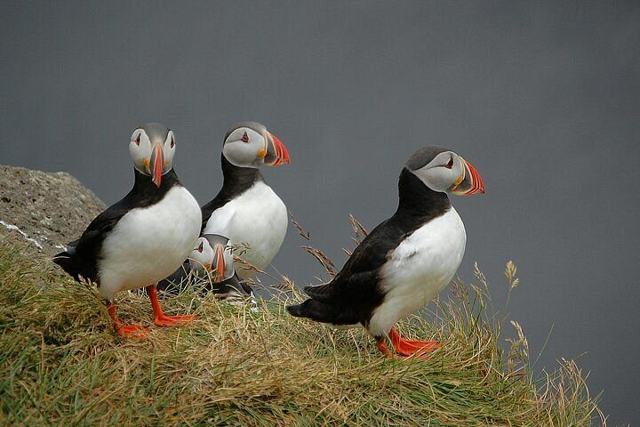
- Bird watching and puffins: from May to mid-August, boats from the Old Harbour go out to the small islands in the bay where puffins nest. You may also see eider ducks, guillemots, cormorants and Arctic terns, and the captain often cuts the engine so you can hear the colony.
- More activities: snorkelling, snowmobiling, ATV rides, hiking, hot spring tours and volcano tours all run as day trips from Reykjavík.
Prefer a slow start? Breakfast, a swim and a rest
Not everyone wants to sightsee straight off the plane. Reykjavík has bakeries and cafés that open from around 7 or 8 am, so you can sit down to a proper breakfast in the centre and watch the city wake up.
The city's geothermal swimming pools open early in the morning. A swim, a soak in the hot tubs and a shower is how many locals start the day, and it works just as well after a night flight. Bring swimwear in your hand luggage.
If you know you will need sleep, ask your hotel about early check-in when you book. Some offer it for a fee when rooms are free. The only way to be sure of a bed at 7 am is to book the room for the night before as well.
Sample plans
Short stopover (5 to 7 hours): land, store your bags or keep them in the car, soak at the Blue Lagoon, have an early lunch, and return to the airport. If you prefer sightseeing, Viking World and the Reykjanes coast fit into the same window.
Arriving to stay, self-drive: collect the car, spend the morning at the Blue Lagoon, drive the Reykjanes loop past Gunnuhver and the lighthouse, then continue to Reykjavík for an afternoon check-in.
Arriving to stay, no car: take the airport bus to BSÍ, drop your bags at your hotel, walk from Hallgrímskirkja down to the harbour and Harpa, and book an afternoon puffin or whale trip in season.
Staying longer than one day? Our 4 Day Iceland Tour Package covers the Golden Circle, the South Coast and Snæfellsnes, and our tour packages page has more. Also read our stopover guide, how many days you need in Iceland and common itinerary mistakes.
Tours to book
If you would rather not organise arrival day yourself, these fit well around an early landing.
- Reykjanes Peninsula Private Tour: the Bridge Between Continents, Gunnuhver and Brimketill with your own guide, with airport pick-up available.
- Golden Circle Private Tour from Reykjavík: Þingvellir, Geysir and Gullfoss with a local guide, at your own pace.
- 4 Day Iceland Tour Package: for a longer stay, the Golden Circle, South Coast and Snæfellsnes in one trip.
Questions people ask
What can I do in Iceland if I arrive early in the morning?
Visit the Blue Lagoon near the airport from 7 or 8 am, drive the Reykjanes Peninsula, explore central Reykjavík on foot, or join a morning day tour such as the Golden Circle.
What time does the Blue Lagoon open?
At 7 am from 15 June to 20 August and at 8 am the rest of the year. You need to book an entry time in advance, and hours can change during volcanic unrest.
Can I store luggage at Keflavík Airport?
Yes. There are luggage lockers on the arrivals side of the terminal, and there are storage points in Reykjavík. Many hotels also hold bags before check-in.
Is it safe to visit the Reykjanes Peninsula with the eruptions?
Generally yes. Flights and Reykjavík have not been affected, but roads near an eruption site can close and some areas are hazardous. Check safetravel.is before you go and stay on marked paths.
Can I join a tour on the day I land in Iceland?
Yes, if your flight lands early. Take the first airport bus to Reykjavík and choose a tour with a pick-up at BSÍ or in the centre. Leave a buffer in case the flight is late.
What is open early in Reykjavík?
Bakeries, cafés and the geothermal swimming pools open first. Most museums open at around 10 am, and Hallgrímskirkja and Perlan from 9 or 10 am depending on the season.