Iceland Travel GuideLOCAL TRAVEL AGENCY IN ICELAND
My trip
Talk to a local
Iceland Travel GuideLOCAL TRAVEL AGENCY IN ICELAND
My trip
Talk to a local
Harpa is Reykjavík's concert hall and conference centre, right on the harbour front in the city centre. It is free to walk in and look around, open year round, and most people spend 20-30 minutes on their own, longer if attending a concert or guided tour.
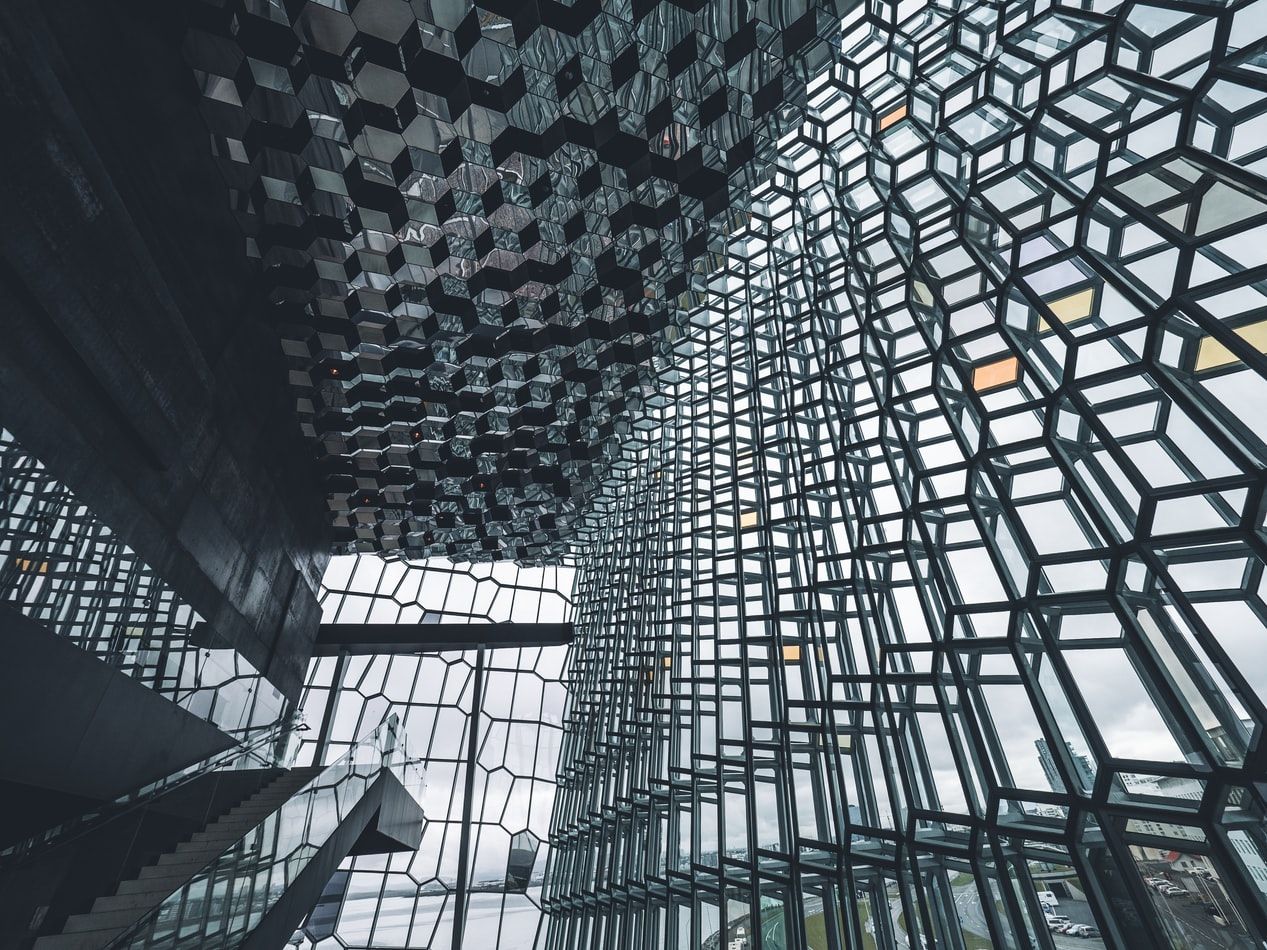
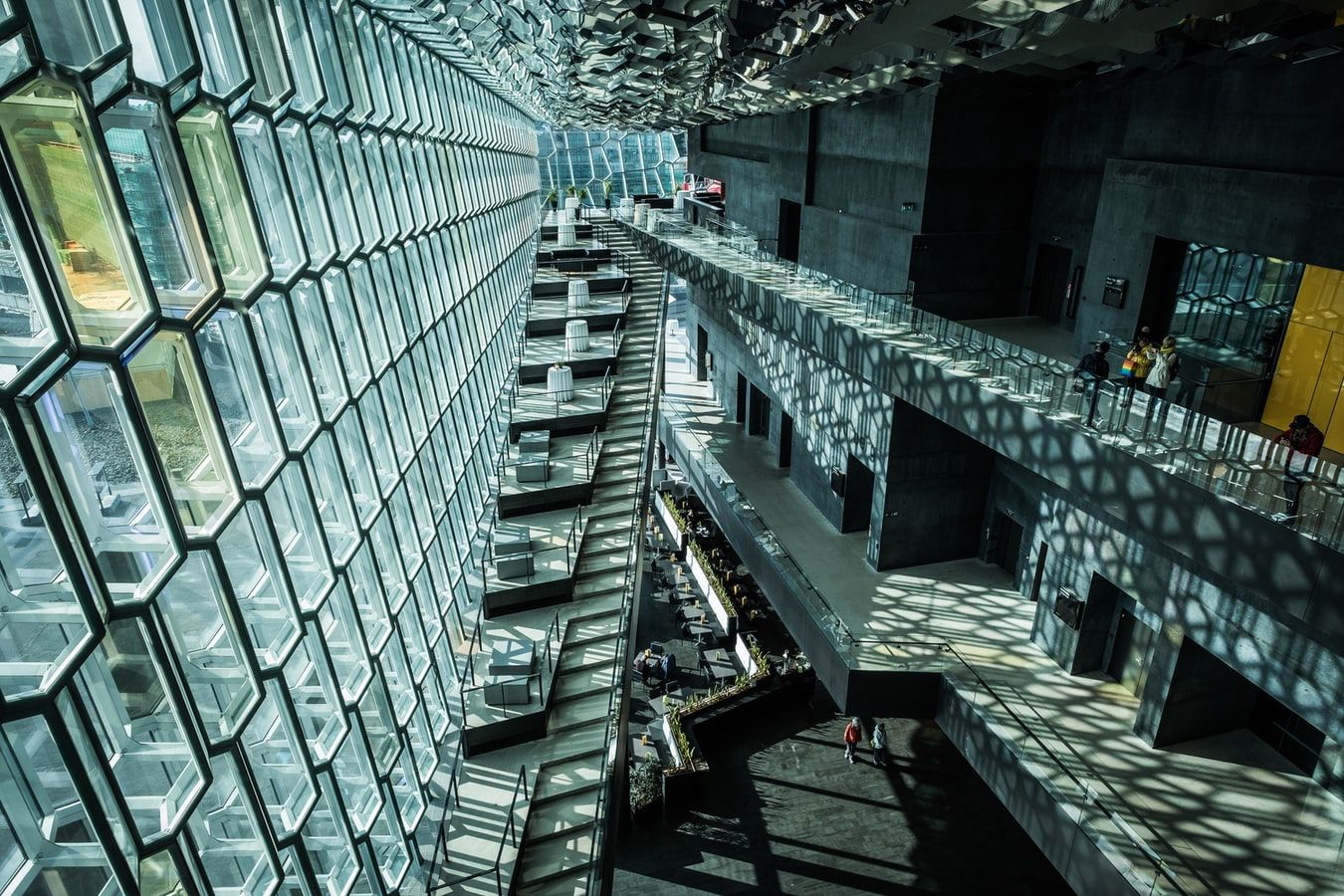
Harpa opened in 2011 and quickly became one of the most recognisable buildings in Reykjavík. Its glass façade, designed with artist Ólafur Elíasson, is made up of large geometric panels inspired by Iceland's basalt columns. They catch and reflect light in different ways through the day, and change colour after dark when the building is lit up.
Inside, Harpa is home to the Iceland Symphony Orchestra and the Icelandic Opera, and hosts well over a thousand concerts and events a year, from classical performances to festivals like Iceland Airwaves. Even without a ticket, it is worth walking through the lobby for the architecture, the harbour views and the shop and cafés on the ground floor.
The inside is as much a part of the visit as the outside. Wood, concrete and glass are combined in tall, open atriums with long staircases, and the windows frame views of Reykjavík harbour and Mount Esja across the bay. Harpa is used for concerts, conferences, exhibitions and festivals, so there is nearly always something going on.
Plans for a concert hall and conference centre on the harbour go back to 2004, when the Icelandic government and private investors agreed to build one together. Construction began in January 2007. Harpa was meant to be the centre of a much larger harbour development with a hotel, apartments, shops and a bank headquarters.
Then came the financial crash of 2008. Work stopped and the half-built hall stood empty on the waterfront. The government decided to pay for its completion, and Harpa came to be seen as a symbol of resilience and of the value Icelanders place on culture.
The first concert was held on 4 May 2011, with the Iceland Symphony Orchestra, the conductor Vladimir Ashkenazy and the pianist Víkingur Ólafsson. In 2013 Harpa won the European Union's Mies van der Rohe Award for contemporary architecture.
Harpa is worth a visit for the building alone, whether or not you care about music.
Harpa has four halls, each with acoustics designed for a different kind of event.
Check the calendar on harpa.is and book concert, opera or festival tickets in advance.
Harpa has a bistro, a restaurant with harbour views, a gift shop selling Icelandic design, and toilets. It is fully accessible with lifts between floors.
Harpa sits right in downtown Reykjavík, within walking distance of most city centre hotels and guesthouses.
Yes, the building and lobby are free to enter. Concerts and some exhibits require a ticket.
Yes, photography is generally allowed in the public areas.
Yes, many visitors come just to see the architecture, the harbour views and the shop and cafés.
It is an easy 10-15 minute walk from most central hotels, right on the harbour front.
In May 2011. The first concert was on 4 May 2011. Construction began in 2007 and was interrupted by the financial crash of 2008.
Henning Larsen Architects and Batteríið Architects designed the building, and the artist Ólafur Elíasson designed the glass façade.
Yes. Harpa runs its own guided tours of the building, including areas normally closed to the public. Check harpa.is for current times and prices.
Yes, there is a paid underground car park beneath the building.
Tours and trips that include Harpa, booked directly with a local travel agency in Iceland.