Iceland Travel GuideLOCAL TRAVEL AGENCY IN ICELAND
My trip
Talk to a local
Iceland Travel GuideLOCAL TRAVEL AGENCY IN ICELAND
My trip
Talk to a local
Reykjanestá is the rocky southwestern tip of the Reykjanes Peninsula, marked by Iceland's oldest lighthouse and surrounded by sea cliffs, stacks, the Valahnúkamöl boulder ridge and geothermal steam. It is about 75 km (around 1 hour) from Reykjavík, free to visit, open all year, and worth an hour for the viewpoints and short walks.
Reykjanestá sits at the far southwestern corner of Iceland, a bare, wind-scoured headland where the Mid-Atlantic Ridge comes ashore. Iceland's first lighthouse was built here on the cliff of Valahnúkur in 1878, but earthquakes and coastal erosion damaged it so badly that a replacement was built a short distance inland on Bæjarfell hill in 1907–1908, and the original was demolished. That newer lighthouse, still in use, is what most visitors photograph today.
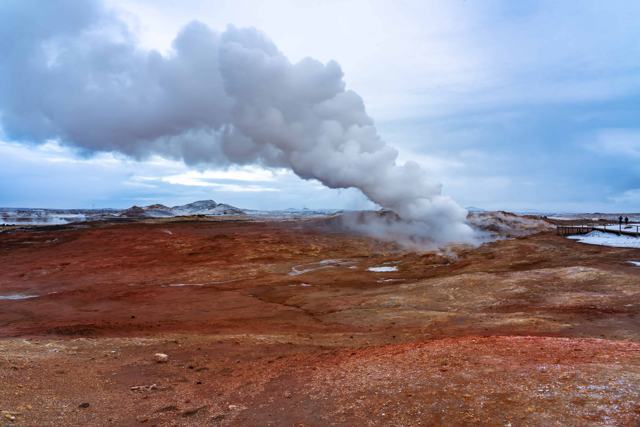
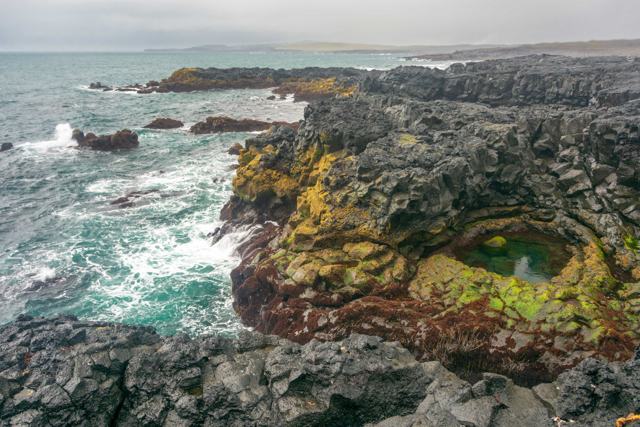
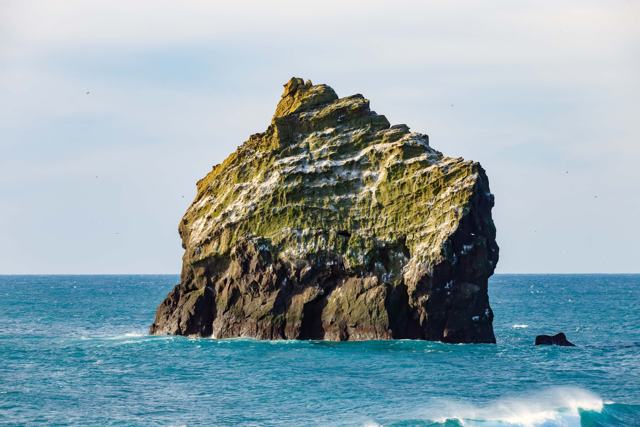
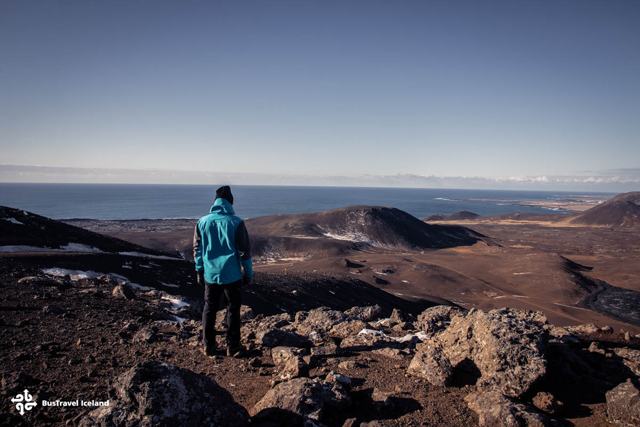
The surrounding landscape is as much the attraction as the lighthouse: black sea cliffs, the sea stack Karlinn rising just offshore, and the steaming ground of the nearby Gunnuhver geothermal area. It is a stark, elemental spot, often windy, and a good place to feel how young and active this part of Iceland still is.
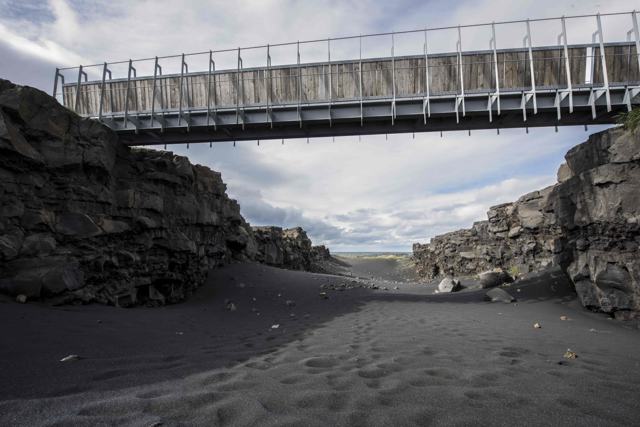
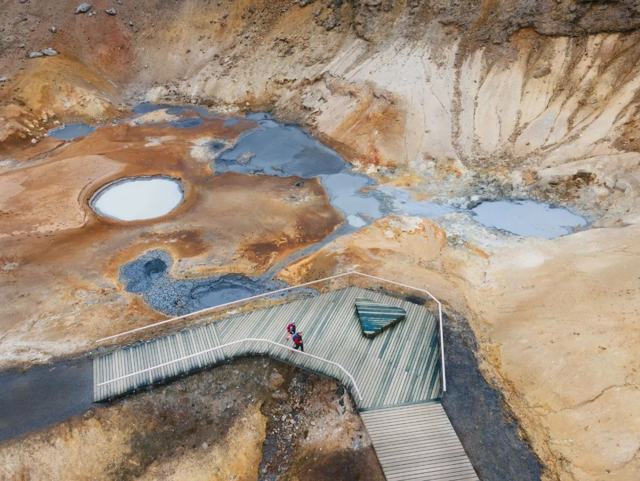
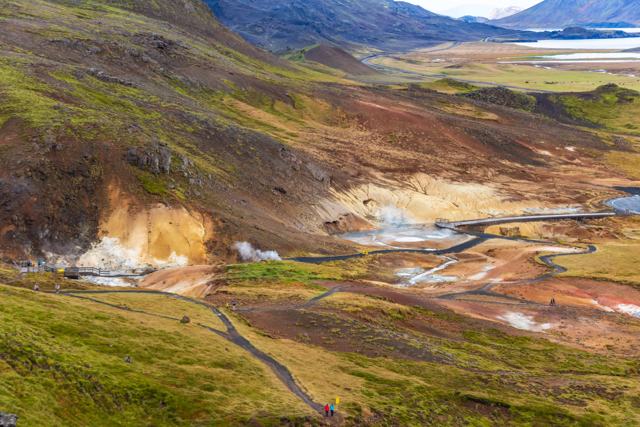
Reykjanes lies on the Mid-Atlantic Ridge, where the North American and Eurasian plates drift apart. That is why the whole peninsula is lava fields, craters and hot ground, with geothermal areas at Gunnuhver, Svartsengi and Krýsuvík, and why earthquakes are common. After about 800 quiet years the peninsula has been erupting again since 2021, further east near Fagradalsfjall and Grindavík. The tip itself has not been affected so far, but check safetravel.is before you drive out.
The first lighthouse at Reykjanes, built in 1878 on the cliff of Valahnúkur, was Iceland's very first. It did not last long: earthquakes weakened the structure and the sea steadily undercut the cliff it stood on. A new lighthouse was built further inland on Bæjarfell hill in 1907–1908, and the old one was brought down by a controlled explosion in April 1908. In a survey of Icelanders' favourite lighthouses, Reykjanesviti came out on top, a nod to how much this bare, dramatic headland is loved despite, or because of, its harsh setting.
The headland is one of the windiest spots in Iceland, so expect strong gusts even on an otherwise calm day.
Everything is within a short walk of the car park by the shore.
Watch for cracks and fissures in the ground and keep back from cliff edges and the waterline. The surf at this tip of Iceland is among the heaviest in the country and waves can reach far higher than you expect.
A small visitor centre operates near the lighthouse in season. There are no shops or cafés at the headland itself. Grindavík is the nearest town, but it has been affected by the eruptions since 2023, so check what is open there. Reykjanesbær has the full range of fuel, shops and food.
Most visitors see Reykjanestá on a day trip from Reykjavík or as a stop on the way to or from Keflavík airport. Reykjanesbær has hotels and guesthouses if you prefer to stay on the peninsula.
No, the lighthouse is not open to the public inside; visitors view it from outside and explore the surrounding cliffs and paths.
About 75 km, roughly 1 hour by car.
No, the headland and viewpoints are free to visit.
It is home to Iceland's first lighthouse, built in 1878, and sits where the Mid-Atlantic Ridge comes ashore, making it a striking spot to see the Reykjanes Peninsula's volcanic landscape.
No. Access to the top has been closed since 2016 because of cracks in the cliff. You can see it from the car park and the shore below.
A ridge of large, sea-rounded boulders beside Valahnúkur at the tip of Reykjanes. The name is sometimes used for the whole spot.
A bronze sculpture by Todd McGrain in memory of the great auk, a flightless seabird that became extinct after the last known pair was killed on nearby Eldey in 1844.
Kittiwakes and other seabirds nest on the cliffs and on the stack Karlinn in spring and summer, and Eldey offshore has a very large gannet colony.
Tours and trips that include Reykjanestá, booked directly with a local travel agency in Iceland.