Iceland has around 30 active volcanic systems, and an eruption happens every few years on average. Since 2021 the Reykjanes Peninsula near Keflavík Airport has had twelve eruptions, the latest in July–August 2025, and as of 19 October 2026 there is no eruption. You can hike to young lava fields, walk around old craters and even go inside a dormant volcano, and the country is well monitored and safe to visit.
Why Iceland has so many volcanoes
Iceland sits on the Mid-Atlantic Ridge, where the North American and Eurasian plates pull apart by about two centimetres a year. The ridge crosses the island from Reykjanes in the south-west to the north-east coast. Under Iceland there is also a hotspot, a plume of hot rock rising from deep in the Earth. The two together make Iceland one of the most volcanically active places on the planet.
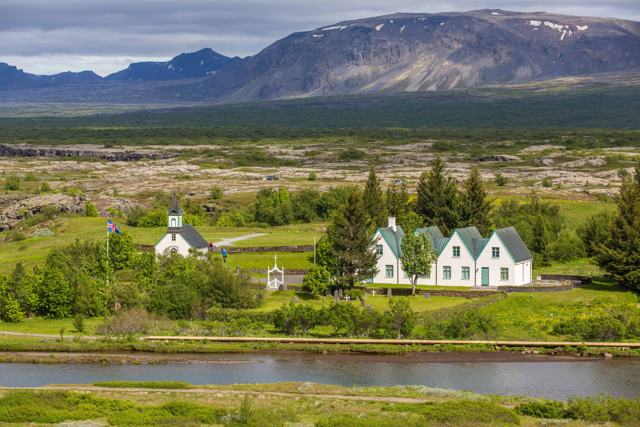
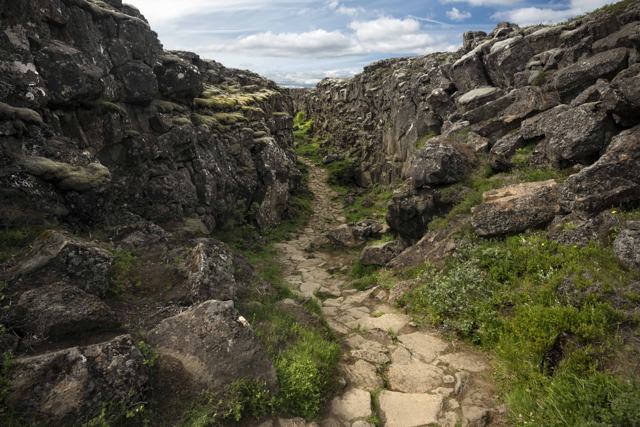
Scientists count around 30 active volcanic systems. Each system usually has a central volcano and a swarm of fissures, so an eruption can come from a single mountain or from a long crack in the ground. At Þingvellir you can walk through the rift valley itself.
Types of volcanoes you will see
- Stratovolcanoes: steep cones built from layers of lava and ash, such as Hekla, Eyjafjallajökull and Snæfellsjökull.
- Fissure eruptions: long cracks that open and pour out lava, such as Laki and the recent Reykjanes eruptions.
- Subglacial volcanoes: volcanoes under ice caps, such as Katla, Grímsvötn and Bárðarbunga. When they erupt the ice melts and can cause sudden glacial floods, called jökulhlaup.
- Table mountains (tuyas): flat-topped mountains formed when volcanoes erupted under the Ice Age ice sheet. Herðubreið in the north-east highlands, often called the queen of Icelandic mountains, is the best-known example.
- Craters and explosion craters: such as Hverfjall, Kerið and Eldborg, which are easy to walk around.
The Reykjanes eruptions since 2021
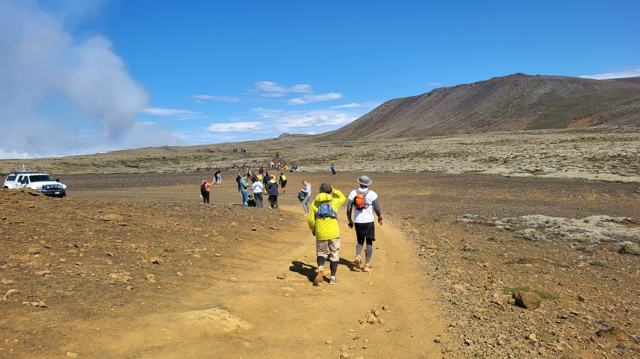
For almost 800 years the Reykjanes Peninsula was quiet. That ended on 19 March 2021, when lava broke through in Geldingadalir, a small valley beside Fagradalsfjall mountain. The eruption lasted six months, until 18 September 2021, and hundreds of thousands of people hiked in to see it. Two more eruptions followed nearby: in Meradalir from 3 to 21 August 2022, and at Litli-Hrútur from 10 July to 5 August 2023.
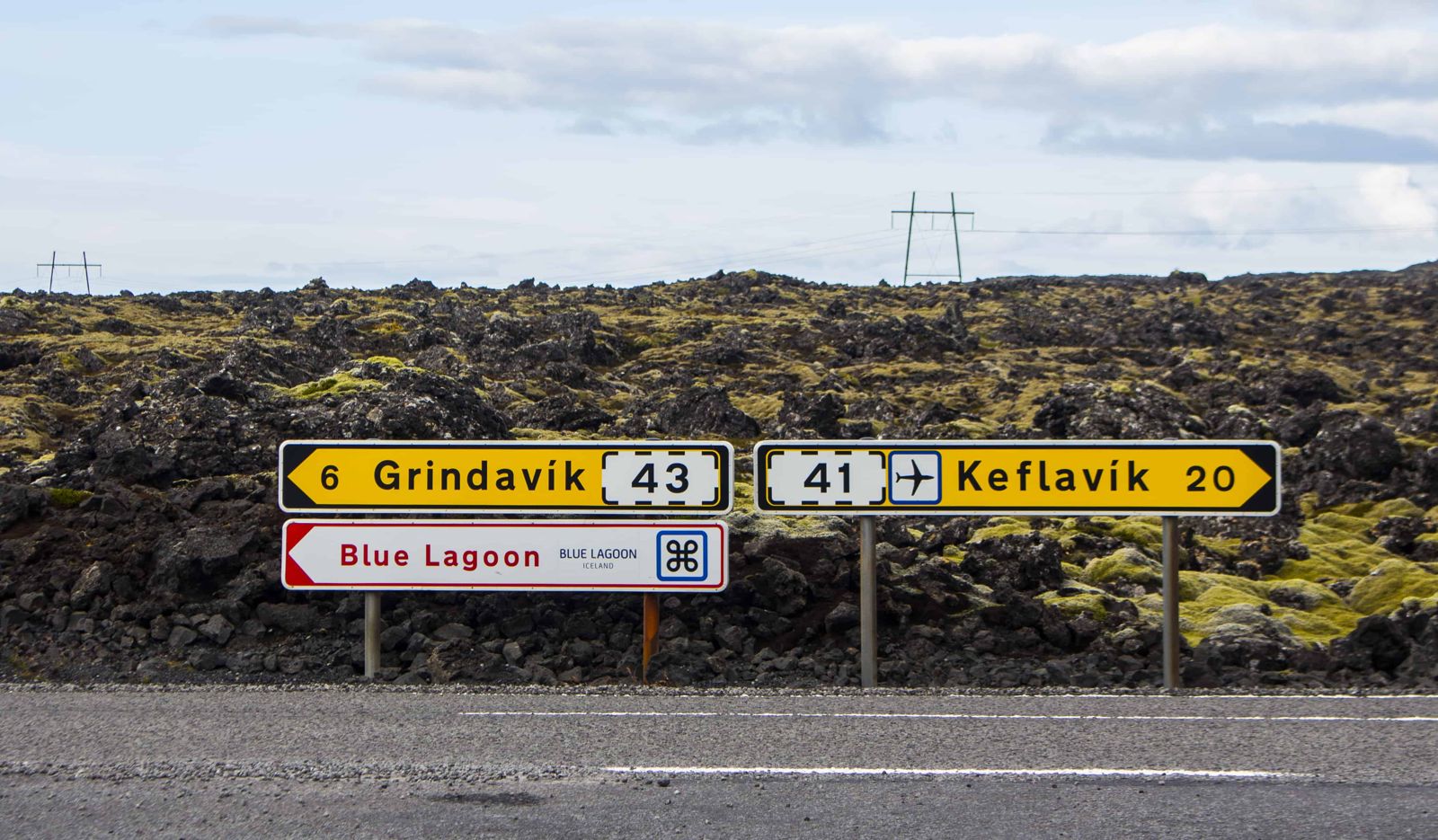
Activity then moved a few kilometres west to the Svartsengi system and the Sundhnúkur crater row, just north of the fishing town of Grindavík. After strong earthquakes, the town was evacuated on 10 November 2023. Nine eruptions followed between December 2023 and August 2025. In January 2024 lava reached the edge of Grindavík and destroyed three homes. Most of the others flowed away from the town, held back by large protective walls. The ninth and latest eruption ran from 16 July to 5 August 2025.
As of 19 October 2026 there is no eruption anywhere in Iceland. In its update of 30 September 2026 the Icelandic Met Office reported that the ground at Svartsengi is still rising slowly, about 4 cm over the previous three months, as magma collects underneath. By mid-August about 29 million cubic metres had gathered since July 2025. A new intrusion or eruption on the Sundhnúkur crater row is still the most likely next step, but the timing cannot be predicted. Past eruptions here have started with only 20 minutes to four hours of warning. A new hazard assessment took effect on 30 September: Grindavík is in the 'considerable hazard' zone and Svartsengi in a lower zone.
What this means for travellers: the airport, Reykjavík and the rest of Iceland have not been affected, and flights have kept running during every Reykjanes eruption. The Blue Lagoon has closed and evacuated for short periods when eruptions began, then reopened. Grindavík is open to visitors; the town is at the civil protection 'uncertainty' level, and visitors are asked to listen for the evacuation sirens and follow signs and responders. The old Fagradalsfjall eruption sites are open for hiking. For the latest each week, see our volcano eruption update, our Fagradalsfjall guide and our Reykjanes tours.
Famous volcanoes in Iceland
These are the volcanoes visitors ask us about most. Several have a place guide with directions and tours.
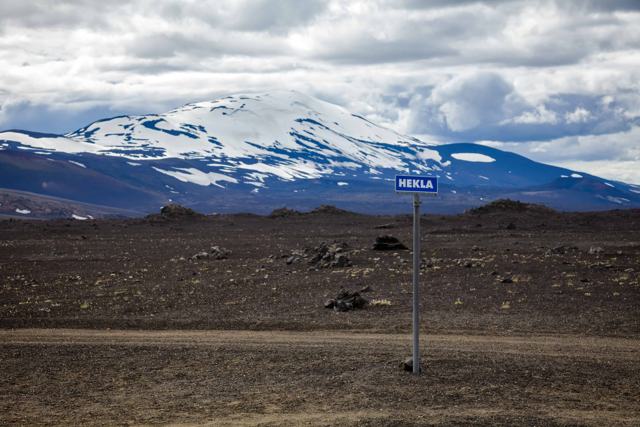
- Hekla (1,488 m, South Iceland): Iceland's best-known volcano. After a huge eruption in 1104, stories spread in Europe that it was the gateway to hell. It has erupted more than 20 times in recorded history, most recently in 2000, and gives very little warning.
- Eyjafjallajökull (South Coast): its 2010 eruption sent an ash cloud over Europe and grounded flights for days. The first phase at Fimmvörðuháls made a new lava field you can see on the Fimmvörðuháls hike.
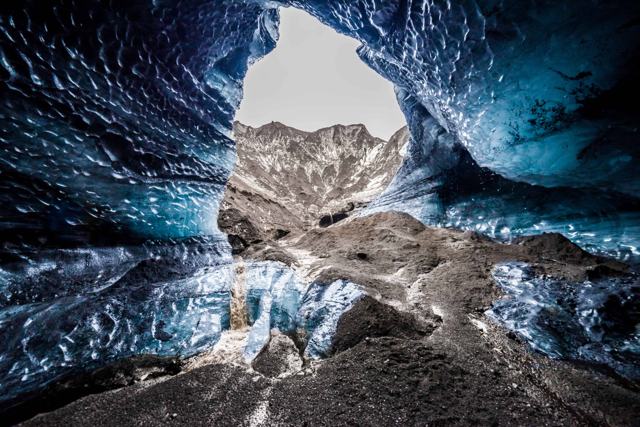
- Katla (under Mýrdalsjökull): one of Iceland's most powerful volcanoes. Its last major eruption was in 1918, and it is closely watched. Small glacial floods still come from the ice cap, including one into the Múlakvísl river in August 2026. Visitors know the area from the Katla ice cave tours.
- Grímsvötn (under Vatnajökull): the most active volcano in Iceland, last erupting in May 2011. The Laki fissure belongs to its volcanic system.
- Bárðarbunga (under Vatnajökull): its fissure eruption at Holuhraun from August 2014 to February 2015 was Iceland's largest in about 230 years.
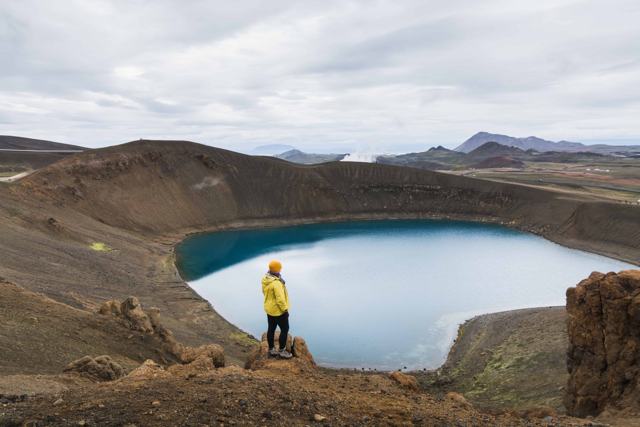
- Askja (Highlands): a huge caldera holding Öskjuvatn, one of Iceland's deepest lakes, next to the small Víti crater. A violent eruption in 1875 led many people in the east and north to emigrate to North America. Its last eruption was in 1961. The ground rose from 2021, but the Met Office confirmed in August 2026 that the uplift has stopped.
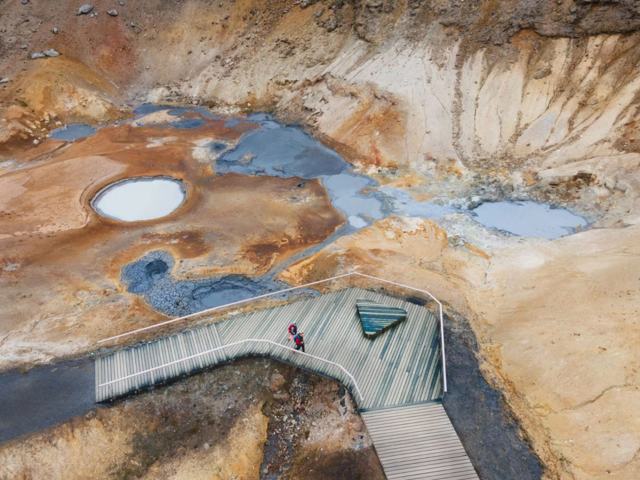
- Krafla (North Iceland): a caldera about 10 km across near Mývatn. The Krafla Fires from 1975 to 1984 brought nine eruptions. Today you can see the green-blue Víti crater lake, steaming lava fields and a geothermal power station.
- Hverfjall (Mývatn): a wide ash crater about 2,500 years old with a short, steep path to the rim and a walk right around the top. One of the easiest volcano hikes in the country.
- Snæfellsjökull (West Iceland): the ice-capped volcano at the end of Snæfellsnes, made famous by Jules Verne's Journey to the Centre of the Earth. It last erupted around 1,800 years ago and is still considered active.
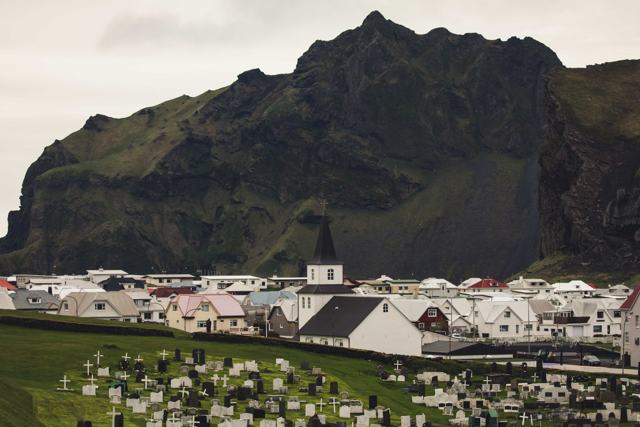
- Eldfell (Westman Islands): opened without warning on Heimaey in January 1973. About 5,300 people were evacuated overnight. You can climb the young cone and visit the Eldheimar museum about the eruption.
Laki 1783–84: Iceland's deadliest eruption
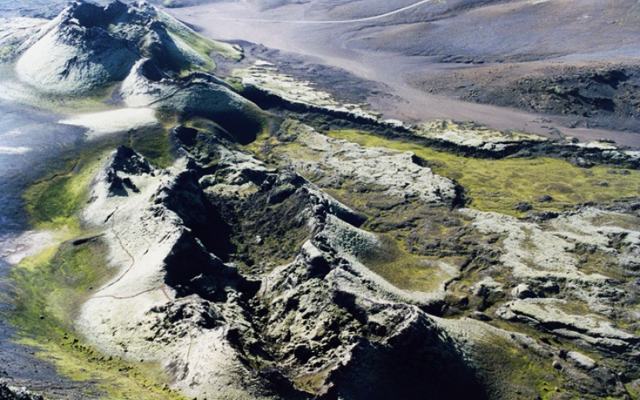
In June 1783 a 27-kilometre row of craters at Laki opened and poured out lava and poisonous gas for eight months, until February 1784. Fluorine in the ash poisoned the grass, and around half of Iceland's livestock died. In the famine that followed, about a fifth of the population died.
The gas haze spread over Europe and caused a very hot summer and a hard winter, with many deaths abroad. Today you can visit the Lakagígar craters by 4×4 in summer, and drive across the Laki lava at Eldhraun on the Ring Road between Vík and Kirkjubæjarklaustur. In summer our Laki Crater and Lakagígar lava tour goes there by super jeep from Kirkjubæjarklaustur.
Is it safe to visit Iceland's volcanoes?
Yes, with common sense. Iceland is one of the best-monitored volcanic countries in the world. The Icelandic Met Office runs a dense network of seismometers, GPS and gas sensors and issues warnings, and the Civil Protection authorities close areas quickly when needed. Most of the country is never affected by an eruption, and early settlers kept away from the most dangerous zones. Read more in why Iceland is so safe.
The real risks at an eruption site are volcanic gas, which collects in hollows on calm days, new lava that looks solid but is not, and ground cracks. Never walk on new lava, follow closures, check the gas forecast and keep children and dogs away from low ground.
How volcanoes help Iceland
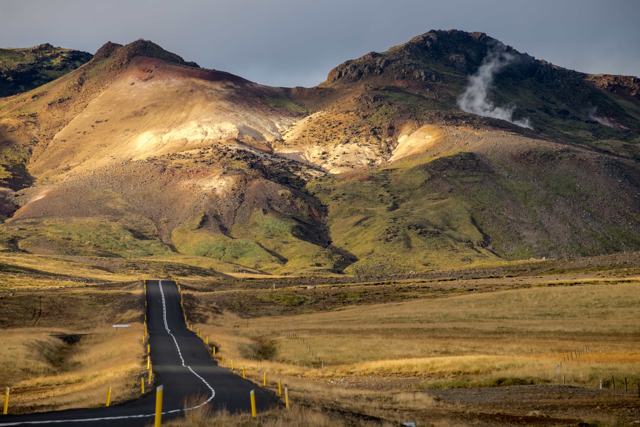
Volcanic heat is part of daily life. At least 90% of Icelandic homes are heated with geothermal water, and geothermal power stations make more than a quarter of the country's electricity, with most of the rest from hydropower. Greenhouses heated this way grow tomatoes, cucumbers and even bananas.
The same heat feeds the country's many hot springs and lagoons. See our hot springs and hidden hot springs guide.
Volcano experiences you can book
You do not need an eruption to see volcanic Iceland up close. Some of our favourite ways:
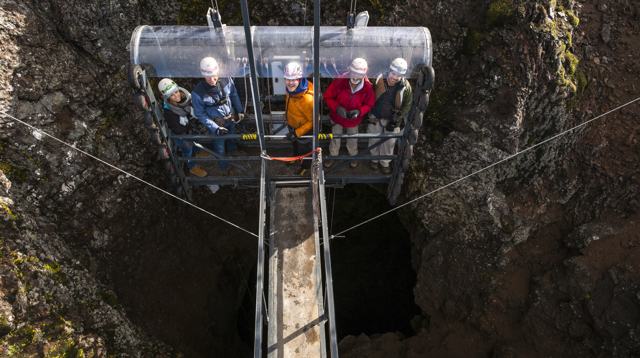
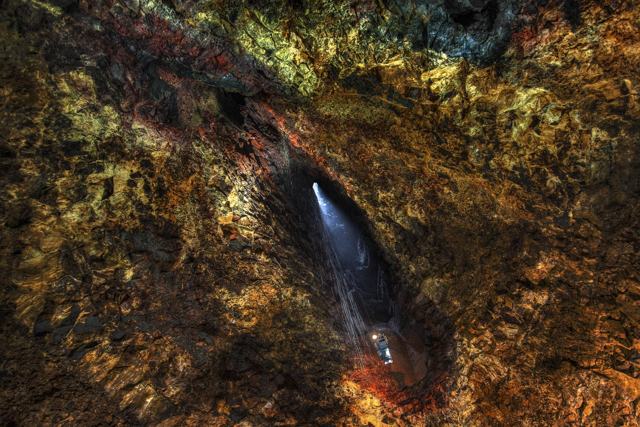
- Go inside a volcano at Þríhnúkagígur, near Reykjavík. It has not erupted for around 4,000 years, and an open lift lowers you about 120 metres to the floor of the empty magma chamber, inside a crater about 213 metres deep. The Inside the Volcano tour runs from 5 May to 30 October.
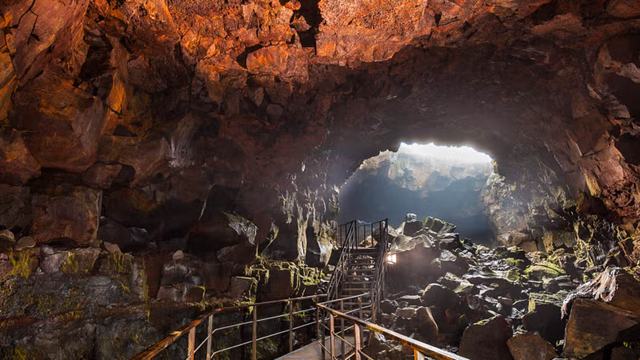
- Walk through lava tubes such as Raufarhólshellir, Leiðarendi and Víðgelmir. Our Raufarhólshellir lava tunnel tour is close to Reykjavík. See our lava cave tours and best lava caves guide.
- Hike to the 2021–2023 lava fields at Fagradalsfjall on a Reykjanes tour. Our Volcano Tour in Iceland is a small-group day hike from Reykjavík across the 2021 and 2022 lava fields, and the Reykjanes Volcano Fields and Grindavík tour visits the Sundhnúkagígar lava field in an afternoon.
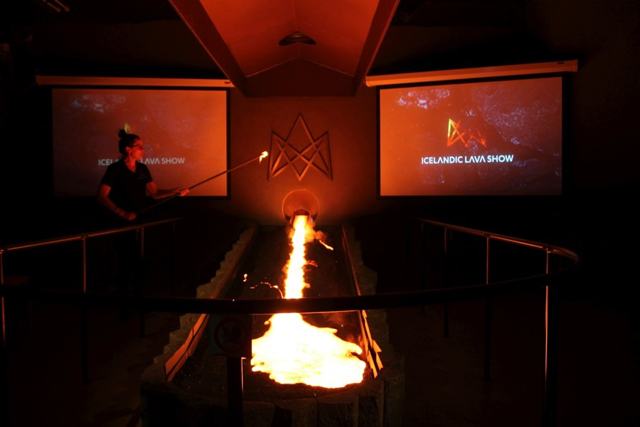
- See real molten lava poured indoors at the Lava Show in Reykjavík, the safe way to see lava when there is no eruption.
- Fly over craters, lava fields and ice-capped volcanoes on a helicopter or airplane tour.
- Explore Mývatn's pseudocraters, Dimmuborgir, Hverfjall and Krafla on a North Iceland tour.
- Visit Landmannalaugar and Askja in summer on highland tours.
Tours to book
If you want to see volcanic Iceland with a guide, these are our suggestions.
- Reykjanes Peninsula private tour: your own guide for 5 hours, with pickup in Reykjavík or at Keflavík Airport, a good start or end to a trip.
- Volcano Tour in Iceland: a guided hike to the Fagradalsfjall and Meradalir lava fields.
- Inside the Volcano: descend into the magma chamber of Þríhnúkagígur, near Reykjavík, from 5 May to 30 October.
- Laki Crater & Lakagígar Lava Tour: the crater row of Iceland's deadliest eruption, in summer.
Questions people ask
How many active volcanoes are there in Iceland?
Iceland has around 30 active volcanic systems. Each system can include a central volcano and many fissures, so the number of individual volcanoes is much higher.
Is there a volcano erupting in Iceland right now?
No. As of 19 October 2026 there is no eruption. The last one, on the Sundhnúkur crater row near Grindavík, ended on 5 August 2025. Magma is still collecting under Svartsengi, so another eruption there is possible. See our weekly volcano update for the latest.
Can I visit the Reykjanes eruption sites?
Yes. The 2021–2023 lava fields at Fagradalsfjall are open for hiking, and Grindavík is open to visitors. Check safetravel.is before you go, follow any closures and never walk on new lava.
Will a volcanic eruption affect my trip to Iceland?
Very unlikely. The Reykjanes eruptions since 2021 have not closed Keflavík Airport or Reykjavík. A large ash eruption under a glacier could disrupt flights, as in 2010, but that is rare.
Can you go inside a volcano in Iceland?
Yes. At Þríhnúkagígur near Reykjavík a lift lowers you about 120 metres into the magma chamber of a volcano that has been dormant for around 4,000 years. The tour runs from 5 May to 30 October.