Iceland Travel GuideLOCAL TRAVEL AGENCY IN ICELAND
My trip
Talk to a local
Iceland Travel GuideLOCAL TRAVEL AGENCY IN ICELAND
My trip
Talk to a local
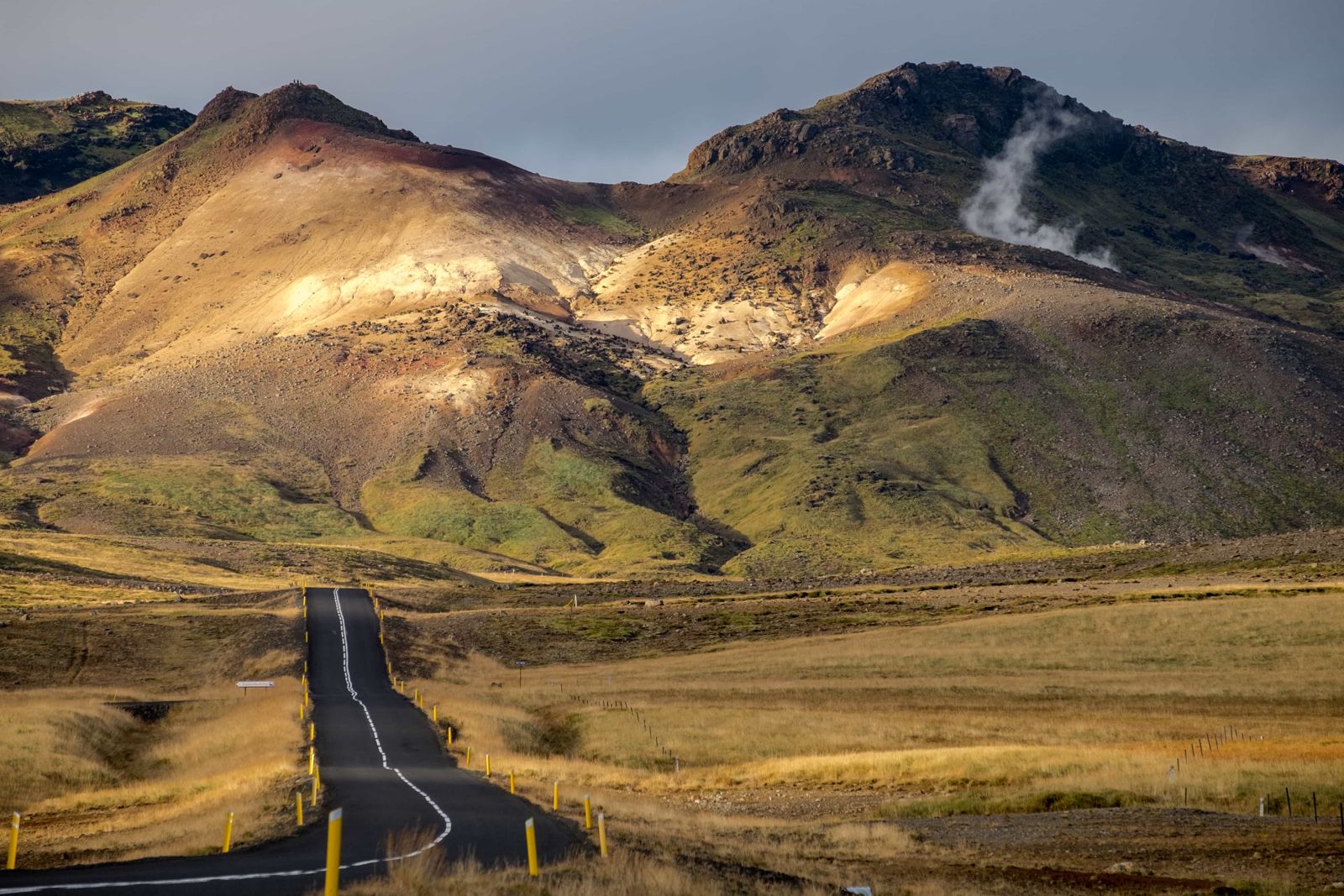
Grindavík is a fishing town on the Reykjanes peninsula, close to the Blue Lagoon and about 50 km (around 45 minutes) from Reykjavík. Since late 2023 the town has been repeatedly evacuated because of an ongoing volcanic eruption sequence nearby, and its situation continues to change, so check current advice before planning a visit.
Grindavík was, before 2023, a busy fishing town of around 3,000 people on Iceland's southwest coast, next to Reykjanesta and a short drive from the Blue Lagoon. An intense earthquake swarm began in late October 2023, escalating into a state of emergency and a full evacuation in November, followed by the first eruption in the Sundhnúkagígar crater row in December 2023. Further eruptions and evacuations have followed through 2024 and into 2025.
Lava has damaged homes and infrastructure inside and around the town at points during the crisis, and the population has fallen sharply as many residents were bought out or relocated. The Icelandic authorities have continued adjusting risk assessments and, more recently, have discussed phased steps toward residents returning and rebuilding, while stressing that the volcanic threat in the area has not ended.
Because the situation has changed repeatedly, with new eruptions, evacuations and reopenings, anything written about Grindavík's status can go out of date quickly. Always check official Icelandic sources, such as the Icelandic Meteorological Office and Almannavarnir (Civil Protection), for the current situation before travelling there.
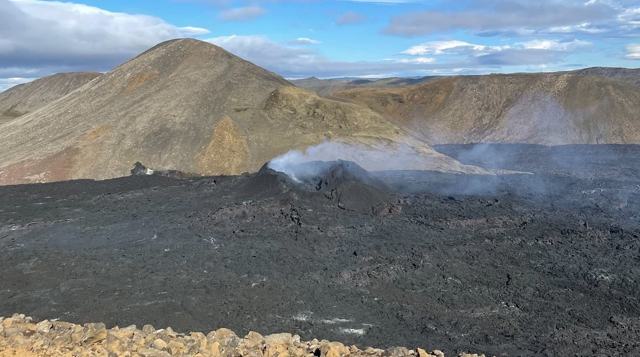
The Sundhnúkagígar crater row, just outside Grindavík, had not erupted in around 800 years before the current sequence began. Since December 2023 it has erupted repeatedly, sending lava toward and, at times, into the edges of the town, and prompting the government to build defensive earth barriers to try to divert flows away from buildings and infrastructure.
The scale of disruption, homes bought by the state, a fishing fleet operating from a town many of its own residents no longer live in, and a national park-style monitoring effort around an active fissure, makes Grindavík's recent history unlike anywhere else in Iceland right now.
The area's status has changed many times since 2023. Check safetravel.is and the Icelandic Meteorological Office before including Grindavík in your plans.
Before it became known as the volcano town, Grindavík was simply one of the most important fishing ports in Iceland.
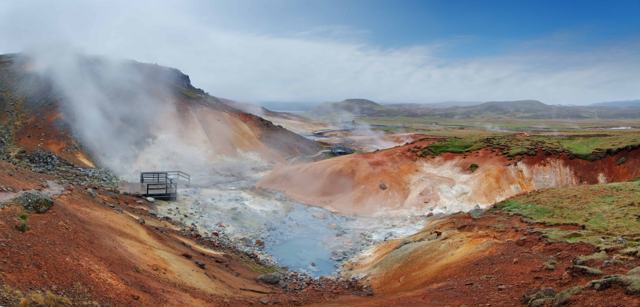
The town sits at the southern edge of the Reykjanes peninsula, with moss-covered lava fields and mountains on one side and the open Atlantic on the other. It has long been home to well-established fish processing plants and a large fleet of fishing boats, and the colourful harbour is still the heart of the place.
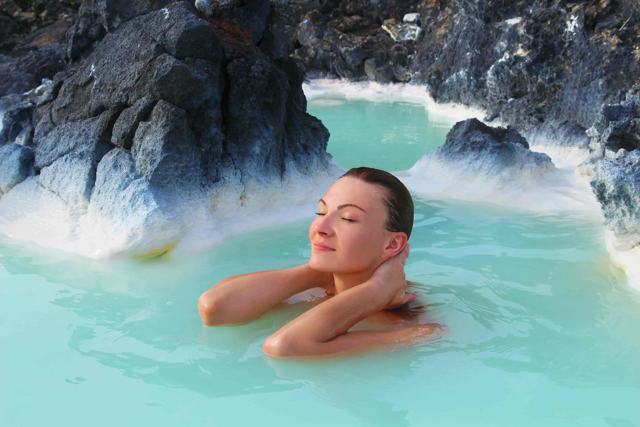
For visitors, Grindavík offered most of what a traveller needs: restaurants, a swimming pool, a campsite opened in 2009, an 18-hole golf course, the town's own sports teams and a museum about saltfish and the fishing industry. Its closeness to the Blue Lagoon, about 6 km away, brought steady growth in tourism.
Each year around Sjómannadagurinn, Iceland's Seamen's Day, on the first weekend of June, the town holds Sjóarinn síkáti, “the ever-cheerful sailor”, a family festival built around the fishing life.
The lava fields and mountains around the town have also been used for hiking, bird-watching from the sea cliffs, trout fishing, caving and horse riding. Since 2023, which of these services and activities are running has depended on the volcanic situation, so check locally before you count on any of them.
Most of the sights are outside the town itself, spread across the lava fields of the southern peninsula. Access to some of them can be restricted during and after eruptions.
Check safetravel.is for current closures before visiting any of these.
In normal conditions the drive from Reykjavík takes 45 to 50 minutes.
Before the eruptions there were buses to the town, and a rental car was the usual choice for visitors. Check current public transport before relying on it.
Given the ongoing situation, most visitors to this part of Reykjanes base themselves in Keflavík, near the international airport, or in Reykjavík, rather than in Grindavík itself.
This changes frequently. Check safetravel.is and the Icelandic Meteorological Office for the current status before planning a visit.
A volcanic eruption sequence at the nearby Sundhnúkagígar crater row began in late 2023 and has continued with repeated eruptions and evacuations since.
The Blue Lagoon has closed temporarily during past eruptions and reopened between them; check its current status separately from the town itself.
Some residents have returned at times between eruptions, but the population is far below its pre-2023 level, and the authorities describe the volcanic threat as ongoing.
About 50 km, around 45 minutes by car, when the area is accessible.
Fishing first of all: it is one of Iceland's main fishing ports. Since 2023 it is also known worldwide as the town beside the Sundhnúkagígar eruptions. The Blue Lagoon is about 6 km to the north.
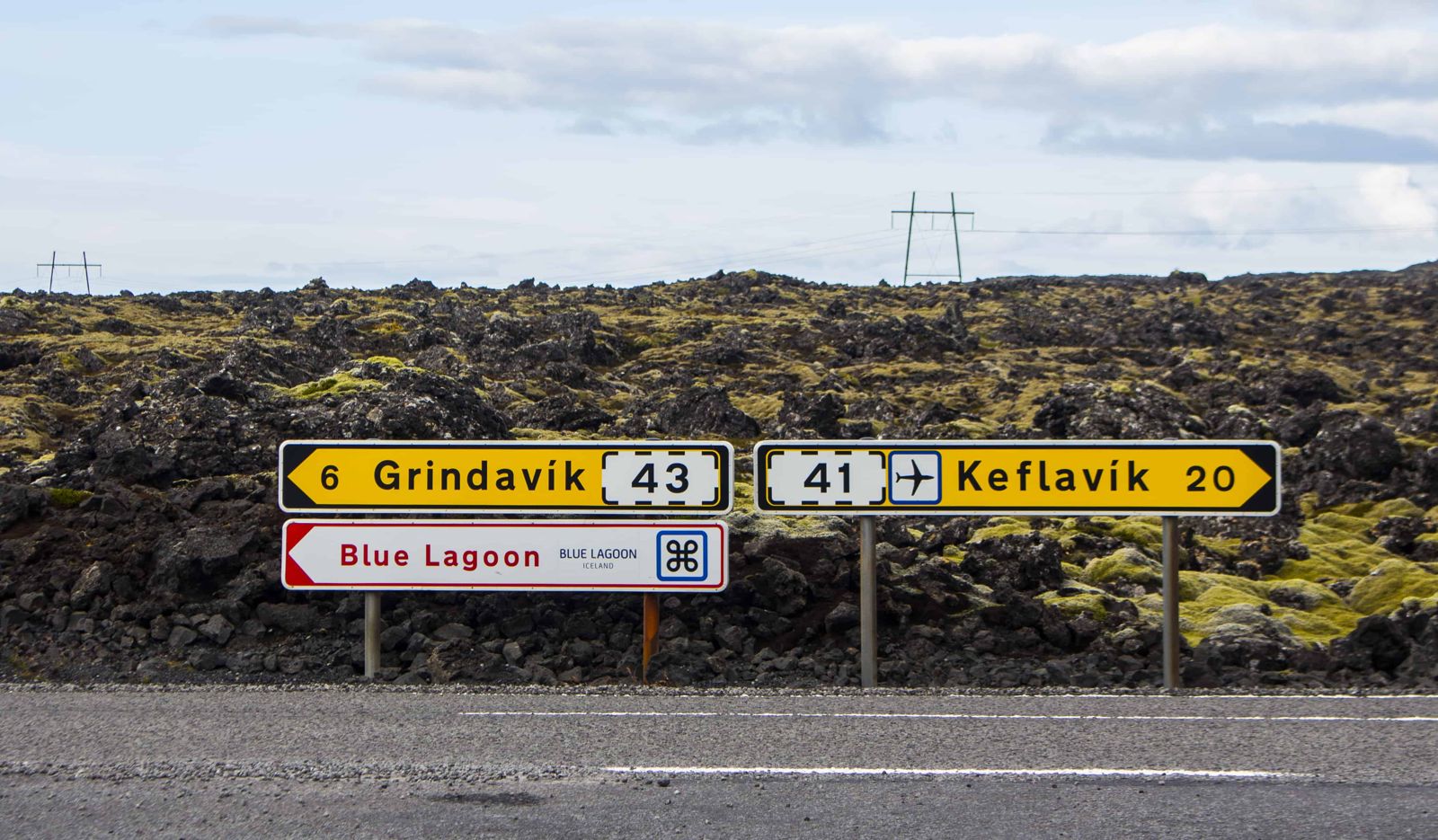
Take Reykjanesbraut (Route 41) towards Keflavík and turn onto Route 43, Grindavíkurvegur, a little past Vogar. Check that the road is open before you set off.
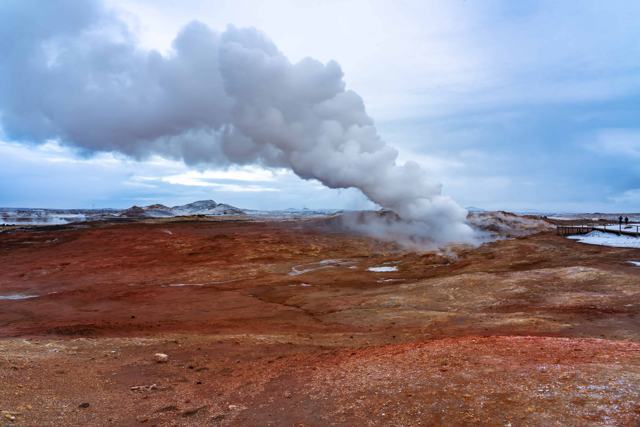
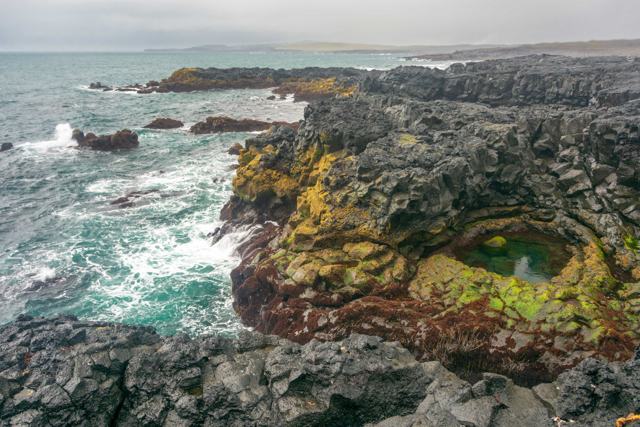
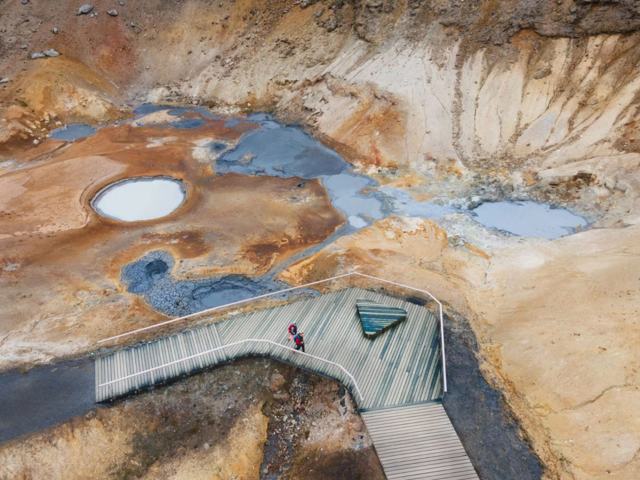
The Blue Lagoon, Mount Þorbjörn, the Gunnuhver mud pools, the Brimketill lava pool, the Eldvörp crater row and the Reykjanes lighthouse, subject to current closures.
Tours and trips that include Grindavík, booked directly with a local travel agency in Iceland.
 DAY TOURUltimate Volcano TourFrom 15,999 ISK per person
 DAY TOURReykjanes Volcano Fields & GrindavíkFrom 14,990 ISK per person
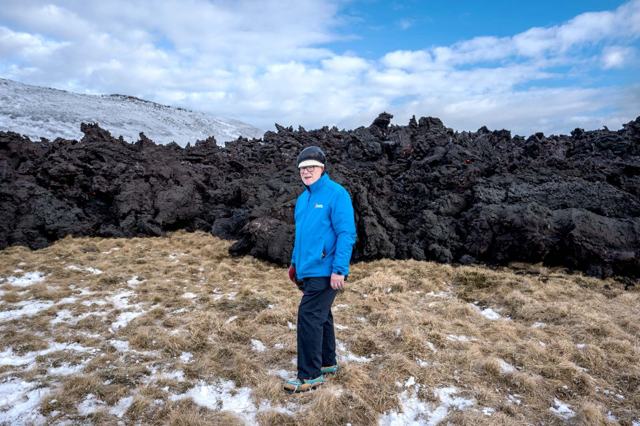 DAY TOURReykjanes Volcano TourFrom 15,000 ISK per person
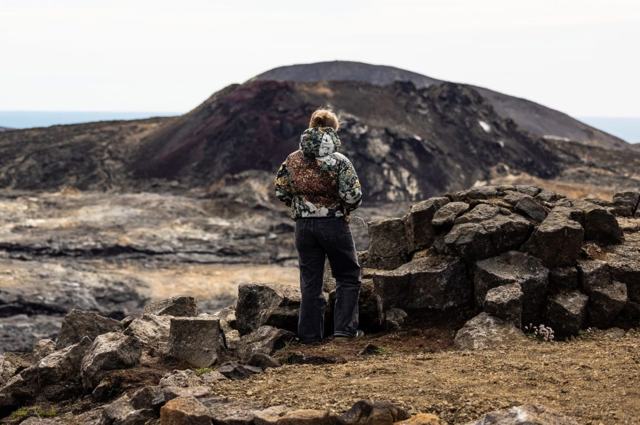 DAY TOURVolcano Tour: Grindavík Volcano Village & the Blue LagoonFrom 36,499 ISK per person
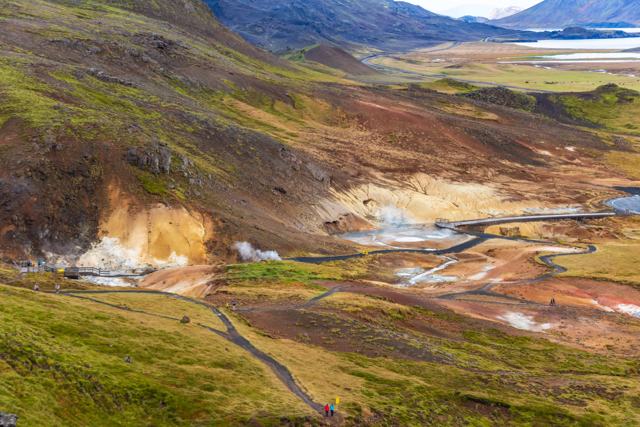 PRIVATEReykjanes Peninsula Private TourFrom 179,900 ISK per group
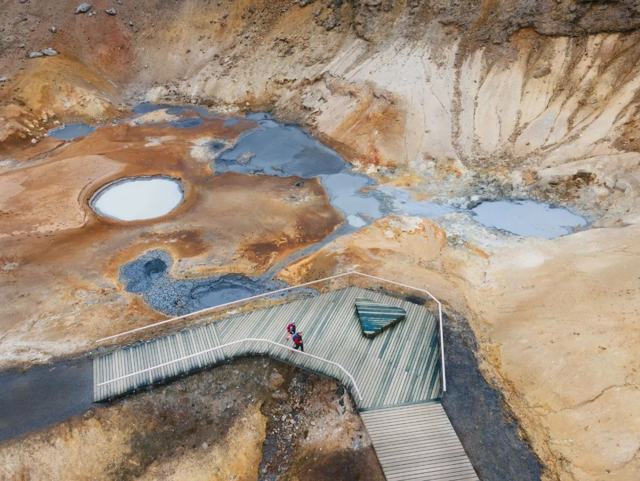 DAY TOURReykjanes GeoParkFrom 19,300 ISK per person