Iceland Travel GuideLOCAL TRAVEL AGENCY IN ICELAND
My trip
Talk to a local
Iceland Travel GuideLOCAL TRAVEL AGENCY IN ICELAND
My trip
Talk to a local
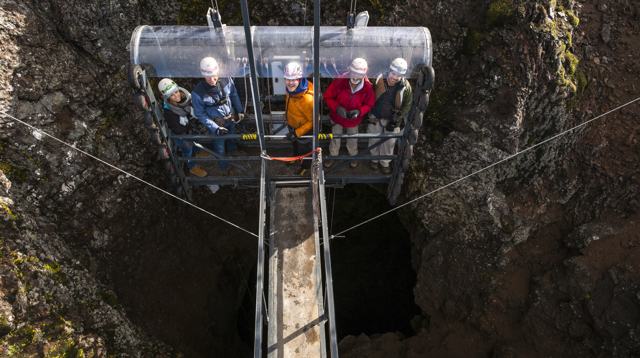
Þríhnúkagígur (Thrihnukagigur) is a dormant volcano in the Bláfjöll area, about 30 minutes from Reykjavík, and the only place where you can descend into an intact magma chamber. You visit on a guided tour only, hiking about 3 km each way across a lava field, then riding an open cable lift 120 metres down. Tours run from May to October, and the whole trip takes 4–6 hours.
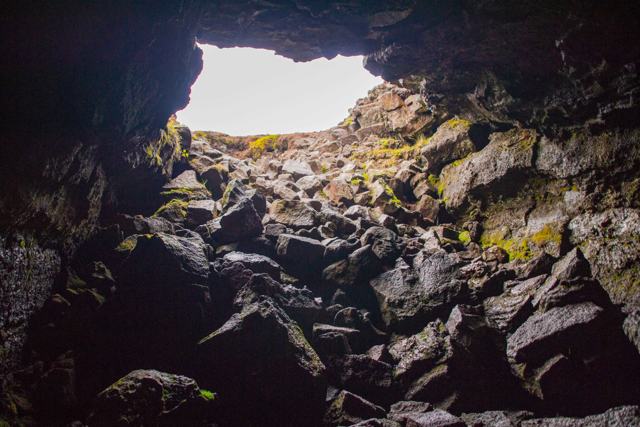
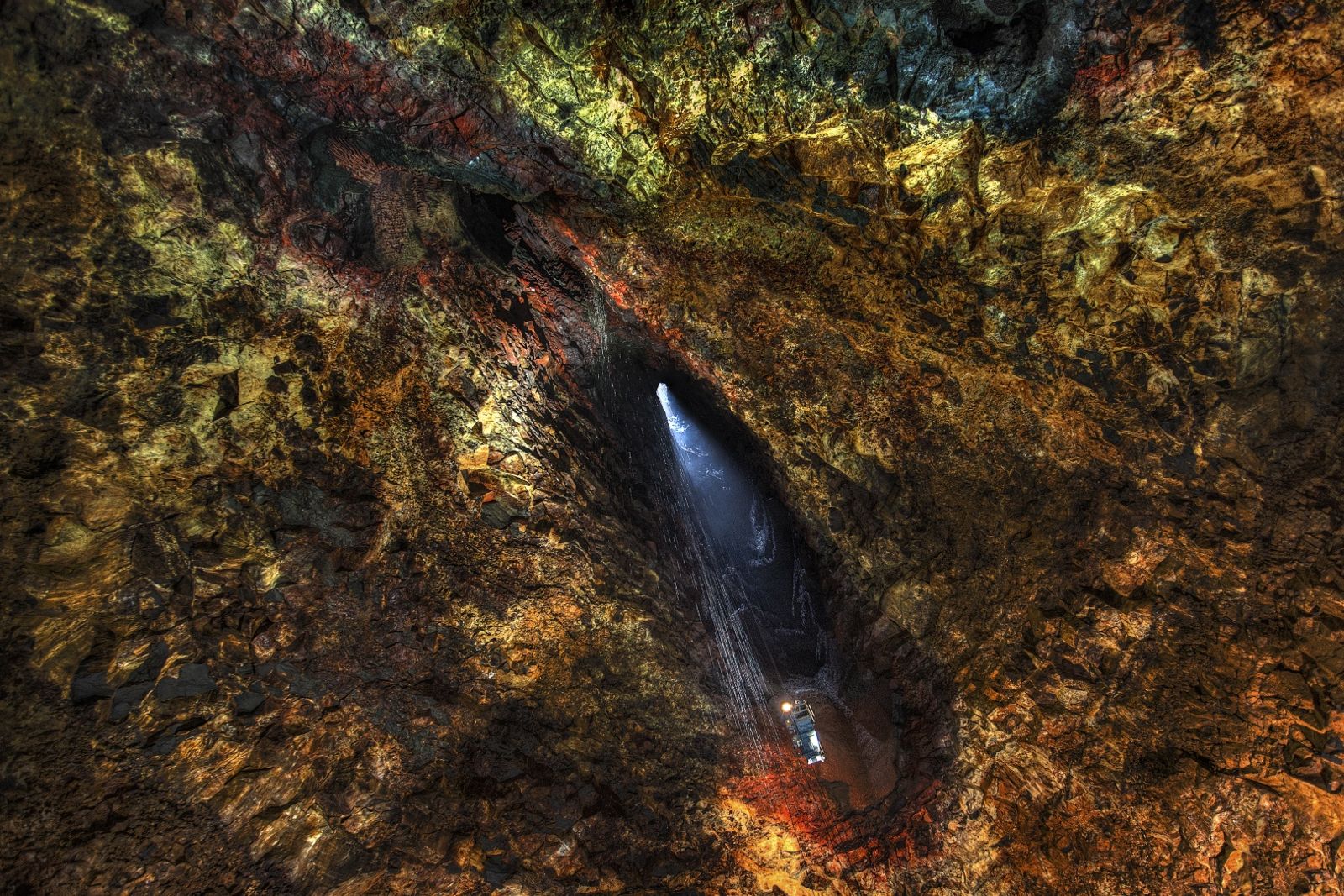
Þríhnúkagígur (often written Thrihnukagigur) means “Three Peaks Crater”. The volcano last erupted about 4,000 years ago, and when the eruption ended the magma drained away instead of freezing in place. That left a huge empty chamber under a funnel-shaped vent that is only a few metres wide at the top and opens out at the bottom, where the floor measures roughly 50 by 70 metres, or about 3,500 m².
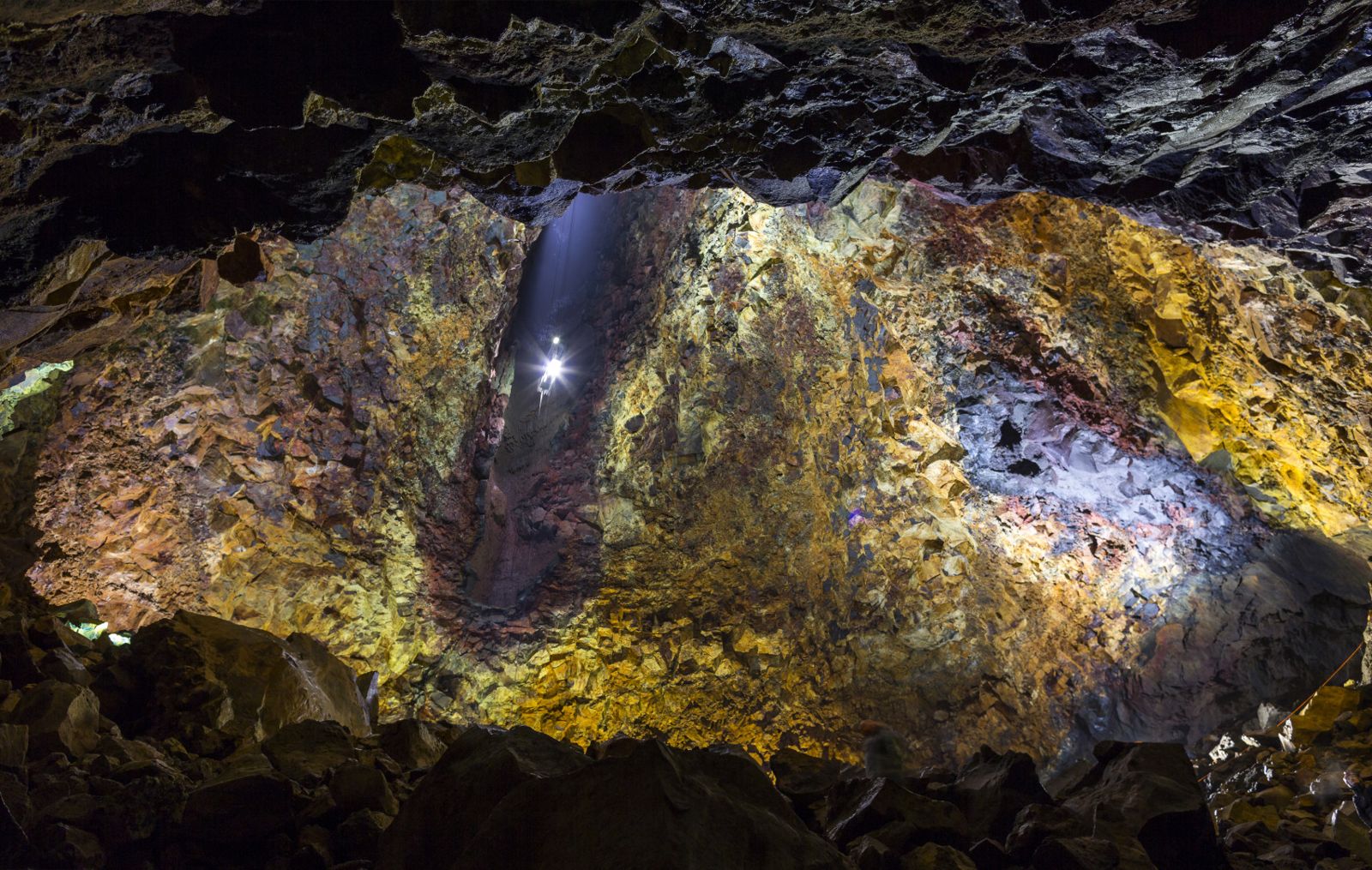
You reach it by a 45–50 minute hike across a moss-covered lava field from a ski cabin in the Bláfjöll mountains. At the crater, an open cable lift lowers a small group through the vent in about seven minutes. Inside, the chamber is large enough to fit a landmark like the Statue of Liberty, and the walls are streaked with red, orange, yellow, purple and green minerals.
You spend about half an hour inside. It is cool down there, around 3–4°C even in summer, so dress warmly. Helmets and harnesses are provided by the guides.
Most volcanoes fill with solid rock once an eruption ends. At Þríhnúkagígur the magma drained back down, and the chamber was left open. It is the only known place where the public can enter a large, intact magma chamber.
The name, “three peaks crater”, describes the three craters on the hill. Only one has been fitted for visitors, with a lift, and the other two are left alone.
The volcano sits in the rift zone where the North American and Eurasian plates are pulling apart. That movement splits the crust and is what drives the volcanic activity on the Reykjanes peninsula. Þríhnúkagígur itself has been quiet for thousands of years.
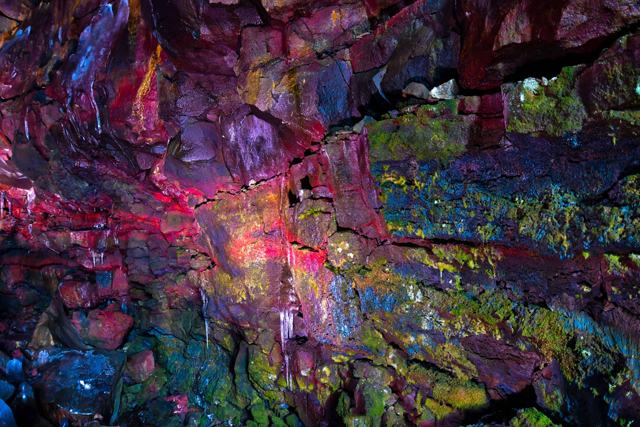
The colours are what most people remember: browns, golden yellow, red, rusty orange, blue, green and black, left by minerals in the rock. The chamber has also been used as a stage. The Icelandic band Kaleo recorded a live version of their song “Way Down We Go” at the bottom, and the musician Chino Moreno played a concert inside the volcano during the Secret Solstice festival.
You cannot visit the crater on your own. Tours may be cancelled in bad weather or when the lava field trail is unsafe, so check your booking terms.
The visit runs in the same order for everyone, and the guides look after the technical side.
Tours normally do not run from November to April.
Facilities are at the meeting point, a ski cabin in Bláfjöll, where the tour begins. There is no café, shop or toilet at the crater itself. Bring water and a snack. The lift and chamber are not suitable for wheelchairs or anyone who cannot walk about 3 km each way.
Most visitors stay in Reykjavík, which is about 30 minutes from the meeting point. Hafnarfjörður and Kópavogur have hotels and guesthouses even closer.
No. You can only visit on a guided tour that includes the hike and the lift.
The open cable lift goes about 120 metres down into the magma chamber, in around seven minutes.
About 4–6 hours in total, including the 45–50 minute hike each way and about 30 minutes inside.
From May to October. There are no regular tours in winter.
No. It last erupted about 4,000 years ago and is considered dormant.
From age 8, if they can manage the hike. You need a moderate level of fitness.
Drive Route 1 east, turn right onto Route 417 (Bláfjallavegur) and follow it to the Bláfjöll ski area, about 30–35 minutes from the city. From there it is a guided walk of about 3 km to the crater.
A very large, dimly lit rock chamber with walls coloured red, yellow, orange, green, blue and black by minerals. It is cool, around 3–4°C, and quiet apart from dripping water.
Tours and trips that include Þríhnúkagígur, booked directly with a local travel agency in Iceland.