Iceland Travel Guide logo Iceland Travel GuideLOCAL TRAVEL AGENCY IN ICELAND My trip Talk to a local

Maríuhellar lava caves

Reykjavík areaLava caveFree entryOpen all year
MARÍUHELLAR IN SHORT

Maríuhellar is a group of three lava caves in the Heiðmörk area, about 12 km south of central Reykjavík. They are free to visit and always open, but they are unlit and unsupervised, so bring a torch and good boots. Allow about an hour.

ON THIS PAGE
Quick factsHistoryGetting thereThe cavesBest time to visitSafety tipsFacilitiesMapNearbyWhere to stayFAQ

About Maríuhellar

Maríuhellar sit in the Svínahraun lava field on the edge of Heiðmörk, the large recreation area used by people from the capital. The three caves are Vífilsstaðahellir, Urriðakotshellir and Draugahellir. The first two were used as sheep shelters in the past, and Urriðakotshellir, the one closest to the road, is the easiest to reach.

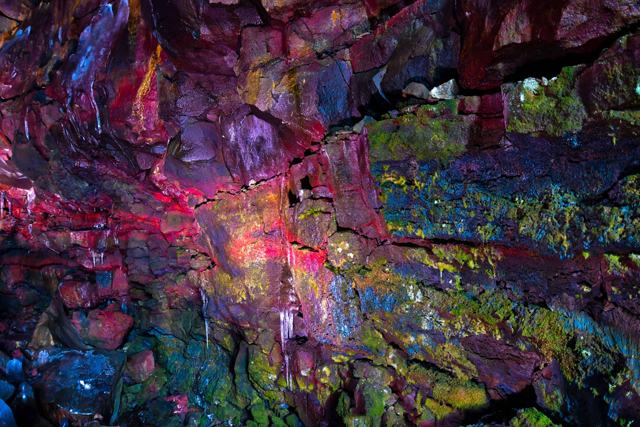
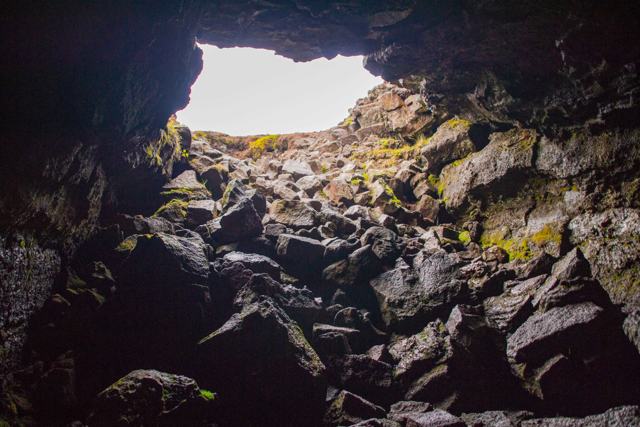
Urriðakotshellir is a wide lava tube in a grassy hollow, with a small skylight in the roof. You walk in over loose rocks and can see how the lava drained away and left a hollow tunnel behind. It is an easy introduction to lava caves without a tour, though the floor is rough and can be slippery.

This is not a show cave. There are no lights, handrails or staff, so you go at your own risk. It is best for people who are comfortable on uneven ground and want a quick nature stop near the city.

Quick facts

TypeThree lava tube caves in the Svínahraun lava field
RegionReykjavík area, at the edge of Heiðmörk
From ReykjavíkAbout 12 km, around 20 minutes by car
GPS64.07171, -21.89337
EntryFree
Opening hoursOpen all year, no supervision
LightingNone. Bring a torch or headlamp
Time neededAbout 1 hour
Lava ageAbout 8,000 years (Búrfell eruption)

How the caves formed

Lava caves form when the outside of a lava flow cools and hardens while hot lava keeps flowing underneath. When the eruption ends and the lava drains out, an empty tunnel is left. The lava that made Maríuhellar came from the crater Búrfell above Hafnarfjörður, in an eruption usually dated to about 8,000 years ago.

People used some of the caves as shelter for sheep, which is common for lava caves near farms in Iceland.

How to get to Maríuhellar

By carDrive south from Reykjavík on Reykjanesbraut, turn left towards Vífilsstaðavegur at the roundabouts, then turn right onto Elliðavatnsvegur. From there it is only 3–4 minutes to the caves. They lie in the lava just north-east of the junction of Flóttavegur and Heiðmerkurvegur, on the old boundary between the farms Urriðakot and Vífilsstaðir. Put the coordinates 64.07171, -21.89337 into your map app, since the signs are limited.
By public transportThere is no direct bus to the caves. A rental car or taxi is the practical option. Some people cycle from the city.
On a guided tourMost cave tours from Reykjavík go to bigger caves such as Raufarhólshellir or Leiðarendi, which have equipment and guides. Maríuhellar is normally a self-guided stop.

The three caves of Maríuhellar

Maríuhellar is not one cave but three, all in the same lava channel.

UrriðakotshellirThe one most people visit, close to the main road. It is a large, open lava tube in a grassy hollow, with a small gap in the roof where you can see through to the sky. It was once used as a sheep cave.
VífilsstaðahellirThe second of the old sheep caves, named after the farm Vífilsstaðir.
DraugahellirThe third cave. The name means 'ghost cave'. Bring a good light if you want to look inside.

Maríuhellar is one of the free things to do near Reykjavík that most visitors miss. The ground is slippery in winter, and evenings turn cold quickly, so dress for the season.

Best time to visit Maríuhellar

Summer (May–September)The best time for a first visit, with long daylight and dry ground. Still bring a torch, as it is dark inside.
Winter (October–April)Possible but icy. The cave floor and the path can be slippery, and daylight is short, so bring spikes and a headlamp.

Safety and practical tips

  • Wear sturdy boots with a good grip. The floor is uneven and can be wet or icy.
  • Bring a headlamp or strong torch and a warm layer. It is cold inside even in summer.
  • Wear a helmet if you plan to go into the darker parts. Rocks can fall from the roof.
  • Do not touch or break the formations, and take all litter home.
  • Do not go alone into caves you do not know, and tell someone where you are going.
  • For a guided cave with lights and equipment, choose a tour to Raufarhólshellir or Leiðarendi.

Facilities and accessibility

There are no facilities at the caves. The Heiðmörk area has picnic spots, and Reykjavík has shops, cafés and fuel a short drive away.

On the map

Open in Google Maps →

Nearby places worth a stop

Leiðarendi lava caveLeiðarendi lava caveGuided lava tube tour, about 25 minutes awayRaufarhólshellirRaufarhólshellirOne of the longest lava tubes near ReykjavíkElliðaárdalurElliðaárdalurRiver valley park inside ReykjavíkKleifarvatnKleifarvatnLarge lake on the Reykjanes peninsulaReykjavíkReykjavíkThe capital, about 12 km away
HafnarfjörðurHarbour town a few minutes' drive away
HvaleyrarvatnSmall lake with walking paths near Hafnarfjörður

Where to stay near Maríuhellar

Most visitors stay in Reykjavík or Hafnarfjörður, both a short drive away, with a wide choice of hotels, guesthouses and restaurants.

Maríuhellar FAQ

Is Maríuhellar free to visit?

Yes. There is no entry fee and no ticket office. You go in at your own risk.

How far is Maríuhellar from Reykjavík?

About 12 km, which is roughly a 20-minute drive from the city centre.

Do I need a guide?

No, but the caves are unlit and the floor is rough. If you want a safer and more informative visit, book a guided tour of a larger cave.

What should I bring?

Sturdy boots, a torch or headlamp, warm clothes and waterproofs. A helmet is a good idea.

How long does a visit take?

About an hour is enough to walk in and around the caves.
More places in Reykjavík