Iceland Travel GuideLOCAL TRAVEL AGENCY IN ICELAND
My trip
Talk to a local
Iceland Travel GuideLOCAL TRAVEL AGENCY IN ICELAND
My trip
Talk to a local
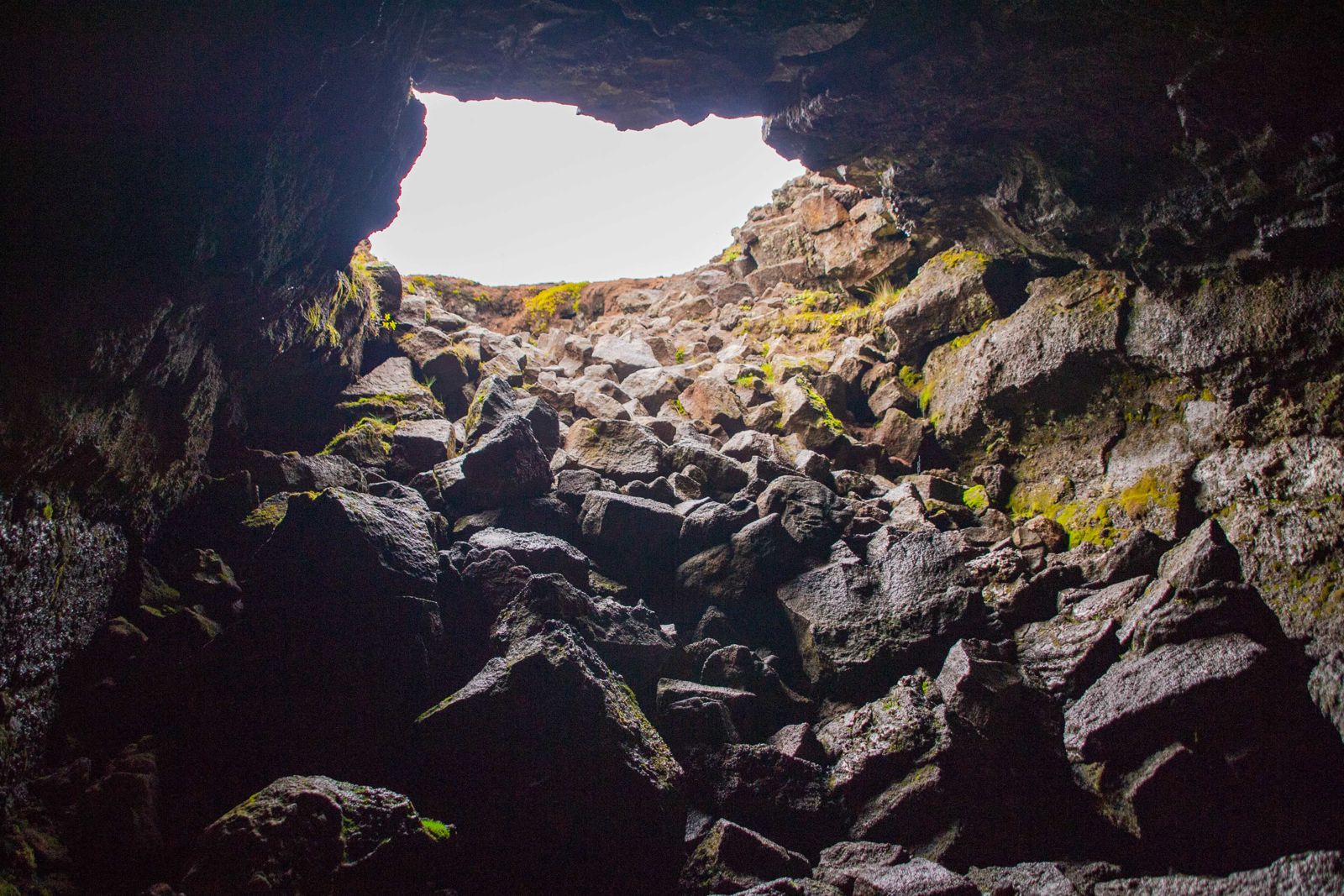
Leiðarendi is a lava tube of about 900 m near Bláfjöll, roughly 25–40 minutes by car from Reykjavík, reached from Route 417. It can only be visited on a guided tour, tours run all year, and most take a few hours including the transfer from Reykjavík.
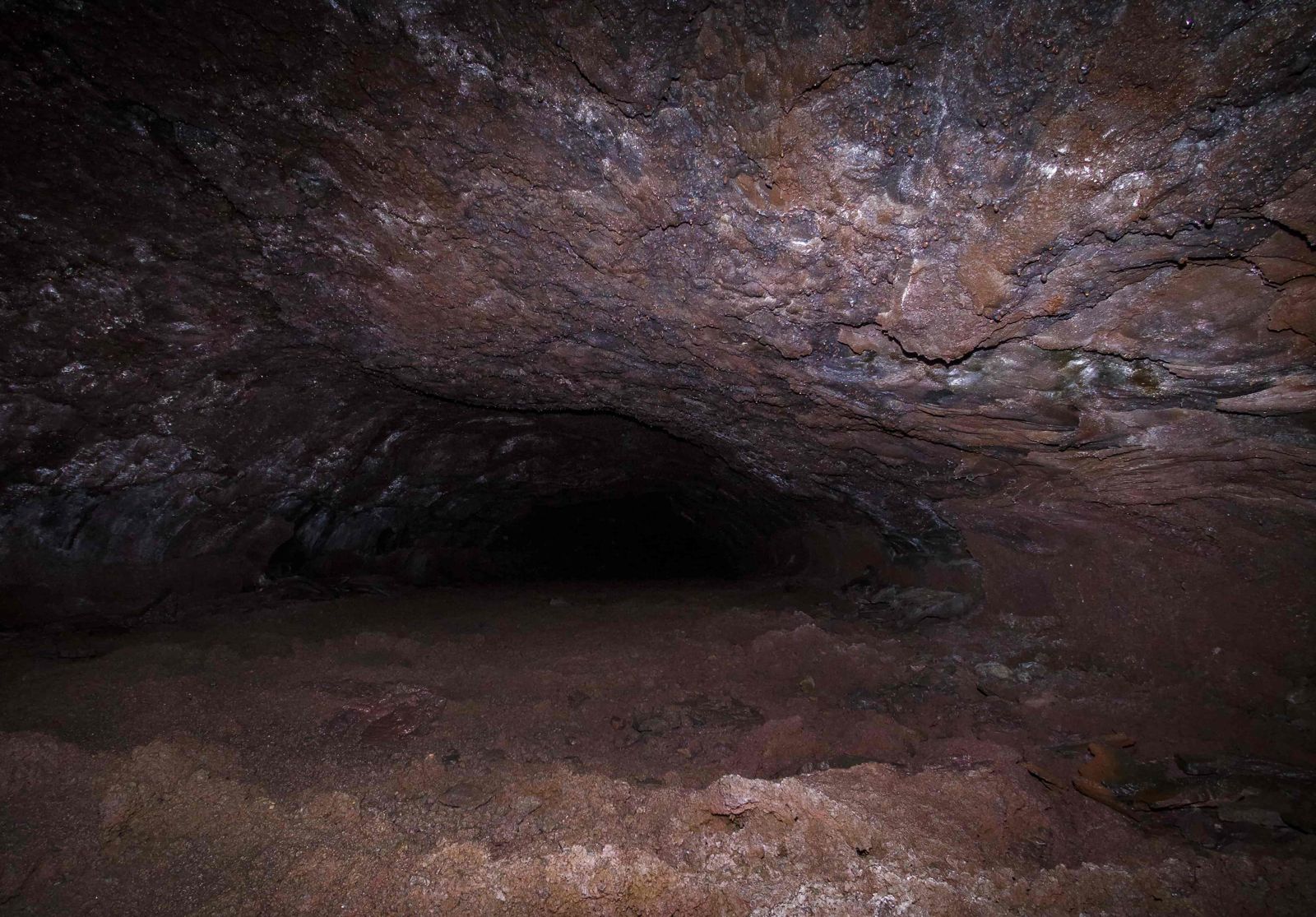
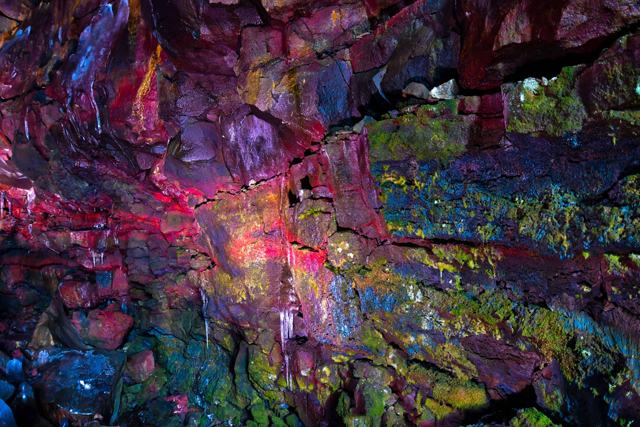
Leiðarendi is a lava tube, a tunnel left behind when the outer surface of a lava flow cooled and hardened while the molten rock underneath drained away. The cave is about 900 m long and consists of two lava tubes that have broken into one another, forming a loop with a few side chambers. Inside you find polished lava walls, drip stalagmites, stalactites, lava flakes and red, yellow and green mineral colours. In winter, ice forms in parts of the cave.
The cave lies in a lava field below Bláfjöll, the Blue Mountains, and the two tubes come from two separate eruptions on the Reykjanes peninsula. One thing that sets Leiðarendi apart is its lava flakes: thin sheets of rock that frost and erosion have loosened from the walls and roof. Each layer marks a separate stream of lava that ran through the tube, so you can read the cave's history in them.
The name means roughly 'end of the road' and is said to come from the skeleton of a sheep found in the cave when it was first explored. The cave is unlit and uneven, with some low and narrow sections, and its formations are fragile, so it can only be visited with a guide who provides helmets and headlamps.
Do not attempt to enter the cave without a guide. The interior is unlit and uneven, and the formations are fragile. When there is snow on the ground the entrance is very hard to find.
Lava caves carry real risks: complete darkness, low ceilings, loose rock and an uneven floor. Guides know the cave thoroughly, are trained to deal with an emergency and bring the right equipment, which is why a visit is only possible with one.
A helmet and a light are the two essentials underground, and both are supplied. Beyond that you need sturdy boots, gloves to protect your hands on the sharp lava, and warm clothes. Choose clothes you do not mind getting dirty or scuffed. Waterproofs are better than ordinary clothing, because lava rock is porous and at times a lot of water drips through the ceiling.
The cave is close to Reykjavík and to several good short stops, so it is easy to combine with something else on the same day.
There is parking at the cave but no other facilities. Tours from Reykjavík typically start from a city meeting point with toilets.
Most visitors see Leiðarendi as a half-day tour from Reykjavík and stay in the city.
No, it is only open on guided tours, which provide the safety gear and knowledge of the route needed to visit safely.
About 900 m, made up of two lava tubes that have broken into one another.
A few hours including the transfer from Reykjavík. The exact length depends on the operator, so check when booking.
Check with the tour operator; some sections involve crouching and uneven footing, so it depends on the child's age and the operator's minimum age policy.
Warm layers, gloves and sturdy, closed shoes. Helmets and headlamps are provided by the tour.
Tours run all year. Winter adds ice formations inside the cave, while summer makes the approach easier.
Most tours pick up in Reykjavík. By car it is up to 30 minutes: Routes 40 and 41 to Hafnarfjörður, Route 42 for about 6 km, then left on Route 417 (Bláfjallavegur) for about 7 minutes.