Iceland has dozens of small islands off its coast, and a handful are easy and rewarding to visit. The best known are the Westman Islands off the south coast, Flatey in Breiðafjörður, Viðey next to Reykjavík, and Grímsey, Hrísey and Drangey in the north. Most are reached by a short ferry or boat trip, and summer is the best time for birds, boats and long days.
Iceland's islands at a glance
Each island has its own character. Some have a small village, a shop and a guesthouse. Others are empty cliffs full of seabirds. Here is a quick overview before the details.
- Westman Islands (Heimaey): south coast, about 35–40 minutes by ferry. Volcanoes, puffins and a real town.
- Viðey: a few minutes by boat from Reykjavík. History, art and easy walks.
- Flatey: Breiðafjörður, by ferry from Stykkishólmur or Brjánslækur. A quiet, car-free old village.
- Hrísey: Eyjafjörður, 15 minutes by ferry from Árskógssandur. Walking trails and birdlife.
- Grímsey: on the Arctic Circle, about 3 hours by ferry from Dalvík or 30 minutes by air from Akureyri.
- Drangey: Skagafjörður, boat trips in summer only. A steep bird cliff with a saga story.
Westman Islands (Vestmannaeyjar)
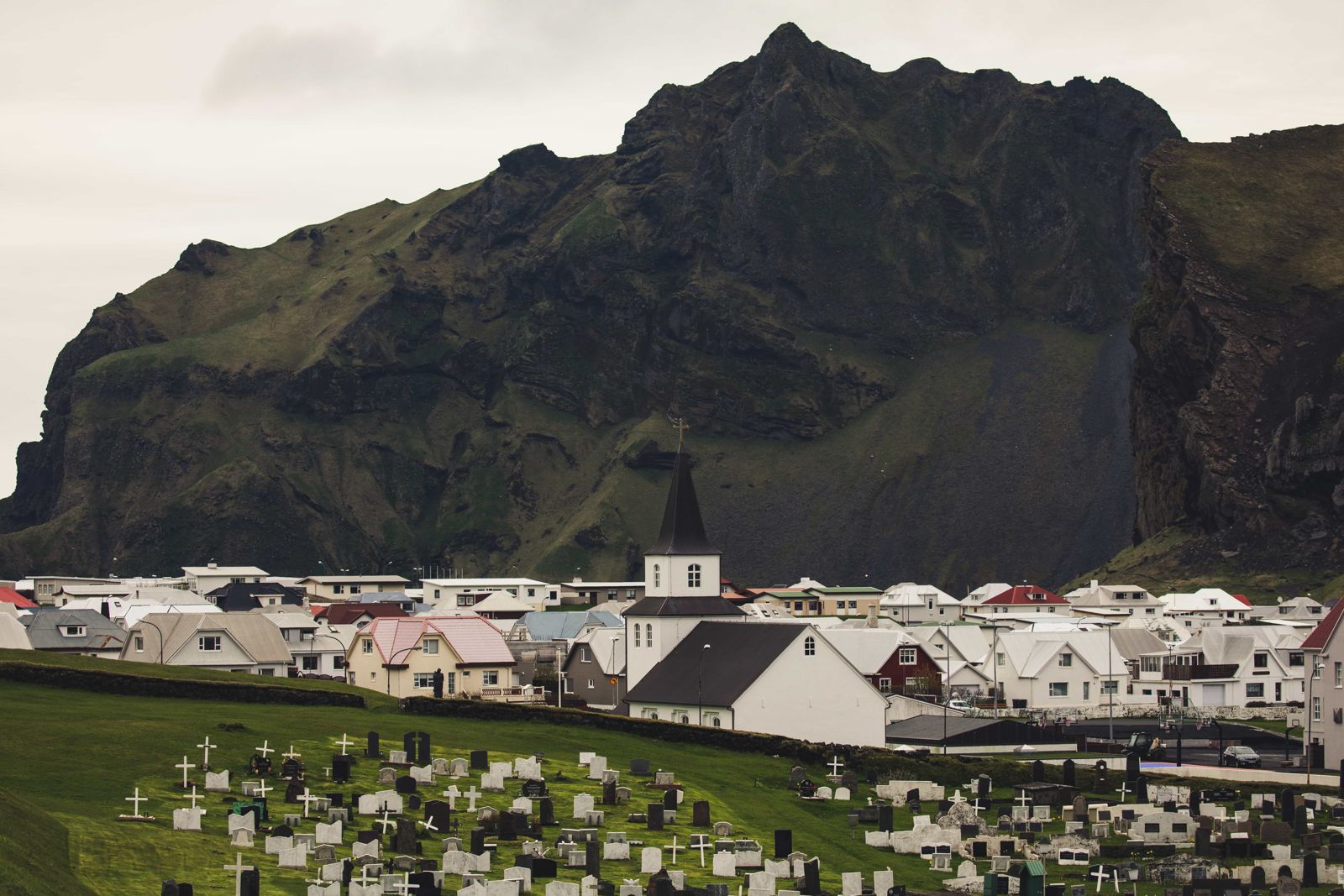
The Westman Islands are an archipelago of around 15 islands and many rock stacks off the south coast. Only the largest, Heimaey, is inhabited, with a town of about 4,400 people. It is the easiest island trip in Iceland and has the most to do.
In January 1973 the Eldfell volcano opened on the edge of town without warning. About 5,000 people were evacuated overnight, and the eruption lasted about five months. Roughly a fifth of the town was buried, and the lava was slowed by pumping seawater onto it. You can climb Eldfell today, a short but steep walk up a young, still-warm cone.
The Eldheimar museum is built around a house dug out of the ash and tells the story of the eruption and of Surtsey, the island that rose from the sea south of Heimaey in 1963. In summer it is open daily from 11:00 to 17:00, and from late September to mid-April from 13:00 to 16:00. Adult entry is 3,550 ISK.
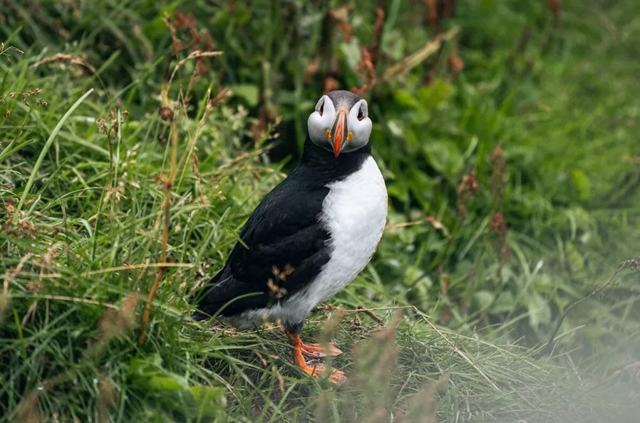
Puffins are the most common seabird in the Westman Islands. The birds are around from spring until late summer, and in late August and early September local children rescue young pufflings that land in town. Boat trips around the island pass sea caves and cliffs, and you can see Elephant Rock on the western shore. If you would rather not organise the day yourself, our Westman Islands Day Tour from Reykjavik includes the return ferry, the Eldfell walk, Eldheimar and puffin watching at Stórhöfði.
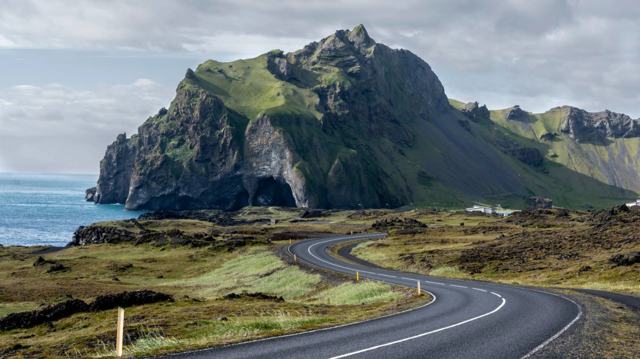
Viðey: the island next to Reykjavík
Viðey is a small island of about 1.7 square kilometres in Kollafjörður, just off Reykjavík. It is the easiest island to visit if you are staying in the city, and a few hours is enough.
An Augustinian monastery stood here from 1225 to 1539. Viðeyjarstofa, a stone house built in the 1750s for Skúli Magnússon, often called the father of Reykjavík, is now a restaurant. The last residents left the island in 1943.
On the western part of the island is Áfangar (Milestones), an artwork by Richard Serra from 1990. It is nine pairs of basalt columns placed around the shore, and walking between them is a good way to see the whole island.
How to get to Viðey
In summer, ferries run daily from Skarfabakki pier, with some sailings from the old harbour and Harpa. In winter the ferry runs from Skarfabakki at weekends only. The crossing takes only a few minutes. There is nowhere to stay on the island, so plan it as a half-day trip from Reykjavík.
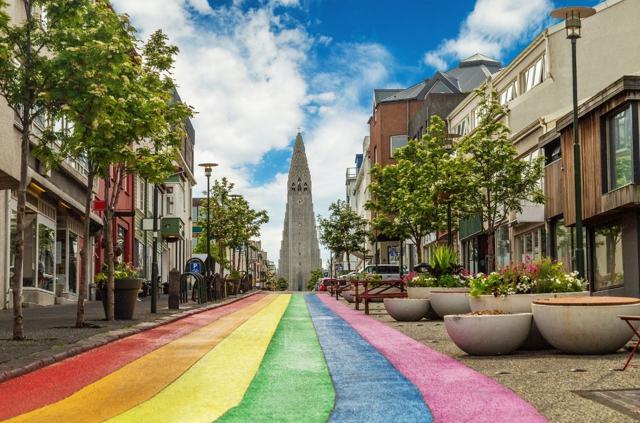
Flatey: the quiet island in Breiðafjörður
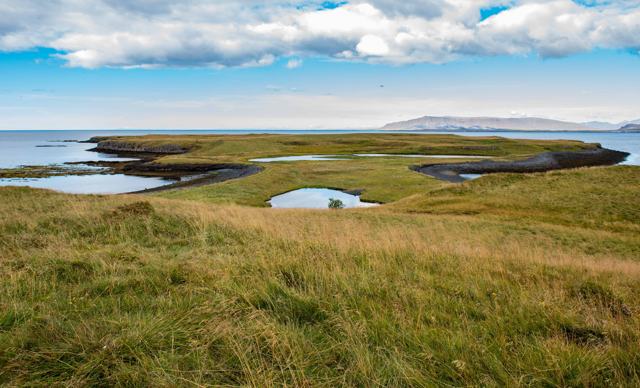
Flatey means flat island, and it is small: about 2 kilometres long and 1 kilometre wide. Only a handful of people live there all year. In summer the old wooden houses fill up with families and visitors, and the island feels like a village from another century. Cars are not allowed, so everything is done on foot.
Flatey was once an important trading and cultural centre, with a monastery from 1172. Its library, built in 1864, is the oldest and smallest library in Iceland. It once held Flateyjarbók, the largest of the medieval Icelandic manuscripts, which is now kept in Reykjavík.
The church dates from 1926. Its ceiling and walls were painted by the Catalan artist Baltasar Samper in the 1960s, with scenes of island life, including Jesus in traditional Icelandic clothing. Puffins, Arctic terns and many other seabirds nest on the island in summer. Keep your distance from the terns in June and July, as they will dive at your head to protect their chicks.
How to get to Flatey
The Breiðafjörður car ferry runs between Stykkishólmur on the Snæfellsnes peninsula and Brjánslækur in the Westfjords, stopping at Flatey. In summer there are two sailings a day. You can leave your car in Stykkishólmur and go as a foot passenger, or take the car on to the Westfjords and stop off on the island.
One day is enough to walk the whole island, but staying the night lets you enjoy it after the day visitors leave. There is a hotel on the island, and the old salt cellar bar is a nice place to finish the evening. See our public transport guide for more on ferries.

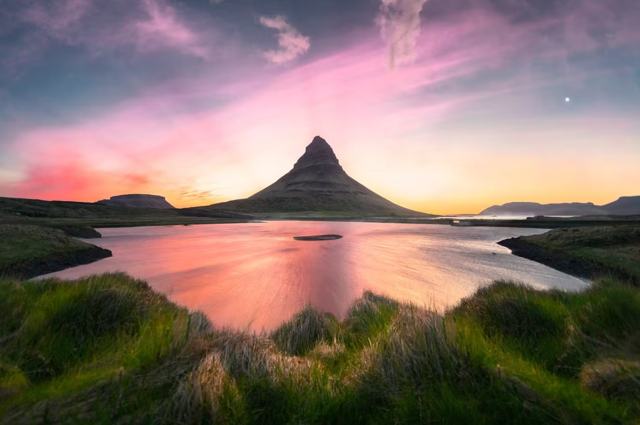
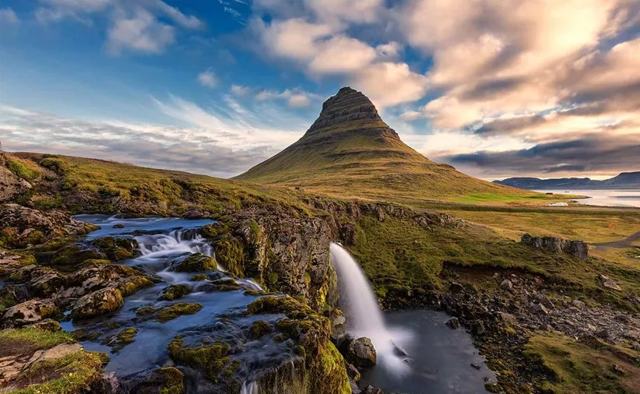
Grímsey: Iceland's Arctic Circle island
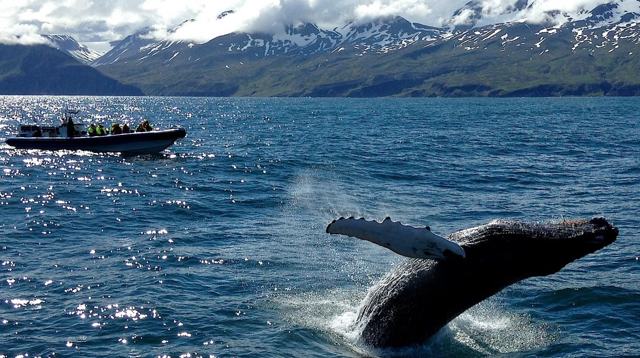
Grímsey lies about 40 kilometres off the north coast and is the northernmost inhabited place in Iceland. The island is only about 5 square kilometres, rising to 105 metres in cliffs on the east side. Fewer than 100 people live there, mostly from fishing.
The Arctic Circle crosses the island. It moves slowly over time, so the marker, a large stone sphere called Orbis et Globus, is moved now and then to the right spot. Walking out to it is the main reason most people come. Around the June solstice Grímsey has the true midnight sun, with the sun above the horizon all night. Our daylight hours guide explains more.
The cliffs hold large colonies of puffins, kittiwakes, razorbills and guillemots, and the island is an Important Bird Area. The old driftwood church burned down in 2021, and a new church was consecrated in August 2025.
How to get to Grímsey
The ferry sails from Dalvík three days a week all year, on Mondays, Wednesdays and Fridays, with extra sailings in summer. The crossing takes about 3 hours and the sea can be rough. Flights from Akureyri take about 30 minutes, daily in summer and three times a week in winter.
Many visitors fly one way and take the ferry the other, or fly out and back on the same day. There is limited accommodation on the island, so book early if you want to stay the night.

Hrísey: the pearl of Eyjafjörður
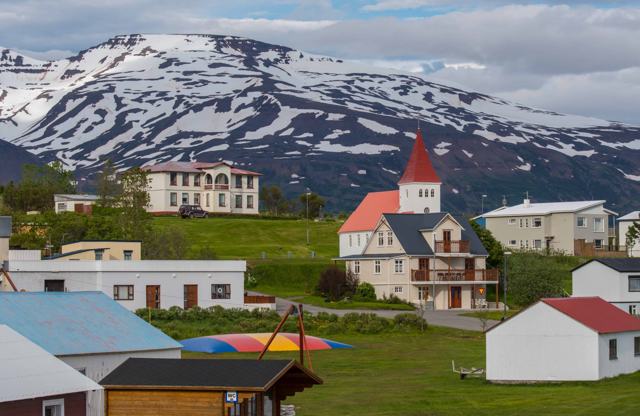
Hrísey sits in the middle of Eyjafjörður, north of Akureyri. About 7.5 kilometres long, it is the second-largest island off Iceland's coast after Heimaey. Around 120 people live in its small village.
The island is known for its birdlife, with about 40 species, including ptarmigan, Arctic terns and eider ducks. Killing birds is forbidden on the island. The northern part is a private eider nesting reserve and is closed to walkers.
Four marked walking trails, from about 4 to 7 kilometres, lead from the village to viewpoints and the rocky east coast. Keep dogs on a lead in the nesting season, from May to mid-July.
Drangey: the outlaw's island
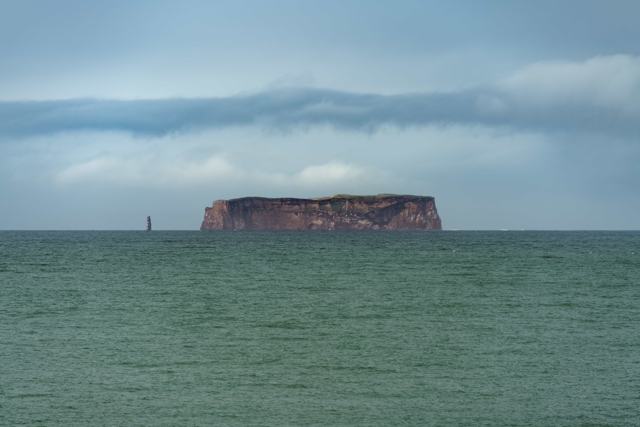
Drangey rises about 180 metres straight out of Skagafjörður. It is the remains of an old volcano, made of palagonite tuff, and looks like a rock fortress from the shore. Nobody lives there.
In Grettis saga, the outlaw Grettir the Strong lived on Drangey with his brother and a servant for his last years, until he was killed there in 1031. For centuries locals caught seabirds on the cliffs, and today puffins, guillemots, razorbills, kittiwakes and fulmars still nest there.
Boat trips run in summer from near Grettislaug, the hot pool at Reykir, usually from 1 June to 15 August, depending on weather. A full trip takes about 4 hours. The only way up is a steep path with ropes and ladders, so it is not for anyone with a fear of heights. Finish with a soak at Grettislaug.
When to visit Iceland's islands
June to August is the best time. Boats run more often, puffins and other seabirds are on the cliffs, and the long days give you time to explore. Puffins usually arrive in April and May and leave by late August. Our puffin guide and bird watching guide have more detail.
Viðey, Hrísey, Grímsey and the Westman Islands can be visited all year, but winter crossings are fewer and more often cancelled by weather. Drangey trips only run in summer. Avoid the Westman Islands on the Shop Workers' Weekend at the start of August unless you are going to the Þjóðhátíð festival, as the ferry and rooms sell out. See our music festivals guide for dates.
Island tours and planning
The Westman Islands are the easiest to see with a guide. A Westman Islands tour from Reykjavík or the south coast takes care of the ferry, the volcano and the puffins in one day. For the north, North Iceland tours and Akureyri shore excursions can combine Eyjafjörður with whales and waterfalls.
If you are driving yourself, Flatey fits well into a Snæfellsnes or Westfjords trip, and Hrísey or Grímsey into a day or two around Akureyri. Browse our puffin tours or self-drive trips to build it into your plans. If you prefer a guide, the Snæfellsnes Private Tour or our 2 Day Snæfellsnes Peninsula Tour covers the peninsula that the Flatey ferry leaves from.
These are the tours that fit best with the islands in this guide:
- Westman Islands Day Tour from Reykjavik: ferry, volcano, museum and puffins in one guided day from the capital, from May to September.
- Husavik Whale Watching & Puffins: a good add-on to Hrísey or Grímsey if you are spending a few days in the north.
- Snæfellsnes Private Tour: your own guide on the peninsula, easy to pair with a Flatey crossing from Stykkishólmur.
Questions people ask
How many islands does Iceland have?
Iceland has many small islands, islets and skerries around its coast, but only a few are inhabited. The best known are Heimaey in the Westman Islands, Grímsey, Hrísey, Flatey and Viðey.
Which Icelandic island is easiest to visit?
Viðey is a few minutes by boat from Reykjavík. The Westman Islands are about 35–40 minutes by ferry from Landeyjahöfn on the south coast and have the most to see.
Can you cross the Arctic Circle in Iceland?
Yes, on Grímsey. The Arctic Circle crosses the island, and a stone sphere marks the line. You can fly from Akureyri in about 30 minutes or take the 3-hour ferry from Dalvík.
Can you take a car to the islands?
You can take a car on the ferry to Heimaey. Cars are not allowed on Flatey, and Viðey, Hrísey, Grímsey and Drangey are best explored on foot.
When is the best time to visit Iceland's islands?
June to August, when boats run more often, puffins are nesting and the days are long. Some islands can be visited in winter, but sailings are fewer and weather cancellations are common.