Public transportation in Iceland means buses, ferries, taxis and domestic flights. There are no trains. In Reykjavík the yellow Strætó buses are cheap and easy, with a single adult fare of 690 ISK in 2026, but outside the capital buses are infrequent and most famous sights are hard to reach without a car or a tour.

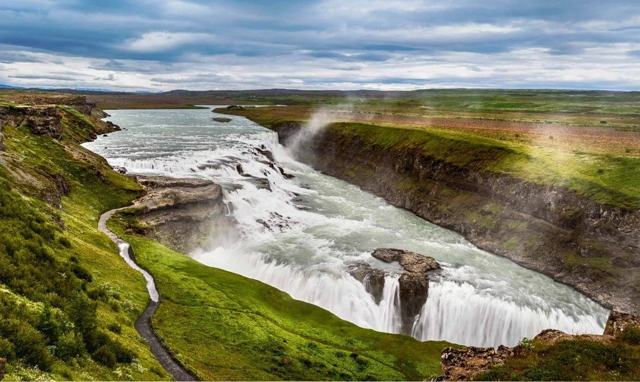
How public transport in Iceland works
Iceland has no railway and no metro. Almost all public transport is by bus, run under the Strætó name, both inside the capital area and on long-distance routes around the country. Ferries link the mainland with inhabited islands, taxis fill the gaps, and domestic flights connect Reykjavík with the larger towns.
The system works well for getting around Reykjavík and for travelling between towns. It is built for local people going to work and school, not for sightseeing. Buses rarely stop at waterfalls, glaciers or viewpoints, so if you want to see the countryside you will usually need to self-drive, join a day tour or book one of our multi-day trips, such as the 8 Day Tour Around Iceland.
So who is it for? Public transport suits you if you are staying in Reykjavík, travelling on a tight budget, moving between towns with time to spare, or mixing buses with hiking, cycling or hitchhiking. Most visitors end up combining several kinds: a bus from the airport, their own feet in the city, a ferry to an island and a tour or rental car for the countryside. The sections below go through each option in turn.
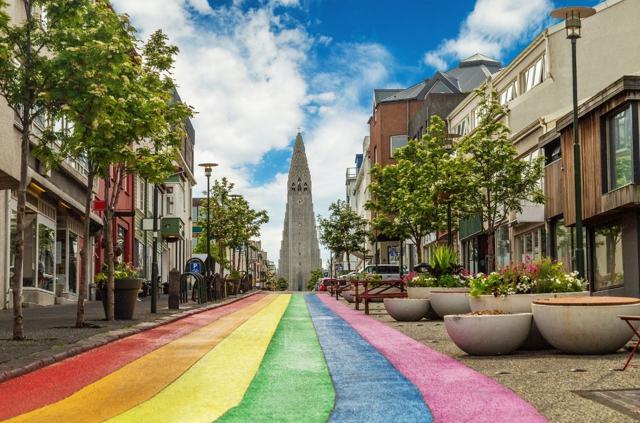
Strætó buses in Reykjavík
The yellow Strætó buses cover Reykjavík and the neighbouring towns of the capital area, including Kópavogur, Hafnarfjörður and Mosfellsbær. Buses run from early morning until around midnight, with later starts at weekends. Hlemmur and Lækjartorg in the city centre are the main hubs.
The buses are run by Strætó bs., a company owned by Reykjavík and the neighbouring municipalities. The word strætó is simply short for strætisvagn, “street carriage”, and locals use it for the bus system as a whole. The buses are easy to spot from a distance because of their bright yellow colour.
On weekdays the first buses leave at about 6:30 am. They start at about 7:30 am on Saturdays and about 9:30 am on Sundays and public holidays. Most routes run about every 15 minutes at peak times and every 30 minutes outside them, in the evenings and at weekends. A few of the busiest routes run more often. Last buses are between about 11:30 pm and 1 am, depending on the route.
Bus stops are marked with a yellow and red Strætó sign. Wave to the driver as the bus approaches, and press the stop button before your stop, as buses do not always stop if nobody is waiting or getting off.
Plan your journey in the Klappið app or the route planner on the Strætó website. Both show timetables and a live map of where each bus is, in English as well as Icelandic.
You can take a pushchair on board, and bicycles are allowed on city buses when there is room, at the driver's discretion. Luggage is fine as long as you can carry it on yourself.
Bus fares and tickets in 2026
Fares in the capital area rose on 6 January 2026. Current prices are:
A single ticket is valid for 75 minutes from the moment you first use it. You can change buses as often as you like within that time without paying again, as long as you tap the same card or show the same ticket.
- Single adult fare: 690 ISK
- Youth (12–17) and seniors (67+): 345 ISK
- Children aged 11 and under: free
- Klapp ten (paper card with 10 rides): 6,900 ISK
- 30-day adult pass: 12,000 ISK
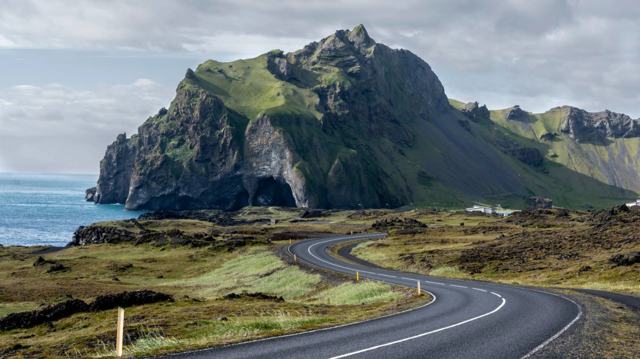
Ways to pay: Klappið app, contactless and Klapp cards
The easiest option for most visitors is contactless payment on board. You can also buy tickets in the Klappið app and show the code to the reader, or buy a reusable Klapp card, which costs 1,000 ISK and is topped up with credit.
In the Klappið app you can buy tickets in advance and keep them until you need them. Activate a ticket just before you board, and the 75 minutes start counting from then. The app is free for iPhone and Android and works in English.
Strætó uses fare capping for adult tickets, so you never pay for more than three rides in a day or nine in a week. That makes a day of hopping on and off buses in Reykjavík affordable.
If you plan to visit several museums and pools, the Reykjavík City Card also includes unlimited travel on the city buses for the length of the card. It is not valid on the airport route 55.
City buses in the capital area stopped taking cash on 1 June 2025, so you cannot pay the driver with coins or notes. If you only have cash, buy a Klapp ten card at a Strætó sales point or at most Reykjavík swimming pools before you travel.
Night buses
Night buses run in the early hours of Saturday and Sunday mornings, after Friday and Saturday nights out. Routes 101, 103, 104, 105 and 106 leave the city centre at around 01:20–01:30, 02:25–02:35 and 03:30–03:45, heading to Hafnarfjörður, Breiðholt, Úlfarsárdalur, Norðlingaholt and Mosfellsbær.
They only run outwards from the centre, not back into town. The fare is 690 ISK and discounts do not apply. Pay by contactless card, with a night ticket in the Klappið app, or with a valid period pass.

Getting between Keflavík Airport and Reykjavík
The cheapest way to reach the city from Keflavík Airport is Strætó route 55. It runs every day and costs 2,400 ISK for adults to Reykjavík, 1,200 ISK for youth and seniors, and nothing for children aged 11 and under. You pay on board by card or cash. Not every departure goes to the BSÍ bus terminal, and some end in Hafnarfjörður, so check the timetable.
Most visitors use the private airport coaches rather than the public bus. They are timed to meet arriving flights, so if you miss one, the next is rarely far behind. The basic ticket takes you to a bus terminal in Reykjavík. For a higher fare you can add a transfer in a smaller bus to your hotel or to the nearest tour bus stop, which is worth it if you have heavy bags. The coaches have luggage holds and usually free Wi-Fi. Book online before you fly in summer, and check the luggage allowance if you travel with more than one large suitcase.
Private airport buses leave after every arriving flight and take around 45 minutes to the BSÍ terminal, with hotel drop-off for an extra fee. Taxis and private transfers are the most comfortable choice with luggage or a family. Our guide on how to get from Keflavík Airport to Reykjavík compares every option, and our guide to arriving early covers what to do before check-in.
Long-distance buses around Iceland
Strætó also runs buses between towns across the country. The route network was reorganised on 1 January 2026. Useful routes for travellers include:
- Route 51: Reykjavík to Selfoss, several times a day on weekdays
- Route 52: Reykjavík to Höfn along the South Coast, four trips a week
- Route 53: Selfoss to Landeyjahöfn (for the Westman Islands ferry) and Hvolsvöllur
- Route 50: Reykjavík to Akranes and Borgarnes
- Route 57: Reykjavík to Akureyri, one trip a day
- Route 56: Akureyri to Egilsstaðir, timed with flights at Akureyri
What to know before taking a countryside bus
Countryside buses are not part of the Klapp system. You pay the driver by debit or credit card, or cash, and capital area tickets and passes are not valid. Most routes cannot be booked in advance, so arrive at the stop in good time.
Some routes run only a few days a week, and timetables change with the seasons. A journey that takes a morning by car can take a full day by bus, and there is often no connection back the same day. Buses drive straight between towns and do not stop at sights along the way.
Outside towns, tell the driver where you want to get off, and wave clearly when you want to be picked up at a rural stop. On the main routes the coaches have a bicycle rack at the back for three or four bikes, taken on a first come, first served basis. Pets are not allowed on countryside coaches.
If you want to see places like Gullfoss, Seljalandsfoss or Jökulsárlón without a car, a guided tour is usually easier and not much more expensive. See our Golden Circle tours and South Coast tours, most of which include pick-up in Reykjavík. The Golden Circle Small Group Tour and the Jokulsarlon Glacier Lagoon Boat Tour from Reykjavik both reach places the buses do not.
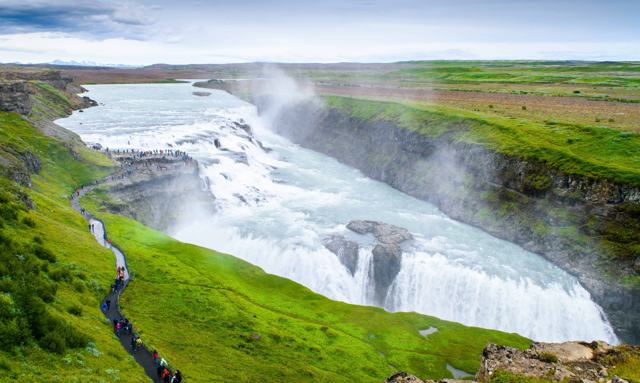
Ferries
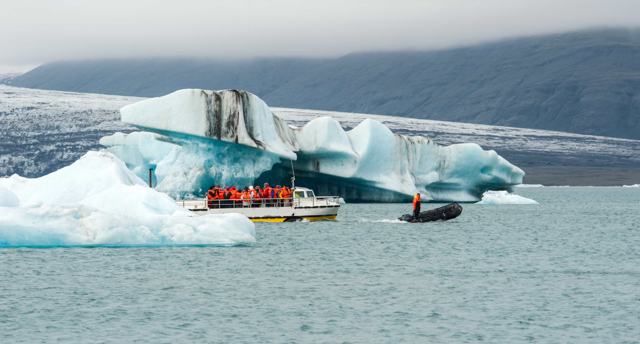
Travelling by boat is sometimes a choice and sometimes the only way to get there. Several inhabited islands are reached by public ferry, and places such as Hornstrandir have no roads at all. Most of the small islands are car-free or have very few cars, so you leave the vehicle on the mainland and walk. The main domestic routes are:
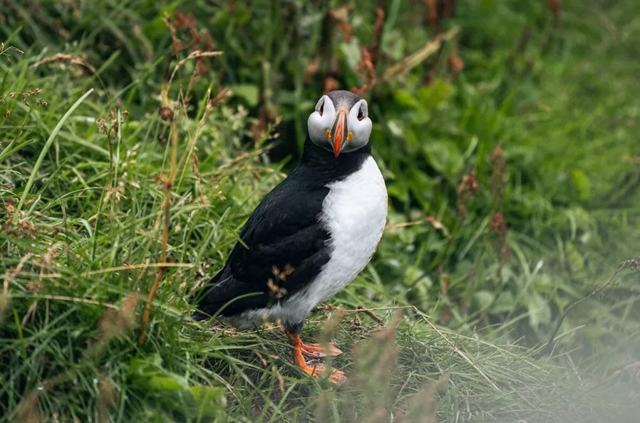
- Westman Islands: from Landeyjahöfn to Heimaey in about 35 minutes, several times a day. When the sea is too rough for Landeyjahöfn, the ferry sails from Þorlákshöfn instead, which takes close to three hours. The islands are known for their puffin colonies and for the 1973 eruption that buried part of the town. Arrive at least 30 minutes before departure. Our Westman Islands Day Tour from Reykjavik includes the ferry tickets.
- Breiðafjörður: from Stykkishólmur to Brjánslækur in the Westfjords, stopping at Flatey. It carries cars and is a handy shortcut to the Westfjords.
- Hrísey: a short crossing from Árskógssandur, north of Akureyri, to Hrísey.
- Grímsey: from Dalvík to Grímsey, Iceland's northernmost inhabited island, where you can step across the Arctic Circle.
- Viðey: a short boat trip from Reykjavík to Viðey, daily in summer and at weekends in winter.
- Hornstrandir: summer boats from Ísafjörður and Norðurfjörður to the Hornstrandir Nature Reserve, which has no roads.
Ferry to the Faroe Islands and Denmark
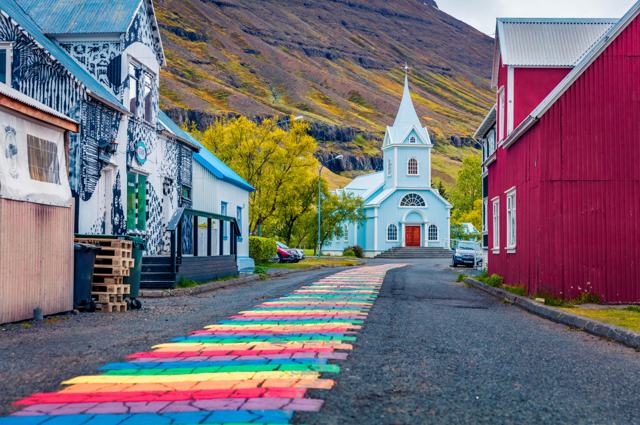
A car ferry sails about once a week from Seyðisfjörður in East Iceland to Tórshavn in the Faroe Islands and on to Hirtshals in Denmark. The Seyðisfjörður to Tórshavn leg takes about 20 hours. It is a popular way to bring your own car or camper to Iceland. Passenger sailings to Iceland have paused in midwinter in recent years, so check the timetable before you plan a winter crossing.
For island trips, see our guides to islands in Iceland and hiking Hornstrandir on your own, and our Westman Islands tours.
Taxis
Taxis are easy to find in Reykjavík at taxi ranks, by phoning a taxi company, or through apps such as Hopp, which also works at Keflavík Airport. You can also hail one in the street if its roof light is on. Taxis normally run on a meter and take cards, and you do not need to tip.
Fares are high compared with most countries, especially for longer trips outside town, so taxis make most sense for short hops, late nights and groups who can split the cost. Most drivers speak English, but it helps to have your address written down or open on your phone.
There is no Uber or Lyft in Iceland. Taxis outside the capital area and Akureyri are few, so book ahead if you need one in a small town or late at night.
Bikes, e-scooters and walking
Cycling is a cheap and easy way to get around Reykjavík, which has a good network of cycle paths along the coast and through the valleys. Rental e-scooters are all over the city and are unlocked with an app. They are handy for short trips, but pavements can be icy in winter and wind is strong all year. Bike rental shops and guided bike tours are good if you prefer pedal power.
You can also bring your own bike. Most airlines carry one if it is packed in a bike box, and just outside the arrivals hall at Keflavík Airport you should find a shelter with stands, pumps and tools where you can put it back together. A cycle path leads from the airport into the town of Keflavík; beyond that, the road to Reykjavík is wide but busy. Ferries take bikes too.
Walking is free and often the best way to see central Reykjavík. Hallgrímskirkja, Laugavegur, the Old Harbour and Harpa are all within a 20-minute walk of each other. Our city tours and food tours are an easy way to get your bearings on foot.
The one drawback of walking and cycling is the weather. On a fine day it is the nicest way to get about. When wind and rain arrive, which can happen within the hour, duck into a café or take a bus or taxi instead.

Domestic flights
For long distances, a domestic flight is much faster than the bus. Flights leave from Reykjavík's city airport, close to the centre, to Akureyri, Egilsstaðir and Ísafjörður, and smaller planes fly on from Akureyri to places such as Grímsey. A flight to Akureyri takes about 45 minutes, against a full day on the bus.
Tips for using public transport in Iceland
- Download the Klappið app before you arrive and check routes in the Strætó route planner.
- Pay by contactless card in Reykjavík. You do not need cash, and city bus drivers do not take it.
- Plan longer bus journeys in advance. Look up the route and the times, and check that there is a bus back.
- Check countryside timetables carefully. Some routes run only a few days a week.
- If you are out late at the weekend, remember that regular buses stop around midnight. The night buses only run outwards from the centre, and taxi queues can be long.
- Allow extra time in winter, when storms can delay or cancel buses and ferries.
- Dress for the weather while you wait at stops. Many stops have no shelter.
- Install the 112 Iceland app. It lets you call for help and send your location to the emergency services if something goes wrong.
- Book ferries with cars well ahead in summer, especially to the Westman Islands.
- Remember what the bus does not do. A countryside bus drives straight from one town to the next and passes the waterfalls and viewpoints without stopping.
- If your plan is mostly sightseeing, compare the bus with a tour or a rental car. Our beginner's guide to Iceland and common itinerary mistakes can help you decide.
Tours to book
If buses will not get you where you want to go, these tours will:
- Golden Circle Small Group Tour: Þingvellir, Geysir and Gullfoss in a day, none of which are on a regular bus route.
- Jokulsarlon Glacier Lagoon Boat Tour from Reykjavik: the glacier lagoon without a car, and a boat ride among the icebergs.
- 8 Day Tour Around Iceland: the Ring Road with transport and a guide, instead of stitching together countryside buses.
Questions people ask
Is there public transportation in Iceland?
Yes. Strætó runs city buses in the Reykjavík area and long-distance buses between towns. There are also public ferries, taxis and domestic flights, but no trains.
How much is a bus ticket in Reykjavík?
A single adult fare is 690 ISK in 2026. Youth aged 12–17 and seniors pay 345 ISK, and children aged 11 and under travel free. You can pay by contactless card on board.
Can you see Iceland by public transport?
You can travel between towns, but buses are infrequent and do not stop at most sights. For the Golden Circle, South Coast and other highlights, a rental car or guided tour works much better.
Is there Uber in Iceland?
No. Use taxi ranks, phone a taxi company, or book through a taxi app such as Hopp.
How do I get from Keflavík Airport to Reykjavík by public bus?
Take Strætó route 55. It runs every day and costs 2,400 ISK for adults to Reykjavík, paid on board by card or cash.
How long is a Strætó bus ticket valid?
A single ticket in the capital area is valid for 75 minutes, and you can change buses within that time without paying again.
What time do buses start and stop in Reykjavík?
Around 6:30 am on weekdays, 7:30 am on Saturdays and 9:30 am on Sundays. Most routes finish around midnight, and night buses run out of the centre on Friday and Saturday nights.
Can I take a bike on the bus in Iceland?
On city buses, yes, when there is room. Main countryside routes have a rack for three or four bikes. Space cannot be booked.