Iceland is one of the easiest places in Europe to see seabirds and waterfowl up close. About 72 species breed here, and close to 400 have been recorded in total. The best time for bird watching in Iceland is May to July, when puffins, terns and waders are nesting, but ravens, ptarmigan and eiders stay all year.
Why Iceland is good for birds
Iceland sits in the North Atlantic between Europe and North America, with long coasts, cold seas full of fish and wide wetlands. That mix brings huge seabird colonies to the cliffs and large numbers of ducks and waders to the lakes and marshes.
The species list is not long, because few small songbirds live here. What Iceland has instead is numbers. It holds a large share of the world's Atlantic puffins, about a third of all European golden plovers, almost half of the world's great skuas and the biggest breeding population of northern fulmars. You rarely need to walk far to see birds, and many can be watched from the car or a short path.
Most visitors combine birding with other sightseeing. A trip along the coast in summer will show you puffins, terns, fulmars, eiders and oystercatchers without any special planning.
Birds to look for
These are the species most visitors ask about, with the best chances to see them.

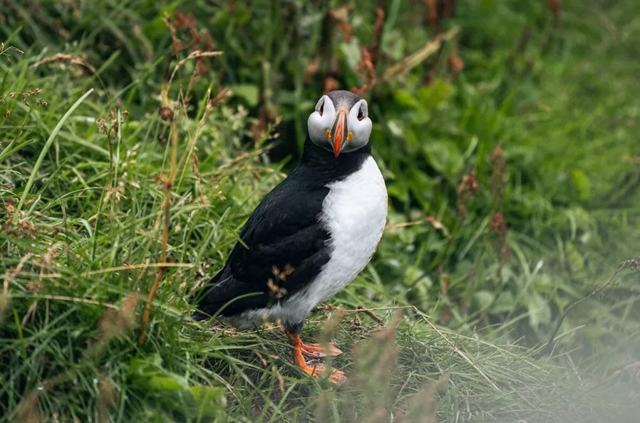
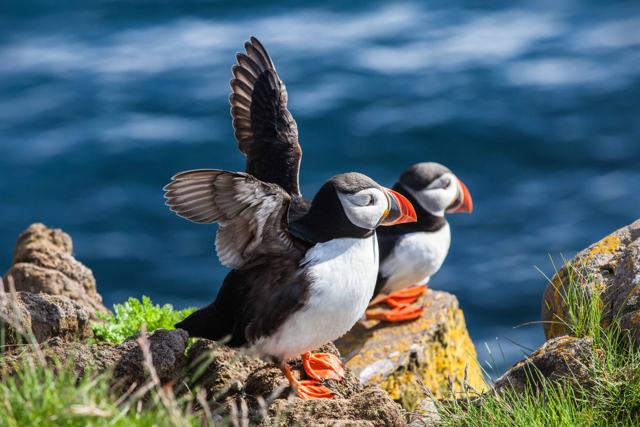
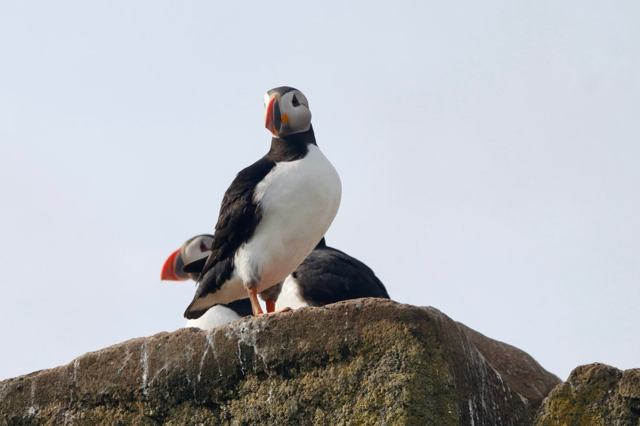
- Atlantic puffin. Iceland's best-known bird. Puffins come ashore to nest from late April or May and leave from mid-August. The Westman Islands have about half of Iceland's puffins. Numbers have fallen in parts of Iceland since around 2000, so watch them from a respectful distance. Our puffin guide has the details.
- Arctic tern. Terns fly between the Arctic and the Antarctic each year. Birds tracked from Iceland and Greenland covered about 70,900 kilometres a year on average, so they see two summers and more daylight than any other animal. They nest in colonies from May to August, including at Grótta in Reykjavík and around Jökulsárlón.
- European golden plover. Called lóa in Icelandic, the plover is the country's sign that spring has come. The first bird usually turns up in the second half of March, and the news always covers it. Plovers nest on heaths and moors across the country through the summer.
- Northern fulmar. Fulmars look like gulls but fly on stiff, straight wings and have a tube on the top of the bill. Iceland has one to two million pairs. They spit a foul-smelling stomach oil at intruders, so do not lean over a nest.
- White-tailed eagle. Iceland's largest bird, with a wingspan of up to about 2.4 metres. It nearly died out here around 1900 and has recovered slowly under full protection. Most pairs live around Breiðafjörður and the western coast. Sightings are never guaranteed, so treat one as a bonus.
- Rock ptarmigan. One of the few birds you can see all year. It is white in winter and grey-brown in summer, and it often walks rather than flies. It is also a traditional Christmas dish, and hunting is limited to set days each autumn.
- Common raven. Ravens live all over Iceland all year and appear in many sagas, poems and folk beliefs. In Norse myth, the god Odin had two ravens, Huginn and Muninn, meaning thought and memory.
- Red-throated diver. A slim diving bird, not a duck, with a grey head and a dark red throat patch in summer. It nests on small ponds and is easy to hear in spring, with a wailing, goose-like call.
- Ducks at Mývatn. Fifteen duck species breed at Mývatn, more than anywhere else in Europe. Look for Barrow's goldeneye, a North American duck that lives here all year, and harlequin ducks on the fast water of the Laxá river.
- Common eider. Eiders are common along the coast all year. Farmers collect the soft down from the nests after the birds leave, which is how Icelandic eiderdown is made.
- Snowy owl and little auk. Both are rare highlights. Snowy owls are seen only occasionally, mostly in remote areas. Little auks are winter visitors, best seen from the shore or boats offshore.
Best places for bird watching in Iceland
- Látrabjarg, Westfjords: Europe's largest bird cliff, 14 kilometres long and up to 440 metres high. Up to 40% of the world's razorbills nest here, with puffins, guillemots and kittiwakes. Our 3 Day Westfjords Tour from Reykjavik stops at the cliffs on day one, and there are more Westfjords tours.
- Westman Islands: the biggest puffin colony in Iceland, a short ferry ride from the south coast. Our Westman Islands Day Tour from Reykjavik includes the ferry and a guide, and see our other Westman Islands tours.
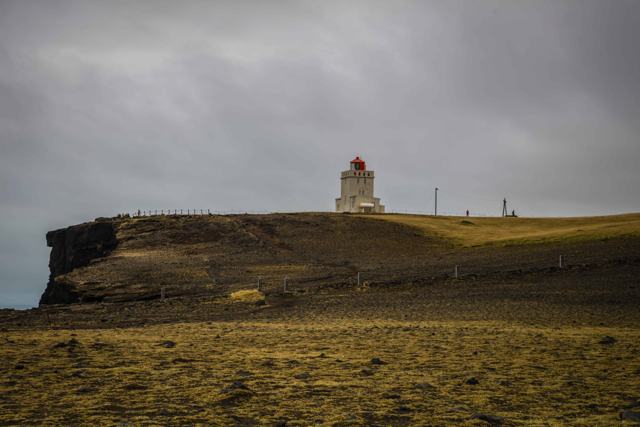
- Dyrhólaey, South Coast: puffins on the grassy cliff tops in summer, close to Vík.
- Borgarfjörður eystri, East Iceland: a puffin colony with viewing platforms at the harbour, one of the easiest places to see them up close. From Seyðisfjörður, our Puffins & Borgarfjörður Eystri tour visits the colony at Hafnarhólmi from May to August.
- Mývatn, North Iceland: ducks, Slavonian grebes and red-necked phalaropes. Sigurgeir's Bird Museum on the lake shore displays almost every Icelandic breeding bird.
- Grótta, Reykjavík: a tidal island with a lighthouse and an Arctic tern colony. It is closed to visitors from 1 May to 15 July to protect nesting birds.
- Tjörnin, Reykjavík: the city pond has ducks, geese, swans and terns in summer, all in the centre of town.
- Garðskagi, Reykjanes: a flat headland near the airport, good for waders, gulls and passing seabirds.
- Grímsey and Flatey: small islands with large seabird numbers in summer. Our guide to islands in Iceland covers how to get there.
- Jökulsárlón and the south-east: Arctic terns and great skuas nest on the sands, and skuas will chase you if you walk too close.
Best time for bird watching
May and June are the best months. Migrants are back, birds are singing and displaying, and nests are active. The long daylight means you can watch birds late into the evening. July is also very good, and seabird cliffs are still busy.
From mid-August the puffins start leaving, and most are gone by early September. Autumn brings geese and waders passing through. Winter is quiet, but you can still see ravens, ptarmigan, eiders, gulls and sea ducks, and sometimes little auks and white-tailed eagles.
If birds are a main reason for your trip, plan for late May to mid-July. Our daylight hours guide shows how long the days are month by month.

Guided tours or on your own
You can see a lot on your own with a car. Most coastal colonies and lakes are close to the road, and many have paths or viewing areas. Our self-drive trips can be planned around the main birding areas.
A guided tour helps if you want to reach islands and cliffs you cannot drive to, or if you want a local guide who knows the calls and nest sites. Puffin tours run by boat and on land in summer, including the Puffin Tour from Reykjavik, and many whale watching tours also pass seabird colonies. For a trip built around birds or photography, a private tour lets you set the pace and stay longer at each spot.
How to watch birds responsibly
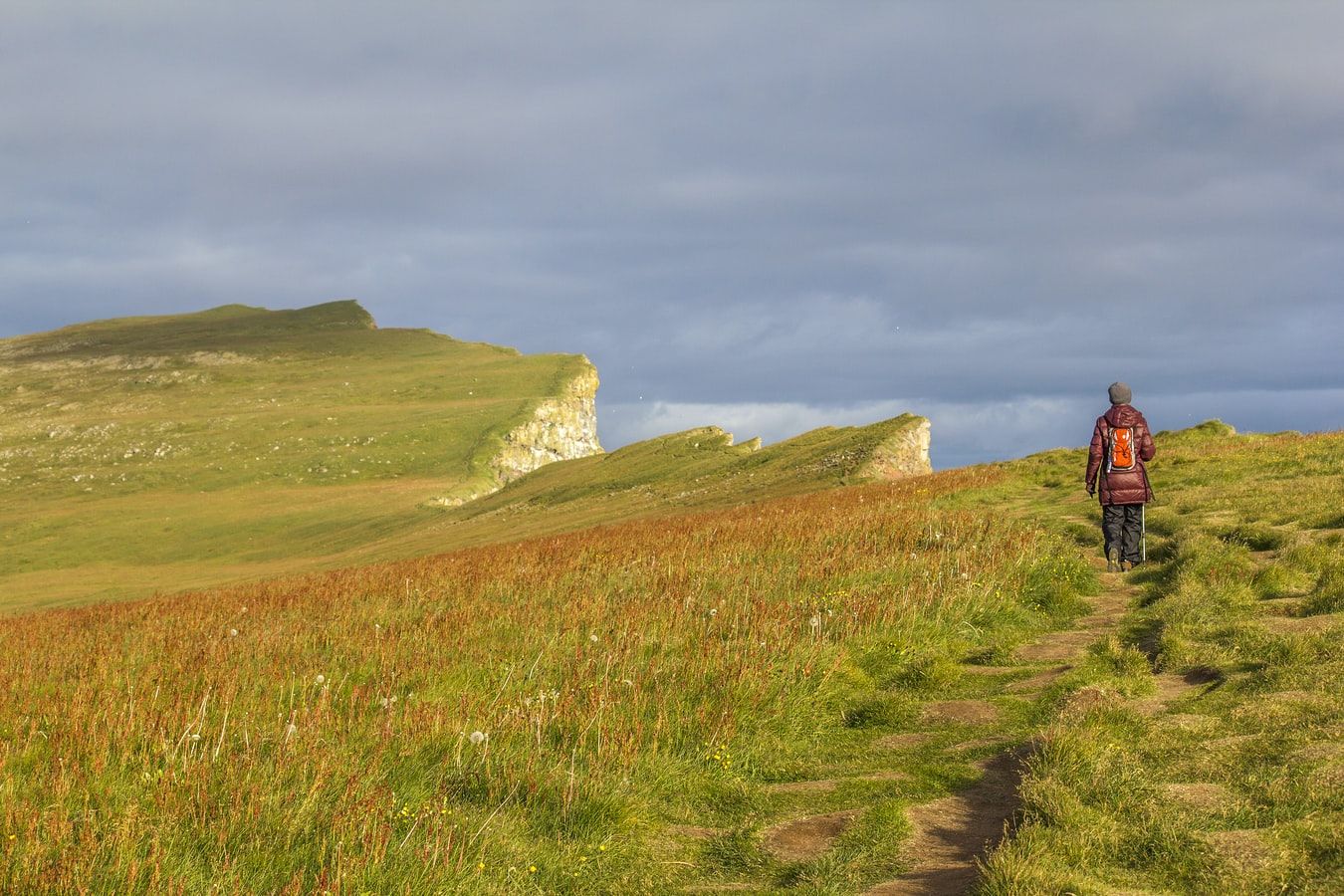
- Stay on paths and keep back from cliff edges. Grass on cliff tops is often undercut, and puffin burrows can collapse under your feet.
- Respect closures during nesting season, such as Grótta from 1 May to 15 July.
- Walk away if birds call loudly or dive at you. Arctic terns and skuas attack people who come near their nests, usually hitting the top of the head. A hat or holding a stick above your head helps.
- Do not fly drones near bird cliffs or colonies. See our drone guide for the rules.
- Never touch eggs or chicks, and keep dogs on a lead near nesting areas.
What to bring
The weather can turn from sun to wind and rain within an hour, so wear two or three warm layers under a waterproof shell rather than one heavy coat. Wear sturdy, waterproof boots, since many sites are on cliffs, moors or wet ground.
Bring binoculars, a small day pack with food and water, and a notebook or an app to record what you see. A telephoto lens helps for photos without disturbing the birds. Our Iceland packing list covers clothing in more detail.

Tours to book
If you want the birding spots and the transport sorted in one booking, these are good places to start.
- 3 Day Westfjords Tour from Reykjavik: a guided summer trip that includes Látrabjarg, Europe's largest bird cliff.
- Westman Islands Day Tour from Reykjavik: ferry and guide to Iceland's biggest puffin colony, from May to September.
- Puffins & Borgarfjörður Eystri: close views from the platforms at Hafnarhólmi in East Iceland.
Questions people ask
What is the best month for bird watching in Iceland?
May and June, with July close behind. Seabirds are nesting, migrants have returned and the days are very long.
How many bird species live in Iceland?
About 72 species breed in Iceland, and close to 400 have been recorded in total, including rare visitors.
Where is the best place to see puffins in Iceland?
The Westman Islands have the largest colony. Látrabjarg, Dyrhólaey and Borgarfjörður eystri are also good, usually from May to mid-August.
Can you go bird watching in Iceland in winter?
Yes, but with fewer species. Ravens, ptarmigan, eiders, gulls and sea ducks stay all year, and little auks visit offshore.
Do I need a tour to see birds in Iceland?
No. Many colonies and lakes are close to the road. A tour helps for islands, boat trips and expert help with identification.