The Eastfjords are a string of quiet fishing villages tucked into steep, narrow fjords on Iceland's east coast. The towns most worth your time are Seyðisfjörður, Djúpivogur, Borgarfjörður eystri, Fáskrúðsfjörður and Egilsstaðir, the regional hub. Give the region at least two days, and more if you want to hike or see puffins.
Why visit the Eastfjords
East Iceland is the least crowded part of the Ring Road. Tall mountains drop straight into the sea, and each fjord has its own small village with a harbour, a swimming pool and usually a café. You get the scenery of the Westfjords with far easier driving, because Route 1 and good paved roads link most of the towns.
The whole Eastern Region has only about 11,000 people spread over more than 15,000 square kilometres, so you will often have a trail, a beach or a hot tub to yourself. Expect jagged peaks, waterfalls, Iceland's largest forest, narrow fjords and long gaps between settlements. Icelanders have lived here since the settlement in the late 9th century, and most of the villages grew up around fishing and trade in the 19th century.
Most visitors pass through in a day on the Ring Road. That is a mistake. Slow down, take the coastal road instead of the inland shortcuts, and stay a night or two. Our East Iceland tours and Ring Road tours include the region, and our guide to how many days you need in Iceland helps with planning.
1. Seyðisfjörður
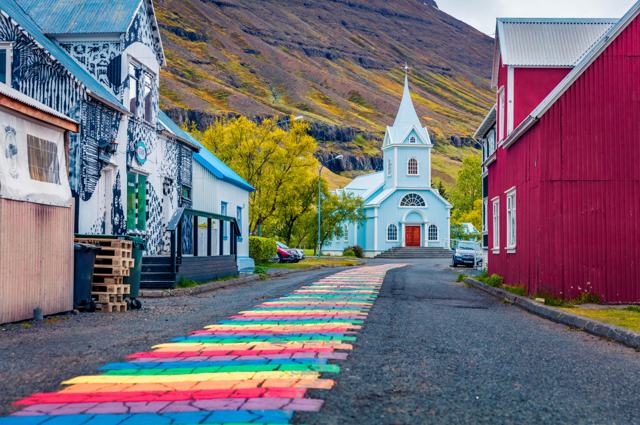
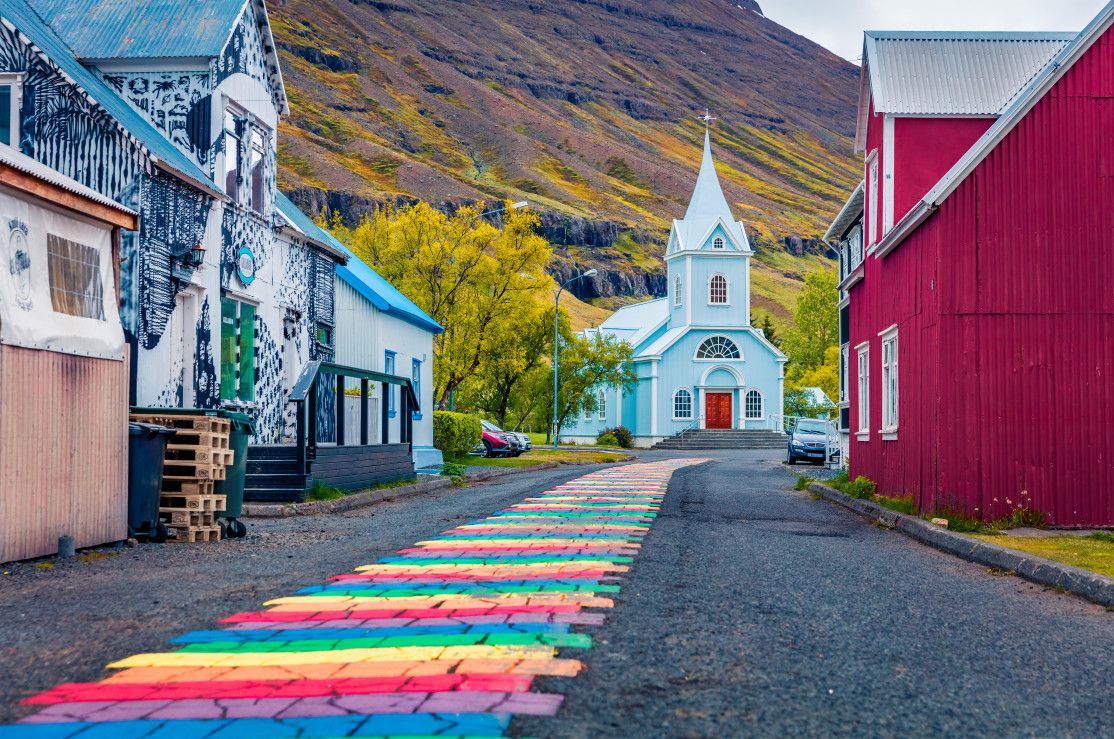
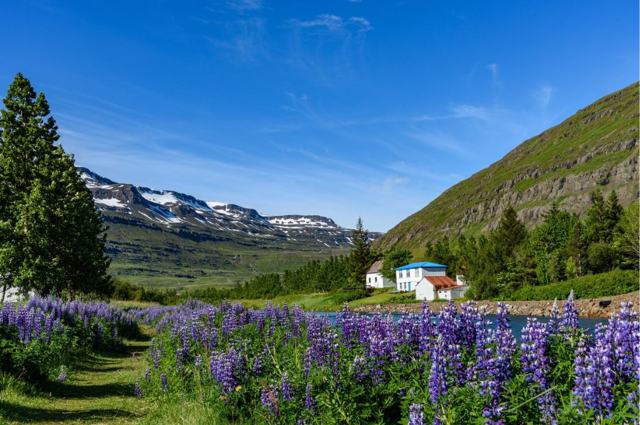
Seyðisfjörður is the best-known town in the east, with around 650 residents, colourful wooden houses in the Norwegian style and a blue-and-white church at the end of the rainbow-painted street. It sits at the head of a long fjord, below waterfalls and snow-streaked mountains.
The town grew up in the 19th century as a trading post and herring port, and Norwegian merchants brought the timber houses that give it its look. The sheltered natural harbour and the short crossing to mainland Europe made it one of the wealthiest settlements in the east for a time. Fishing is still important, and tourism now is too. The mountains Bjólfur and Strandartindur stand on either side of the town.
The town has a strong art scene. Skaftfell, the main visual arts centre in East Iceland, has exhibitions and a bistro, and regularly shows work linked to the Swiss-German artist Dieter Roth (1930–1998), who spent time in the town. In summer, visiting artists from around the world work here. The LungA art festival, held here from 2000, ended after its 2024 edition, but smaller events continue, including a photography festival in May and a midsummer street festival in June.
The Norröna car ferry from Denmark and the Faroe Islands docks here once a week, and the town is also a cruise stop. In December 2020 mudslides destroyed several houses on the south side of town; protective works have since been built and the town is fully open to visitors.
Getting there means crossing the Fjarðarheiði mountain pass, about 600 metres high, from Egilsstaðir. It can be closed by snow in winter, so check road conditions. A tunnel has been planned for years, but it is not expected any time soon. See our Seyðisfjörður tours and Seyðisfjörður shore excursions. From the harbour, our Stuðlagil Canyon private jeep tour runs in summer.
Things to do in Seyðisfjörður:
- Walk the waterfall trail: a marked path leads from the edge of town up through the Vestdalur nature reserve, past a chain of waterfalls, towards the cave of the Mountain Maid, where the remains of a woman from the Viking Age were found. Allow a few hours for the 6 to 10 km, depending on how far you go.
- Photograph Rainbow Street and the blue church, then browse the small design and craft shops nearby.
- Eat out: for a town this size the choice is good, from local fish and lamb to sushi and a bar or two.
- Get on the water: in summer you can paddle a kayak on the calm fjord.
- Enjoy the drive: the zig-zag road over Fjarðarheiði from Egilsstaðir is a sight in itself. Stop at Gufufoss on the way down.
2. Egilsstaðir
Egilsstaðir is the largest town in East Iceland, with around 2,600 people, and the region's service centre. It has the airport with flights to Reykjavík, supermarkets, car hire, a year-round swimming pool and a good choice of places to stay. It is not the prettiest town in the east, but it is the natural base for day trips.
Egilsstaðir is a young town. The farm of the same name appears in old sources as an assembly site, but the town only began to grow after the farmer Jón Bergsson (1855–1923) bought the land, built a large house by the lake and saw that the crossroads would become a centre for trade. His house still stands and is run as a hotel. The Lagarfljót worm is much older: the serpent has been part of local folklore since the 14th century.
The town sits on Lagarfljót, a long lake-like river said to hold a serpent, the Lagarfljót worm. Along its shore is Hallormsstaðaskógur, the largest forest in Iceland, and further on is Hengifoss, one of the country's tallest waterfalls, framed by red clay layers. Read our Hengifoss and Litlanesfoss hiking guide.
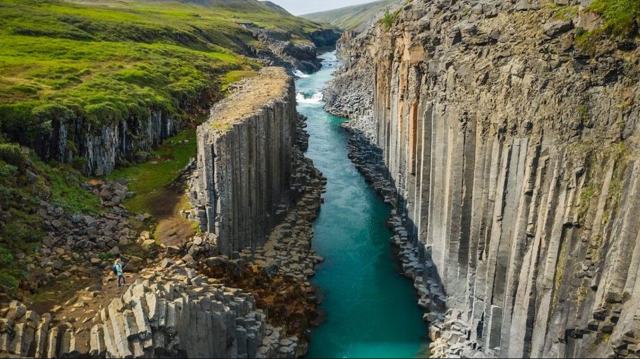
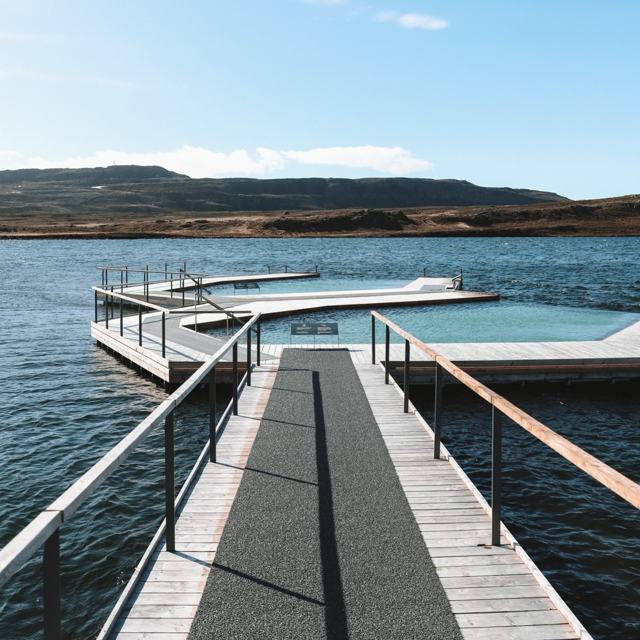
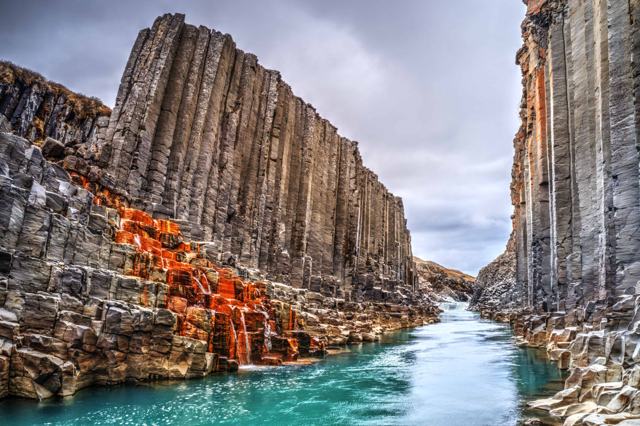
About 5 km north of town, Vök Baths has geothermal pools floating on Lake Urriðavatn and is open all year. Stuðlagil canyon, with its basalt columns, is about an hour's drive away; see our Stuðlagil canyon tours and our guide to the east and west sides of Stuðlagil. Book Vök Baths entry with us.
Things to do in Egilsstaðir:
- Hike to Fardagafoss: the trail starts about 5 km from town, on the road to Seyðisfjörður. The walk up the gorge takes around an hour, with views over the valley. The last part is steeper.
- Visit the East Iceland Heritage Museum for local history, reindeer and old ways of life, or the Sláturhúsið culture centre for performing arts and exhibitions.
- Swim: the town pool is open all year, also in winter.
- Walk in Hallormsstaðaskógur, which has marked forest trails along the lake.
- Try the local food: restaurants serve Nordic-style dishes, and reindeer from the eastern highlands is often on the menu.
- Stock up: if you are driving the Ring Road, this is the place to buy groceries for the next few days.
- Local events include a jazz festival and the Days of Darkness, when the east celebrates the start of winter.
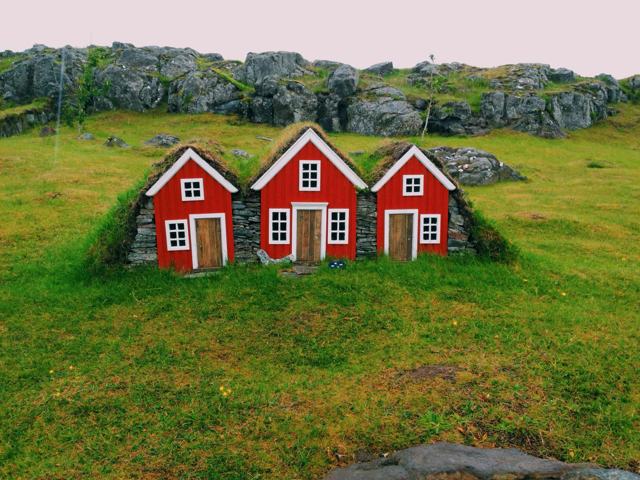
3. Borgarfjörður eystri
Borgarfjörður eystri is a small, remote fjord in the north-east of the region. Its village, Bakkagerði, has fewer than 100 residents. The village is named after Álfaborg, a rocky hill where local folklore says the elf queen lives.
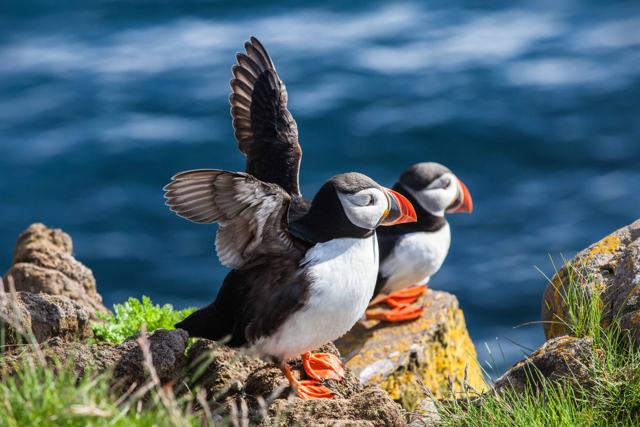
The big draw is Hafnarhólmi, a small islet by the harbour with around 10,000 pairs of nesting puffins. Wooden platforms let you watch them up close without disturbing the burrows. The season runs from mid-April to mid-August, and May to early August is best. Read more in our puffin guide and see our puffin tours. From Seyðisfjörður, our Puffins & Borgarfjörður Eystri tour takes you there.
Borgarfjörður eystri is also the start of the Víknaslóðir trails, a network of marked hiking routes through empty coves and rhyolite mountains. The Bræðslan music festival takes place here each summer; in 2026 it is on 25 July. See our Borgarfjörður eystri tours.
Many Icelanders call this one of the most beautiful villages in the country, and the drive in from Egilsstaðir takes a little over an hour.
Things to do in Borgarfjörður eystri:
- Hike: the Víknaslóðir trails are marked and graded by difficulty, from an easy one-hour walk to full-day routes past colourful mountains, deserted coves and caves.
- Watch the puffins at Hafnarhólmi. It is one of the easiest and safest places in Iceland to see them at close range.
- Eat fish soup: the village is known for it.
- Soak: sit in an outdoor hot tub with a view of the mountains after your walk.
4. Djúpivogur
Djúpivogur is a harbour village of about 400 people in the south of the Eastfjords, and Iceland's first and only Cittaslow town. The idea is a slower pace of life, local food and care for the environment, and you can feel it. Fishing is still the main work, and the village has a hotel, restaurants, a shop and a campsite.
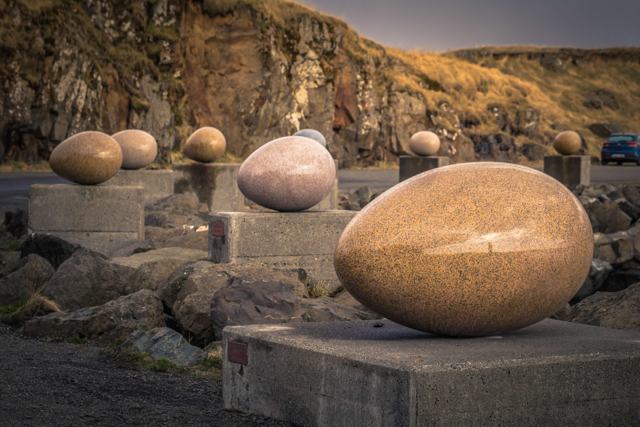
Above the village rises Búlandstindur, a pyramid-shaped mountain that some locals say has special powers. Langabúð, a long timber trading house whose oldest part dates from 1790, now holds a café and a small museum. Just outside the village you will find Eggin í Gleðivík, or the Eggs of Merry Bay, 34 stone eggs representing the birds that nest in the area.
The island of Papey, just offshore, is known for its puffins and other seabirds. Boat trips ran from the harbour for many years, but the regular tours stopped some years ago, so ask in the village whether anyone is sailing. Djúpivogur is also a cruise stop; see our Djúpivogur shore excursions. Our private Eastfjord tour from Djúpivogur runs from May to September, with the egg sculptures, waterfalls and the Stokksnes peninsula.
Things to do in Djúpivogur:
- Ask about a boat to Papey: the island, about 2 square kilometres, has been uninhabited since 1966 and has large puffin colonies in summer. Regular boat tours have not run in recent years, so check locally before you plan a day around it.
- Go birdwatching at the Búlandsnes bird sanctuary, on the lagoons just outside the village.
- See the Eggs of Merry Bay along the harbour road.
- Have coffee at Langabúð, the oldest house in the village, and look round its heritage museum.
5. Fáskrúðsfjörður
Fáskrúðsfjörður, with about 730 residents, has a long link with France. French fishermen used the fjord as a base until 1935, and street signs are in both Icelandic and French.
The French hospital, built in 1903 for sick fishermen, long had a reputation for being haunted. It has been restored and now houses a hotel and a museum about the French fishing era. Outside the village there is a small French cemetery with 49 graves. The village celebrates French Days every July; in 2026 they run from 15 to 19 July.
Skrúður, the island off the mouth of the fjord, is known for its puffins, gannets and other seabirds. Boat trips there are not offered every summer, so ask locally. On the drive out along the fjord, look for Kolfreyjustaður church and the orange Vattarnes lighthouse.
Things to do in Fáskrúðsfjörður:
- Walk the French trail through the village: the hospital, the museum, the bilingual street signs and the cemetery.
- Climb Sandfell: a 743-metre rhyolite mountain on the south side of the fjord. The trail leaves the coast road between the farms Víkurgerði and Vík and follows the river Víkurgerðisá before turning to the top. It is a steep day hike with views of the fjord and the islands Andey and Skrúður.
- Drive Road 955 around the headland instead of taking the tunnel. It gives the best views of Skrúður, where gannets and puffins nest in summer.
- Eat: local menus have a French touch, and the restaurant in the old hospital looks out over the fjord.
6. Reyðarfjörður
Reyðarfjörður sits at the head of the longest and widest fjord in the east, about 30 km long. Norwegian whaling stations once lined the shore, and fishing was the main work until recently. It is a working town, with a large aluminium smelter nearby, and it makes a practical stop for fuel and supplies.
Allied troops were based here during the Second World War, and the Icelandic Wartime Museum tells their story. The British crime series Fortitude was filmed largely in the town. A short walk leads to the Búðará waterfall.
Things to do in Reyðarfjörður:
- Walk to the Búðará waterfall above the town, and back along the path the locals call Love Lane.
- Hike Grænafell: a marked trail climbs the hill above town. On the way you pass large boulders that look like elf houses but were carried down by avalanches.
- Fish at Andapollur, a small pond by the town that is popular with families.
- Visit the Icelandic Wartime Museum in the old army camp. It is open in the afternoons from June to August, and by arrangement the rest of the year.
7. Eskifjörður
Eskifjörður has been a trading post since the 18th century and is still a busy fishing town. The mountain Hólmatindur, 985 metres tall, towers over the fjord.
The East Iceland Maritime Museum covers fishing and trade, and Randulffssjóhús, an old Norwegian fishing house, built around 1890, is kept as it was and is now a summer seafood restaurant where you can try fermented shark and dried fish. The Hólmanes nature reserve, on the peninsula between Eskifjörður and Reyðarfjörður, has short walking trails with sea views and birdlife. Eskifjörður is also a cruise port; see our Eskifjörður shore excursions.
Things to do in Eskifjörður:
- Walk in Hólmanes nature reserve for birds, odd rock formations and, with luck, whales offshore.
- Visit the Maritime Museum for the story of fishing and trade in the fjord. It is open in the afternoons in summer.
- Kayak or fish: the sheltered fjord is good for paddling, and in summer you can rent a boat and gear.
8. Neskaupstaður
Neskaupstaður, on Norðfjörður, is one of the larger towns in the east, with about 1,500 people. It was nicknamed Little Moscow in the 20th century for its strong socialist politics, and fishing is still the main industry.
Until 1949 the town could only be reached by sea. After that the road went over the Oddsskarð pass. Since 2017 the 7.5 km Norðfjarðargöng tunnel has made the drive from Eskifjörður easy all year. Big avalanche barriers above town, built after a deadly avalanche in 1974, have walking paths with views over the fjord.
The museum house has three collections under one roof: art by local painter Tryggvi Ólafsson, natural history and a maritime museum. Neskaupstaður was long the home of the Eistnaflug metal festival each July, but it has not been held in recent years, so check whether it is back before you plan around it.
Things to do in Neskaupstaður:
- Walk along the avalanche barriers for a wide view of the town and Norðfjörður.
- Take a boat trip along the coast of the fjord. Whales are sometimes seen.
- Eat: fresh seafood is the obvious choice, and local lamb is good too.
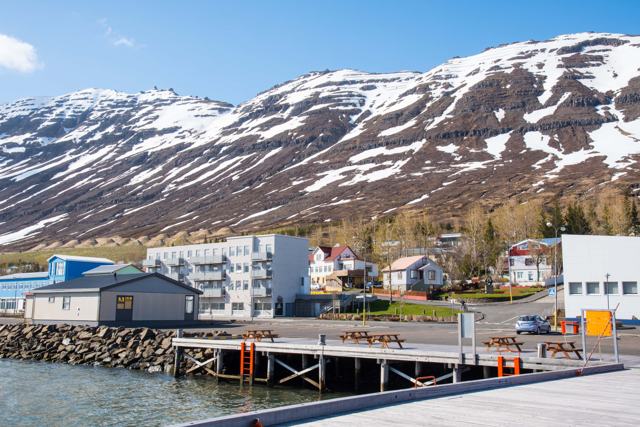
9. Stöðvarfjörður
Stöðvarfjörður is a tiny village on Route 1 with a surprisingly lively art and craft scene. Its best-known sight is Petra's Stone Collection, a lifetime's collection of Icelandic stones and minerals set in a garden.
The fjord is ringed by sharp peaks: Steðji and Hellufjall to the north and Súlur, the village's emblem, to the south. The same geology that built them left the area rich in stones and minerals, which is how Petra found her collection.
The collection is open daily from 1 May to 15 October, 9:00 to 17:00. Entry is 2,200 ISK for ages 14 and over and free for younger children. Allow an hour, and add a walk in the valleys above the village if you have time.
Things to do in Stöðvarfjörður:
- Hike in Jafnadalur: trails lead up the valley to the lone rock Einbúinn, the Hermit, and to a natural stone arch on the slopes of Álftafell.
- See Saxa: on the shore north of the fjord, waves are forced into a narrow cleft and shoot up like a geyser when the sea is rough.
- Swim: the village has a small outdoor pool with a hot tub.
- Shop for crafts: local makers sell their work in a gallery and, in summer, at a market in the old salt house.
10. Breiðdalsvík
Breiðdalsvík, the bay of the broad valley, is a small fishing village at the mouth of Breiðdalur, one of the widest valleys in the east. The valley has waterfalls, colourful rhyolite peaks and good hiking, and it is a common place to see reindeer in winter and spring. Read more in our reindeer guide.
The village dates from the 19th century. Fishing and farming have shrunk, and many people now work in tourism. The river Breiðdalsá runs down the valley to the sea past waterfalls and small patches of woodland, and a local guide can take you to places that are hard to find alone, on foot or on horseback.
The village is a convenient overnight stop between Djúpivogur and the northern fjords.
Things to do in Breiðdalsvík:
- Walk at Streitishvarf: a marked trail south of the village goes round the headland by the lighthouse, with wide views of the ocean.
- Taste the local beer: the village craft brewery is named after the Beljandi waterfall in the valley, and the beer goes well with local fish. Check that it is open before you count on it.
11. Mjóifjörður
Mjóifjörður, the narrow fjord, lies between Norðfjörður and Seyðisfjörður and is the most remote place in the region. Only about 10 to 15 people live in the hamlet of Brekkuþorp. The road in, Route 953 from Egilsstaðir, is a gravel mountain road that is only open for about four months a year, depending on snow. In winter the only access is by a scheduled boat from Norðfjörður.
On the way down you pass the tiered Klifbrekkufossar waterfalls. At the fjord you find the ruins of a Norwegian whaling station at Asknes and, at the end of the road, the Dalatangi lighthouses. The small inlet Smjörvogur is said to have once been used as a prison, because there was no way out by land. Icelanders come here to camp, and experienced hikers walk the steep slopes and ravines. A summer guesthouse and café offers coffee and cake. Only go in good weather and with a car you trust on gravel.
12. Vopnafjörður
Vopnafjörður sits in the far north-east, off the main Ring Road. The bay was first settled by Norse settlers in the 9th century. It is best known for its salmon rivers, which draw anglers from around the world, and for quiet coastal walks.
Nearby, the Bustarfell turf farm museum shows how people lived in old Icelandic turf houses. It is open daily from June to August. Vopnafjörður works well as a detour between the Eastfjords and North Iceland. Our fishing guide covers the rivers.
Things to do in Vopnafjörður:
- Hike: marked trails include Fuglabjarganes, a headland with bird cliffs; Skjólfjörur and the sea stack Ljósastapi; and the route between the valleys, from Sunnudalur to Hofsárdalur. Some are easy, others take most of a day.
- Watch birds: the coast around the bay has nesting sites for some less common species.
- Fish: the rivers here are among the best in Iceland for salmon and trout. Permits must be booked well ahead.
Summer events in the Eastfjords
The small towns hold local festivals every summer. Dates for 2026 include:
- Midsummer street festival, Seyðisfjörður: 20 June
- Vopnaskak, Vopnafjörður: 9–12 July
- French Days, Fáskrúðsfjörður: 15–19 July
- Bræðslan music festival, Borgarfjörður eystri: 25 July
- Útsæðið, Eskifjörður: 13–16 August
Getting there and getting around
Egilsstaðir is a long two-day drive from Reykjavík by the Ring Road, or a short domestic flight. Most people arrive by car on a Ring Road trip, coming from Höfn in the south or from Mývatn in the north.
Summer, from June to August, is the easiest time to visit, with puffins, open mountain roads and long days. In winter the towns stay open, but mountain passes such as Fjarðarheiði can close in storms, so check road conditions and the weather each morning. If you prefer not to drive, our East Iceland tours and multi-day trips take care of it. Our 6 Day Iceland Ring Road Tour includes the East Fjords between the south-east and the north.
Tours to book
If you want a guide in the Eastfjords, these are good places to start.
- Private Eastfjord Tour from Djúpivogur: waterfalls, the Eggs of Merry Bay and Stokksnes with your own local guide.
- Stuðlagil Canyon Private Jeep Tour: the east side of the canyon from Seyðisfjörður, for a small private group.
- 6 Day Iceland Ring Road Tour: a summer trip around the island that includes the East Fjords.
Questions people ask
What is the best town to visit in the Eastfjords?
Seyðisfjörður is the most popular, with its colourful houses, art scene and fjord setting. For puffins, go to Borgarfjörður eystri; for a quiet harbour village, Djúpivogur.
How many days do you need in the Eastfjords?
At least two days to drive the fjords without rushing. Three or four days lets you add Borgarfjörður eystri, Stuðlagil and some hiking.
Where can you see puffins in East Iceland?
Hafnarhólmi in Borgarfjörður eystri has around 10,000 pairs and viewing platforms. Papey off Djúpivogur and Skrúður off Fáskrúðsfjörður have puffins too, but boat trips there do not run every year, so check locally. The season runs from mid-April to mid-August.
Is the road to Seyðisfjörður open in winter?
Usually, but the Fjarðarheiði pass can close in snowstorms. Check road conditions before you drive, and allow for delays.
What is there to do in the Eastfjords?
Hiking, puffin watching, swimming in village pools and geothermal baths, boat trips, kayaking, fishing and visiting small museums. Each town section above lists things to do there.
What is the largest town in East Iceland?
Egilsstaðir, with around 2,600 people. It has the airport, supermarkets and most services, so it is the best base for day trips to the fjords.