Iceland Travel GuideLOCAL TRAVEL AGENCY IN ICELAND
My trip
Talk to a local
Iceland Travel GuideLOCAL TRAVEL AGENCY IN ICELAND
My trip
Talk to a local
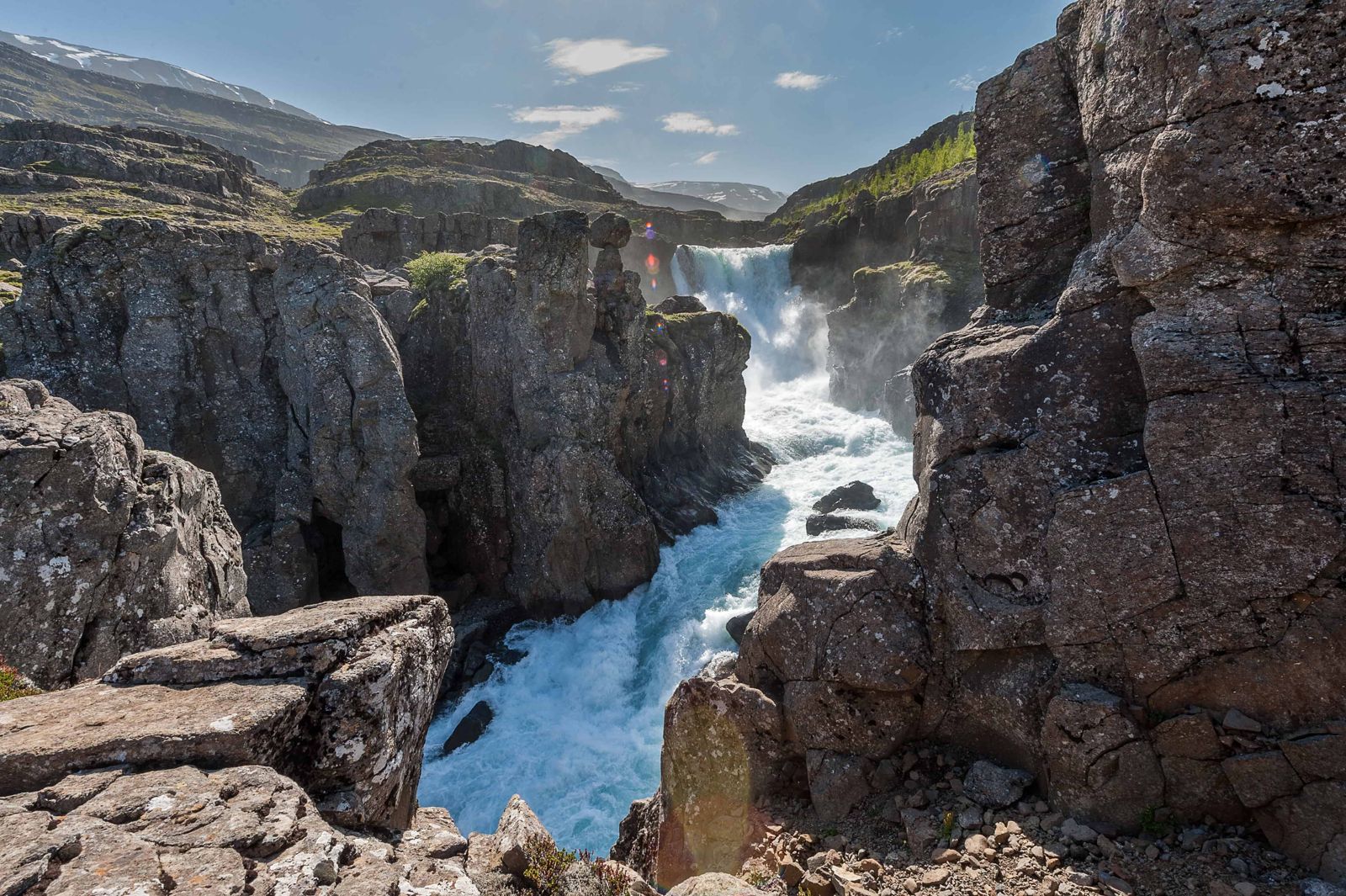
Eskifjörður is a small fishing village on the fjord of the same name in East Iceland, backed by steep mountains that drop almost straight into the sea. It has a maritime museum in a row of restored old harbour buildings and is a quiet stop on a drive around the East Fjords. It is free to walk around and open all year.
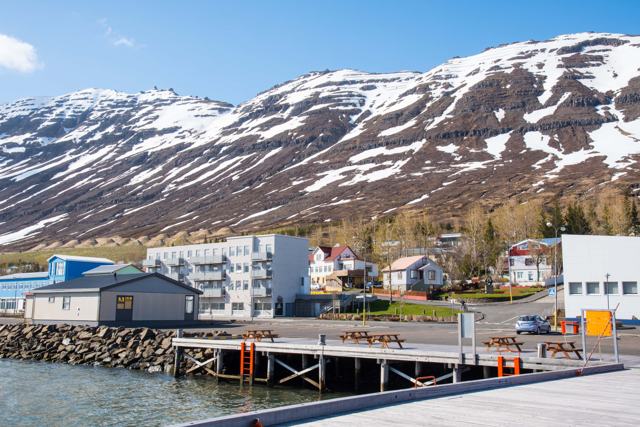
Like many East Fjords villages, Eskifjörður grew up around fishing, and the harbour is still lined with older wooden buildings, several of which have been restored. The East Iceland Maritime Museum, set in some of these historic buildings, covers the fishing industry and shipping history of the region.
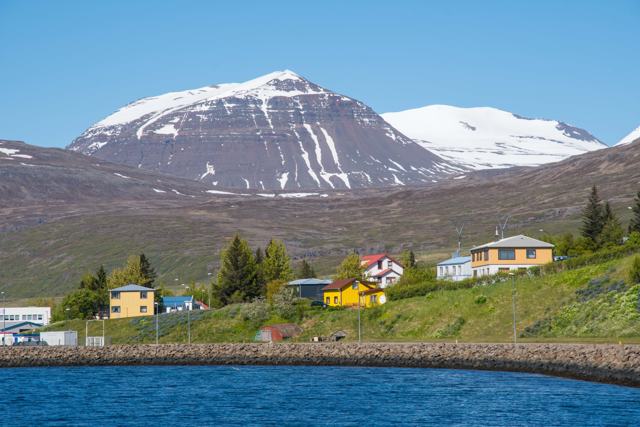
The village sits under the mountain Hólmatindur, whose steep, almost symmetrical shape rises directly across the fjord from the houses, making Eskifjörður one of the more dramatically situated villages along this stretch of coast. It is a good stop for a coffee, a short walk along the shore, or a look at the museum while driving the East Fjords.
The village lies along the north shore of Eskifjörður, a northern arm of the larger fjord Reyðarfjörður, in the middle of the East Fjords. Red, well-preserved fishing sheds line the shore, and around 1,000 people live here.
The sea has shaped life and work here for a long time, and you see it as you walk around: old piers, historic houses and a museum full of fishing gear, alongside reminders of local trade, industry and medicine. The water in the fjord is usually calm, and you may be able to hire a boat locally to get out on it.
Eskifjörður became an official trading post in the late 1780s and has been a centre of commerce ever since. The Danish trading company Ørum & Wulff opened the first store here, and trade has carried on without a break. The number of residents only grew in earnest once Norwegians began fishing for herring off the East Fjords in the late 19th century.
More recently, drilling for hot water paid off. The geothermal water fills the village swimming pool and heats the houses, which makes Eskifjörður one of the few places in East Iceland with geothermal heating.
Above the road over Hólmaháls, at its highest point on the peninsula, there is a picnic table and a pile of stones. Folklore says a völva, a seeress sometimes called the White Witch, is buried under it. She promised to protect the fjord from attack for as long as her bones lay undisturbed. She is credited with turning back North African raiders and, much later, a bomber in the Second World War.
High mountains, empty black beaches and two nature reserves lie within a few minutes of the village, and there are plenty of walking routes.
Eskifjörður has a shop, a geothermally heated swimming pool with hot tubs and water slides, a café, a campsite and guesthouses, along with the maritime museum in the old harbour buildings.
Eskifjörður and the nearby towns of Reyðarfjörður and Egilsstaðir all have guesthouses and hotels, any of which works well as a base for touring the East Fjords.
It is a small village good for a short stop: a walk along the harbour, a look at the maritime museum, and views of the mountain Hólmatindur across the fjord.
It sits just off Route 1, reached by a short detour, between Reyðarfjörður and Neskaupstaður.
No, walking around the village is free. The maritime museum charges an entry fee.
About 1,000.
Roughly 680–700 km, or 8–9 hours of driving. From Reyðarfjörður it is about 15 minutes.
Yes. The Hólmanes nature reserve has easy marked trails along the shore, the old spar mine at Helgustaðanáma is a short walk, and Hólmatindur is a demanding mountain hike.
Tours and trips that include Eskifjörður, booked directly with a local travel agency in Iceland.