Iceland Travel GuideLOCAL TRAVEL AGENCY IN ICELAND
My trip
Talk to a local
Iceland Travel GuideLOCAL TRAVEL AGENCY IN ICELAND
My trip
Talk to a local
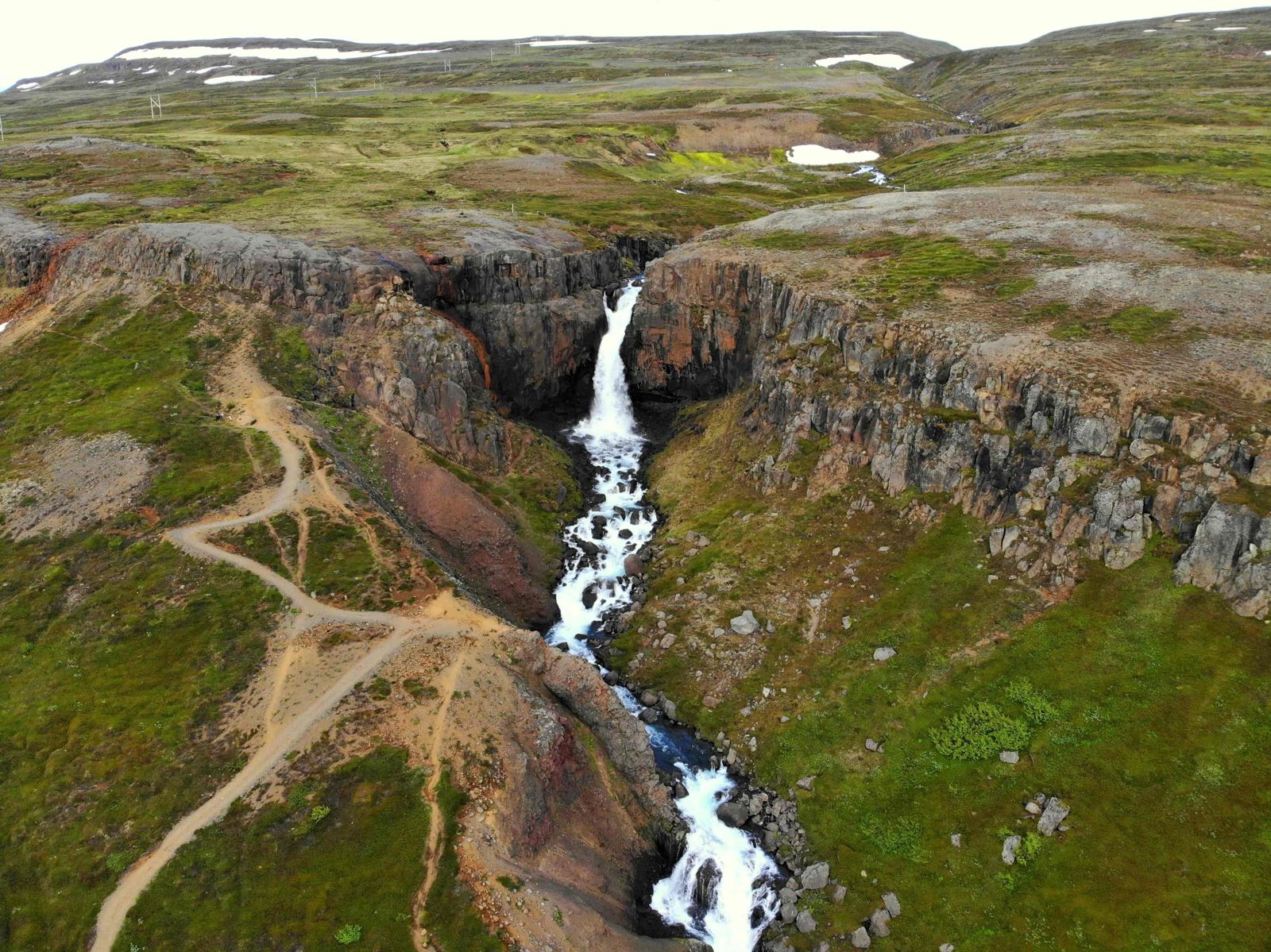
Fardagafoss is a waterfall about 20 metres high on an easy trail near Egilsstaðir in East Iceland, just off the road up to Seyðisfjörður. It is free to visit, the round trip trail is around 2.6 km, and most people spend 1–1.5 hours there and back.
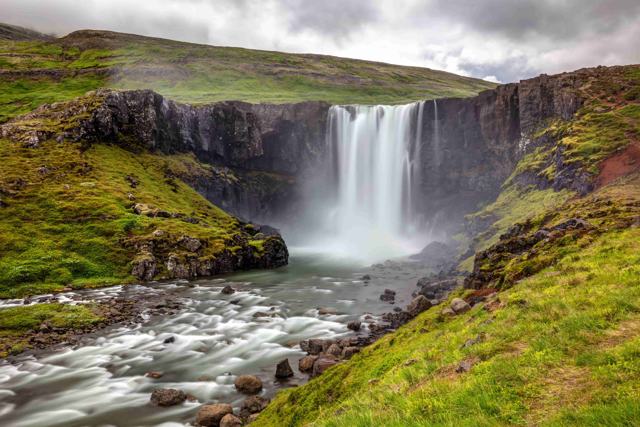
Fardagafoss sits where the road to Seyðisfjörður climbs Fjarðarheiði, and a short, easy trail follows the river Miðhúsaá up to the falls. The water drops in two stages over dark rock, with a milky-blue colour typical of glacial and mountain streams in this part of the country.
Local folklore says a cave once sat behind the falls, inhabited for generations by a troll or hidden being, though the cave has since collapsed. Whether or not you put stock in the story, it adds a bit of colour to what is otherwise a straightforward, pretty walk.
Far fewer people stop here than at the big-name waterfalls, which is a large part of the appeal. The trail gives you a waterfall, a small canyon and wide views over the valley around Egilsstaðir in one short outing, and the troll story makes it a good walk for families with children.
Fardagafoss is known as much for its story as for its looks. Behind the falling water there is a cave, and older people in the area tell that a troll, in most versions a fearsome giantess, lived in it for centuries and guarded the waterfall.
The tale goes that a tunnel runs from the cave under the Fjarðarheiði heath all the way to Gufufoss. The giantess owned a cauldron full of gold, and she is said to have dropped it into a deep pothole in the middle of Gufufoss, lower on the same river. When the water is low, people say, you can still see the handle.
Much of the cave has since collapsed, but what is left of it can still be seen behind the falls. Stories like this are common around Iceland's waterfalls, where the roar of the water and the mist have long fed the imagination.
Coming from Reykjavík, Egilsstaðir is about 640 km away on the Ring Road, around eight hours of driving by the northern route through Borgarnes and Akureyri. Split it over several days and stop at the sights on the way.
The walk is 2.6 km there and back on a marked path. Most of it is easy; only the last short stretch needs care.
Skip the last section and the cave if the rocks are icy or the river is high.
Fardagafoss fits easily into a day around Egilsstaðir and Seyðisfjörður.
None at the trailhead. The nearest services are in Egilsstaðir.
Egilsstaðir and Seyðisfjörður both have hotels and guesthouses within a short drive of Fardagafoss.
It is an easy trail, about 2.6 km round trip, suitable for most visitors.
About 5 km, around 10 minutes by car to the trailhead.
No, it is free to visit.
The trail and access road can be icy and exposed in winter. Summer is the more reliable time to visit.
There is a cave behind the falls. Much of it has collapsed, but in good conditions you can step in behind the water. The approach is wet and slippery, so take care.
At the signed parking area on Route 93, about 5 km from Egilsstaðir, where the road starts to climb Fjarðarheiði towards Seyðisfjörður.
A troll, in most versions a giantess, is said to have lived in the cave behind the falls, with a tunnel leading under the heath to Gufufoss, where she hid a cauldron of gold.