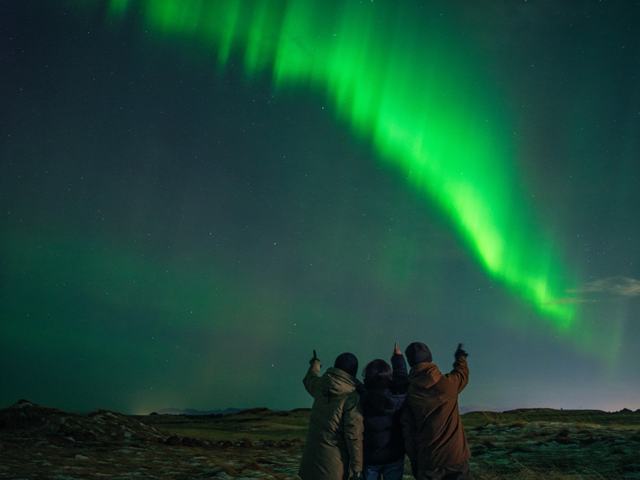
Yes, you can see the Northern Lights in Reykjavík, but only the brighter displays shine through the city glow. For the best chance, walk or drive a few minutes to a dark edge of town such as Grótta, or go 35–50 minutes out of the city to places like Kleifarvatn or Þingvellir. If you do not want to drive on dark winter roads, an evening tour from Reykjavík does the searching for you.
Can you see the aurora from the city?
On an active, clear night the aurora can be bright enough to see from the middle of Reykjavík, even from a hotel window or a downtown street. On a normal night, though, street lights, shop fronts and floodlit buildings wash out the fainter green bands. Your eyes also never fully adjust to the dark when there is light all around you.
So the rule is simple: the further you get from lights, the more you see. Even moving from a busy street to a dark shoreline or park can make a big difference. A short trip out of town makes a bigger one.
This guide is about Reykjavík and its surroundings. For the season, how the aurora works, what to wear and camera settings, see our main guide to the Northern Lights in Iceland.
What the Northern Lights are, in short
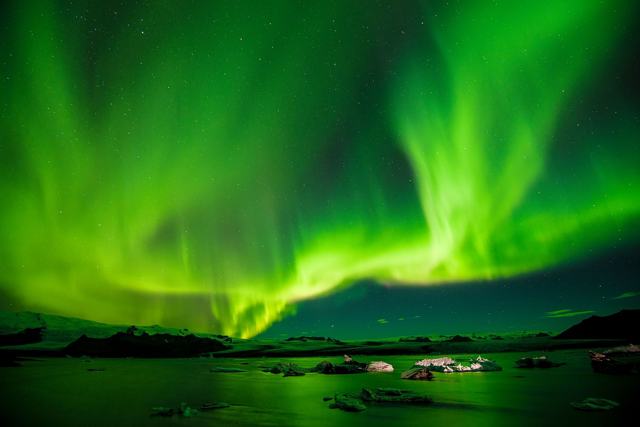
The Northern Lights, or aurora borealis, are a natural light show with a scientific cause. Charged particles from the sun are caught by the Earth's magnetic field and steered towards the poles. High in the atmosphere they hit gas atoms, which give off light. That is why the aurora appears in a ring around the far north (and the far south), and why Iceland sits right under it.
The colour depends on which gas is hit and how high up. Green is by far the most common and comes from oxygen. Oxygen also gives a deep red, but only very high up, above roughly 240 km. Nitrogen adds purple, pink and blue, usually along the lower edge of a strong display.
It all depends on the sun. On a quiet night there may be nothing to see, even with a dark, clear sky, and nobody can promise a display on a given date. You need three things at once: solar activity, darkness and clear sky.
When to look from Reykjavík
The season in Reykjavík runs from about late August to mid-April, when the nights are dark enough. In midwinter the city has only a few hours of daylight, so there is plenty of dark sky, but the weather is also at its stormiest. Our daylight hours guide shows how the nights change through the year.
Check the free aurora forecast from the Icelandic Met Office (vedur.is) in the afternoon. It gives an activity number from 0 to 9 and a cloud map. On that map, green means cloud and white means clear sky. The page also lists darkness and moonrise times for Reykjavík, which helps you decide when to head out.
Reykjavík is often cloudy when other parts of the country are clear. If the cloud map shows gaps inland or to the east, that is where tours and local drivers will head.
Best spots inside Reykjavík
None of these are fully dark, but all are within a short walk, bus ride or drive of the centre and are good for a quick look when the forecast is strong.
- Grótta: the lighthouse at the tip of Seltjarnarnes, about ten minutes' drive west of the centre, is the city's favourite aurora spot. You look north over the sea towards Esja and, on clear nights, Snæfellsjökull. The island itself is only reachable on foot at low tide, but the shore and car park work fine. There is little light pollution, and the lighthouse makes a good subject for photos. It gets busy on good nights, so arrive early to get a parking space and a spot on the shore.
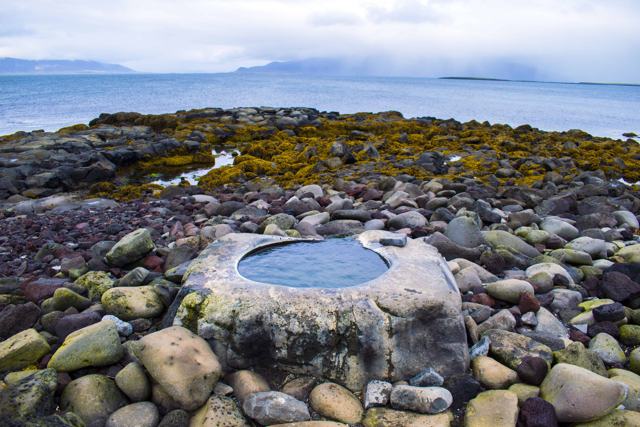
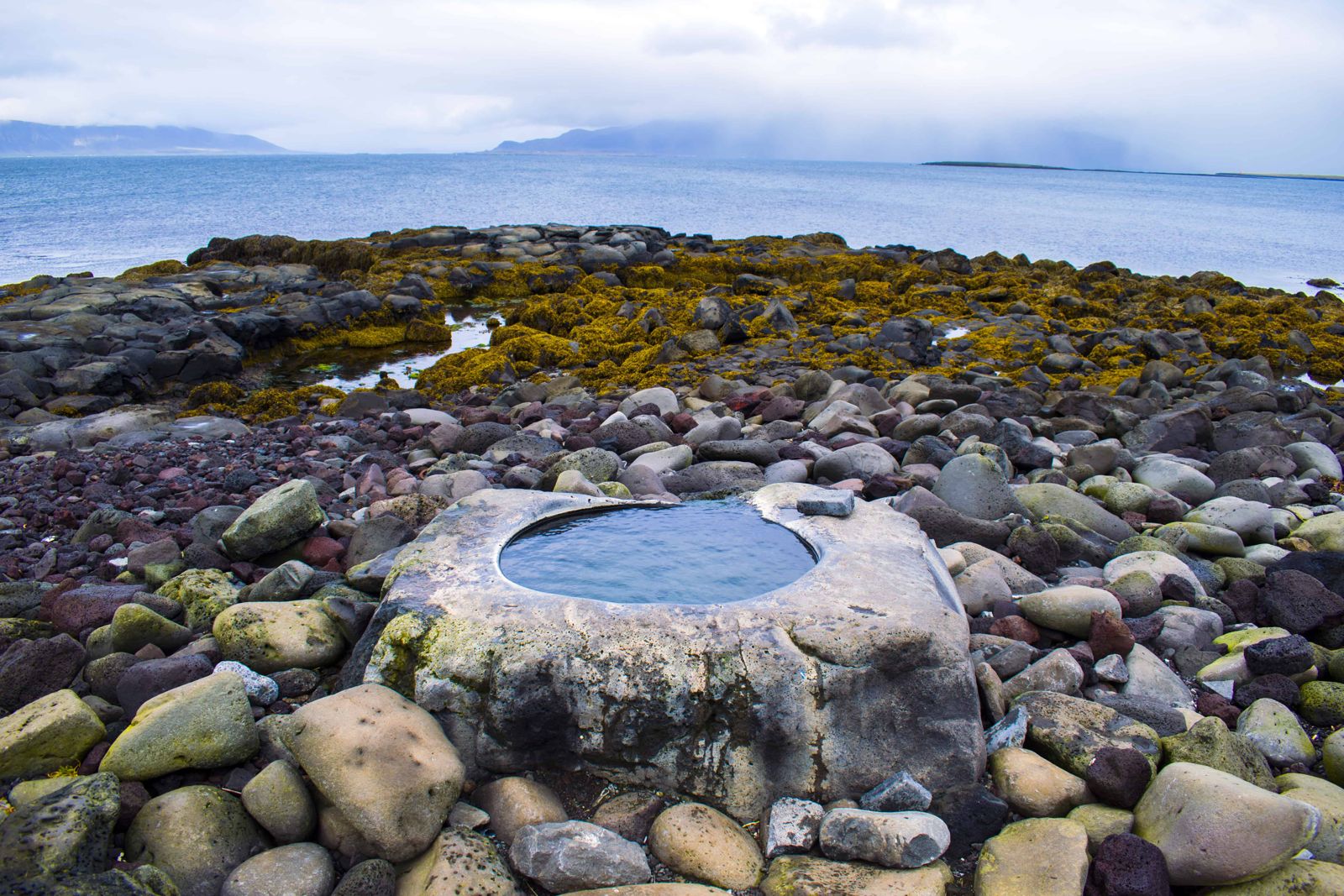
- Kvika foot bath: right beside Grótta is a small, free geothermal foot bath carved into the rock by artist Ólöf Nordal. The water is around 39°C, so you can warm your feet while you watch the sky. Bring a small towel.
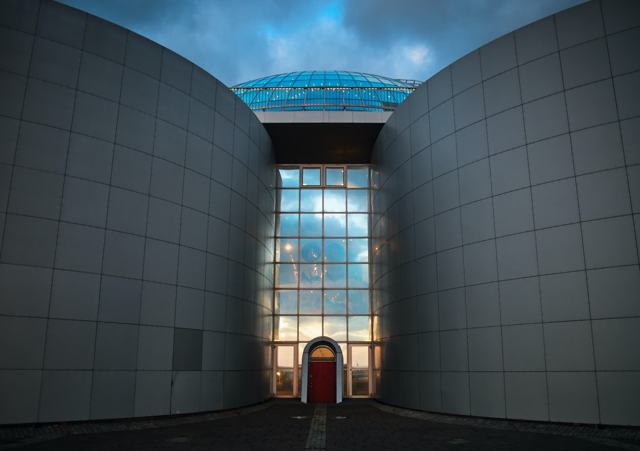
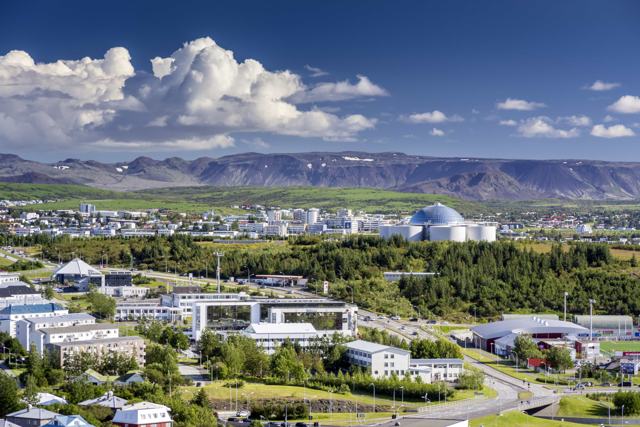
- Öskjuhlíð and Perlan: the wooded hill around Perlan is darker than the streets below, and the trees block much of the city glow. Perlan's observation deck gives a 360° view over the city, but it is only open during museum hours and is lit, so it suits early evening displays rather than serious viewing.
- Elliðaárdalur: the river valley on the east side of the city is one of the darker green spaces within Reykjavík, with open views once you walk away from the paths' lamps.
- The shore paths: the coastal walk along Ægisíða and out towards Nauthólsvík faces the sea, which means fewer lights in your line of sight. Look north and west, away from the city.
Dark skies within an hour of Reykjavík
If you have a car, these places give you much darker skies without a long drive. Check road conditions and weather before you go, and only stop in proper parking areas.
Be ready to move. If cloud covers one place, another may be clear: from Þrengsli, for example, you can go west towards Kleifarvatn or north-east to Þingvellir. Decide with the cloud map, not by habit.
- Hvaleyrarvatn: a small lake in the hills right behind Hafnarfjörður, so you do not have to drive far past the town. There is a car park at the west end of the lake, and a walking path leads from it to the south shore. The lake is sheltered from the town lights, and on calm nights the aurora reflects in the water.
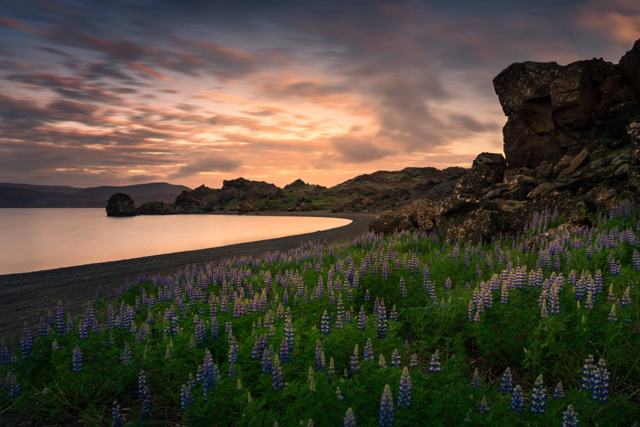
- Kleifarvatn: the largest lake on the Reykjanes peninsula, about 35 minutes' drive south of the capital on Route 42 from Hafnarfjörður. By day it is a quiet place for walkers and birdwatchers. At night it is very dark, with almost no buildings, and the road continues to the Krýsuvík geothermal area. The road is narrow and can be icy in winter.
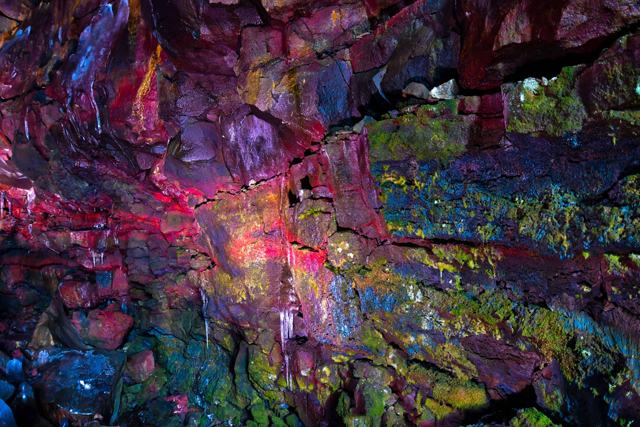
- Þrengsli and Raufarhólshellir: Þrengsli (Route 39) is the road between Reykjavík and Þorlákshöfn. It crosses empty lava fields about 35–45 minutes from the city, with almost no buildings to light the sky. The car park at the Lava Tunnel is an easy place to stop. By day you can tour Raufarhólshellir, a lava tunnel more than 1.3 km long, then stay out for the dark; in winter there are sometimes evening tours of the tunnel too. See our lava tunnel tours.
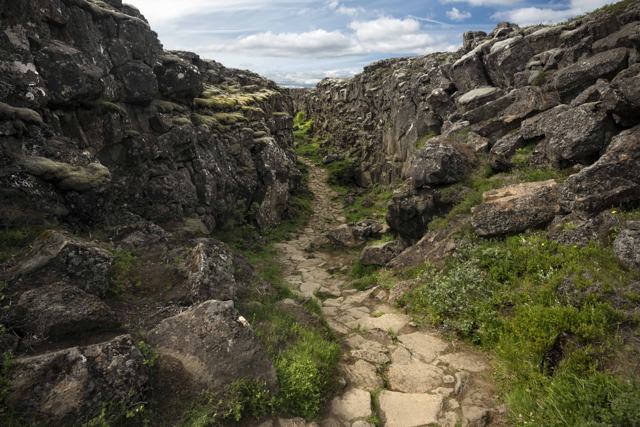
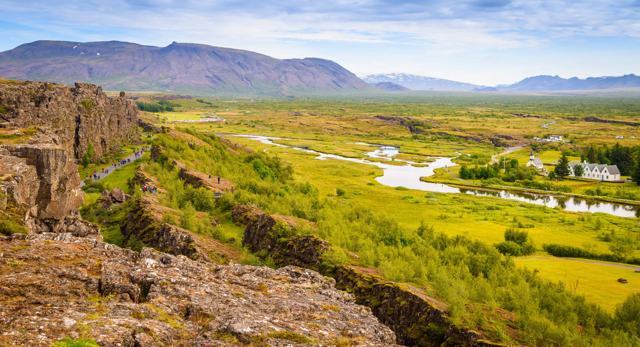
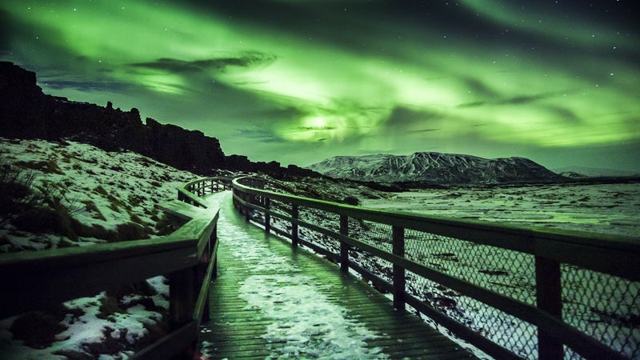
- Þingvellir National Park: about 50 minutes north-east of the city and properly dark, with a wide view over the rift valley and lake. This is where the North American and Eurasian plates pull apart, so you can watch the lights from the gap between two continents. It is the first stop of the Golden Circle, so you can combine a day tour with an evening in the countryside.
- Esja and Hvalfjörður: a short drive north of the city, with darker skies and views back over the bay. Covered in more detail in our Iceland-wide guide.
- Garðskagi: the lighthouses at Garður, on the north-west tip of the Reykjanes peninsula, are about an hour from Reykjavík. The view is open to the sea on three sides, which helps when cloud sits over the hills inland.

Northern Lights tours from Reykjavík
Most visitors see the aurora on a tour from Reykjavík, and for a first winter trip it is usually the easier choice. You travel with other people who are out for the same thing, and guides help you find and photograph the lights. They watch the forecasts all evening and drive to wherever the sky is clearest, which may be in a completely different direction from the one you would guess. You do not have to drive icy roads in the dark after a long day. And if no lights appear, many tours offer a free second try on another night.
Tours run through the season, typically from late August or September to mid-April. Most evening trips take about 3–5 hours, with pick-up in the city. See all our Northern Lights tours. The main options from Reykjavík are:
- Bus and minibus tours: the best value. Minibuses keep the group smaller and can stop at spots big coaches cannot. See Northern Lights Small Groups or the Northern Lights Bus Tour from Reykjavik.
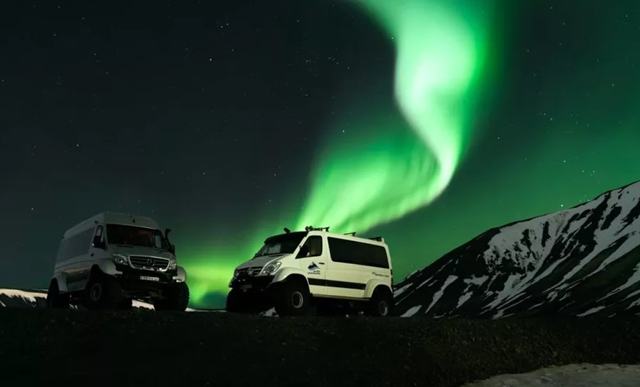
- Super jeep tours: small groups in modified 4×4s that can reach quieter places and go further if the sky is cloudy near the city. See super jeep tours and the Northern Lights Super Jeep.
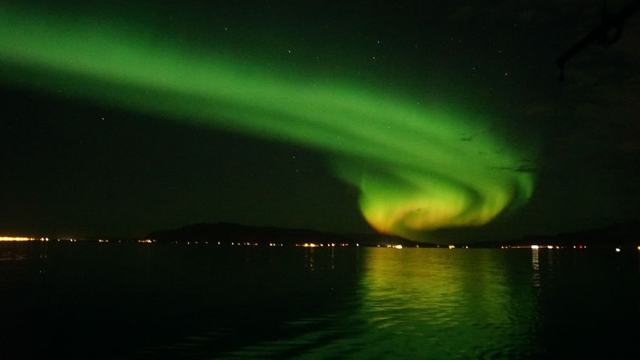
- Boat tours: cruises leave from Reykjavík's Old Harbour and head out into Faxaflói bay, away from the city lights. Out there the sky is dark in every direction and the lights reflect in the sea. White-beaked dolphins and harbour porpoises live in the bay, so now and then you get wildlife as a bonus. The trips are short and need no long drive, but calm weather matters. See Northern Lights by Boat. In the north, similar trips have run from Akureyri into Eyjafjörður.
- Private tours: your own guide and vehicle, good for families, couples and photographers who want to set the pace. See private tours and the Northern Lights Private Tour from Reykjavik.
- Photo tours: guides help with settings, tripods and composition. See photo tours.
Tour or self-drive: how to choose
Take a tour if this is your first winter in Iceland, you are not used to driving on snow and ice, or you are only in Reykjavík for a night or two and want the best chance in the time you have.
Drive yourself if you are an experienced winter driver and have a flexible evening. It costs less for a group and you can stay out as long as you like. Check road.is for road conditions and safetravel.is for warnings, fill the tank, and never stop on the road or a narrow verge. Pull into a proper car park and turn off your headlights so others can see too.
Renting a car: you need a valid driving licence, and the person who drives should be the one most used to winter roads. A normal two-wheel-drive car is fine for the paved roads to every place in this guide; a 4×4 gives more grip and clearance in snow and on gravel. Rental cars come with winter tyres in the winter months. Choose a car that fits your group and luggage. The saving is real for a group of friends, but the work is yours: you follow the aurora and cloud forecasts, check whether a road or area is closed, and decide where to go.
Either way, book your tour or set aside your aurora evenings early in your stay. That leaves room for a second try if the first night is cloudy. Our guide on how many days to spend in Iceland can help you plan.
What to bring for a night out
You will stand still in the cold, often in wind, for an hour or more. Warm, layered clothing, a hat, gloves, insulated boots and a hot drink make the difference between enjoying the night and giving up early. Bring a head torch with a red-light mode, a phone power bank, and a small tripod if you want photos. The full lists are in our winter packing list.
- Sturdy shoes: boots with good grip. You stand and walk on ice, wet moss and uneven lava, often near water.
- Warm clothes: more layers than you think you need. You will be standing still for a long time.
- Power bank and spare batteries: cold drains phones and camera batteries fast. Keep the spares in an inside pocket.
- A map: a paper map or an offline map on your phone, in case you lose signal or battery.
- A torch: a small torch or head torch, ideally with a red light, so you do not need your phone's light.
- A tripod: any kind. You need one for sharp aurora photos, even with a phone.
If the sky stays cloudy
Reykjavík has good back-up plans for a grey night. The Áróra show at Perlan is an 8K Northern Lights planetarium film that explains the aurora and shows it at its best. You could also soak in a geothermal lagoon under the night sky, such as the Blue Lagoon or Sky Lagoon (see our comparison), or visit one of the city's heated public pools, where locals go in all weathers.
If a tour is cancelled because of weather, see our tips on what to do when tours get cancelled, and browse our Reykjavík tours for other evening ideas.
Tours to book
If you would rather leave the searching to a guide, start here:
- Northern Lights Private Tour from Reykjavik: your own guide and vehicle from Reykjavík, going wherever the sky is clearest.
- Northern Lights Super Jeep: a small group that can head further out when Reykjavík is cloudy.
- Northern Lights by Boat: out on Faxaflói bay from the Old Harbour, with no drive at all.
Questions people ask
Can you see the Northern Lights in Reykjavík?
Yes, during strong displays on clear nights. City lights hide the fainter aurora, so go to a darker edge of town such as Grótta, or 35–50 minutes out of the city.
Where is the best place to see the Northern Lights in Reykjavík?
Grótta lighthouse on Seltjarnarnes, about ten minutes' drive from the centre, is the most popular city spot. Öskjuhlíð around Perlan and Elliðaárdalur are other darker areas within the city.
How far do I need to go from Reykjavík to see the Northern Lights?
Often not far. Kleifarvatn, the Þrengsli lava fields and Þingvellir are all within about 35–50 minutes and have very little light pollution. On cloudy nights tours may drive further to find clear sky.
How long is a Northern Lights tour from Reykjavík?
Most evening tours take about 3–5 hours with pick-up in the city. Boat tours from the Old Harbour are usually shorter, and super jeep or private tours can run longer.
What month is best for the Northern Lights in Reykjavík?
Any month from September to March works. Midwinter has the longest nights but rougher weather, while September–October and February–March often combine long nights with milder conditions.
Why are the Northern Lights green?
Green light comes from oxygen atoms hit by particles from the sun, and it is the most common colour. Red comes from oxygen very high up, and purple, pink and blue come from nitrogen.