Iceland Travel GuideLOCAL TRAVEL AGENCY IN ICELAND
My trip
Talk to a local
Iceland Travel GuideLOCAL TRAVEL AGENCY IN ICELAND
My trip
Talk to a local
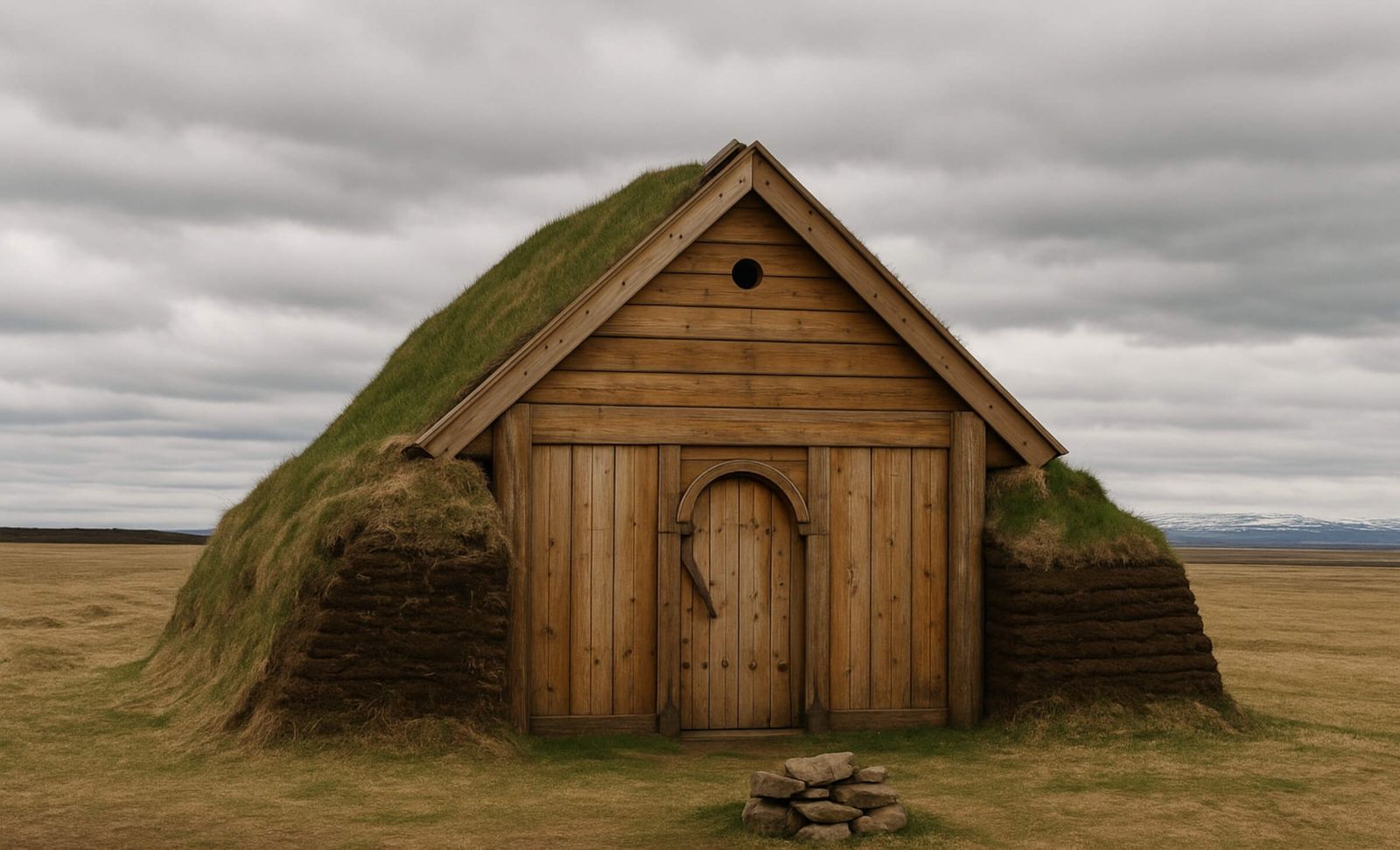
Geirsstaðakirkja is a replica of a Viking Age turf church, built in 1999 to 2001 on the site of the excavated ruins near Egilsstaðir in East Iceland. It stands by Route 925, is free to visit and open to walk around at any time, and most people spend 15 to 20 minutes here.
The church is a reconstruction of a farm church from the Commonwealth Age, roughly 1,000 years ago. It has turf walls and roof over a timber frame on stone, in the way churches were built in early Iceland when Christianity was taking hold. It faces east and west, with carved benches at the front. Inside, there is a simple wooden altar with a large cross and a small open window above it. A carved guest book, wrapped in plastic, lies on the altar together with information about the site.
The ruins of the original were found in a dig in 1997 by the East Iceland Heritage Museum (Minjasafn Austurlands), on the land of the farm Litli-Bakki. The excavation showed the remains of a turf church, a farmstead, a longhouse and two smaller buildings, with a circular wall around them. It is thought to have been a private church for the household of the farm only, and to have belonged to Hróarr Unason, son of the settler Uni Garðarsson.
It is a small, quiet stop, and a good match for the other turf sites in Iceland. Please do not treat it as a showpiece. It is a real place of worship and a christening took place here when it was consecrated in 2001.
In 1997 archaeologists working on the land near Litli-Bakki found the ruins of an early church and farm. The find gave a rare picture of how a farm in the Commonwealth Age (930 to 1262) was laid out, with a church, a house and outbuildings inside a circular wall.
The reconstruction was built in 1999 to 2001 with turf, wood and stone using old methods. It was funded partly by the European Union, together with the Icelandic Research Council's science fund, the Norður-Hérað municipality and the New Business Venture Fund. It stands close to the site of the original, was blessed in 2001, and the first christening was held here the same year.
Geirsstaðakirkja is in the far east of the country, a long way from Reykjavík, so it is not a day trip from the capital. Visit it on a self-drive trip around the Ring Road or while staying in East Iceland.
Geirsstaðakirkja is a replica. Only five turf churches survive in their original form, and each has its own claim.
In Reykjavík there is one more, a turf church rebuilt at the Árbær Open Air Museum.
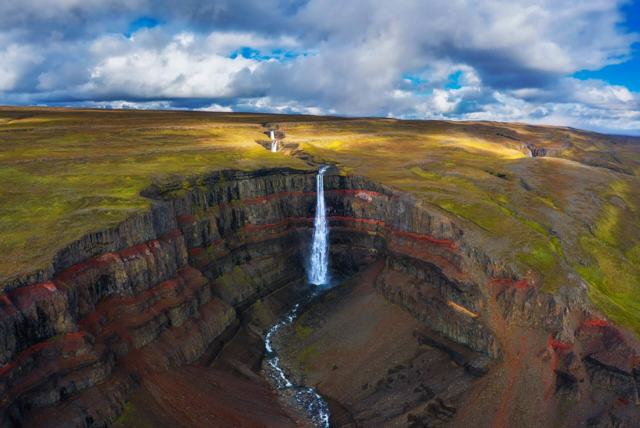
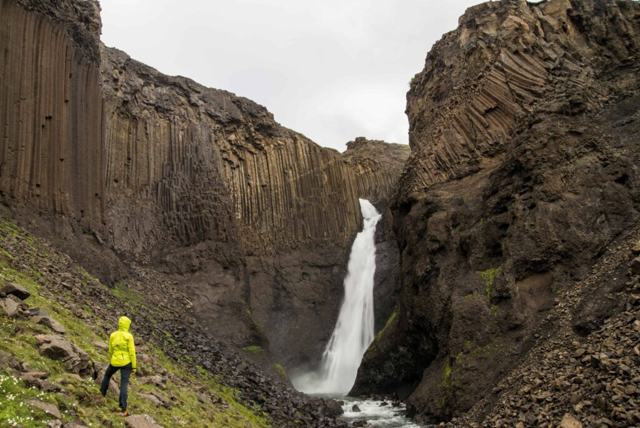
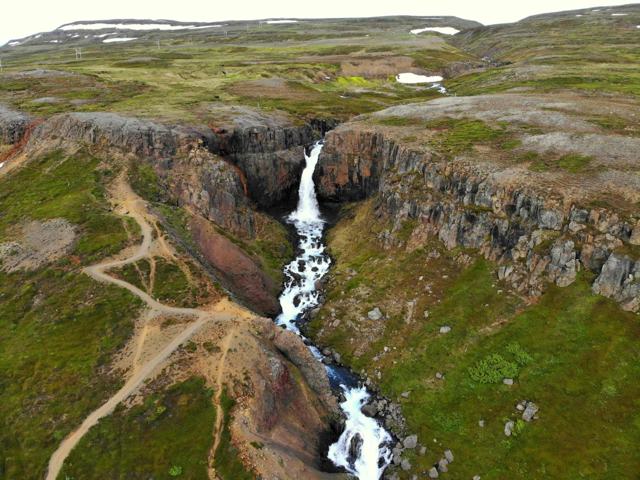
Hengifoss, one of the tallest waterfalls in Iceland, is the main sight of the area. Red clay layers between dark basalt stripe the cliff behind the narrow fall. The walk up takes about 40 to 60 minutes from the car park and passes Litlanesfoss on the way. Both rivers run into Lagarfljót, the long lake said to be home to the Lagarfljót worm.
Hallormsstaður forest, near Egilsstaðir, has eleven marked trails and two campsites among the birch woods. For a soak afterwards, the Vök Baths float in the lake Urriðavatn just outside Egilsstaðir, heated by geothermal water.
There are no toilets, café or shop at the church. The nearest services are in Egilsstaðir.
Egilsstaðir and Fellabær have hotels, guesthouses and a campsite, and are the best bases. Hallormsstaður also has accommodation.
It is a replica, built in 1999 to 2001 on the site where archaeologists found the ruins of the original in 1997.
No. It is free to visit and you can walk to it at any time.
About 15 to 20 minutes, as it is a small building.
Near Egilsstaðir in East Iceland, at the junction of Routes 925 and 926 by the Lagarfossvirkjun power station.
Five original turf churches survive in Iceland: Saurbæjarkirkja in Eyjafjörður, Víðimýrarkirkja and Grafarkirkja in Skagafjörður, and Núpsstaðarkirkja and Hofskirkja in the southeast.