Tolli, full name Þorlákur Kristinsson Morthens, is one of Iceland's best-known living painters. Born in Reykjavík in 1953, he paints big, expressive oil landscapes of Icelandic mountains, lava, glaciers and light. This guide covers his story, his style, where to see his work and the places in Iceland that shaped it.
Who is Tolli?
Tolli was born in Reykjavík in 1953. His father, Kristinn Morthens, was also a painter, and his younger brother is Bubbi Morthens, one of Iceland's most famous musicians.
Before art school, Tolli spent the 1970s as a travelling worker. From 1971 he worked in fish processing and other jobs around the country, in places such as Neskaupstaður, Eskifjörður, Höfn, Grindavík, Keflavík and the Westman Islands. Those years on the coast gave him a close, working knowledge of Icelandic weather, sea and land.
He also made music. In the mid-1970s he began writing and performing with Bubbi, with songs about workers' rights, and in 1983 he co-founded the band Ikarus. The band's album was his graduation project from art school.
Training and the move to landscape
Tolli graduated from the Icelandic College of Arts and Crafts (Myndlista- og handíðaskóli Íslands) in Reykjavík in 1983. He then studied at the Hochschule der Künste in West Berlin, finishing in 1985.
Back in Iceland he became known as one of the painters who brought Neo-Expressionism to the country. His early work mixed figures and abstraction and could be dark in mood. Around 1990, with an exhibition at the Reykjavík Art Museum, his focus turned to landscape, and it has stayed there since.
In his own words, his practice is rooted in abstract expressionism and now centres on capturing the essence of Icelandic landscapes through oil painting.
What his paintings look like
A Tolli painting is usually a large canvas with thick, fast brushwork. Mountains, lava fields, glaciers, rivers and northern skies are the common subjects. The colours are strong: deep blues and blacks next to bright yellows, pinks and greens, which suits a country where snow, moss and lava sit side by side.
He works by feel rather than from a fixed plan. The marks and gestures matter as much as the view itself, so the paintings read as landscapes and as abstract works at the same time. His more recent shows lean towards calm, balanced scenes with a lot of light and movement.
Recent exhibition titles give a sense of his themes. A Horizon in Chaos (2023) was about movement and change in nature. Now (2025) was built around the idea that everything happens in the present moment. Marks of Seasons (2026) looked at the highlands in June, when summer is in the valleys but snow still lies in the mountain gullies.
Meditation, mindfulness and prison work
Outside the studio, Tolli is well known in Iceland for his work with meditation. He has practised Buddhism and mindfulness meditation since 2004, and for many years he has led meditation sessions in Icelandic prisons.
He has chaired government committees on conditions and services for prisoners, and he teaches courses on stress and mental wellbeing for Icelandic companies. That calm, present-moment thinking shows in the titles and mood of his later paintings.
Where to see Tolli's work
In Iceland, Tolli is represented by Þula, a contemporary gallery in Reykjavík with a space at Hafnartorg in the city centre and another at Grandi by the old harbour. It holds regular solo shows of his work, so check its programme before you travel. Outside Iceland, Davis Gallery in Copenhagen also shows and sells his paintings.
His work is in many public and private collections, in Iceland and abroad. Collections change what they have on display, so a gallery show is the most reliable way to see his paintings in person.
Iceland's painting tradition
Tolli is part of a long line of Icelandic landscape painters. Icelandic painting grew in the late 19th and early 20th century, when artists such as Þórarinn B. Þorláksson, Ásgrímur Jónsson, Jón Stefánsson, Kristín Jónsdóttir and Jóhannes S. Kjarval trained abroad and came home to paint their own country.
Kjarval, in particular, is famous for close-up views of lava and moss, and he is a good point of comparison when you look at Tolli's work. Where the early painters showed the landscape as a national symbol, Tolli uses it to show energy, change and mood.
Art museums in Reykjavík
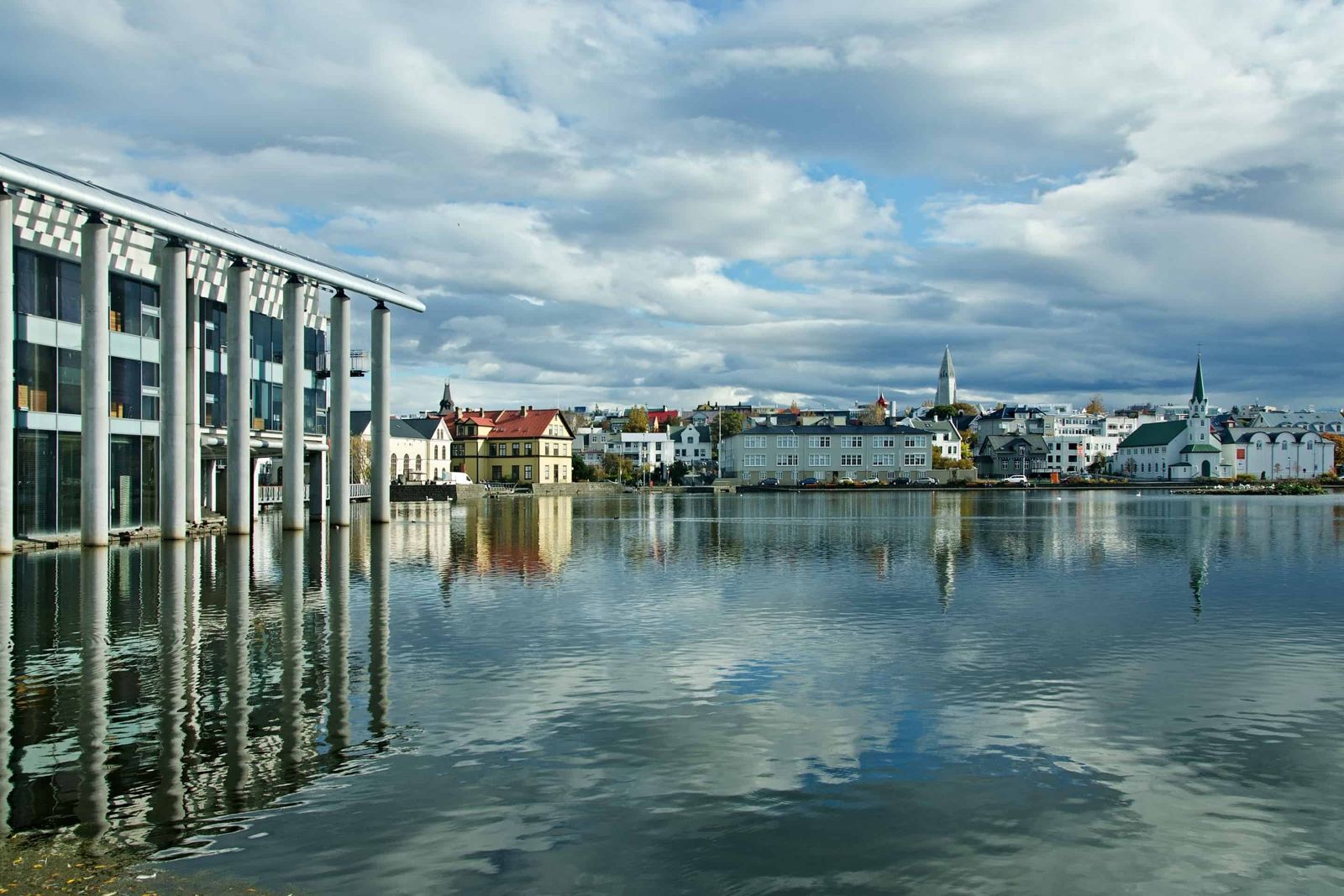
If you enjoy Tolli's work, Reykjavík has plenty more to see. The National Gallery of Iceland by the city pond holds the main national collection of Icelandic art from the 19th century onwards. The Reykjavík Art Museum has three buildings: Hafnarhús by the harbour for contemporary art, Kjarvalsstaðir for Kjarval and modern painting, and Ásmundarsafn for the sculptor Ásmundur Sveinsson.
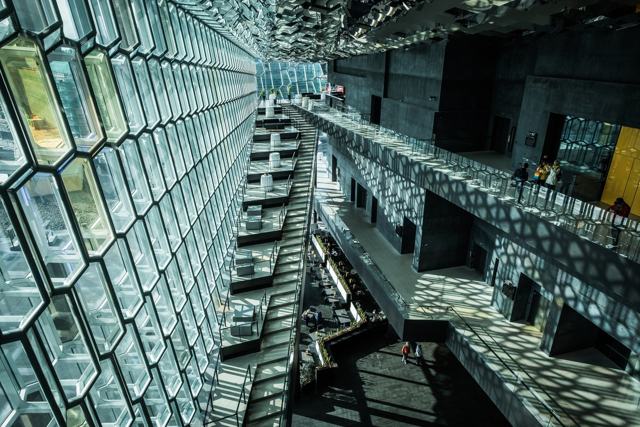
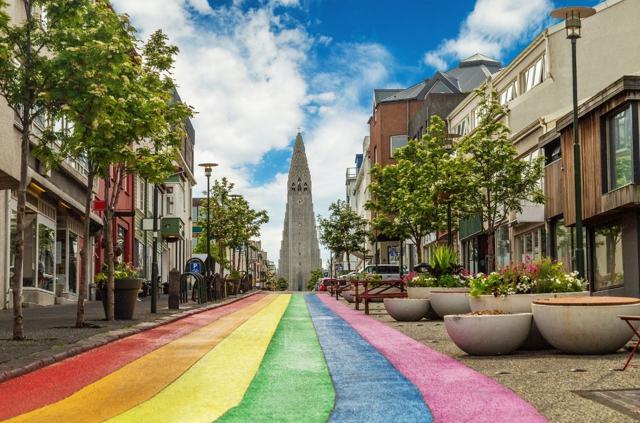
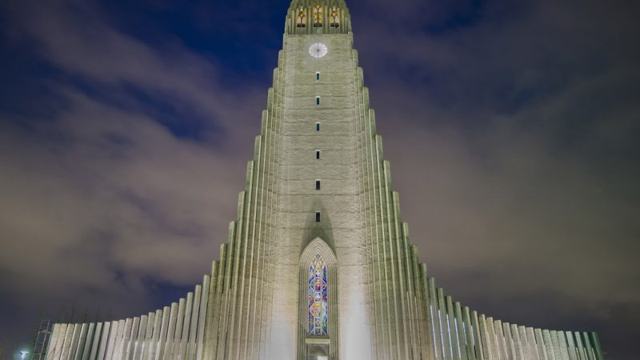
Next to Hallgrímskirkja, the Einar Jónsson Museum has a free sculpture garden. Harpa, with its glass façade designed with the artist Ólafur Elíasson, is worth a look even if you are not going to a concert.
A guided walk is an easy way to get your bearings, and a private Reykjavík walking tour gives you a local guide of your own. See our Reykjavík tours, city tours and museum tours.
Art festivals worth planning around
DesignMarch is Reykjavík's yearly design festival, with exhibitions and events across the city. In 2026 it ran from 6 to 10 May. The Reykjavík Arts Festival has been held since 1970 and now takes place every second year in early summer, with music, theatre and visual art. Dates for both are announced by the organisers, so check before you book.
For music events around the country, see our Iceland music festivals guide.
See the landscapes that inspire the paintings
The best way to understand Tolli's paintings is to stand in the places he paints. These trips put you in front of the same kind of scenery.
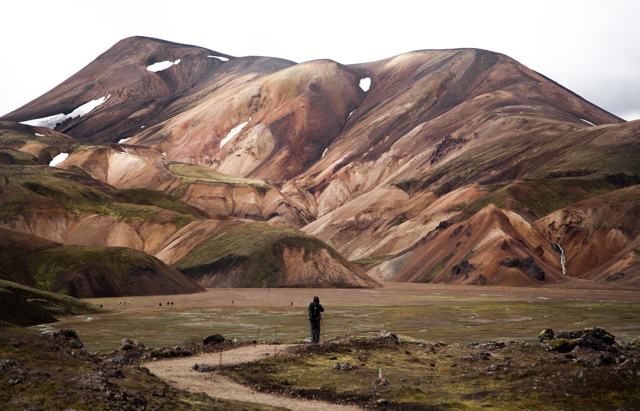
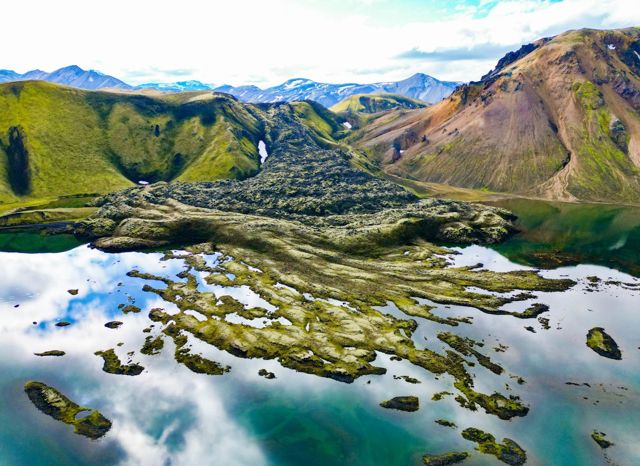
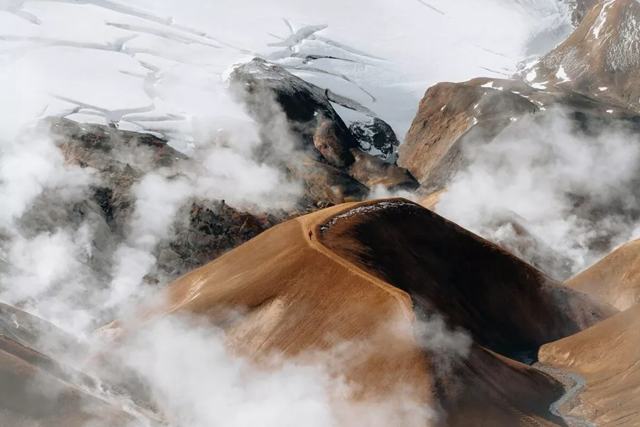
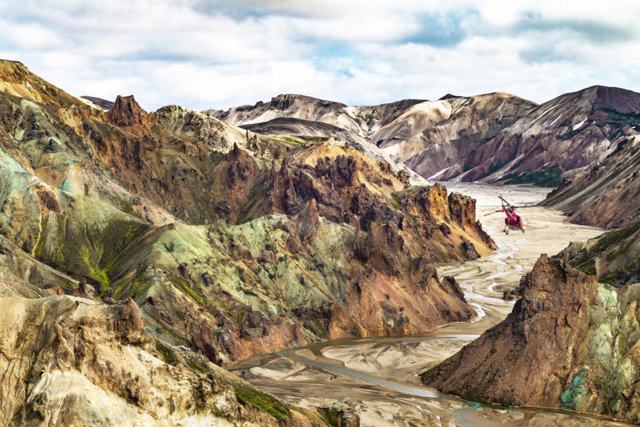
- The highlands. Colourful rhyolite mountains, snow patches and wide valleys, the theme of his 2026 show. Landmannalaugar and Kerlingarfjöll are the classic examples. See our highland tours, such as the Landmannalaugar private tour or the Kerlingarfjöll hiking tour from Reykjavík.
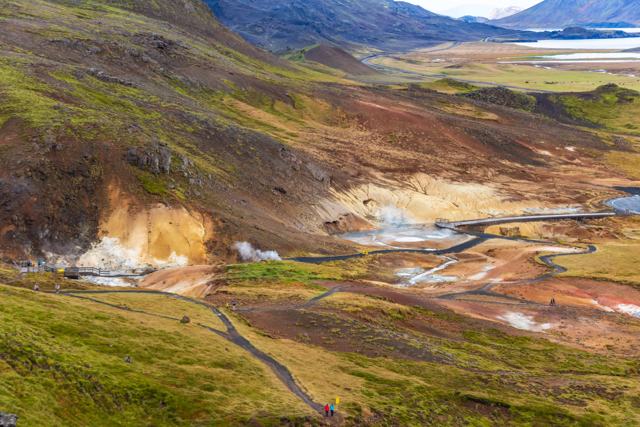
- Lava and volcanoes. Fresh lava fields and craters on the Reykjanes peninsula and in the south. Read our volcanoes guide and see our volcano tours, such as the Reykjanes peninsula private tour.
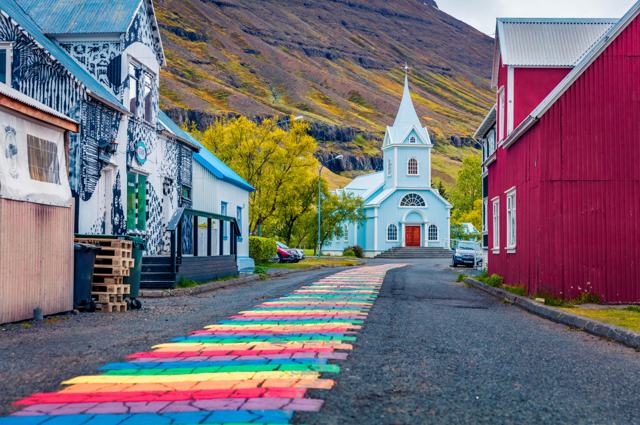
- The East Fjords. Tolli worked in the fishing towns of the east as a young man. Seyðisfjörður is also one of Iceland's liveliest small art towns. See our guide to towns in the East Fjords.
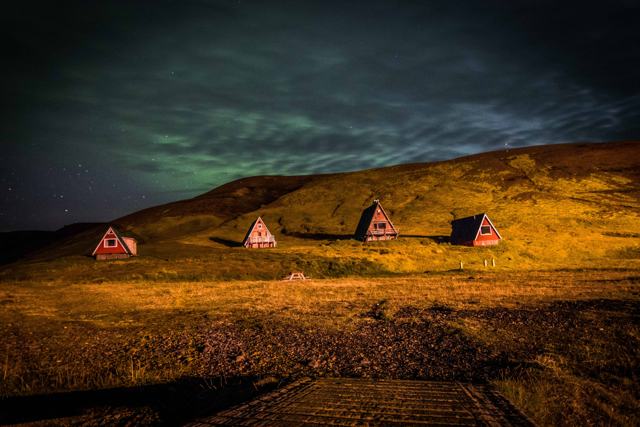
- Northern skies. Winter light and the aurora appear in many Icelandic paintings. See our Northern Lights guide.
- Iceland from above. A flight shows the land as colour, line and pattern, much like an abstract canvas. See our helicopter and airplane tours, such as the Icelandic Grandeur helicopter tour from Reykjavík.
Tours to book
If you would like a guide to take you to the places behind the paintings, these are the tours we would pick.
- Landmannalaugar Private Tour in Iceland: the rhyolite mountains of the highlands with your own guide.
- Kerlingarfjöll Hiking Tour from Reykjavik: a day on foot among the colourful slopes and snow patches of Kerlingarfjöll.
- Private Reykjavik Walking Tour: a local guide of your own for the city centre, the harbour and the galleries around them.
Questions people ask
Who is Tolli?
Tolli, Þorlákur Kristinsson Morthens, is an Icelandic painter born in Reykjavík in 1953. He is known for large, expressive oil paintings of Icelandic landscapes.
Is Tolli related to Bubbi Morthens?
Yes. Tolli is the older brother of the musician Bubbi Morthens. The two performed music together in the 1970s.
Where can I see Tolli's paintings in Reykjavík?
Þula gallery in central Reykjavík represents him and holds regular exhibitions of his work. Check the gallery's programme for current shows.
What style does Tolli paint in?
His roots are in Neo-Expressionism and abstract expressionism. Since about 1990 he has painted mostly landscapes, with bold colour and loose, gestural brushwork.