Iceland Travel GuideLOCAL TRAVEL AGENCY IN ICELAND
My trip
Talk to a local
Iceland Travel GuideLOCAL TRAVEL AGENCY IN ICELAND
My trip
Talk to a local
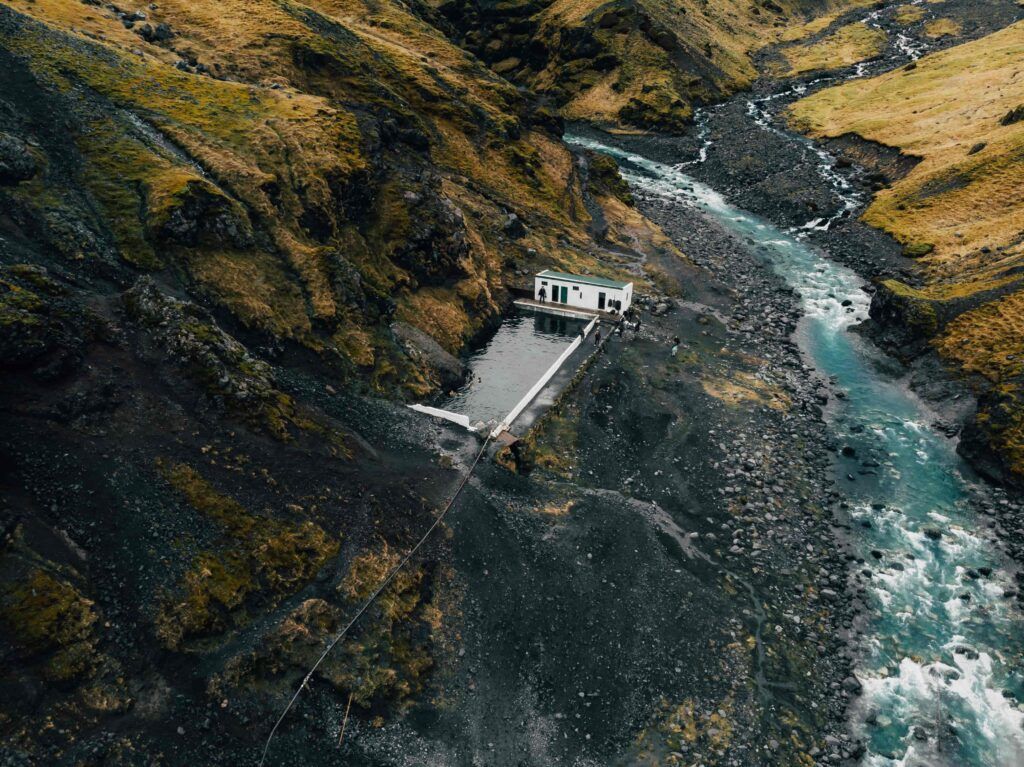
Seljavallalaug is a geothermally heated swimming pool built in 1923 into a hillside near Seljavellir, close to Skógar in South Iceland. It is about 155 km (around 2 hours) from Reykjavík, reached by a 20-minute walk, free to use, and open all year at your own risk, with no lifeguard or regular cleaning.
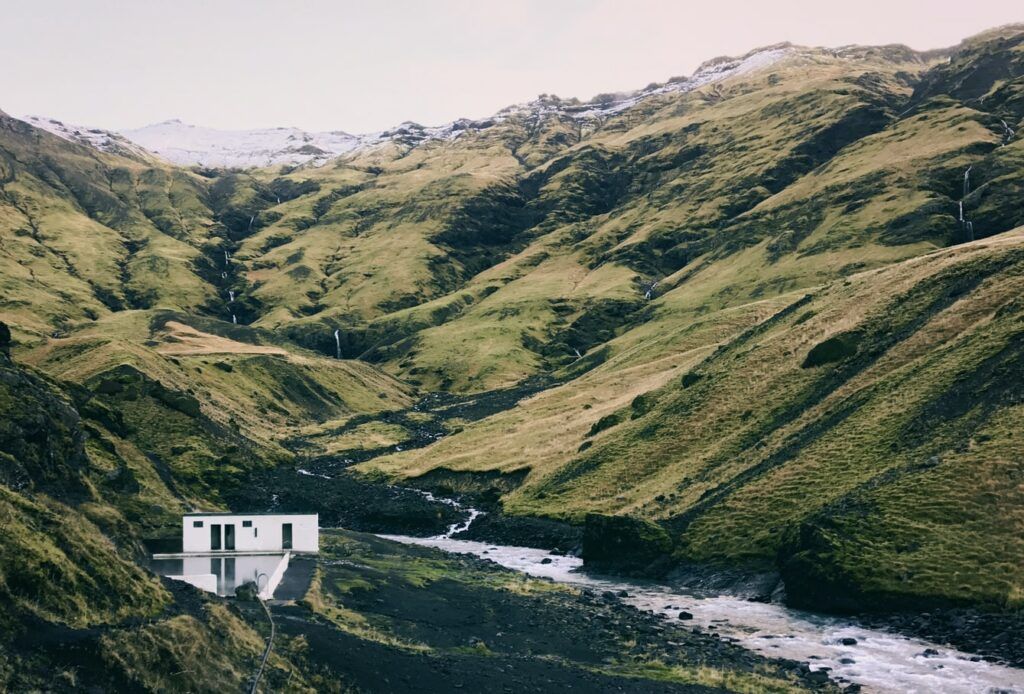
Built in 1923, Seljavallalaug is one of the oldest swimming pools in Iceland and was the country's largest until 1936, used originally to teach local people to swim. It sits in a narrow valley below the slopes of Eyjafjallajökull, the volcano that erupted in 2010. The pool is built against a rock face that acts as one of its four walls, so it is only half enclosed and open to the weather. Hot water runs in from a natural spring on the hillside just above.
The pool survives on very little upkeep now. It is cleaned only once a year, algae builds up on the walls between cleanings, and the water is not tested or treated the way a normal public pool would be. Ash from the 2010 Eyjafjallajökull eruption once filled it completely; volunteers cleared it out afterwards. Anyone who swims does so at their own risk, but for many visitors the setting, an old concrete pool tucked into a green valley, is the whole appeal.
Seljavallalaug was built in 1923 by Björn Andrésson of Berjaneskot and other local people, who wanted somewhere for the community around Seljavellir to learn to swim. At the start of the 20th century most people on this coast made their living from fishing, yet very few could swim. From 1927, swimming lessons were held here as part of compulsory schooling.
For over a decade it was the biggest pool in the country, before newer, better-equipped pools were built closer to towns. It has been left largely as it was ever since, which is part of why it now feels more like a historic ruin than a modern facility.
During the Eyjafjallajökull eruption in 2010 the valley and the pool were buried in ash. Volunteers with heavy machinery dug it out, and the pool was back in use the following year. It is still not run by any authority; a group of local volunteers cleans it once a year.
If you lose the path, keep following the riverbed up the valley, away from the road you drove in on. Do not attempt the walk if the river is running high after heavy rain.
Seljavallalaug is not a hot tub. The water is lukewarm, somewhere between 20 and 35°C depending on the season and the weather. It is warmest in the corner where the hot water runs in and cooler at the shallow end.
In summer it is comfortable for floating and swimming. Between late autumn and early spring the water is colder, and getting out into the wind is the hard part. Icelanders still walk in through the snow for a dip in midwinter, but bring warm, dry clothes for afterwards.
The pool is about 1.2 m deep at the shallow end and about 1.8 m at the deepest point. The bottom and walls are slippery with algae, so step in carefully.
A very basic, roofless changing structure stands beside the pool. There are no toilets, no shop and no staff. The nearest services are in Skógar.
Skógar and the surrounding South Coast have a range of guesthouses and hotels, making Seljavallalaug an easy stop for those staying in the area.
It is used at your own risk. There is no lifeguard, the water is not regularly tested, and algae can build up between the pool's annual cleanings.
About 1.5 km from the car park, roughly 20 minutes each way on a mostly flat path.
No, it is free, and there is no staff on site.
Lukewarm, roughly 20–35°C. It is warmest near the inflow and in summer, and noticeably colder from late autumn to early spring.
Turn off the Ring Road onto Route 242 (signed Raufarfell) just west of Skógar, follow the signs to Seljavellir and park at the end. From there it is a 15 to 20 minute walk up the valley.
It was built in 1923 and is one of the oldest swimming pools in Iceland. It was the largest pool in the country until 1936.