Iceland Travel GuideLOCAL TRAVEL AGENCY IN ICELAND
My trip
Talk to a local
Iceland Travel GuideLOCAL TRAVEL AGENCY IN ICELAND
My trip
Talk to a local
Skógar is a small village of around 25 people on the South Coast Ring Road, best known as the site of Skógafoss waterfall and the Skógar folk museum. It is about 150 km (2 hours) from Reykjavík, free to visit, and open all year, with the museum charging its own entry fee.
Skógar means "forest". The village lies south of the Eyjafjallajökull glacier, between the town of Hvolsvöllur to the west and Vík to the east, with green pasture all around and Skógafoss as its landmark.
Skógar is easy to miss on a map, but almost everyone driving the South Coast stops here for Skógafoss, one of Iceland's most photographed waterfalls, right beside the village. The settlement itself is tiny, a scatter of buildings including hotels, a campsite and the well-known Skógasafn folk museum.
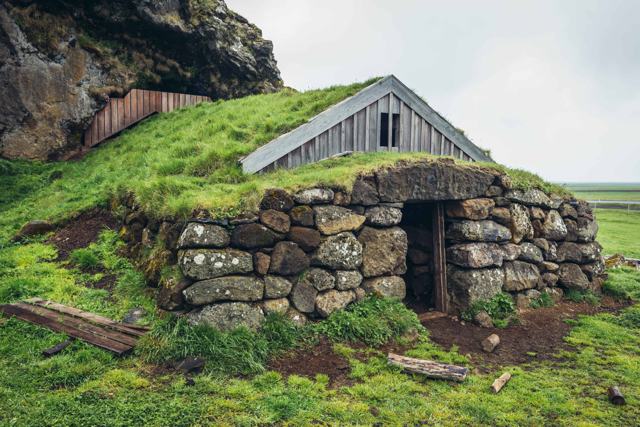
The museum holds more than 18,000 items across several buildings, covering rural life, fishing and transport in Iceland, and includes a collection of turf buildings moved here from around the region. Skógar is also the starting point for the Fimmvörðuháls trail, a well-known hike of about 25 km that climbs between the Eyjafjallajökull and Mýrdalsjökull glaciers before descending into Þórsmörk.
Skógar is said to have been settled by a Viking named Þrasi Þórólfsson, who hid a chest of treasure behind Skógafoss. People say the rainbow at the foot of the falls is the gold shining up through the water.
The story goes on: two boys once saw the chest coming up out of the water and grabbed it by the ring on its side. The chest sank back and only the ring came away in their hands. A ring said to be the one from the chest is on display in the Skógar museum.
The Skógar folk museum keeps the heritage of South Iceland. The collection covers handicrafts, boats and fishing gear, farming and fishery tools, rare books, musical instruments, natural history, documents and manuscripts, along with rebuilt farmhouses that show how Icelanders used to live.
The museum of transport tells how technology turned scattered farms into a connected country. It follows communication, postal services, electrification and transport through the 19th and 20th centuries, with road-building machinery, cars, trucks, radios, telecom equipment and even rescue team gear.
There is also a museum shop with a large selection of books and Icelandic keepsakes.
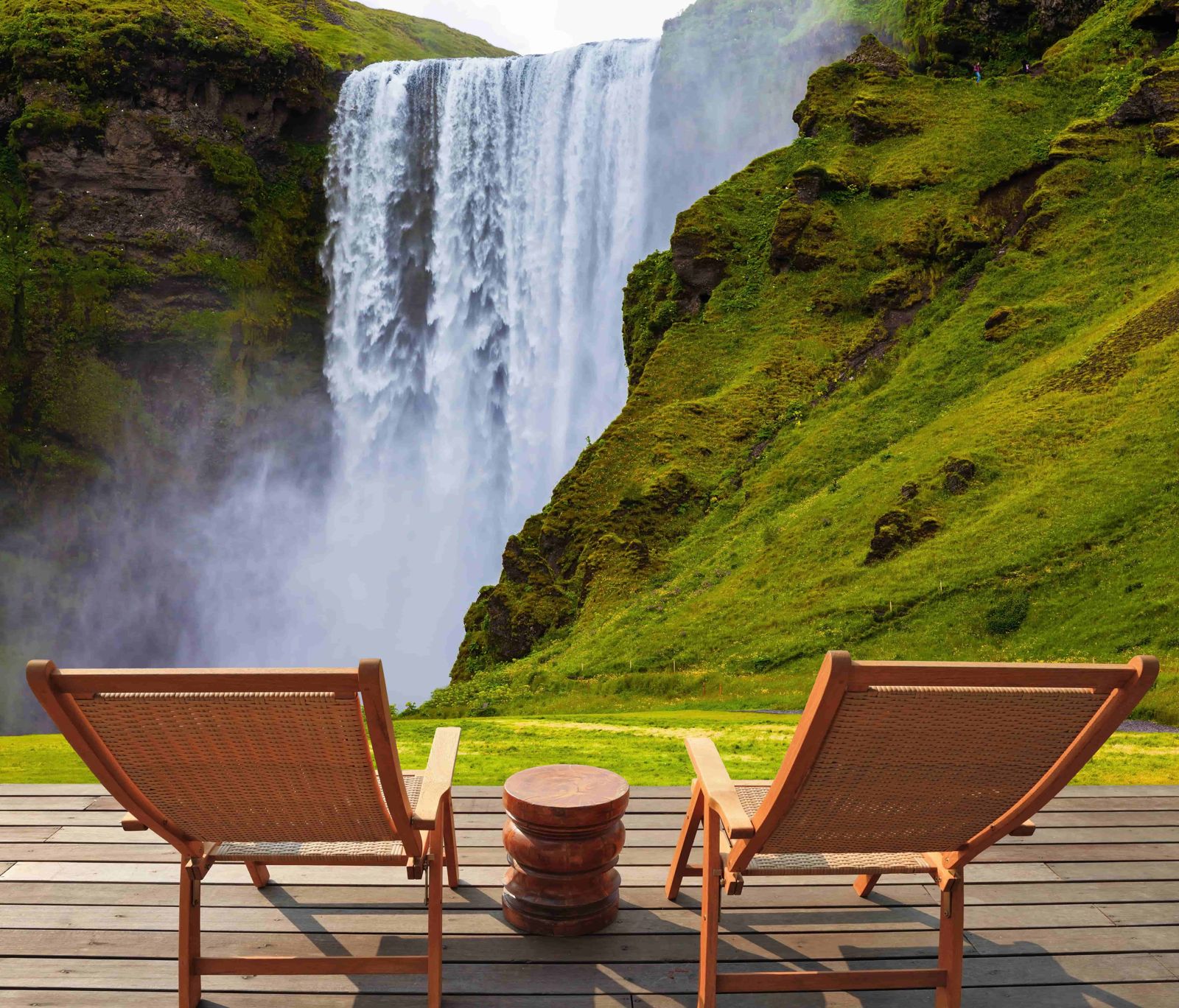
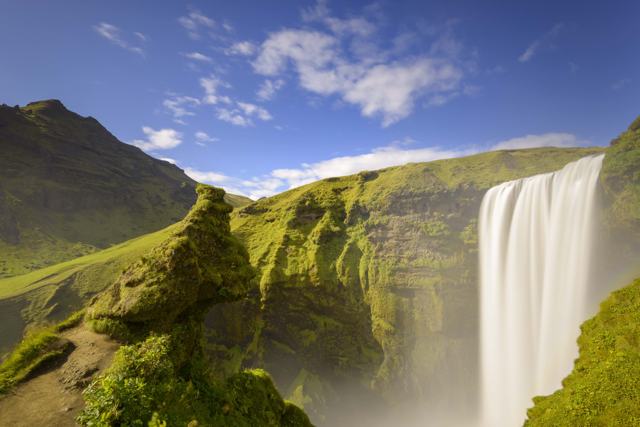
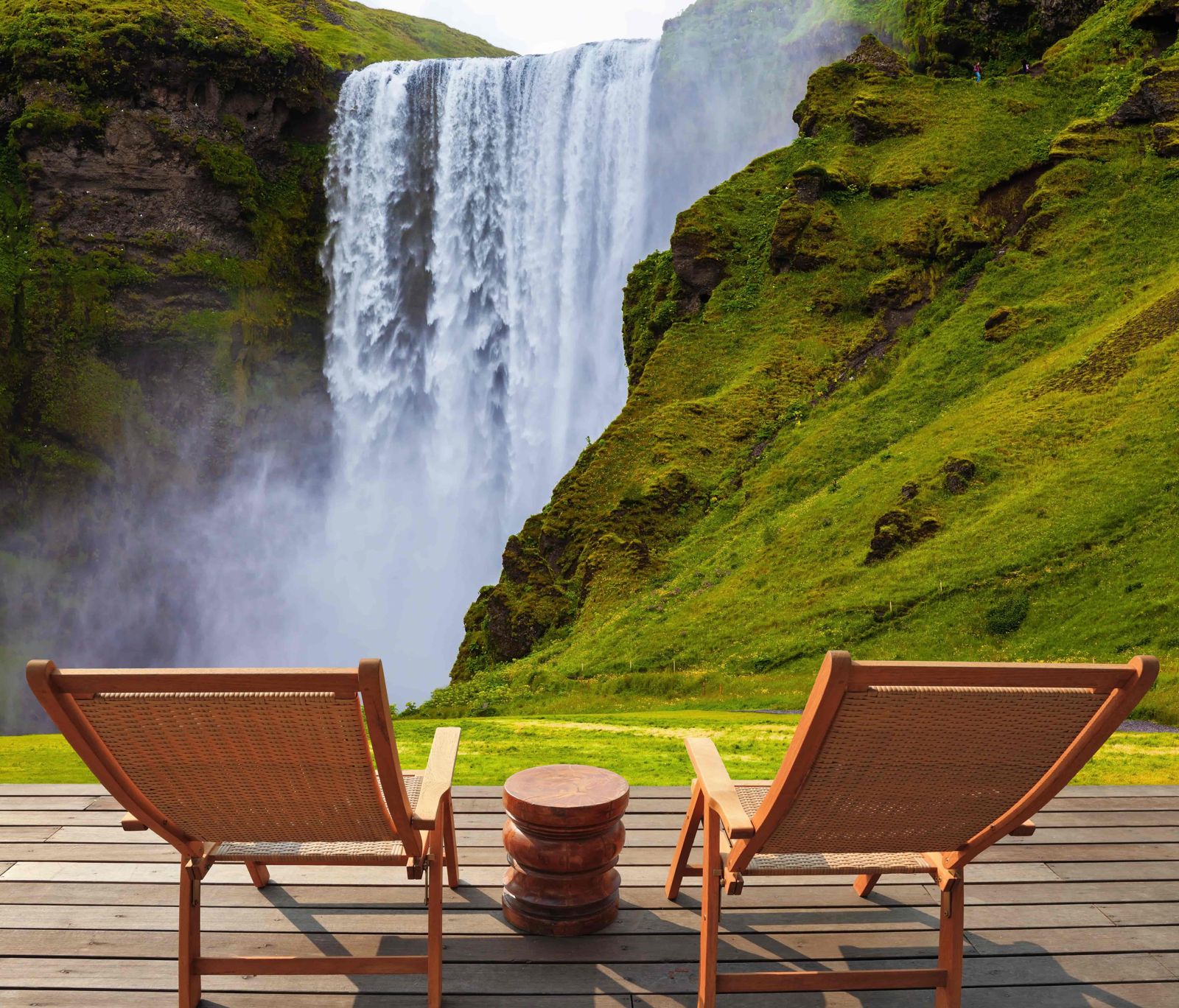
Skógafoss, on the Skógá river, is one of the biggest waterfalls in Iceland: about 60 metres high and 25 metres wide. It falls over cliffs that were once the coastline. The sea has since retreated, and the old sea cliffs now run parallel to the shore for a long way, marking the line between the highlands and the coastal lowlands.
The fall throws up a lot of spray, so on a sunny day you nearly always get a rainbow, and sometimes two. You can walk right up to the water on the flat gravel, but you will get wet, so wear waterproof clothes and shoes.
On the east side of the falls a staircase climbs to the top, and from there the Fimmvörðuháls trail continues up the river past more waterfalls, with views towards Eyjafjallajökull and Mýrdalsjökull.
To avoid the crowds, come first thing in the morning or late in the evening. In winter a late visit has another advantage: if you are lucky, the Northern Lights appear over the falls.
Skógar is a year-round stop, but the weather in South Iceland can change at any time. Always pack rain gear and an extra jumper.
Hotels, a campsite, a café and horse rental are available in the village. Fuel and a shop are available nearby along Route 1.
Skógar itself has hotels and a campsite, and many South Coast travellers use it or nearby Vík as a base for a night on their way around the Ring Road.
No, Skógar is the small village, and Skógafoss is the waterfall right beside it. Most people use the names interchangeably for the stop.
Yes, if you have an hour or more, it gives good context on rural Icelandic life, fishing history and turf building construction.
Only if you are fit and well prepared. The trail is about 25 km over a pass between two glaciers and takes a very long day; many hikers split it in two with a night in a hut. It is a summer route and needs proper planning and equipment.
About 150 km, around 2 hours by car.
Skógar means "forest" in Icelandic.
The settler Þrasi Þórólfsson is said to have hidden a chest of gold behind the waterfall. Only its ring was ever recovered, and a ring said to be that one is shown in the Skógar museum.
May to October has the mildest weather. November to April is colder, with rain, wind and sometimes snow, but fewer people and a chance of Northern Lights.
Tours and trips that include Skógar, booked directly with a local travel agency in Iceland.