GLJÚFRABÚI IN SHORTGljúfrabúi is a 40-metre waterfall hidden inside a narrow, moss-covered canyon a short walk from Seljalandsfoss in South Iceland. It is about 128 km (around 1 hour 45 minutes) from Reykjavík, free to visit (parking is at the shared Seljalandsfoss car park), open all year, and most people spend 20–40 minutes there.
About Gljúfrabúi
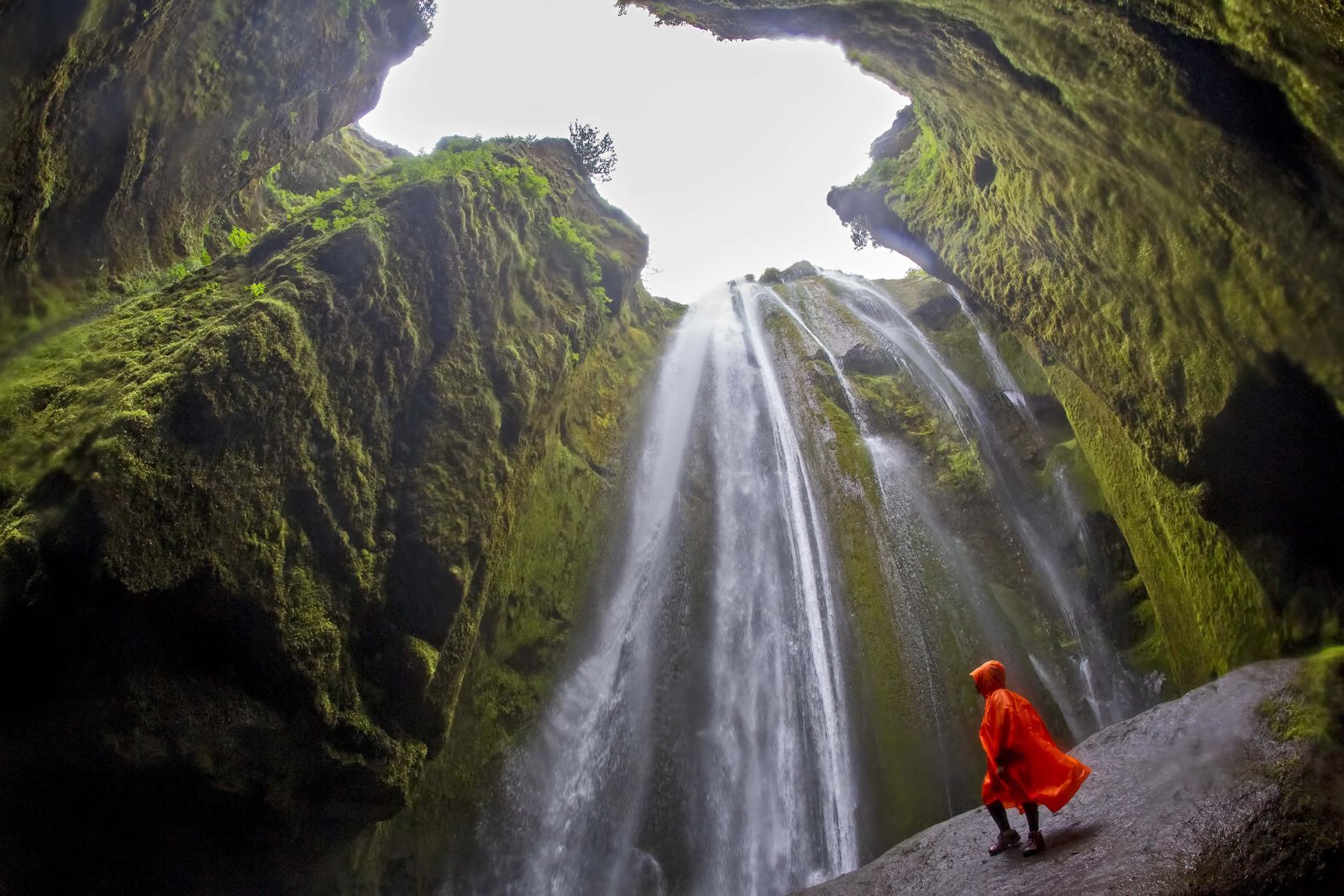
Gljúfrabúi means roughly "canyon dweller", a fitting name for a waterfall that hides almost entirely out of sight until you are right in front of it. Most of the fall is enclosed inside a narrow gorge in the cliff face, with only a sliver visible from outside, so the full view only opens up once you step into the canyon itself.
Reaching it means wading along a shallow stream between rock walls for a short distance, with the waterfall crashing down at the end into a pool. It is a smaller, quieter contrast to its famous neighbour Seljalandsfoss, just a few minutes' walk away, and popular with visitors who want to see something a little more hidden on the same stop.
Most visitors stop at Seljalandsfoss, take their photos and drive on. The ten-minute walk north is worth it. Inside the gorge the cliffs close in overhead, the sound of the water fills the chamber and the air is cool and thick with mist. Even on a busy day there are usually far fewer people here than next door.
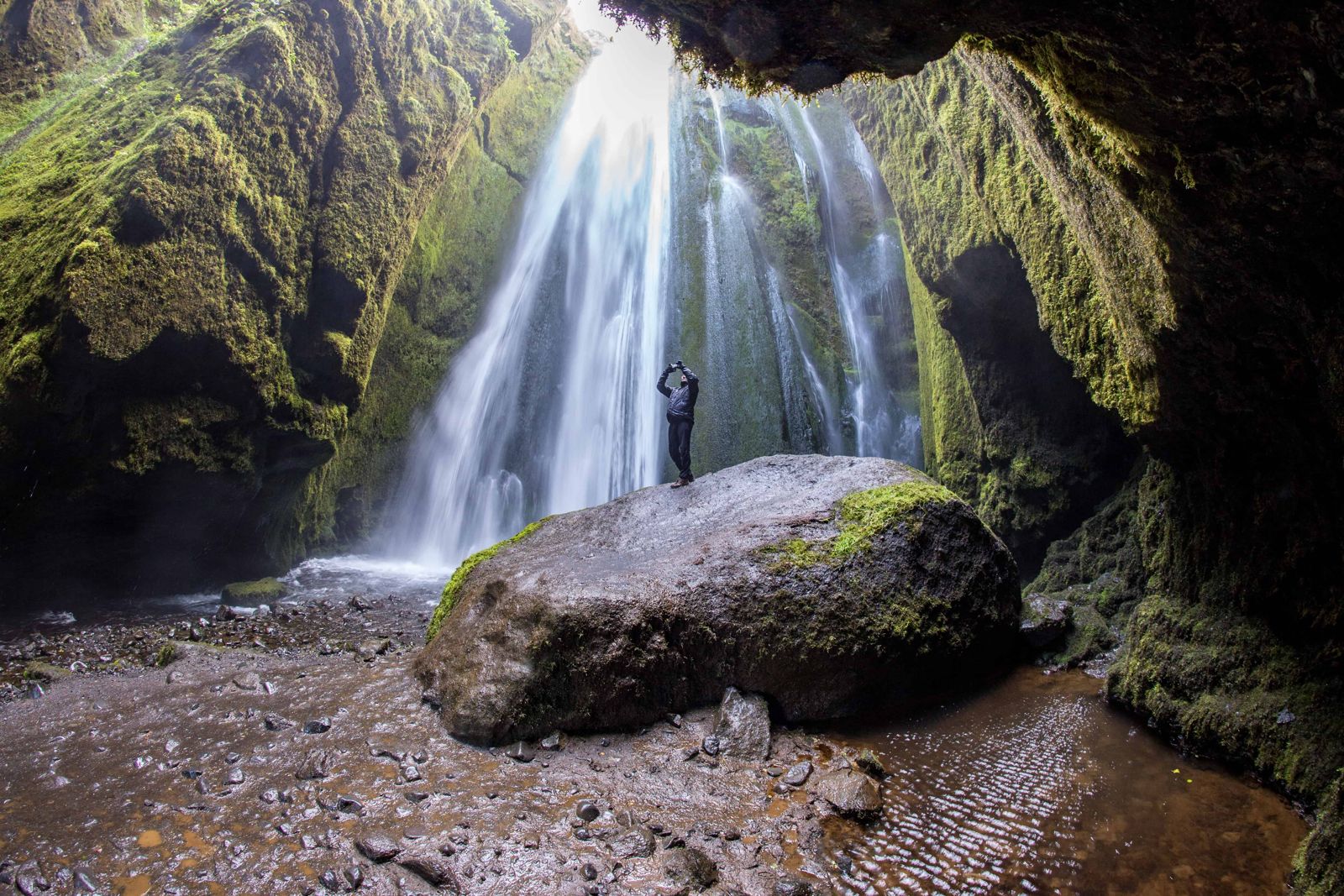
It is also a favourite with photographers. Light comes in through the narrow opening at the top of the gorge, and on a bright day it catches the spray and the green walls.
The waterfall is on the Gljúfurá, a spring-fed river that carries less water than the Seljalandsá next door. That is why Gljúfrabúi is the more slender of the two falls, and why the stream at its foot is usually shallow enough to wade.
Quick facts
HeightAbout 40 m
RiverGljúfurá
Name"Canyon dweller": gljúfur means canyon, búi means dweller
RegionSouth Iceland, at Hamragarðar by Route 249
GPS63.6209, -19.9862
From SeljalandsfossRoughly 600 m north along a flat path, about 10 minutes on foot
From ReykjavíkAbout 128 km, around 1 hour 45 minutes by car on Route 1
From SkógafossAbout 30 km, around 25 minutes by car
EntryFree
ParkingShared with Seljalandsfoss; a fee per car (about 1,000 ISK) covers both waterfalls
StatusProtected natural monument
Time needed20–40 minutes
The canyon dweller of Hamragarðar
The name Gljúfrabúi means "dweller of the gorge", and it describes the place exactly. A large palagonite rock called Franskanef stands in front of the fall and blocks it from view, so that from the path only the very top of the water shows above the cliff.
The waterfall is on the land of Hamragarðar, a farm that is no longer lived in. The farm was given to the Rangá Forestry Society in 1962 and now belongs to the municipality of Rangárþing eystra. Gljúfrabúi itself is a protected natural monument, so leave the moss and the rock as you find them.
How to get to Gljúfrabúi
By carGljúfrabúi is just off the Ring Road (Route 1) in South Iceland. Turn onto Route 249 (Þórsmerkurvegur) at the sign for Seljalandsfoss and park at the Seljalandsfoss car park. The falls there are visible from the main road; Gljúfrabúi is not.
The walk from the car parkFrom Seljalandsfoss, follow the flat gravel path north along the base of the cliffs. It is easy to follow and signposted, and takes about 10 minutes. The path ends by the Hamragarðar campsite, where a stream runs out of a gap in the cliff.
On a guided tourSouth coast day tours that stop at Seljalandsfoss usually allow time to see Gljúfrabúi as well, since they are so close together.
Getting into the canyonYou wade a short distance along a shallow, rocky stream to reach the waterfall itself. Waterproof shoes make this much easier.
The parking fee at Seljalandsfoss covers your visit to Gljúfrabúi; there is no separate charge at the canyon.
Where is Gljúfrabúi waterfall?
Gljúfrabúi is on the South Coast, at the foot of the old sea cliffs below Eyjafjallajökull, a short walk north of Seljalandsfoss. Both waterfalls drop over the same line of cliffs and share one car park, on Route 249 a few hundred metres from the Ring Road.
From Reykjavík it is about 128 km, a drive of around 1 hour 45 minutes east on Route 1 through Selfoss, Hella and Hvolsvöllur. That makes it an easy first stop on a South Coast day, with Skógafoss about 30 km further on.
Step by step: entering the gorge to Gljúfrabúi
Unlike most Icelandic waterfalls, you cannot simply walk up to this one. Getting in is short, and part of the fun.
Step 1: Find the openingAt the end of the path you come to a narrow gap in the cliff, framed by big rocks and mossy walls, with a stream flowing out of it. From here you can see only the top of the waterfall above the rock called Franskanef.
Step 2: Wade the streamWalk into the gap along the stream bed, stepping from rock to rock where you can and through the water where you cannot. The water is usually ankle to knee deep, and deeper after heavy rain or snowmelt. The stones are wet and slippery, so go slowly.
Step 3: Inside the chamberAfter a few metres the gorge opens into a round chamber with moss-covered walls rising on every side and the sky a small opening overhead. The waterfall drops about 40 m in front of you into a shallow pool. Expect noise, cold air and a lot of spray.
Step 4: The big boulderA large boulder sits in the middle of the chamber, and most people climb onto it for a photo with the falls behind. It is wet, so use your hands.
Step 5: The view from aboveBack outside, a narrow trail with wooden steps and a chain on the steepest part climbs partway up Franskanef, the rock in front of the gorge. From the top you look down into the canyon and across to the waterfall. It is steep and exposed, so skip it in wet or icy conditions.
There is a risk of falling rocks inside the canyon. Do not linger under the walls.
What to wear when visiting Gljúfrabúi
You will get wet here, so dress for it before you leave the car.
On your feetWaterproof boots with good grip, or shoes you do not mind soaking. Some people take their shoes off and wade barefoot in summer, but the water is cold and the stones are sharp in places.
Waterproof layersA waterproof jacket or poncho, and waterproof trousers if you have them. The spray inside the chamber soaks you within a minute, whatever the weather outside.
Camera and phoneBring a dry bag or rain cover, and a cloth to wipe the lens. Spray settles on the glass between every shot.
For afterwardsKeep dry socks and a spare layer in the car. If you are also walking behind Seljalandsfoss, you will be glad of them twice.
Other places to see near Gljúfrabúi
Gljúfrabúi is rarely a stop on its own. These are close enough to combine with it.
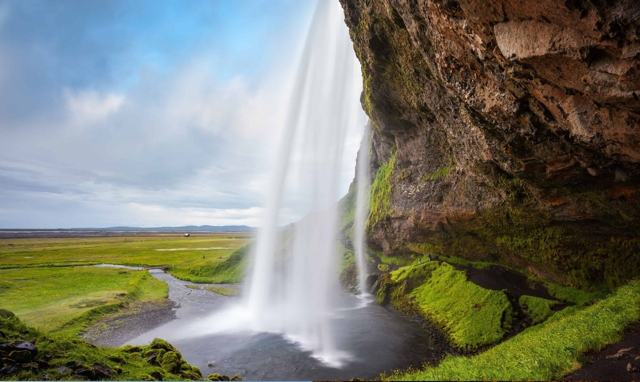
SeljalandsfossThe well-known neighbour, about 10 minutes' walk south, is the waterfall you can walk behind. Seeing both makes a good hour or so.
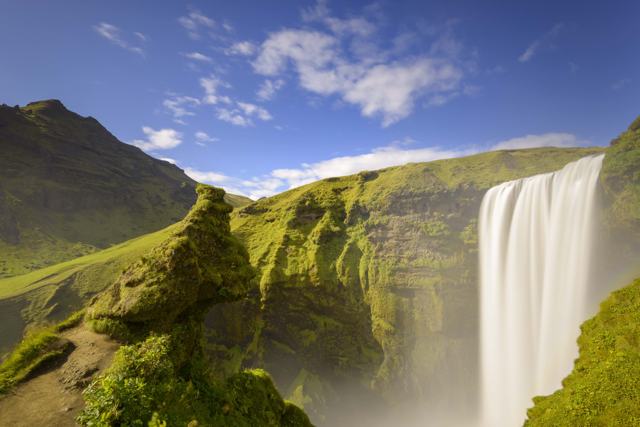
SkógafossAbout 30 km east on Route 1, Skógafoss is 60 m high and one of the largest waterfalls in the country. On sunny days there is often a rainbow in the spray.
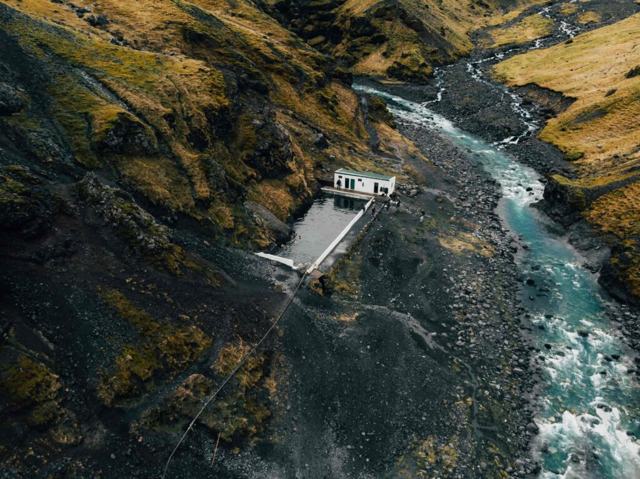
SeljavallalaugOne of Iceland's oldest outdoor swimming pools, built into a mountainside in a valley below Eyjafjallajökull and filled with geothermal water. It is reached by a short walk.
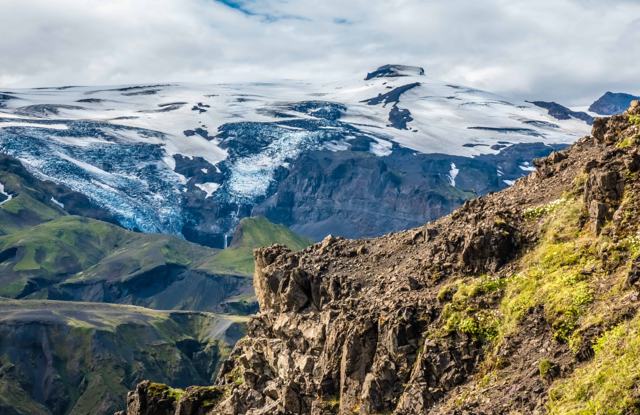
EyjafjallajökullThe ice-capped volcano known for its 2010 eruption rises behind the cliffs and is in view from many points along this stretch of the Ring Road.
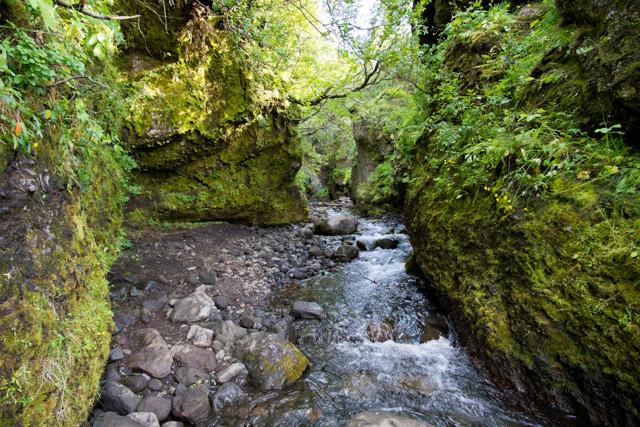
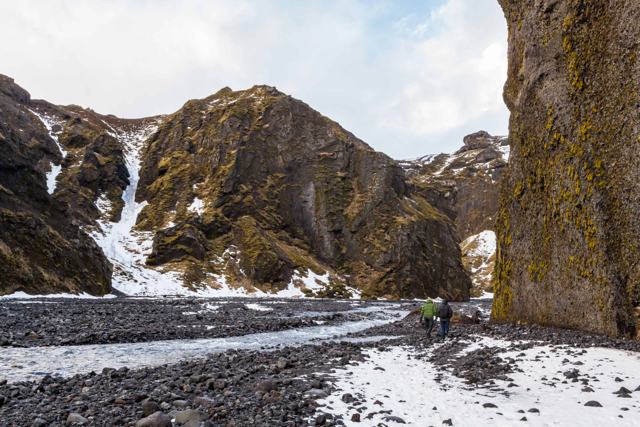
Nauthúsagil and StakkholtsgjáTwo more narrow canyons further along Route 249 towards Þórsmörk, for those who liked wading into Gljúfrabúi. The road becomes a rough mountain track with river crossings beyond Nauthúsagil.
Best time to visit Gljúfrabúi
SummerThe most comfortable time to wade in, with warmer air and water levels usually manageable. Come early in the morning or in the evening for the best chance of having the gorge to yourself.
WinterColder water and icy rocks make the approach harder, and the stream can be partly frozen. Take extra care, or admire it from outside the canyon instead.
Safety and practical tips
- Wear waterproof shoes or boots; you will be wading through a shallow stream over uneven rocks.
- Expect to get wet from spray once inside the canyon, whatever the weather outside. A waterproof jacket or poncho keeps you comfortable.
- Protect your camera and phone with a waterproof bag or cover.
- The rocks underfoot are slippery, so take your time going in and coming out.
- Go early in the morning or later in the evening if you want the waterfall to yourself.
- Let people come out before you go in; the entrance is too narrow to pass comfortably.
- Watch for falling rocks and do not stand under the canyon walls longer than you need to.
- It pairs naturally with a stop at Seljalandsfoss, since they share the same car park.
Facilities and accessibility
None at Gljúfrabúi itself. Seljalandsfoss, a short walk away, has toilets and a small snack stand in season.
Nearby places worth a stop
Where to stay near Gljúfrabúi
Hvolsvöllur and Hella, a short drive away, have hotels and guesthouses convenient for this stretch of the south coast.
Gljúfrabúi FAQ
Where is Gljúfrabúi waterfall?
In South Iceland, about 600 m north of Seljalandsfoss on Route 249, just off the Ring Road. It is about 128 km from Reykjavík.
How do I get into Gljúfrabúi?
Walk north from the Seljalandsfoss car park to the gap in the cliff, then wade a few metres along the shallow stream into the gorge. The water is usually ankle to knee deep.
Will I get wet at Gljúfrabúi?
Yes, reaching it means wading through a shallow stream, and there is spray once you are inside the canyon.
Is it free to visit?
Yes, though parking is via the shared Seljalandsfoss car park, which charges a fee per car.
How far is it from Seljalandsfoss?
About 10 minutes on foot along a flat path at the base of the cliff.
Can I see it without getting wet?
You can glimpse the top of the waterfall from outside the canyon entrance, and there is a steep path up the rock in front for a view from above, but the full view requires wading in.
What does Gljúfrabúi mean?
It means "canyon dweller" or "dweller of the gorge", because the waterfall is hidden inside a cleft in the cliff.
How high is Gljúfrabúi?
About 40 metres.
 Iceland Travel GuideLOCAL TRAVEL AGENCY IN ICELAND
My trip
Talk to a local