Iceland Travel GuideLOCAL TRAVEL AGENCY IN ICELAND
My trip
Talk to a local
Iceland Travel GuideLOCAL TRAVEL AGENCY IN ICELAND
My trip
Talk to a local
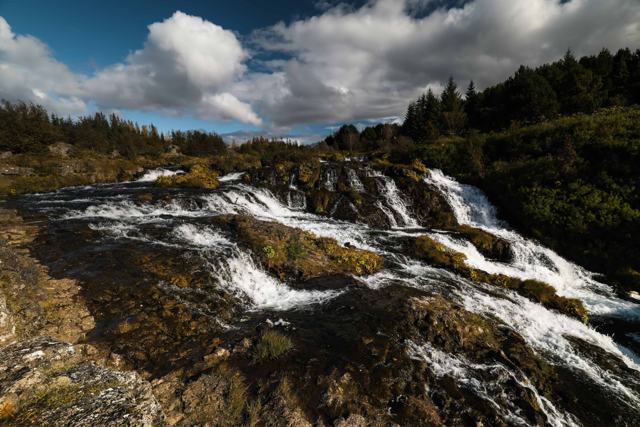
Kermóafoss is a small waterfall on the Elliðaá river, tucked inside Elliðaárdalur valley in the middle of Reykjavík. It's free to visit and reached by a walking path of about 1.5 km from the car park by the old power station on Rafstöðvarvegur. Few visitors know about it, even though it sits in the city where most trips to Iceland begin. Allow an hour or so for the walk there and back.
Kermóafoss sits along the Elliðaá river as it runs through Elliðaárdalur, the long green valley that cuts through Reykjavík between Árbær and Breiðholt. It's a modest waterfall by Icelandic standards, but its setting is what makes it worth the stop: a quiet stretch of river, forest and walking paths a short drive from the city centre.
The Elliðaá is one of Iceland's better-known salmon rivers, and the valley around it is a popular spot for walking, running and cycling among Reykjavík residents. The falls are a natural, informal stop along the network of paths rather than a signposted attraction, which is part of why visitors often walk right past them.
What surprises people is how far from the city it feels. The valley is thick with trees and wildflowers, the traffic noise drops away, and the falls sit in a green pocket that could be hours from the capital. There are several smaller waterfalls along the river on the way, and the valley is a favourite with local photographers.
No guided tours go to Kermóafoss, so you come under your own steam: by car, by city bus or by bike. If you'd like a guide, a private tour of Reykjavík can include it on request.
This is a local, lightly marked spot within Elliðaárdalur rather than a signposted attraction, so allow time to find it along the river path.
The falls are not signposted, so it helps to know the way before you set off.
Elliðaárdalur is one of Reykjavík's largest green spaces, good for walking, running and cycling, with woodland, wildflowers, rivers and waterfalls all within the city limits. You may well see wild rabbits on the paths.
The Elliðaá is a salmon river running through a capital city, which is rare. Around 1,000 salmon are caught here each summer, and there are trout too. You can fish, but only with a licence bought in advance.
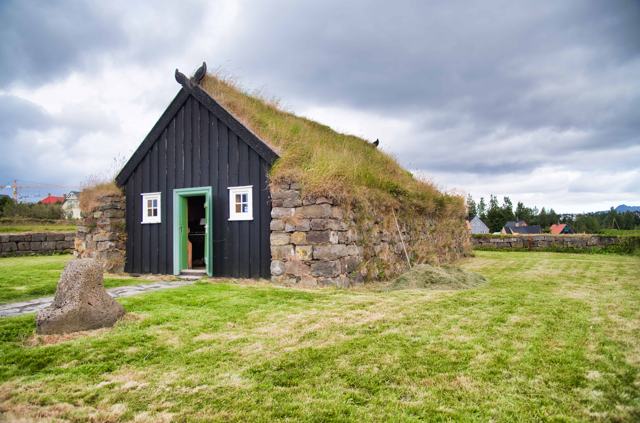
The Árbær Open Air Museum, with its old houses and turf-roofed buildings, is on the edge of the valley and pairs well with the walk.
The valley is worth visiting in any season, but it looks completely different in summer and winter.
There are no facilities directly at Kermóafoss. Elliðaárdalur has paved paths, and services are a short drive away in surrounding Reykjavík neighbourhoods.
Kermóafoss is a short trip from anywhere in Reykjavík, so no separate accommodation is needed. The city has hotels, guesthouses and hostels for every budget, and a campsite in Laugardalur if you are travelling with a tent or camper; keep the weather in mind if you plan to camp.
It's not signposted, so it helps to walk the river path from the old power station car park with a map or directions saved.
The car park next to the old power station on Rafstöðvarvegur is the best starting point. The falls are about 1.5 km from there.
No, it's free, like the rest of Elliðaárdalur.
Allow about an hour in total for the falls, or 2–3 hours if you walk the whole valley.
Yes. It is often snow-covered and very quiet, but the paths are icy and the rocks by the falls are slippery, so wear boots with good grip.
No regular tours go there. Drive, cycle or take a city bus, or ask for it to be included in a private tour of Reykjavík.
Yes, though the path near the water can be uneven, so keep an eye on young children.