Icelandic is the national language of Iceland, a North Germanic language that has changed less than its Scandinavian cousins since the Viking age. You do not need it to travel here, because almost everyone you meet in tourism speaks good English. Still, a few words go a long way, and knowing what place names mean makes the whole country easier to read.

Where Icelandic comes from
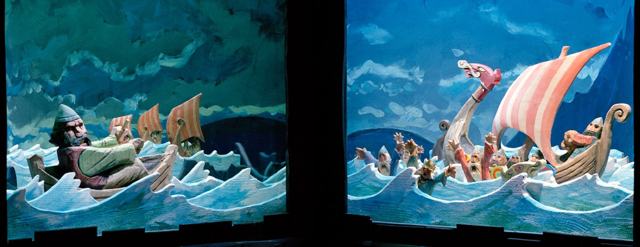
Iceland was settled by Norse people in the late 800s, most of them from western Norway, some by way of the Norse colonies in Scotland and Ireland. They brought Old Norse with them. Our guide to Vikings in Iceland tells that story.
At first Icelanders and Norwegians spoke the same language. The two began to drift apart in the 12th to 14th centuries. Old Norse in Iceland became Old Icelandic, and Modern Icelandic is usually dated from around 1540. Pronunciation and some word endings have changed along the way, and loanwords came in too, such as Latin church words from the 12th century onwards. Because the island was isolated, the language kept much of its old grammar and vocabulary. That is why Icelanders can still read the medieval sagas and Eddas with only a little help, something few other Europeans can do with texts that old. To learn more about the settlers and one of the best-known sagas, visit the Settlement and Egils Saga Exhibition in West Iceland.
Icelandic is a North Germanic language, like Danish, Norwegian, Swedish and Faroese, and sits in the West Scandinavian branch of that family. Its closest relative is Faroese. The two look similar on paper, with much the same spelling rules, but spoken Icelandic and Faroese are not mutually intelligible. Norwegian is the next closest, yet Icelandic is not mutually intelligible with Danish, Norwegian or Swedish either. Finnish, the other big Nordic language, is not related at all. It belongs to the Finno-Ugric family, so a Finn has no head start with Icelandic.
Is Icelandic hard to learn?
Honestly, yes, for most English speakers, though it is not in the same league as Mandarin or Japanese. Nouns have three genders (masculine, feminine and neuter) and four cases (nominative, accusative, dative and genitive), and adjectives, articles and even some numbers change to match. There is no simple rule for gender, so it has to be learned word by word, and most grammar rules come with exceptions.
The good news is that spelling is fairly regular once you know the rules, and stress almost always falls on the first syllable. Many long words are also easy to take apart, because Icelandic builds new words from old ones:
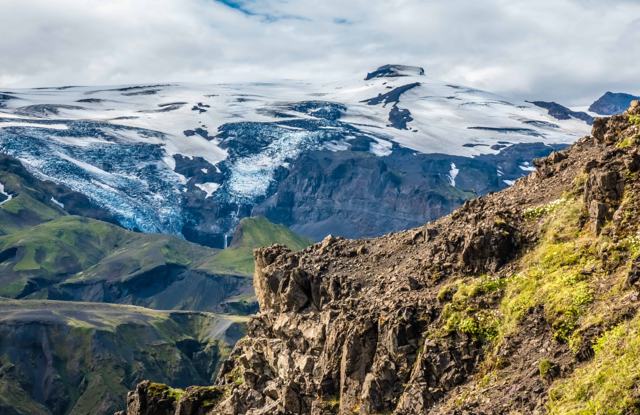
Long names are the other hurdle. When the Eyjafjallajökull volcano erupted in 2010, news readers around the world struggled with it. Split it into its parts, eyja-fjalla-jökull (island, mountains, glacier), and it is much easier to say.
- regnhlíf (umbrella) = regn (rain) + hlíf (cover)
- ísskápur (fridge) = ís (ice) + skápur (cupboard)
- dýragarður (zoo) = dýr (animals) + garður (garden)
- sjónauki (telescope) = sjón (sight) + auki (increase), coined by the poet Jónas Hallgrímsson in the 19th century
New words instead of borrowed ones
Iceland has a long habit of language purism. Rather than borrow English words, Icelanders usually make new ones from Icelandic roots. The computer is tölva, a blend of tala (number) and völva (prophetess). The word for technology, tækni, was coined in 1912 from tæki (tool). The telephone is sími, an old word that once meant a long thread.
An official language committee was set up in 1965 to guide this work, and today the state-funded Árni Magnússon Institute for Icelandic Studies looks after both the language and the medieval manuscripts. The government has also backed projects to bring Icelandic into software and voice technology, because so much of daily digital life happens in English.
The Icelandic alphabet: 32 letters
The Icelandic alphabet has 32 letters: A, Á, B, D, Ð, E, É, F, G, H, I, Í, J, K, L, M, N, O, Ó, P, R, S, T, U, Ú, V, X, Y, Ý, Þ, Æ, Ö. C, Q, W and Z are only used in foreign words and some names. Z was officially dropped in 1973.
The letters that trip visitors up most:
- Þ þ (thorn): the th in thing. It is not a P.
- Ð ð (eth): usually the soft th in this. It never starts a word.
- Æ æ: like the i in ice.
- Á á: like ow in cow.
- Ö ö: like the u in fur, without the r.
- ei / ey: like ay in day.
- au: roughly like the French œil; there is no exact English match.
- J: like the English y, so já (yes) sounds like yow.
- ll: usually close to tl, which is why Eyjafjallajökull sounds like AY-ya-fyat-la-YUR-kutl.
- hv: said like kv.
How Icelandic names work
Most Icelanders do not have a family surname. Instead, their last name comes from a parent's first name. So Atli Björn Ólafsson is Atli Björn, son of Ólafur. If a man called Jón has a son Ólafur and a daughter Katrín, they are Ólafur Jónsson and Katrín Jónsdóttir. Some people use their mother's name instead, and since 2019 people registered as non-binary can use the ending -bur (child).
Because of this, Icelanders call each other by first name, even the president, and the phone directory is sorted by first name. Only a small number of families have inherited surnames, and adopting a new family name has not been allowed since 1925.
New first names are checked by the Icelandic Naming Committee, which keeps a register of approved names. If parents want a name that has not been used in Iceland before, they have to apply for it. A new name must fit Icelandic grammar and the Icelandic alphabet. Proposals to abolish the committee have been made, but it is still in place.
Do you need Icelandic to visit Iceland?
No. For English speakers there is almost no language barrier. Icelanders learn English at school, and nearly everyone speaks it as a second language. It is widely used in hotels, restaurants, shops, on tours and in the capital, and most signs aimed at visitors are in English too. Icelanders do not expect you to speak their language.
That said, people appreciate the effort. A takk at the till or a góðan daginn in the morning costs nothing and usually earns a smile. On a city tour or a food tour in Reykjavík, your guide will happily teach you a few more words. On our private Reykjavík walking and food tour you can ask as many questions as you like.
Useful Icelandic words and phrases
Pronunciations are rough English guides. The stressed syllable is in capitals.
- Góðan daginn (GOH-thahn DYE-in): good day, a polite hello
- Hæ / Halló (hi / HAH-low): hi, hello. Hæ is the more common one, and you will often hear it doubled: hæ hæ.
- Takk / Takk fyrir (tahk / tahk FIH-rir): thanks / thank you. Þakka þér (THAH-ka thyer) is more formal. Remember that Þ is a th, not a P.
- Takk kærlega (tahk KIRE-leh-ga): thank you very much
- Já / Nei (yow / nay): yes / no
- Bless (bless): bye. Icelanders often say it twice.
- Fyrirgefðu (FIH-rir-gev-thu): sorry, excuse me. Afsakið (AF-sah-kith) means the same and works well for getting someone's attention.
- Ég heiti … (yeh HAY-tih): my name is …
- Talar þú ensku? (TAH-lar thoo EN-sku): do you speak English?
- Hvar er …? (kvar er): where is …? Add the place name and people will understand, for example Hvar er klósettið? (where is the toilet?).
- Hvað kostar þetta? (kvath KOS-tar THET-ta): how much is this?
- Tekur þú kort? (TEH-kur thoo kort): do you take cards? The answer is nearly always yes.
- Ég ætla að fá … (yeh EYE-tla ath fow): I will have …, the usual way to order or ask for something in a shop.
- Einn miða til …, takk (aytn MIH-tha til): one ticket to …, please.
- Kvittun (KVIT-tun): receipt
- Skál (skowl): cheers
- Gangi þér vel (GOWN-gee thyer vel): good luck
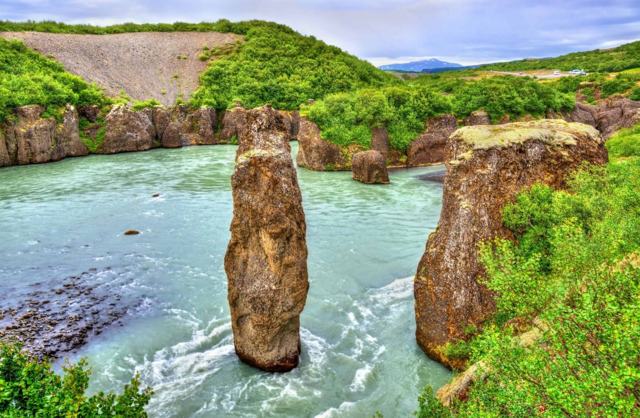
Words you will see on signs
These help in shops, at the airport and on the road. Road signs are especially worth knowing if you plan a self-drive trip.
- Opið / Lokað: open / closed
- Inngangur / Útgangur: entrance / exit
- Snyrting, Salerni or Klósett: toilets. Karlar is men, Konur is women.
- Brottfarir / Komur: departures / arrivals (one departure is brottför, one arrival is koma)
- Flugvöllur: airport. Strætó, short for strætisvagn: city bus. Umferðarmiðstöð: bus terminal. Bílaleiga: car rental.
- Hótel: hotel. Herbergi: room. Bókun: booking or reservation.
- Einbreið brú: single-lane bridge. Slow down and give way to cars already on it.
- Blindhæð: blind hill. Keep right and slow down.
- Hætta: danger
- Ófært: impassable, often seen on road condition maps in winter
Place names are little descriptions
Most Icelandic place names simply describe the landscape. Learn a handful of endings and the map starts to make sense.
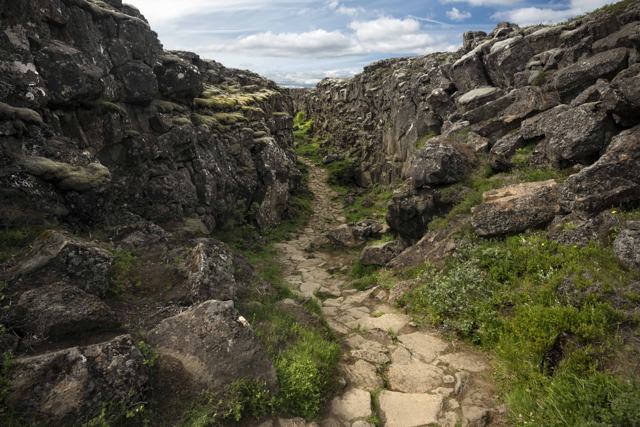
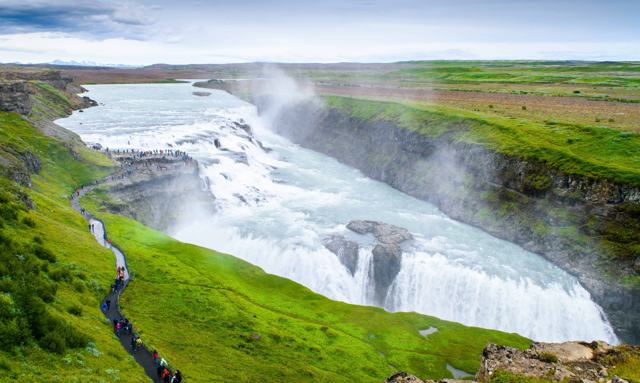
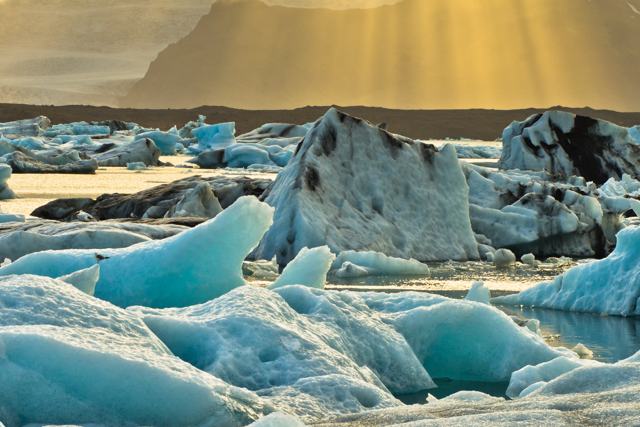
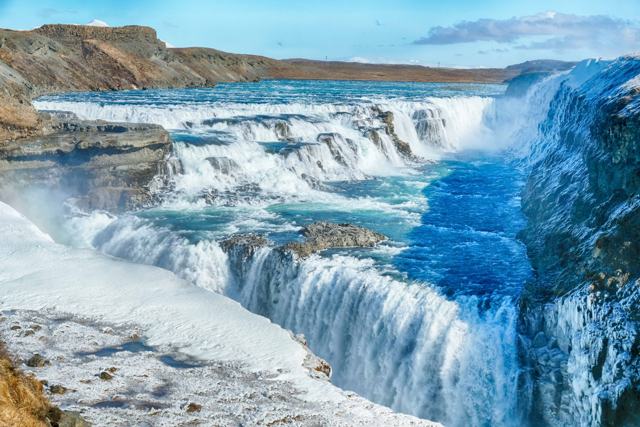
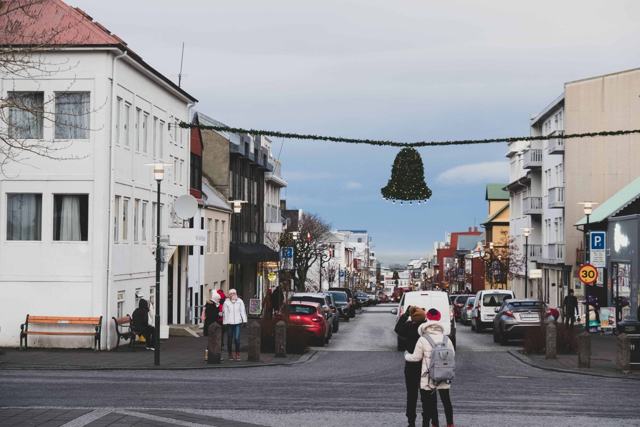
A few examples: Gullfoss is the golden waterfall. Jökulsárlón is glacier-river-lagoon. Eyjafjallajökull, the volcano that stopped European flights in 2010, is the glacier of the island mountains. Reykjavík means smoky bay, after the steam the first settler saw rising from hot springs. Þingvellir is the parliament plains, where the Alþingi met from 930. You can walk there with a local guide on our private Golden Circle tour from Reykjavík.
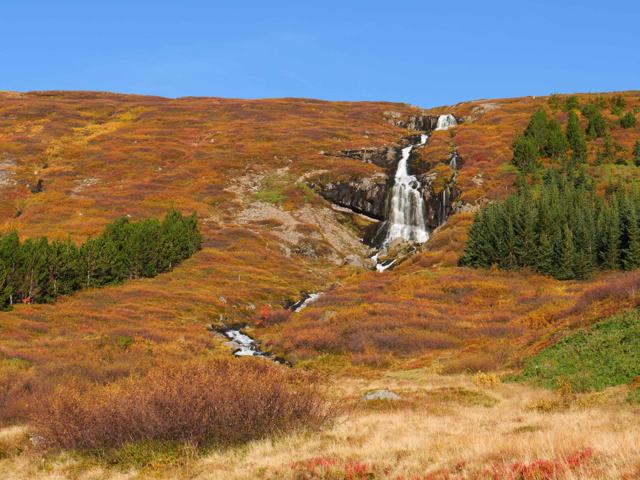
- foss: waterfall (Skógafoss, Svartifoss, Dettifoss)
- jökull: glacier (Vatnajökull, Sólheimajökull)
- fjörður: fjord (Hafnarfjörður, Borgarfjörður, Seyðisfjörður; Vestfirðir is the Westfjords)
- vík: bay (Reykjavík, Vík)
- ey / eyja: island (Heimaey, Grímsey, Drangey, Surtsey)
- dalur: valley (Reykjadalur, steam valley; Laugardalur in Reykjavík, valley of the pools)
- vatn: lake (Mývatn, midge lake)
- lón: lagoon
- á: river
- fell / fjall: mountain (Kirkjufell, church mountain)
- hraun: lava field
- hver: hot spring, and laug: warm pool (Landmannalaugar, the people's pools)
- gjá: fissure (Almannagjá, Silfra's rift)
- hellir: cave
- nes: headland or peninsula (Snæfellsnes)
- brú: bridge (Borgarfjarðarbrú, the long bridge at Borgarnes)
Icelandic numbers 1 to 10
Numbers one to four change with gender (masculine, feminine, neuter, in that order below), which is part of what makes the language tricky. From five upwards they stay the same. And yes, six really is sex. One to ten is enough for shopping in Reykjavík, whether you are after lava-stone jewellery or a bottle of Brennivín.
- 0: núll
- 1: einn, ein, eitt
- 2: tveir, tvær, tvö
- 3: þrír, þrjár, þrjú
- 4: fjórir, fjórar, fjögur
- 5: fimm
- 6: sex
- 7: sjö
- 8: átta
- 9: níu
- 10: tíu
Icelandic Language Day
Every year on 16 November Iceland celebrates Dagur íslenskrar tungu, the Day of the Icelandic Language. The date is the birthday of Jónas Hallgrímsson, the 19th-century poet who shaped modern Icelandic and coined many of its words. Schools, libraries and the media mark the day with readings and events. If you are here in November, look out for it.
How to start learning Icelandic
If you want to go further, Icelandic Online, run by the University of Iceland, has free courses from complete beginner up to advanced level, plus a paid version with tutor support. Two well-known textbooks are Colloquial Icelandic by Daisy L. Neijmann and Complete Icelandic (Teach Yourself) by Hildur Jónsdóttir. Language apps and online tutors help with speaking, and language schools in Reykjavík run courses if you are staying a while. Icelandic is close to phonetic once you know the letters, so start by listening: Icelandic music, radio and podcasts train your ear before you worry about grammar.
For a gentler start, learn the phrases above, then try reading place names as you travel. Our beginner's guide to Iceland covers the rest of the practical basics, and if you are thinking of staying longer, see our guide to finding a job in Iceland. To see the stories behind the language, read about elves and trolls in Iceland or visit one of the museums in Iceland.
Tours to book
A local guide is the easiest way to hear Icelandic spoken and to learn what the names around you mean.
- Private Reykjavik Walking Tour: the city with your own guide, and time to ask about words, names and signs.
- Private Reykjavik Walking & Food Tour: the same walk with Icelandic food along the way.
- Golden Circle Private Tour from Reykjavík: Þingvellir, Geysir and Gullfoss, three names you can now read, at your own pace.
Questions people ask
What language is spoken in Iceland?
Icelandic is the national language. English is widely spoken, especially in tourism, so visitors can get by without any Icelandic.
How many letters are in the Icelandic alphabet?
32. It includes Þ, Ð, Æ and Ö, and letters with accents such as Á and É. C, Q, W and Z are only used in foreign words and some names.
Can Icelanders read Old Norse?
Largely, yes. Icelandic has changed so little that Icelanders can read the medieval sagas and Eddas with only a little help.
Is Icelandic similar to Norwegian or Danish?
They are related, but not mutually intelligible. The closest language is Faroese, which looks similar when written but sounds quite different.
How do you say thank you in Icelandic?
Say takk (tahk) or takk fyrir (tahk FIH-rir). For thank you very much, say takk kærlega.