Iceland Travel GuideLOCAL TRAVEL AGENCY IN ICELAND
My trip
Talk to a local
Iceland Travel GuideLOCAL TRAVEL AGENCY IN ICELAND
My trip
Talk to a local
Lambafellsgjá is a narrow fissure, about 50 metres deep, cutting through the small Lambafell hill on the Reykjanes Peninsula. It is roughly an hour from Reykjavík by car, free to visit, and the walk from the car park takes about an hour in total. It is open all year, but summer is the easiest time to walk right through it.
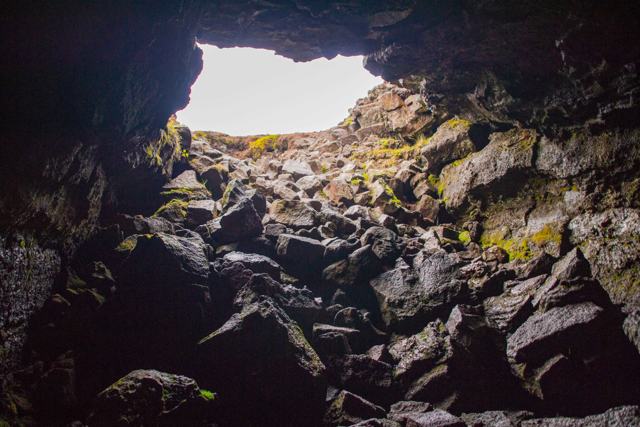
Lambafellsgjá is a crack in the side of Lambafell, a small hill made of hyaloclastite, the brown rock that forms when lava erupts under a glacier. The fissure is only a few metres wide in places, and its walls rise about 50 metres on either side. Looking up from inside, you see a thin strip of sky between dark rock.
The walls are lined with basalt pillows, rounded lava shapes that formed when molten rock met ice and water. Geologists like the place for exactly that reason. For everyone else it is simply a quiet, short hike that few tour groups bother with, so you often have it to yourself.
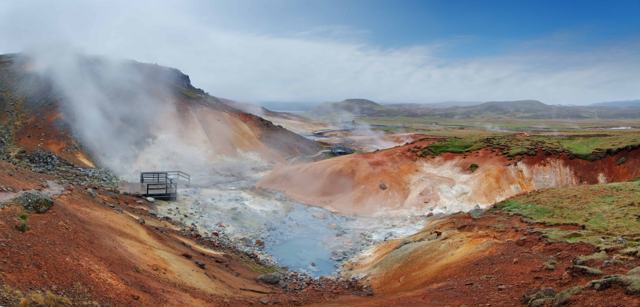
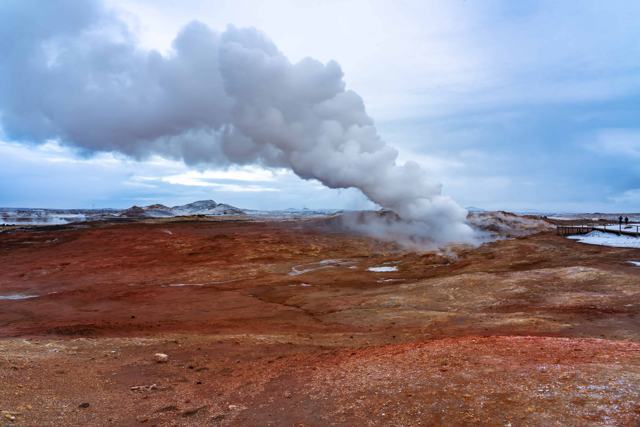
At the southern end there are steam vents, and the path leaves the fissure up a steep slope of loose gravel. Take it slowly and wear proper hiking shoes.
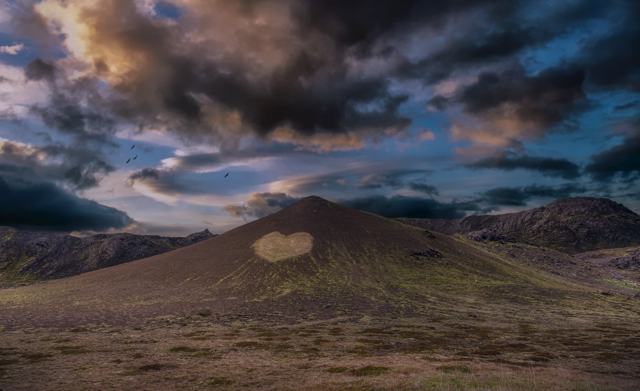
The Reykjanes Peninsula sits on the boundary between the North American and Eurasian plates, and it is full of fissures, craters and lava fields. Lambafell is one of several hills here that were built by eruptions under the ice sheet of the last glacial period. When lava met the ice, it cooled quickly into glassy fragments and rounded pillows, and later the hill split open along a fault.
That is why the walls look so different from the black lava fields around them. You are walking through the inside of a small volcano-under-ice.
The fissure itself is young in geological terms. It opened during the Holocene, after the ice had gone, while the pillow lava in its walls is far older. That is the contrast you walk through: old rock, split by a recent crack.
The last stretch is a gravel road, usually fine for a normal car in dry weather. The Reykjanes Peninsula has seen volcanic activity in recent years, so check safetravel.is and the Icelandic Met Office before you go.
The walk is short and easy to follow, and you can make it a loop.
Bring a head torch or a phone light if you want a better look at the walls. Stay away from the steam vents.
Lambafellsgjá fits easily into a day on the Reykjanes Peninsula, a stopover day near the airport, or an afternoon out from Reykjavík.
Lava fields, craters and hot ground cover most of Reykjanes, which is why sights here are close together and mostly free.
There are no toilets, café or shop at Lambafellsgjá. Bring water and anything you need for the hike. The nearest services are in Hafnarfjörður and along Reykjanesbraut.
Most visitors do this as a day trip from Reykjavík. Hafnarfjörður and Reykjavík are the closest places with a wide choice of hotels and guesthouses, and there are also places to stay near Keflavík airport and at Grindavík.
Around an hour for the walk to the fissure, through it and back. Allow a little more if you take photos or walk the loop over the hill.
No. It is short and mostly flat, but the slope at the southern end is steep and covered in loose gravel, so take care and wear good shoes.
No. It is free to visit. Check for parking signs when you arrive.
Around an hour by car, via Reykjanesbraut (Route 41) and a short gravel road.
Yes, it is open all year, but ice can make the gravel slope and the fissure floor slippery and days are short. Summer is easier.
Yes. It is a favourite family walk among locals. The only difficult part is the steep gravel slope at the southern end, where children need a hand.
Most people enter from the south and walk north. At the northern end you can turn round and go back through, or return over the hill on the marked trail.