KIRKJUGÓLF IN SHORTKirkjugólf (“the church floor”) is a small pavement of hexagonal basalt columns, about 80 square metres in size, just outside the village of Kirkjubæjarklaustur on Iceland’s South Coast. It is free to visit, open all year, reached by a short walk from the car park, and most people need 15–20 minutes. Kirkjubæjarklaustur is around 3 hours 20 minutes by car from Reykjavík.
About Kirkjugólf
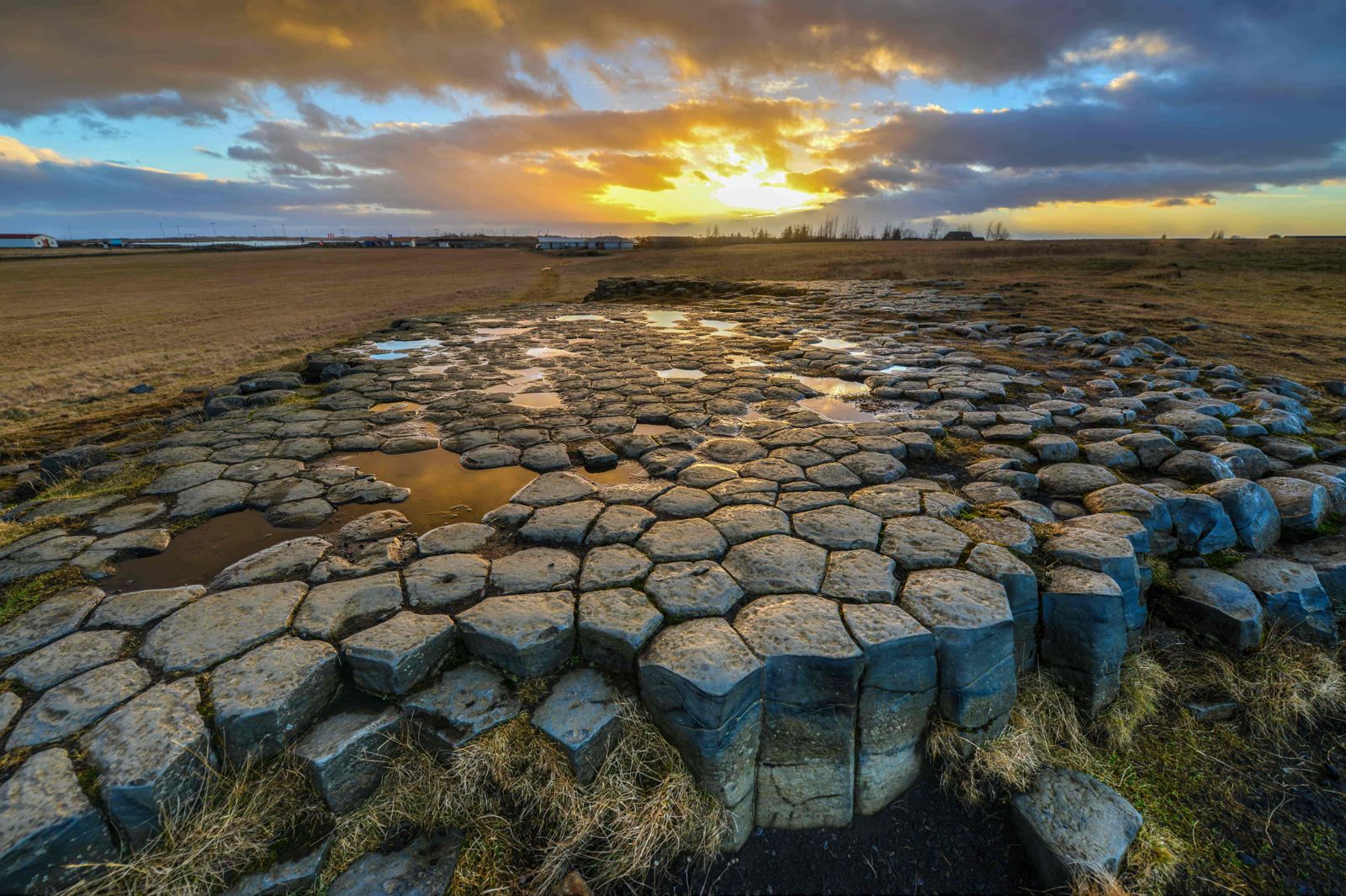
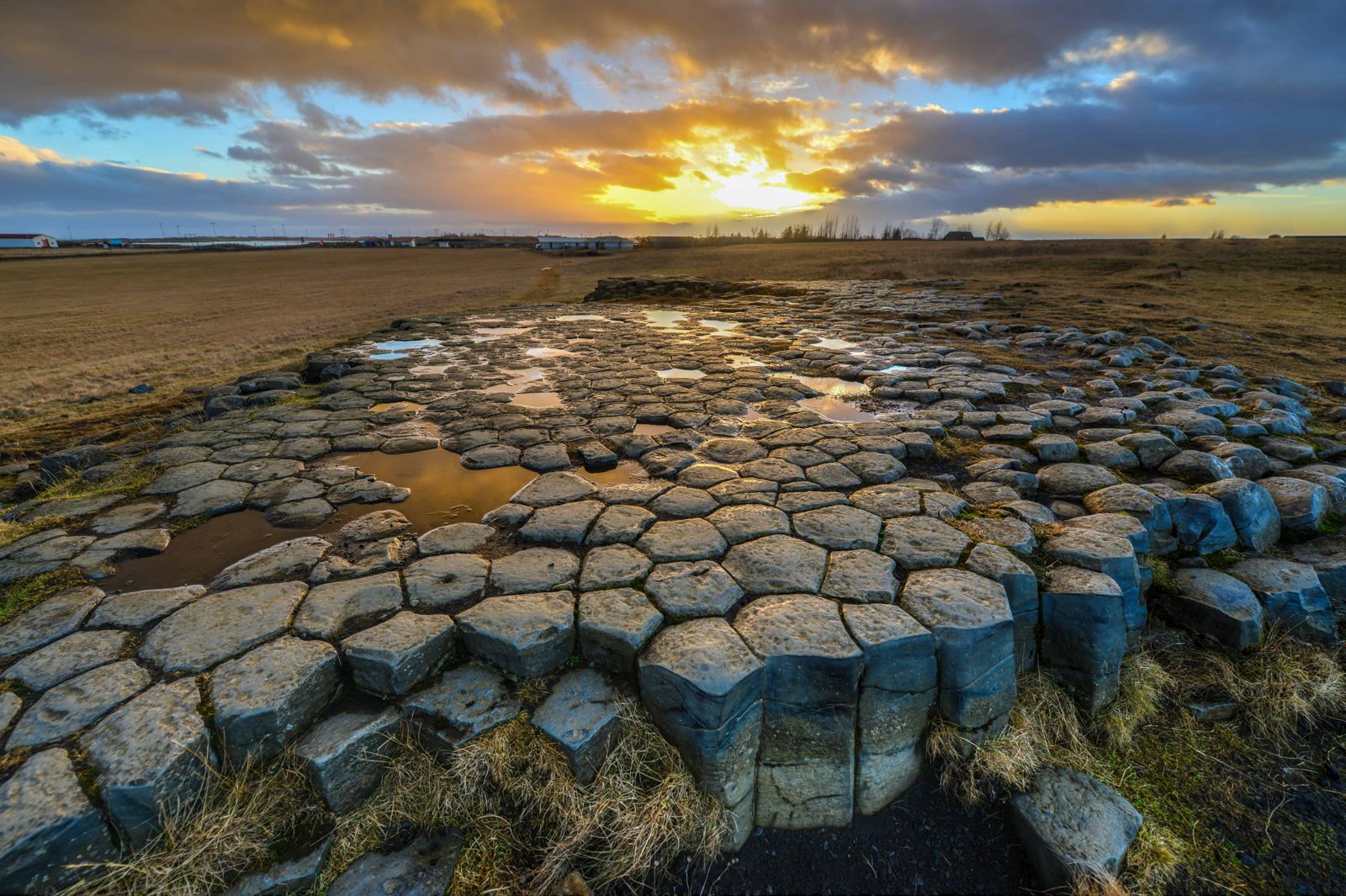
From above, Kirkjugólf looks like a floor laid by a stonemason. The tops of the basalt columns sit flush with the ground and fit together like tiles, most of them with six sides, though you can also find five, seven and eight-sided ones. The whole pavement covers about 80 square metres and is surrounded by grass and low vegetation.
It is a small stop, not a big attraction, and that is part of its charm. There is no building, no path network and no crowd. You walk up, look closely at the stone, and take a few photos. It fits well with a walk around Kirkjubæjarklaustur, together with Systrafoss waterfall and the nearby canyon and lava fields.
The honeycomb pattern has inspired more than one Icelandic artist, and it is easy to see why: black stone, green grass and an open sky make a simple, strong picture. Few visitors stay long, so it is also a calm place to sit for a while. The site has been protected as a natural monument since 1987.
Quick facts
SizeAbout 80 m² of columnar basalt
TypeNatural basalt pavement, protected as a natural monument since 1987
RegionSouth Iceland, next to Kirkjubæjarklaustur
From ReykjavíkAbout 260 km, around 3 hours 20 minutes by car along the Ring Road
RoadRoad 203 (Geirlandsvegur), just off the Ring Road
EntryFree
ParkingSmall car park by the gate and sign on Road 203
WalkingA few minutes on an easy path across the field from the car park
Opening hoursOpen all year
Time needed15–20 minutes
FacilitiesNone on site; toilets and shops are in the village
A floor with no church
No church ever stood here. Earlier visitors took the pattern for the floor of an old building, and one idea was that it had been built by Irish hermits who lived in Iceland before the Norse settlers. Later study showed it is natural. Lava cooled and contracted, cracking into columns, and the tops were worn flat when the sea covered the land at the end of the Ice Age.
The name still points to the area’s religious history. A Benedictine convent for women was founded at Kirkjubær in 1186, and the village of Kirkjubæjarklaustur (“the convent at Kirkjubær”) grew up on the same spot.
How to get to Kirkjugólf
By carKirkjubæjarklaustur is on the Ring Road (Route 1) between Vík and Skaftafell. For Kirkjugólf, leave the Ring Road at the roundabout by the fuel station, turn towards the village and follow the sign for Geirland onto Road 203 (Geirlandsvegur). The gate, sign and small car park are beside the road a short way up, a few hundred metres from the fuel station. From there an easy path leads across the field to the stones. Anyone can manage the walk.
On footIf you are already in the village, you can walk. The Ástarbraut (“Love Path”) also starts at Systrafoss and runs up the mountain above the village.
On a guided tourKirkjugólf is rarely a stop on its own. It is sometimes included in South Coast tours that continue past Vík, or in private tours that suit your own pace.
By public transportLong-distance buses run along the Ring Road and stop in Kirkjubæjarklaustur, but schedules are limited, especially in winter. Check the timetable before you plan around it.
The Ring Road is paved and open all year, but in winter it can be icy and windy, and it is sometimes closed briefly in storms. Check umferdin.is and vedur.is before you drive.
Things to do around Kirkjugólf
Kirkjugólf takes a quarter of an hour, so pair it with one or two of the other stops around Kirkjubæjarklaustur.
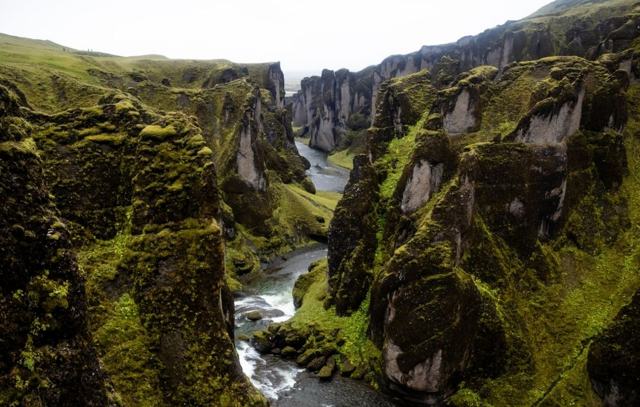
Fjaðrárgljúfur canyon<a href="/locations/fjadrargljufur-canyon/">Fjaðrárgljúfur</a> is the best-known sight in the area, a winding canyon with mossy green walls a short drive west of the village. A trail follows the rim from the car park. It is much busier than Kirkjugólf.
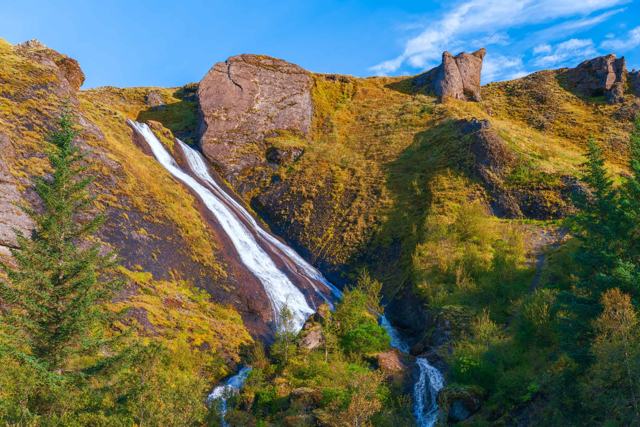
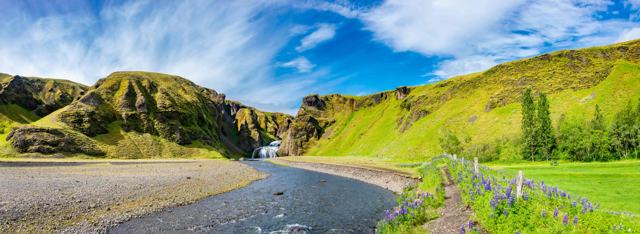
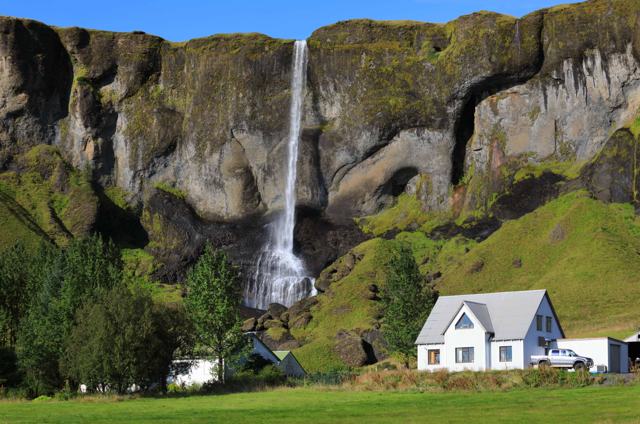
Systrafoss and Stjórnarfoss<a href="/locations/systrafoss-waterfall/">Systrafoss</a> falls from the cliff above the village, and <a href="/locations/stjornarfoss-waterfall/">Stjórnarfoss</a> is further up Road 203, the same road that passes Kirkjugólf.
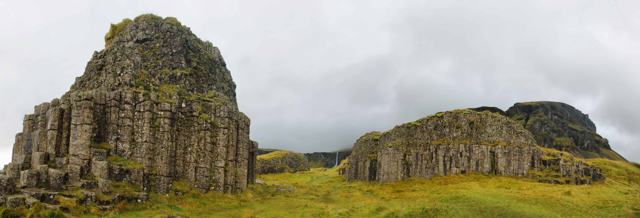
DverghamrarIf the basalt at Kirkjugólf caught your interest, <a href="/locations/dverghamrar/">Dverghamrar</a>, about 10 minutes east on the Ring Road, shows the same kind of columns from the side.
Best time to visit Kirkjugólf
Summer (May–September)Green grass around the black stone, long daylight, and the easiest walking. Visits are short, so it never feels busy.
Winter (October–April)The columns can be covered by snow or ice, which hides the pattern. Take care on the gravel path, and check daylight hours before you stop.
Safety and practical tips
- Look at the columns from above and up close. The hexagon pattern shows best when the stone is wet or the light is low.
- Do not climb on the columns or chip off pieces. The site is a protected natural monument.
- There are no toilets at the site, so use the ones in Kirkjubæjarklaustur before you walk up.
- Combine it with Systrafoss and the walk around the village. Together they make a good hour and a half.
- Wear waterproof shoes. The grass around the pavement is often wet.
Facilities and accessibility
There are no facilities at Kirkjugólf itself. Kirkjubæjarklaustur has a fuel station, shops, cafés and a swimming pool.
Nearby places worth a stop
Where to stay near Kirkjugólf
Kirkjubæjarklaustur has guesthouses, a hotel, self-catering cottages and a campsite. It is a good overnight stop between the Vík area and Skaftafell or Höfn.
Kirkjugólf FAQ
Is Kirkjugólf free to visit?
Yes. There is no entrance fee and the site is open all year.
How long does it take to see Kirkjugólf?
About 15–20 minutes, including the short walk from the car park.
Was Kirkjugólf really a church floor?
No. It is a natural formation of basalt columns. The name comes from its resemblance to a paved floor.
Where is Kirkjugólf?
On Road 203, just off the Ring Road at the village of Kirkjubæjarklaustur in South Iceland, about 260 km and around 3 hours 20 minutes by car from Reykjavík.
Are there toilets at Kirkjugólf?
No. The nearest are in Kirkjubæjarklaustur village.
How do I find Kirkjugólf?
From the roundabout at Kirkjubæjarklaustur, follow the sign for Geirland onto Road 203 and look for the gate, sign and small car park beside the road. The stones are a few minutes' walk across the field.