Iceland Travel GuideLOCAL TRAVEL AGENCY IN ICELAND
My trip
Talk to a local
Iceland Travel GuideLOCAL TRAVEL AGENCY IN ICELAND
My trip
Talk to a local
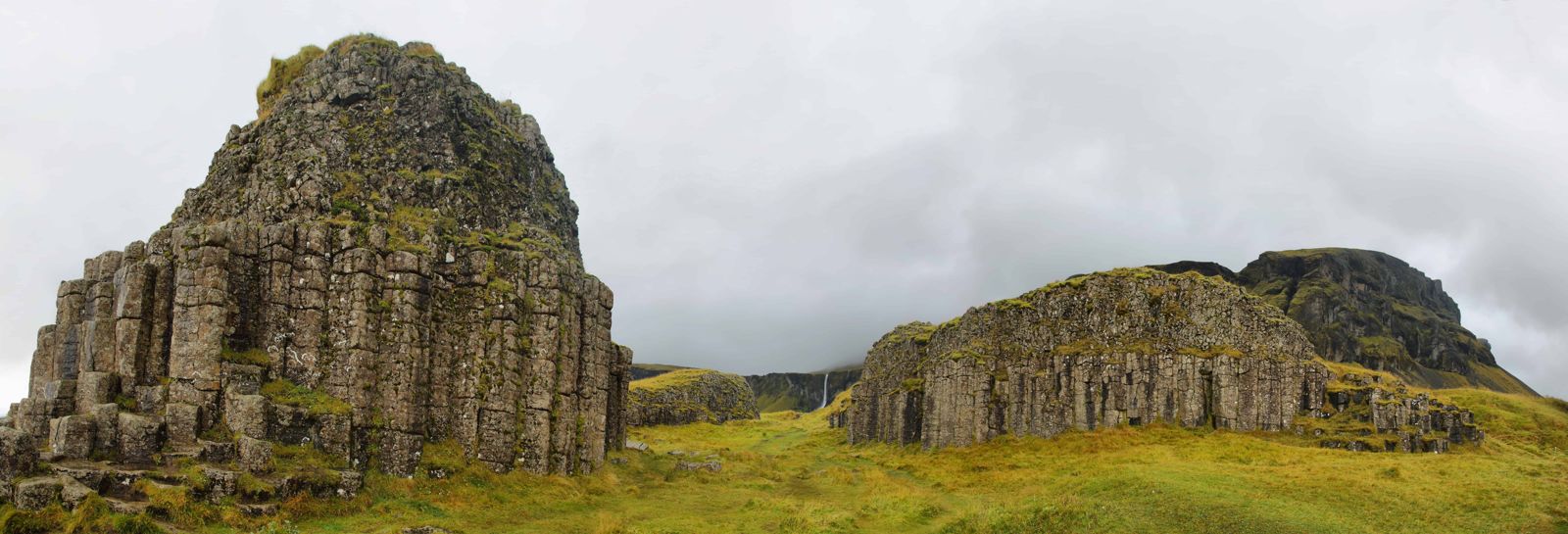
Dverghamrar (“Dwarf Rocks”) are two small cliffs of hexagonal basalt columns right beside the Ring Road in South Iceland, just east of the Foss á Síðu waterfall and east of Kirkjubæjarklaustur. Entry is free, there is a place to park, and most people stop for 15–30 minutes. They are a protected natural monument.
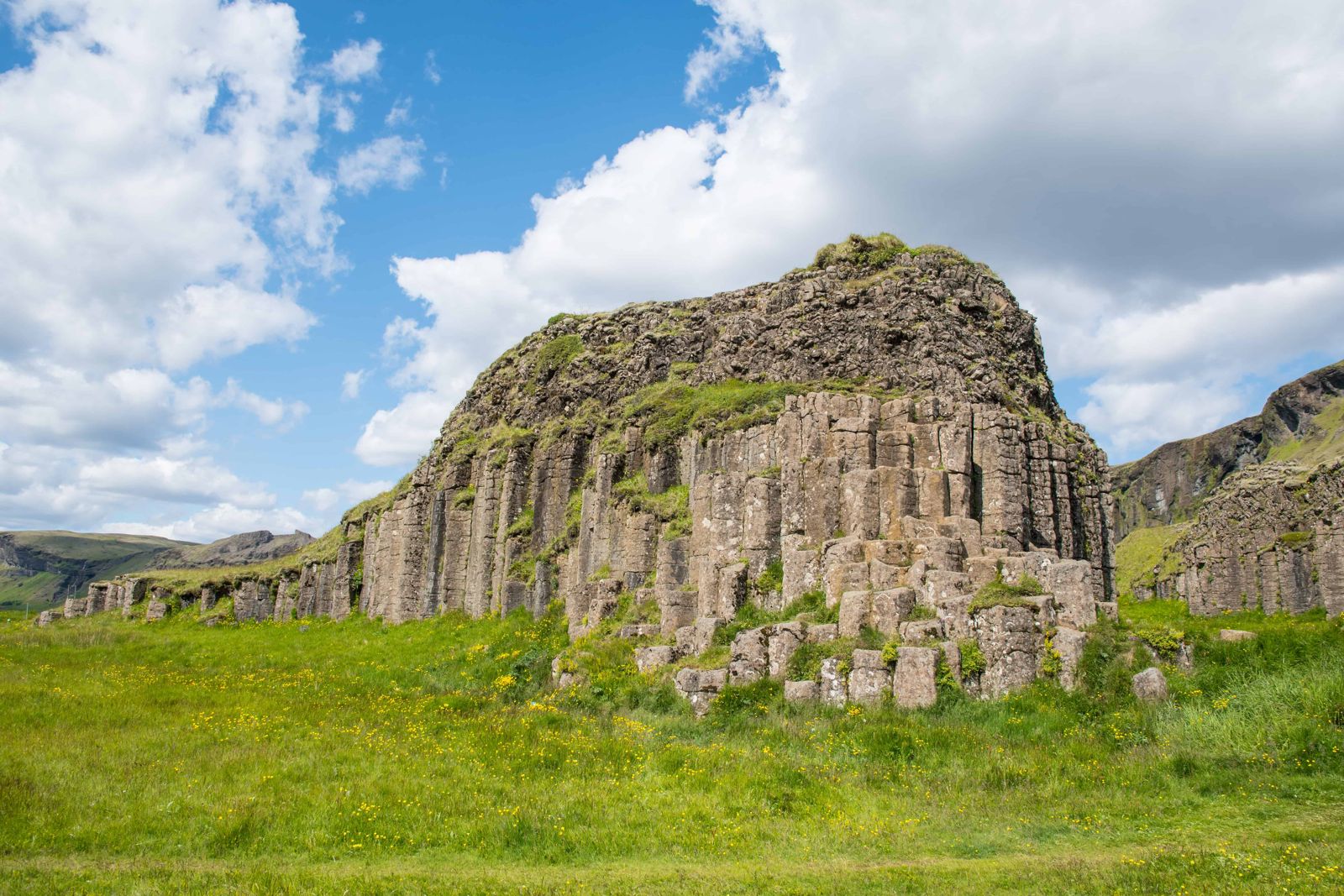
Dverghamrar is a horseshoe-shaped set of rock faces where the basalt has cooled into tall, six-sided columns. The lower parts are regular and neat, while the layers above look more broken and uneven. Moss and grass cover the top and the ground around, so the dark stone stands out against the green.
It is an easy stop on the drive along the South Coast. You can walk around the base, look at the columns close up, and climb the slope beside the rocks for a view over the flat, black outwash plains and, on clear days, towards the glaciers of Vatnajökull. Early or late in the day, low light gives the best colour and shadow.
In Icelandic folklore, dwarves and other hidden people live in rocks like these, and Dverghamrar is treated with respect as one of their homes. Iceland has many places with stories of elves, but few are linked with dwarves in this way. The best known story dates from 1904. Ólafía, a young daughter of Páll and Margrét Ólafsdóttir at the farm Foss, was driving sheep past the rocks when she heard someone singing a hymn. She looked for the singer and found nobody, and local people concluded that the dwarves had been singing. Some also like to say that the dwarves or hidden people built the rock walls themselves.
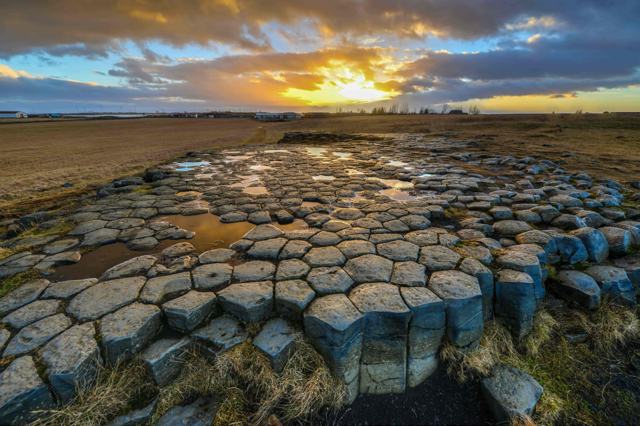
Geologists explain the shape differently. Columnar basalt forms when a lava flow cools and contracts, and the cracks spread through the rock and leave six-sided columns. The cliffs were probably shaped by waves when sea level was higher at the end of the last Ice Age.
The Ring Road is paved and open all year, but it can be icy and very windy in winter. Check umferdin.is and vedur.is before driving.
The site is small, and a short loop on the worn path takes you past everything. Information boards at the stop explain the geology and tell more of the folklore.
Morning and evening light in summer brings out the colour of the rock and the green around it, and sunset here can be very good.
There are no facilities at Dverghamrar. The nearest fuel, food and toilets are in Kirkjubæjarklaustur.
Kirkjubæjarklaustur has hotels, guesthouses, cottages and a campsite, and there are farm stays along the Ring Road nearby.
“Dwarf Rocks” in Icelandic. Folklore says dwarves live in the rocks.
No. It is free to visit and parking is free.
About 15–30 minutes, longer if you climb up for the view.
Beside the Ring Road just east of Foss á Síðu waterfall and east of Kirkjubæjarklaustur in South Iceland.
Yes, they are a protected natural monument, so please do not climb on the columns or damage the moss.