Iceland Travel GuideLOCAL TRAVEL AGENCY IN ICELAND
My trip
Talk to a local
Iceland Travel GuideLOCAL TRAVEL AGENCY IN ICELAND
My trip
Talk to a local
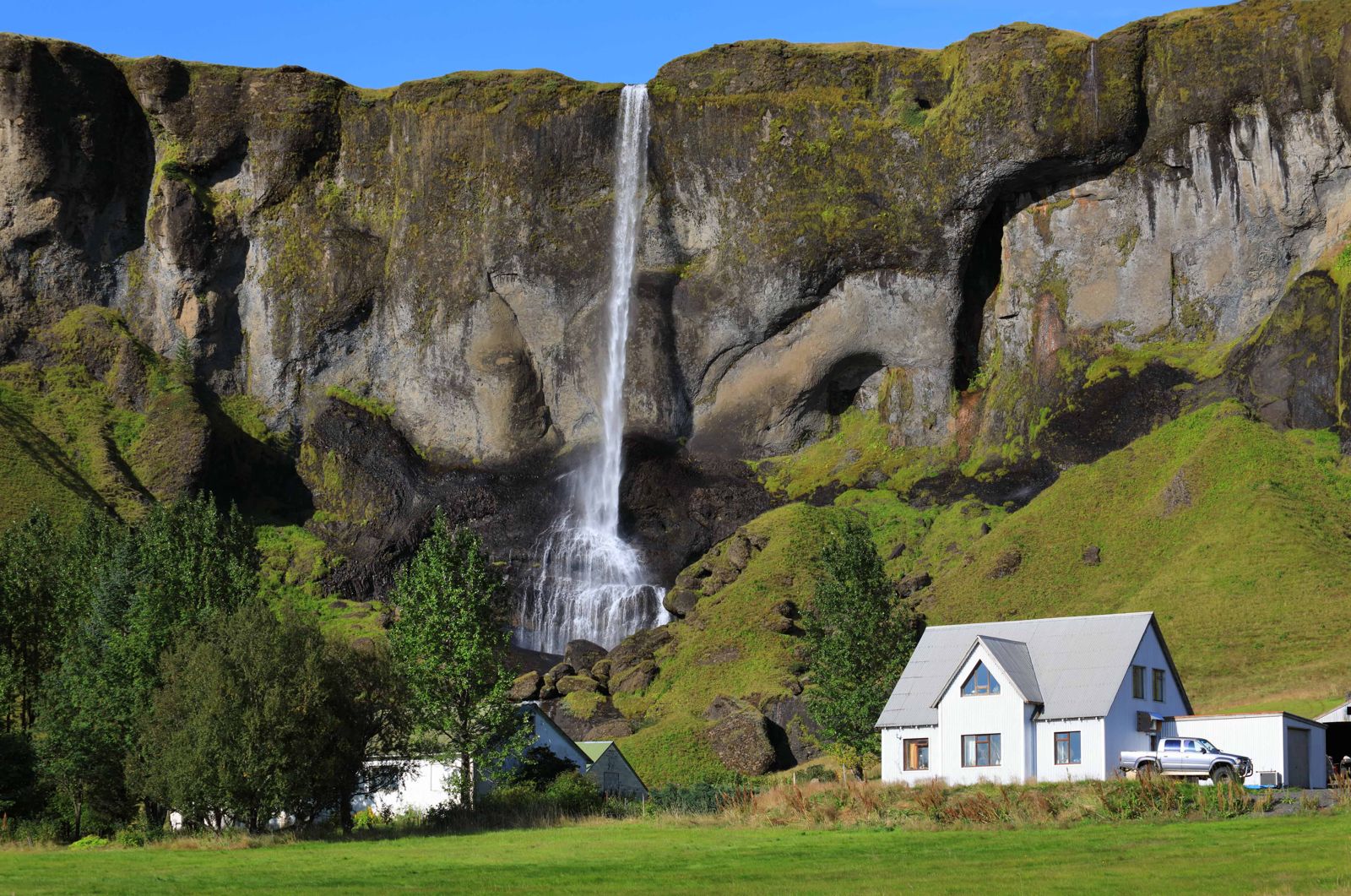
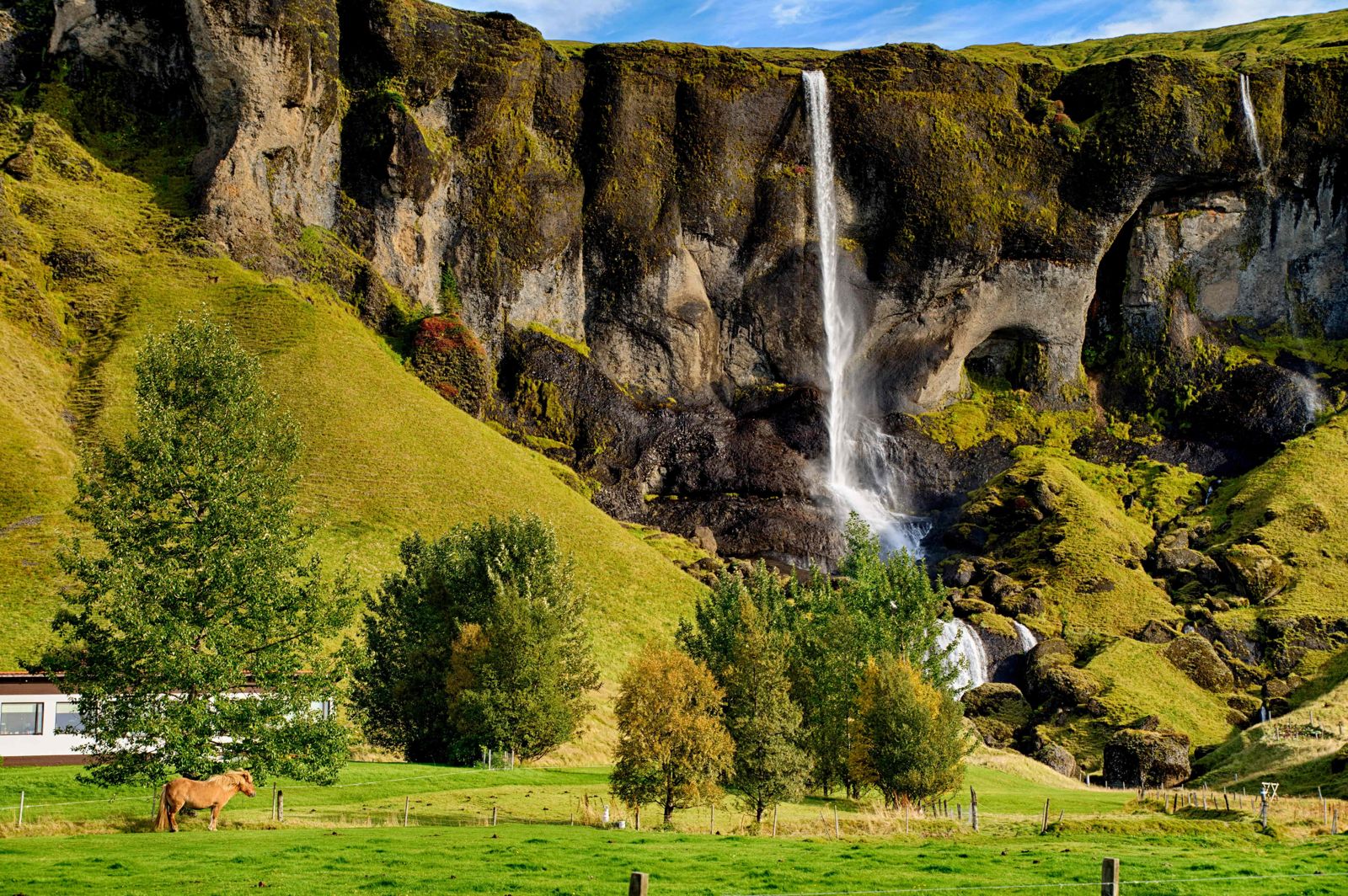
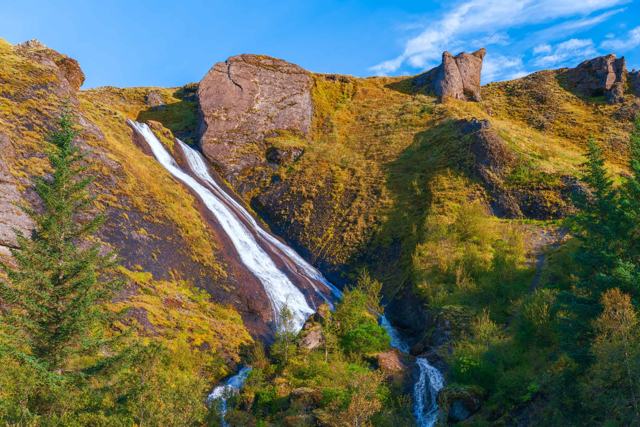
Foss á Síðu is a slim waterfall about 30 metres high, dropping over a basalt cliff right beside a farm on the Ring Road, about 10 km east of Kirkjubæjarklaustur in South Iceland. It is free to visit, open all year, and most people stop for 10–15 minutes on their way further east.
Foss á Síðu shares its name with the old farm it falls behind. The name means “the waterfall in Síða”, Síða being this district of South Iceland, and the farm is one of the oldest recorded in the country, mentioned in the Landnámabók (Book of Settlement). The water comes from a small lake, Þórutjörn, above the cliff, and the fall is thin rather than powerful, which is part of its appeal: it looks almost like a ribbon laid against the dark rock.
Because the waterfall sits so close to the road, with the farm buildings and sheep in the same view, it is one of the easiest photo stops on the drive between Vík and Skaftafell. You can see the white strip against the dark cliffs from a long way off. On days with strong wind and little water, the fall is sometimes blown sideways or back up over the cliff edge before it reaches the bottom.
It is far from the biggest waterfall in Iceland, but the setting of steep green hillsides, cliffs and a working farm makes it one of the most photographed on this stretch of the Ring Road. The cottages and houses in front of the falls are private homes, so enjoy the view from the roadside and do not walk into the farmyard.
The farm at Foss á Síðu has been lived on since the Settlement Era, between 874 and 930 AD, and is named in the Book of Settlement, one of the earliest works of Icelandic literature. Farms along this stretch of coast lived with the same conditions travellers see today: exposed, windy land between the glaciers and the sea.
The farm is also tied to one of Iceland's better-known ghost stories, dating from the 16th century. Because of one man's wicked deeds, the tale goes, a family was cursed for nine generations and followed by Móri, a ghost in the shape of a dog. Some people say the dog can still be seen in the area, and opinions differ on whether the nine generations have run out. Nobody has been harmed, so there is no need to worry.
Kirkjubæjarklaustur, the village just to the west, was a religious centre for centuries, with a convent in the Middle Ages. Stories like this one probably grew and spread from there, part of a wider Icelandic tradition of family ghosts that were said to follow certain bloodlines.
Driving straight from Reykjavík takes about three and a half hours without stops, so allow more time than the map suggests and plan this as part of a longer South Coast day or an overnight trip.
The waterfall is fed by Þórutjörn, a small lake on the plateau above the cliffs. A passable hiking trail leads up to the lake, and from the top you get a wide view over the Síða district. The trail is not a maintained tourist path, so wear proper boots, keep well back from the cliff edge and skip it in wind, fog or ice. The land belongs to the farm, so close gates behind you and follow any signs.
Several good stops sit close together on this part of the Ring Road, so it is easy to plan them as one outing.
There are no facilities at the waterfall itself. Kirkjubæjarklaustur, 10 km west, has fuel, shops and restaurants.
Kirkjubæjarklaustur, 10 km west, has the nearest hotels and guesthouses, and is a common overnight stop between Vík and Jökulsárlón.
It is a quick, free stop right beside the road, worth a short break rather than a special trip on its own.
About 30 metres, falling over a basalt cliff behind the farm of the same name.
About 10 km east along Route 1, around 10 minutes by car.
From Þórutjörn, a small lake on the plateau above the cliff. A hiking trail leads up to the lake.
A 16th-century tale says a family at the farm was cursed for nine generations and followed by Móri, a ghost in the shape of a dog.
About three and a half hours without stops, along the Ring Road through Vík and Kirkjubæjarklaustur.
Tours and trips that include Foss á Síðu, booked directly with a local travel agency in Iceland.