Iceland Travel GuideLOCAL TRAVEL AGENCY IN ICELAND
My trip
Talk to a local
Iceland Travel GuideLOCAL TRAVEL AGENCY IN ICELAND
My trip
Talk to a local

Kirkjubæjarklaustur, often shortened to Klaustur, is a small village on the Ring Road in South Iceland, between the black sand beach at Vík and Jökulsárlón glacier lagoon. It sits right on Route 1, is free to walk around, and makes a good overnight stop or lunch break.
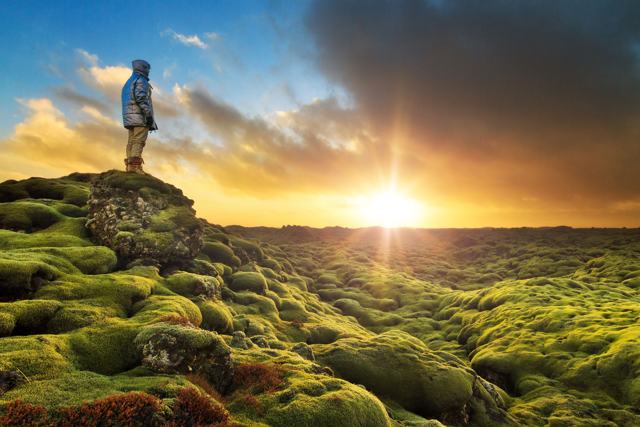
Kirkjubæjarklaustur is the first village you reach after crossing the Mýrdalssandur outwash plain and the Eldhraun lava field on the way east from Vík. The name looks like a tongue twister, but it breaks into three plain words: kirkju (church), bæjar (of the farm) and klaustur (convent). It is pronounced roughly "KIRK-yu-bye-yar-kloy-stur", and locals just say Klaustur.
The site has a long history: Irish hermits are said to have lived here before Iceland's Norse settlement, and from 1186 to 1554 a Benedictine convent stood on the site. Little remains of the convent itself, but the name has stuck.
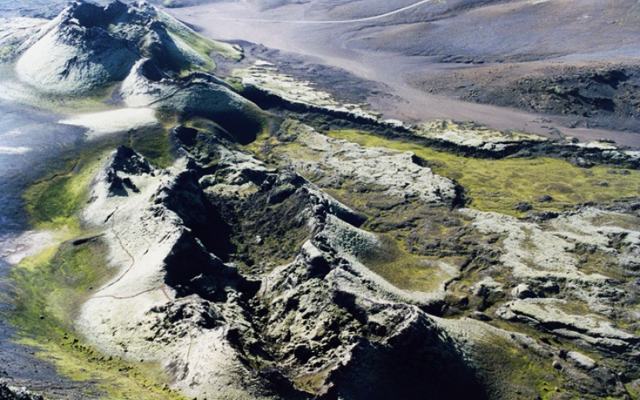
Today Klaustur is a small service village with hotels, restaurants and a petrol station, and it works well as a base for exploring the surrounding area, from the black lava fields left by the 1783–1784 Laki eruption to waterfalls and canyons just outside town.
Local tradition says Irish monks, the Papar, lived at Kirkjubær before Norse settlers arrived in the 9th century. A settler named Ketill the Foolish, himself a Christian, later farmed here, and it was long said that only Christians could live at Kirkjubær and that pagans were not welcome.
The old story of Hildir Eysteinsson tells what happened to one who tried. Hildir, a pagan from Meðalland, decided to move to Kirkjubær after Ketill's time, but dropped dead as he reached the edge of the farm. He is said to be buried in Hildishaugur (Hildir's Mound), a rocky hillock just east of the village.
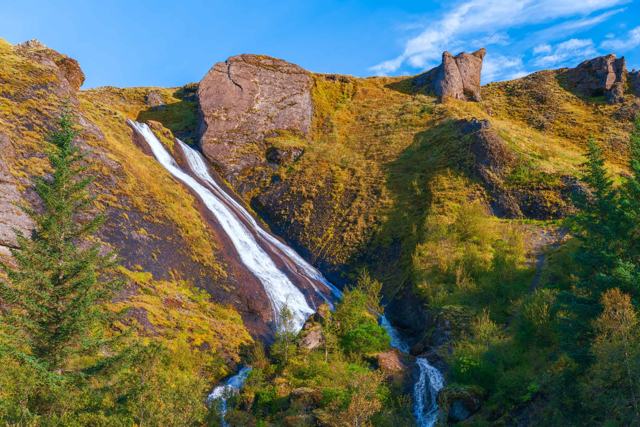
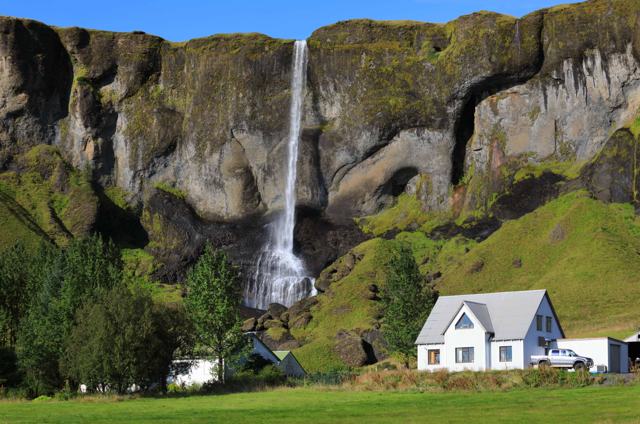
A Benedictine convent operated here from 1186 until the Reformation in 1554, and it gave the village its name. The nuns are remembered in several place names: Systrafoss (Sisters' Falls), Systravatn (Sisters' Lake) and Systrastapi (Sisters' Rock), a rock pillar west of the village. According to legend, two nuns who broke their vows were burned at the stake and buried on top of it.
Most of what there is to see is within walking distance of the village or a few minutes' drive away.
Hotels, guesthouses, a campsite, restaurants and cafés, a supermarket, a fuel station, a swimming pool with hot tubs and the Skaftárstofa visitor centre.
Kirkjubæjarklaustur has several hotels, guesthouses and a campsite, making it one of the main overnight stops between Vík and Höfn.
Klaustur means "convent" in Icelandic, a reference to the Benedictine convent that stood here from 1186 to 1554. Locals often shorten the full name to Klaustur.
About 250 km, around 3 hours by car on Route 1.
Yes, it is roughly halfway between Vík and Jökulsárlón and has hotels, restaurants and fuel, which makes it a popular place to break the journey.
Roughly "KIRK-yu-bye-yar-kloy-stur". Most people simply say Klaustur.
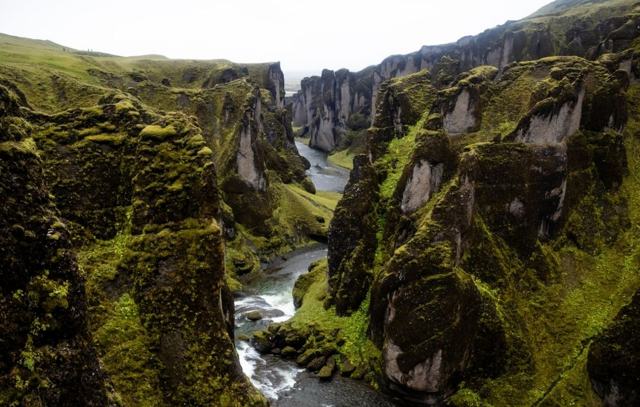
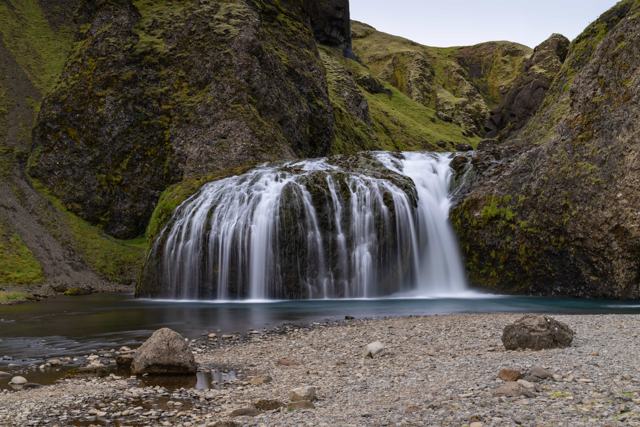
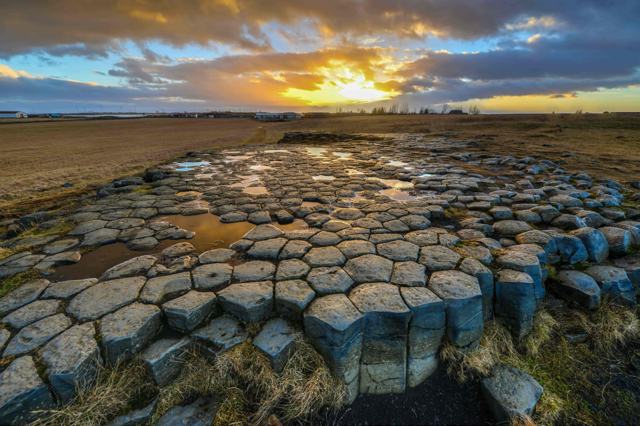
Walk up beside Systrafoss to Systravatn lake, see Systrastapi, Stjórnarfoss and Kirkjugólf, use the swimming pool, and visit Fjaðrárgljúfur canyon a short drive west.
Tours and trips that include Kirkjubæjarklaustur, booked directly with a local travel agency in Iceland.