Written by locals at Iceland Travel Guide · Checked by Heiða · Updated October 2026
GRETTISLAUG IN SHORT
Grettislaug is a pair of small geothermal pools at Reykir on Reykjaströnd, on the west shore of Skagafjörður in North Iceland, about 25–30 km north of Sauðárkrókur. It has an entry fee, and it is linked to Grettir’s Saga. It is easy to visit from Sauðárkrókur or as a day trip from Akureyri.
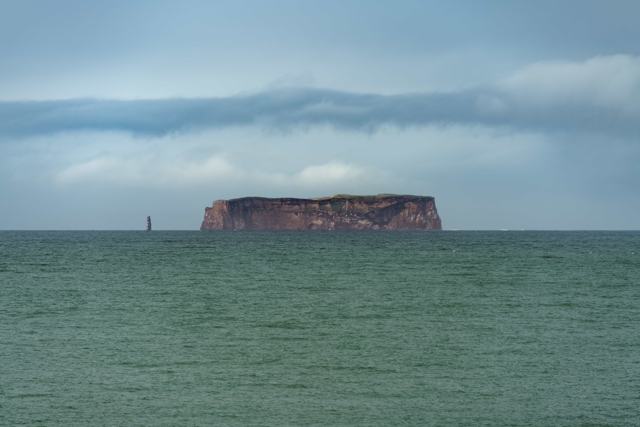
Grettislaug sits by the shore at the Reykir farm, looking across Skagafjörður towards Drangey island. There are two pools, the larger Grettislaug and a smaller pool called Jarlslaug. The water is a comfortable 39–42°C, a little cooler in cold or windy weather, and comes from a natural geothermal spring.
The pools are named after Grettir the Strong, the outlaw of Grettis saga. According to the saga, he swam from Drangey to the shore near Reykir and warmed himself here. The distance is around 7 km, and the story is a good excuse to soak with a view of the island.
It is a simple, friendly place: two stone-lined pools, basic changing areas and a small café or guesthouse at the farm. It is more relaxed than the big spas but also busier than truly wild pools, especially on summer afternoons.
What sets it apart is the setting. The pools are right beside the sea, with the fjord and Drangey in front of you and the mountain Tindastóll behind. It is a long way from the crowds of the Blue Lagoon or the Mývatn Nature Baths, and on a clear evening you can watch the sun go down over the fjord from the water.
Quick facts
GPS65.88225, -19.73694
TypeTwo natural-spring pools: Grettislaug and Jarlslaug
Pool sizeGrettislaug about 4.5 × 3.75 m and around 80 cm deep; Jarlslaug is smaller
WaterAbout 39–42°C
RegionNorth Iceland, Reykjaströnd, Skagafjörður
From SauðárkrókurAbout 25–30 km
From AkureyriAbout 120–135 km, around 1.5–2 hours
From ReykjavíkAbout 300 km, around 4 hours
EntryPaid; check current price with Reykir
SeasonOfficially April 1 to mid-October; access depends on weather
Grettis saga tells of Grettir Ásmundarson, an outlaw who spent his last years on the island of Drangey in Skagafjörður. Legend says that when his fire went out he swam ashore to fetch new flame and warmed himself for a long time that night in the hot spring at Reykir, which took his name.
The saga is one of the best-known medieval Icelandic sagas, and it follows Grettir through his fights, his years on the run and his death on Drangey. The island is visible from the pools, and boat tours run there in summer for bird watching.
The pool you bathe in today is a rebuild. Until the 20th century there were two warm pools at Reykir, one of them used for washing clothes. A storm in 1934 broke through the shingle bank and the sea destroyed both. Grettislaug was rebuilt in 1992 by the farmer Jón Eiríksson, known as the Earl of Drangey, and the second pool, Jarlslaug ("the earl’s pool"), is named after him.
How to get to Grettislaug
By carFrom the Ring Road at Varmahlíð, take Route 75 north towards Sauðárkrókur, then follow Route 748 (Reykjastrandarvegur) along the west shore of Skagafjörður to Reykir. Roads are paved to Sauðárkrókur; the shore road is mostly gravel.
On a guided tourSome North Iceland tours include Skagafjörður and a stop at the pools. A day trip from Akureyri is possible.
By public transportThere is no regular public bus to Reykir. A car is the practical choice.
In winter the road can be icy or closed and the pools may not be open. Check umferdin.is and contact Reykir before going out of season.
Where is Grettislaug hot spring?
Grettislaug is on Reykjaströnd, the west shore of Skagafjörður in North Iceland, at the farm Reykir where the coast road ends. It is about 25 km north of the town of Sauðárkrókur, below the mountain Tindastóll and opposite Drangey island.
From Reykjavík it is about 300 km and around four hours by car. From Akureyri it is roughly 120–135 km and one and a half to two hours. The pools are part of a small family-run site with a campsite, a guesthouse and a little harbour, where the boats to Drangey leave in summer. You can drive right up to the car park, and the pools are a few steps from it.
What to expect at Grettislaug
Grettislaug is not a spa. It is a small, plain hot spring by the sea, and that is why people like it.
Grettislaug, the main poolThe larger of the two pools is edged with stones and has room for a good number of people at once. It is shallow enough to sit in comfortably, at around 80 cm deep, with the water at about 39–42°C. That is warm enough for a long soak after a day of driving or walking.
Jarlslaug, the second poolA few metres away is Jarlslaug, a slightly smaller pool with water at a similar temperature. With two pools so close together you can move between them and find the spot you like best, or a quieter corner when one is busy.
The surroundingsThe pools are next to the shore, with open views of the sea, Drangey and the mountains around the fjord. It is peaceful and feels remote. On clear evenings the sunset over the fjord is the best part of the visit, and from late August there is a chance of Northern Lights.
Simple facilitiesExpect basic changing areas and toilets, and a small café at the farm in season. Do not count on a full shower block or lockers. Bring your own towel and swimwear, and be ready to change quickly in the cold, at your car if the changing area is full.
A quiet place to batheGrettislaug is less known than the big-name pools, so it is usually calm, especially in the morning and late evening. Summer afternoons are the busiest, when campers and day visitors arrive together.
There is an entry fee, paid on site, which goes towards keeping the place up.
Things to do near Grettislaug
Skagafjörður is known for its history, its horses and its turf houses, so it is easy to fill a day around a soak.
Drangey islandThe steep-sided island straight out from the pools was Grettir’s last refuge. In summer, boat tours leave from the small harbour at Reykir. You climb a steep path to the grassy top for wide views of the fjord, and the cliffs hold thousands of seabirds, including puffins and guillemots.
Hólar in HjaltadalurAbout an hour’s drive away, on the other side of the fjord, Hólar was the bishop’s seat for North Iceland from 1106 and for almost seven centuries after that. The cathedral, built in 1763 from red sandstone from the mountain above, is the oldest stone church in Iceland. Hólar is still a place of learning today, and you can walk around the old buildings and exhibitions.
Horse riding in SkagafjörðurSkagafjörður is the heart of Icelandic horse country. Many farms offer guided rides, from an hour to several days, across the river flats and hills of the fjord. The Icelandic horse is small, calm and sure-footed, so beginners are welcome.
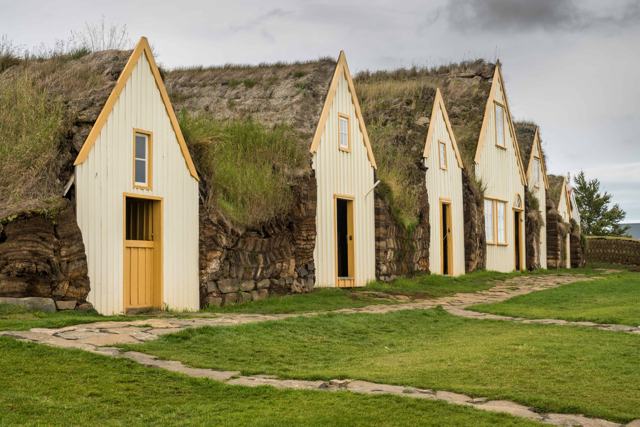
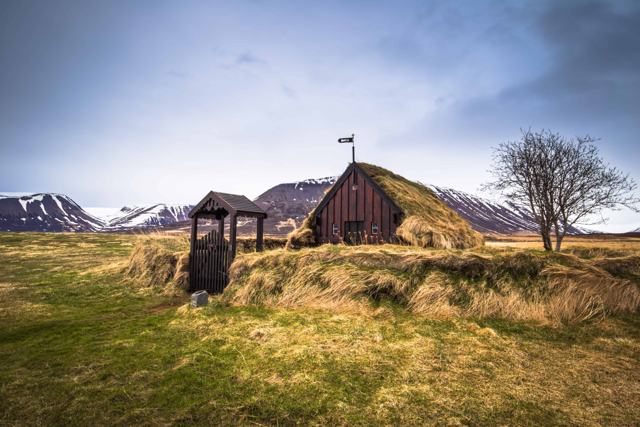
Glaumbær turf houses and the heritage museumGlaumbær is a preserved turf farm on Route 75 between Varmahlíð and Sauðárkrókur. Its row of turf-walled houses shows how people lived in past centuries, and it is home to the Skagafjörður Heritage Museum, with objects from the Viking Age to more recent times.
River raftingSkagafjörður is the best-known river rafting area in Iceland. In summer there is a gentle family trip on the Vestari-Jökulsá, the West Glacial River, and a much rougher white-water trip on the Austari-Jökulsá, the East Glacial River. Both start near Varmahlíð, and you need to book.
Why visit Grettislaug
Come here if you want a calm, simple soak in a fine setting rather than a spa day. You get a natural hot pool by the sea, a real link to one of the great sagas, and a view of the island where the story ends.
It also suits anyone taking the slower road through the north. Most visitors hurry along the Ring Road between Akureyri and Reykjavík. A detour up Skagafjörður to Grettislaug, with Glaumbær and Hólar on the way, shows a quieter side of the country.
Best time to visit Grettislaug
Summer (June–August)Light nights, camping open and easy roads. The busiest time at the pools.
Spring and autumn (April–May, September–October)Quieter and often cooler, with autumn colour along the fjord. Check that the pools are open.
Winter (November–March)Officially outside the main season. Access depends on weather and the pools may be closed, so check first.
Safety and practical tips
Shower or rinse before getting in and do not use soap in the pools.
Keep noise down. The pools are next to a guesthouse and campsite.
Bring your own towel and swimwear. Check whether towels are available before you go.
Confirm opening times and the entry fee with Reykir before a long drive.
Combine with a visit to Glaumbær turf houses or the Drangey boat tour.
Put the GPS point 65.88225, -19.73694 into your map before you leave Sauðárkrókur; the last 25 km or so are on a gravel coast road.
Stay for the sunset on a clear evening. The pools face the fjord and Drangey.
Facilities and accessibility
Basic changing areas and toilets, a small café or guesthouse at the Reykir farm, and camping in season. Do not count on showers. Sauðárkrókur, about 25–30 km away, has shops, fuel and restaurants.
 Iceland Travel GuideLOCAL TRAVEL AGENCY IN ICELAND
My trip
Talk to a local