Iceland Travel GuideLOCAL TRAVEL AGENCY IN ICELAND
My trip
Talk to a local
Iceland Travel GuideLOCAL TRAVEL AGENCY IN ICELAND
My trip
Talk to a local
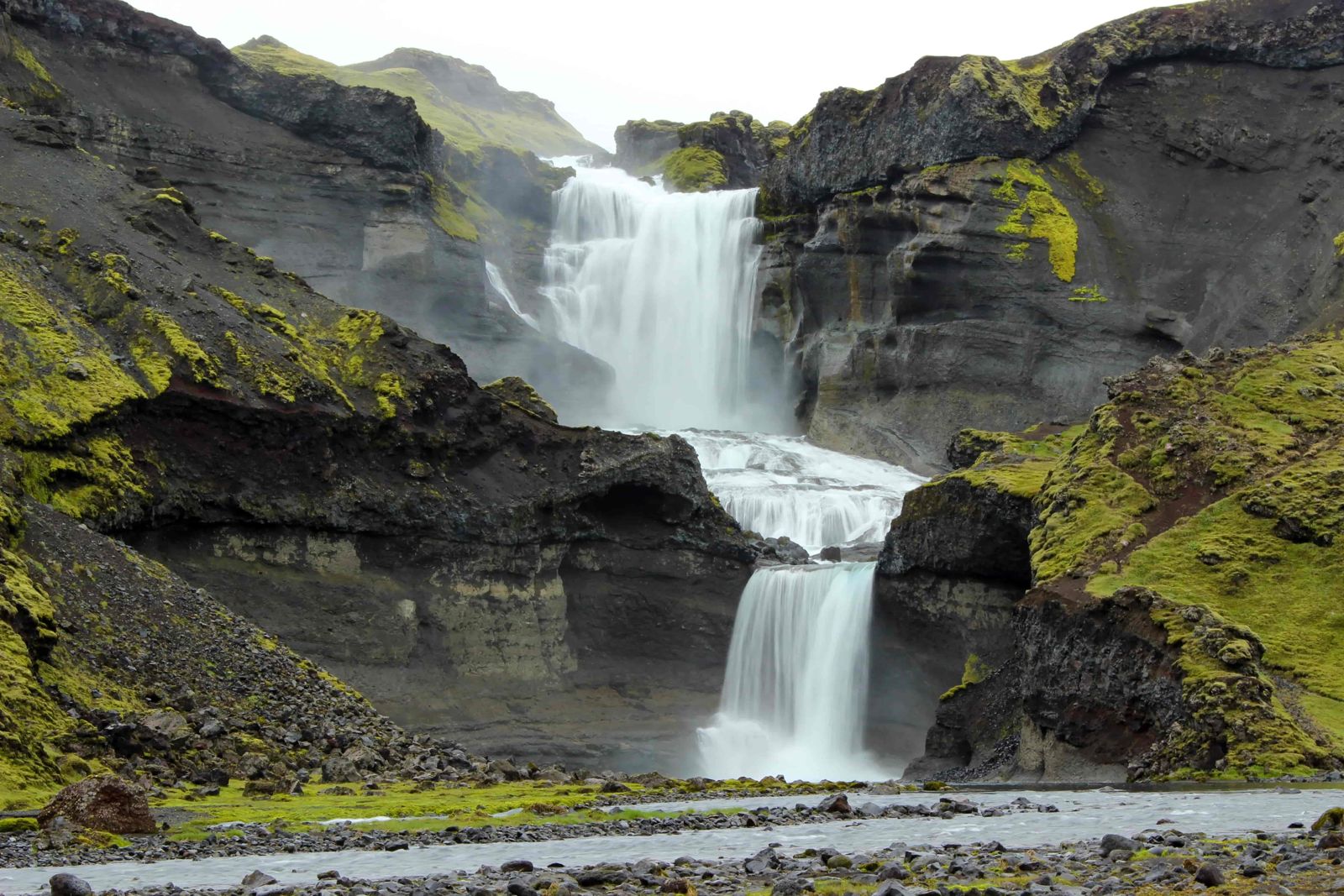
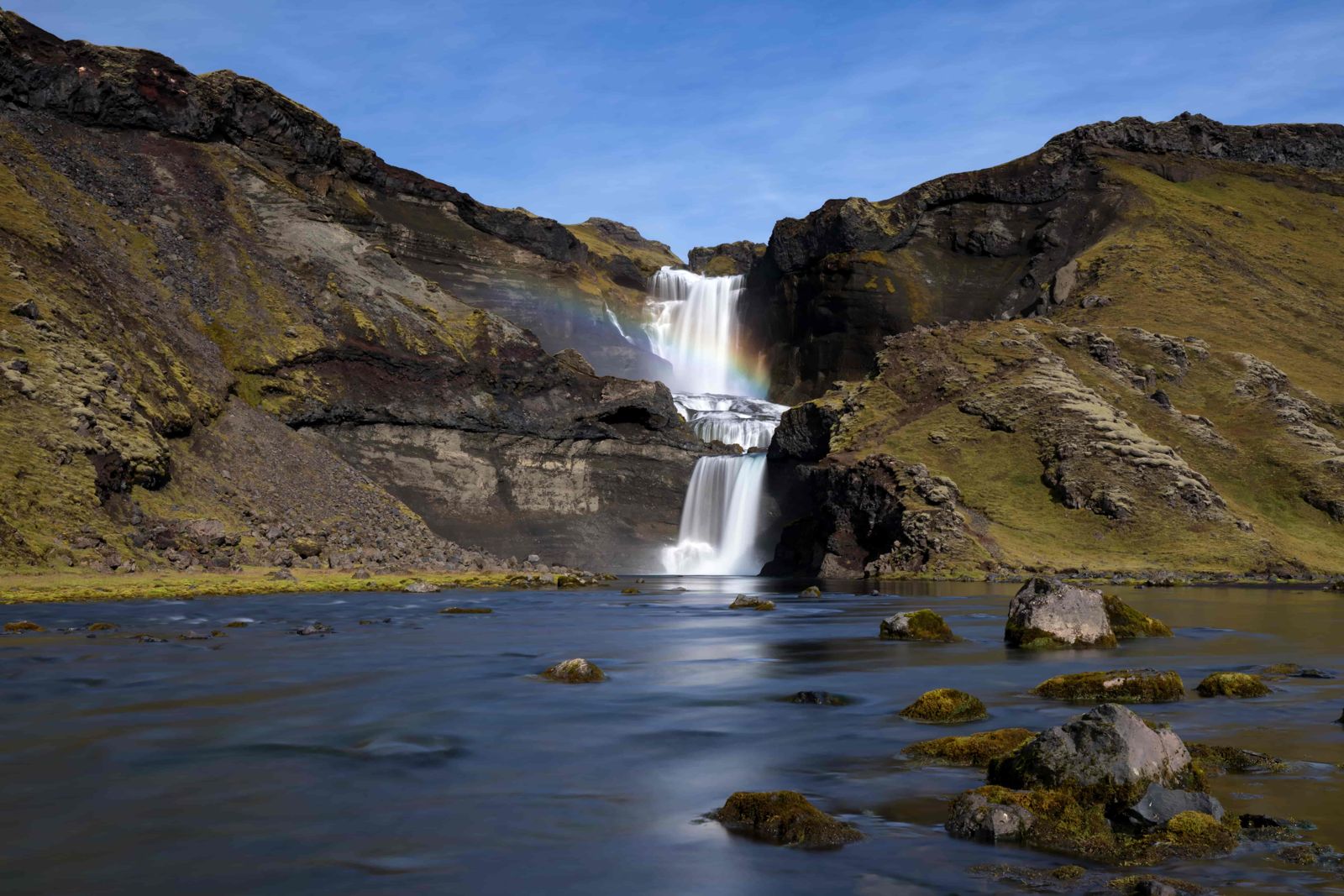
Ófærufoss is a two-step waterfall, about 40 metres high, inside Eldgjá, the long volcanic canyon in the Icelandic Highlands. It is reached on the Fjallabak Nyrðri mountain road, open in summer only, then on a walk of about 2.5–3 km from the Eldgjá car park. Allow 2–3 hours for the visit. It is free to visit.
Ófærufoss (“the impassable waterfall”) drops in two cascades into Eldgjá, a fissure about 40 km long, up to 600 metres wide and up to 200 metres deep. The water comes from the Nyrðri-Ófæra river, and the canyon walls around it are covered in green moss against dark volcanic rock.
The waterfall used to be even more unusual. A natural stone arch spanned the lower fall, so you could see the water pass beneath it. The arch collapsed in the early 1990s, but the falls are still worth the walk. The path follows the canyon floor, crosses small streams and gives good views of Eldgjá’s walls on the way.
The name is easier to say than it looks: roughly “Oh-fye-ru-foss”. Because it sits deep in the Highlands, far fewer people come here than to the waterfalls along the Ring Road, and on a quiet day you may have the canyon almost to yourself. Paths lead around the falls as well as up to them, so it is easy to spend a couple of hours here.
Eldgjá means “fire canyon”. It opened in an eruption around the year 934 that is counted among the largest lava eruptions in Iceland’s history, and it is part of the same volcanic system as Katla, which sits under the Mýrdalsjökull glacier. The lava field from the eruption covers a very large area.
The eruption was later described by people living on the South Coast and is linked to the old Icelandic poem Vǫluspá, though historians debate how closely.
The highland roads are usually open from mid-June or July until late September, depending on snow and road conditions. Check road.is before you go. Ordinary rental cars are not allowed on F-roads.
The drive is the hard part. Once you are at the Eldgjá car park, the walk itself is straightforward.
The whole drive from Reykjavík takes about four hours each way, so most people visit from a base on the South Coast or as part of a longer highland trip rather than as a day trip from the capital.
Vatnajökull National Park lists the Ófærufoss trail as 2.5 km and 1 to 1.5 hours. Allow two hours or more for the return walk with time at the falls.
Outside these months the roads are closed and the area is not reachable.
There is a car park at Eldgjá, and a ranger station with a small service point is reported there in summer. There are no shops, restaurants or fuel nearby. Bring food, water and fuel with you.
There is basic lodging and camping in the Highlands, but most visitors stay in Kirkjubæjarklaustur or along the Ring Road and make a day trip. Book early in summer.
About 40 metres, in two drops.
Treat it as a 4x4 route. The Fjallabak roads are F-roads and there is a river crossing before the car park.
About 2.5–3 km from the Eldgjá car park, around an hour each way.
Only in summer, when the highland roads open, roughly mid-June or July to late September.
It collapsed in the early 1990s. Some sources give 1993.
Roughly “Oh-fye-ru-foss”. The name means “the impassable waterfall”.
Drive the Ring Road east past Vík, turn onto Route 208 west of Kirkjubæjarklaustur and follow Fjallabak Nyrðri (F208) to the Eldgjá car park, then walk about 2.5 km along the canyon floor. Allow about four hours of driving each way.
Yes, there is a free car park at Eldgjá, where the walk to the waterfall starts.
Tours and trips that include Ófærufoss, booked directly with a local travel agency in Iceland.