Iceland Travel GuideLOCAL TRAVEL AGENCY IN ICELAND
My trip
Talk to a local
Iceland Travel GuideLOCAL TRAVEL AGENCY IN ICELAND
My trip
Talk to a local
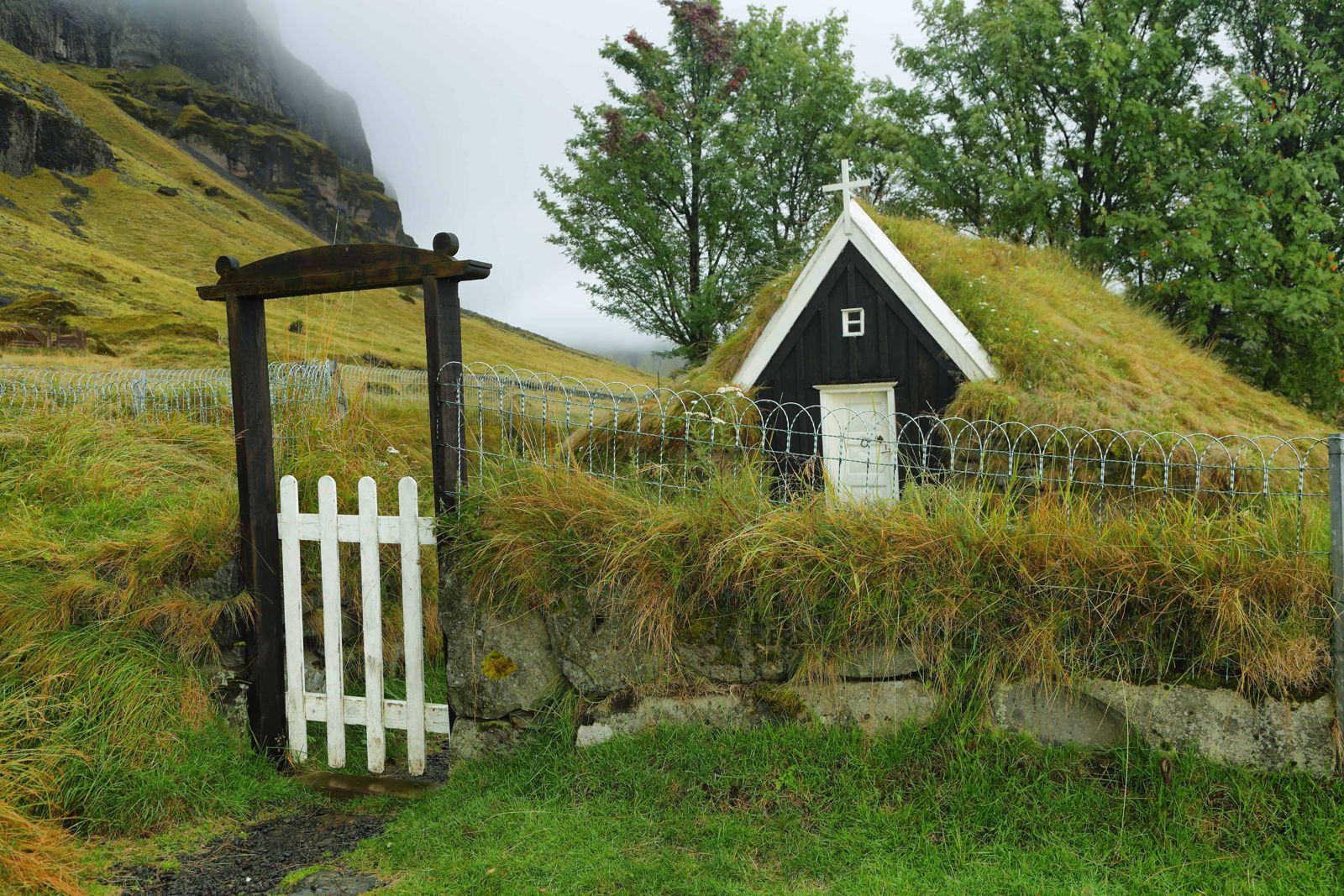
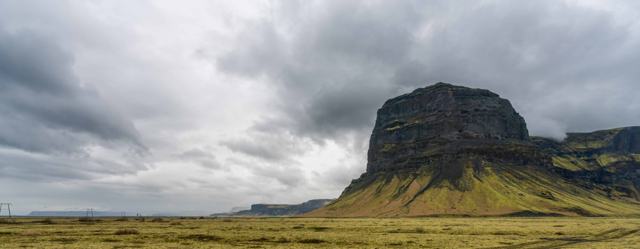
Núpsstaður is a small turf church and old farm in Fljótshverfi, in the shadow of the mountain Lómagnúpur, just off the Ring Road between Kirkjubæjarklaustur and Skaftafell. It is one of Iceland’s oldest and smallest turf churches, cared for by the National Museum. The church is closed inside, and the farm is private land: in recent years visitors have found the gate on the farm road shut, so plan on seeing the turf roofs from the road and treat anything closer as a bonus. Allow 20–30 minutes.
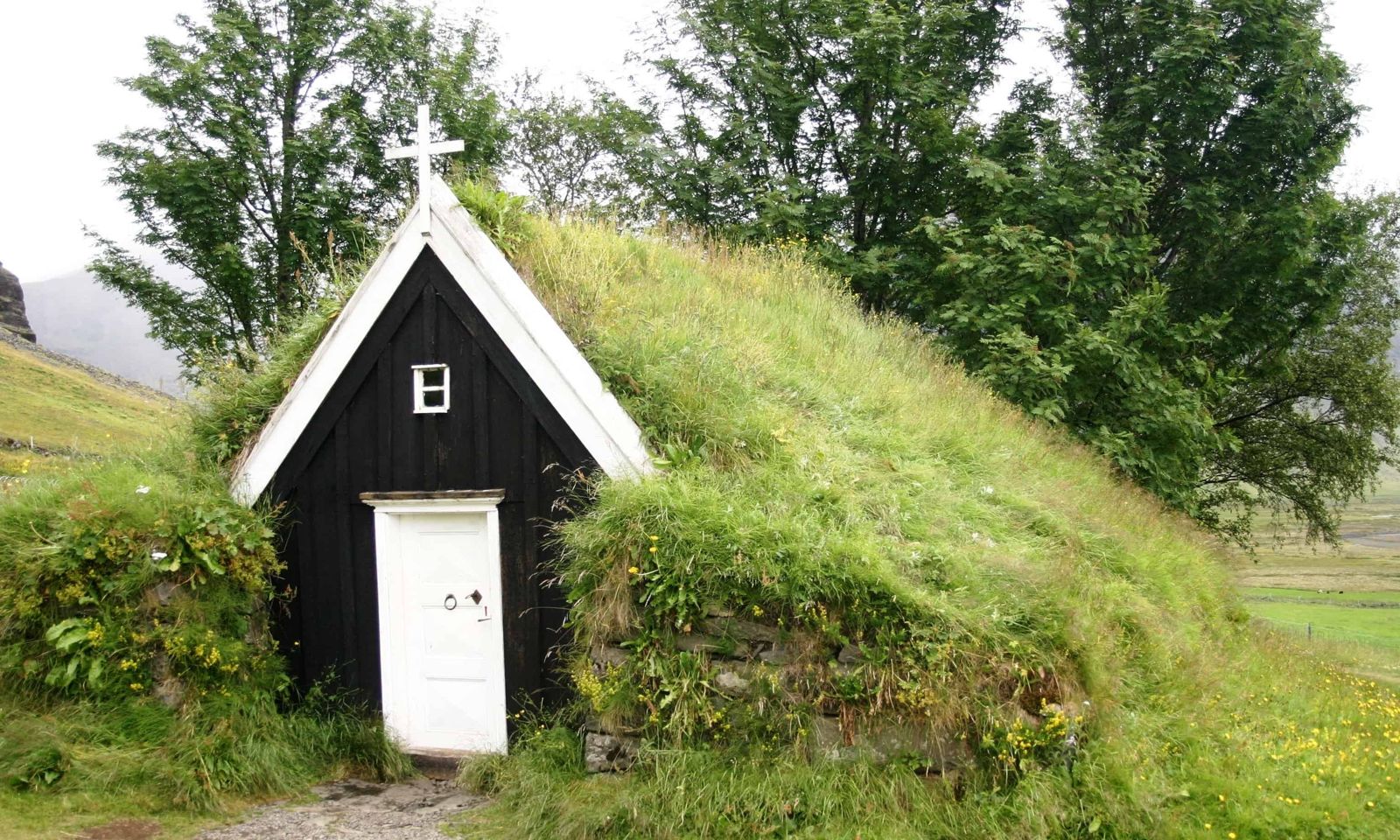
The church at Núpsstaður is tiny. It is a low timber building with walls of turf and a turf-covered roof, and it sits among the old farm buildings at the foot of the mountains. The turf hides the timber frame, so from a few metres away it looks as if the hill has grown a small chapel.
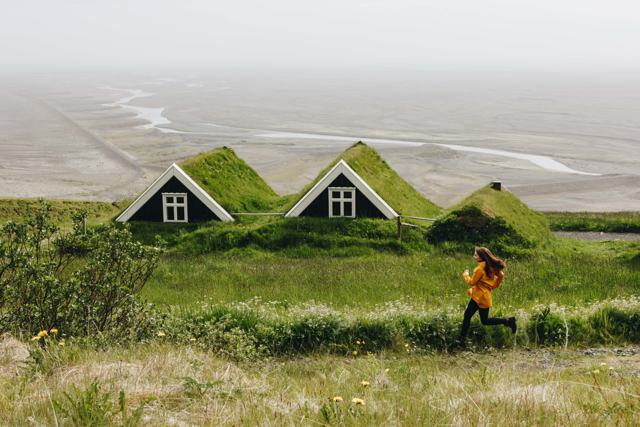
The farm is one of the last places in Iceland where you can see a whole group of turf buildings together. Some 15 houses are recorded on the farm, four of them in ruins: barns, storehouses, outhouses and a cowshed, grass-covered and centuries old, which show how people lived and farmed in the 18th and 19th centuries. Behind them, the mountain Lómagnúpur rises as a huge dark cliff, and the Núpsstaðarskógar woodland lies to the north.
Núpsstaður was also a very important stop on the old route across the south coast. Before the Ring Road, farmers here helped travellers cross the glacier rivers on Skeiðarársandur, which had no bridges and could change from day to day.
Núpsstaður, the easternmost farm in Fljótshverfi, lay on the edge of Skeiðarársandur, the huge glacial outwash plain that once cut the south-east of Iceland off from the rest of the country. A church probably stood here before the 12th century. The chapel you see today, known locally as Núpsstaðakirkja, goes back to the mid-17th century, around 1650–1660, with its timber work renewed later.
In 1765 it was taken out of use as a parish church by order of the king. After that it is thought to have served the farm as a private chapel, and for a time as a storehouse where travellers crossing the sands could leave their goods. In 1930 it became the first building in Iceland to be taken into the care of the National Museum and was declared protected. It was repaired in 1958–60 and re-consecrated in 1961.
Inside, according to heritage records and old photographs, there is a front room with a stone floor and benches along the walls, and a chancel with a wooden floor two steps higher. The altar stands under the east window. It is an 18th-century piece that the National Museum brought here from the church at Stóri-Dalur. There is no pulpit and no font. Because the building is so small and fragile, it is kept closed.
Before the Ring Road was completed in 1974, the farmers of Núpsstaður guided travellers and the post across the unbridged glacier rivers of Skeiðarársandur, on horseback and sometimes over the glacier itself. The best known was Hannes Jónsson (1880–1968), postman and guide, who is buried behind the farmhouse.
The farm is private land. Respect the gate and any signs, and check umferdin.is before driving on this exposed stretch of the Ring Road.
Even from a distance there is a lot to take in. Bring binoculars or a long lens if the gate is closed.
There are no facilities at Núpsstaður. Toilets, food and fuel are at Kirkjubæjarklaustur and at Skaftafell, each a drive away along the Ring Road.
The nearest places to stay are at Kirkjubæjarklaustur and around Skaftafell and Freysnes, with farm stays along the Ring Road. Book ahead in summer.
No. It is kept closed to protect it. The farm is also private land, and the gate on the farm road has often been closed in recent years, so you may only see the church from a distance.
The turf chapel goes back to the mid-17th century, around 1650–1660, and a church probably stood here before the 12th century.
The National Museum of Iceland. In 1930 it became the first building in the country taken into its care.
You can stop and see the farm and church from the road for free. The farm itself is private, and visitors in recent years have found the gate closed with a no-entry sign. Respect it if so.
About 20–30 minutes.
In Fljótshverfi in South Iceland, just north of the Ring Road between Kirkjubæjarklaustur and Skaftafell, at the foot of Lómagnúpur. GPS: 63.958, -17.578.
It is one of the few turf churches left in Iceland, it was the first building taken into the care of the National Museum, in 1930, and its farmers guided travellers across the rivers of Skeiðarársandur before the Ring Road was completed in 1974.