Six historic turf churches still stand in Iceland: Víðimýri, Saurbær, Grafarkirkja, Núpsstaður, Hof and a replica at Árbær in Reykjavík. Only Víðimýri is regularly open inside, and only in summer. The rest are best seen from the outside, so plan them as photo stops on a drive around the north or the south-east.
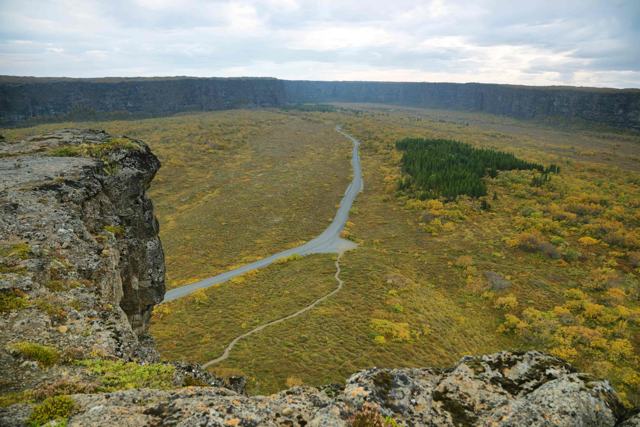

What is a turf church?
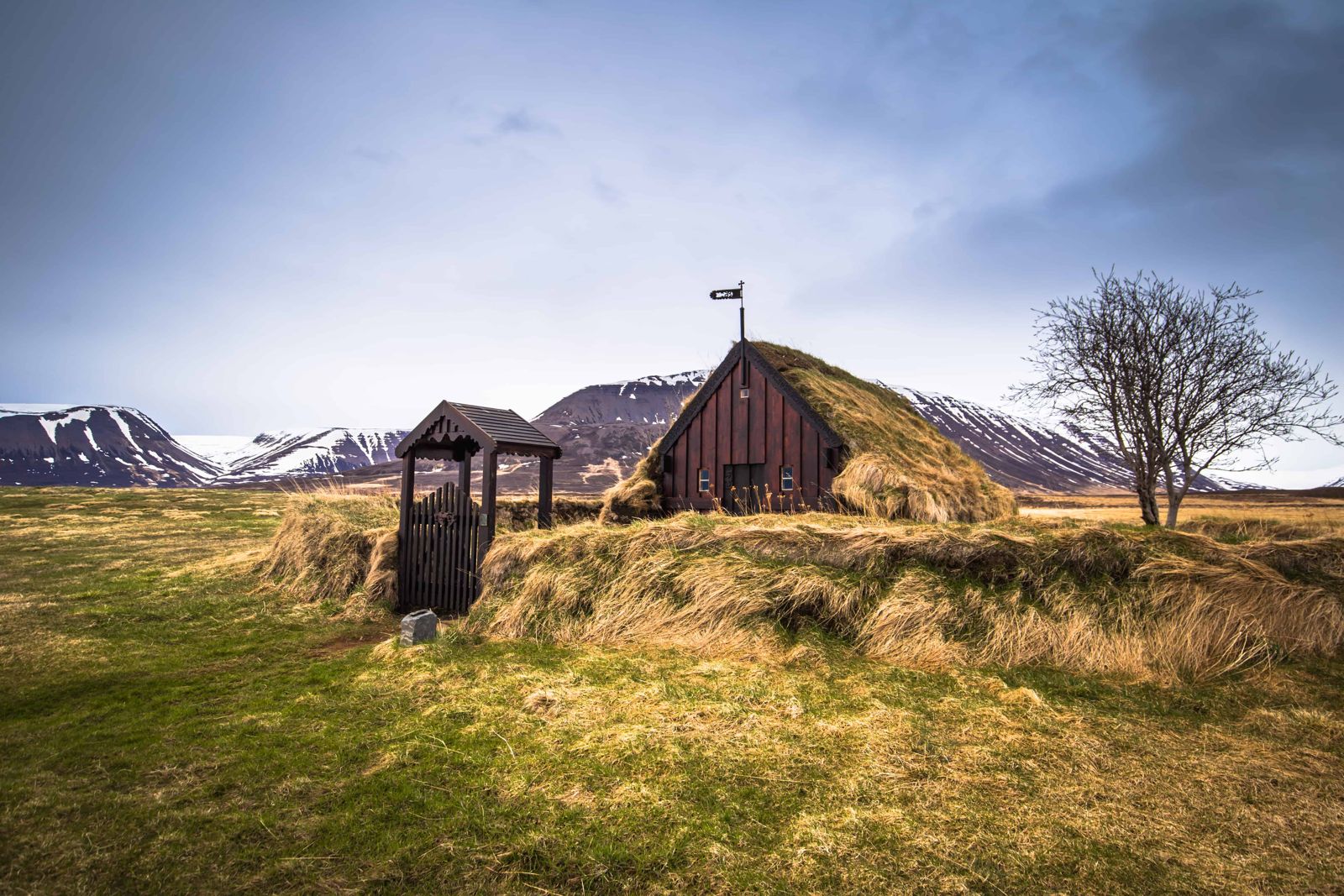
For most of Iceland's history there was little timber to build with. People used stone, turf and driftwood, and turf was excellent insulation against wind and cold. Farmhouses, barns and churches were built with a timber frame, thick walls of stone and turf, and a turf roof, with grass growing on top.
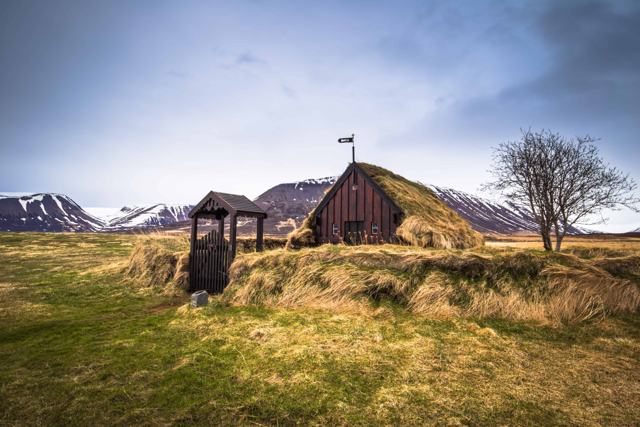
The churches follow the same method as the farms. A small wooden gable and door at the front are usually the only parts you see, and the rest looks like a low green mound. Each summer the turf needs care, which is one reason the survivors are looked after by the National Museum of Iceland. Most are maintained as part of its historic house collection.
Which turf churches can you visit in 2026?
The short version: Víðimýri can be visited inside in summer, Árbær is inside a museum you can walk through, and the others are closed inside but can be seen from outside at any time.
- Víðimýri (Skagafjörður, north): open 1 June to 31 August, daily except Monday, from 12:00 to 17:00. Entry is 1,100 ISK for adults and free for children under 18 (2026 price), or 2,600 ISK on a combined ticket with the Glaumbær turf farm nearby. Closed from September to May.
- Saurbær (Eyjafjörður, north): about 25 to 30 kilometres from Akureyri. Interior visits are not routine, so treat it as an exterior stop.
- Grafarkirkja (Höfðaströnd, Skagafjörður): closed to the public. You can see the outside and the round graveyard wall.
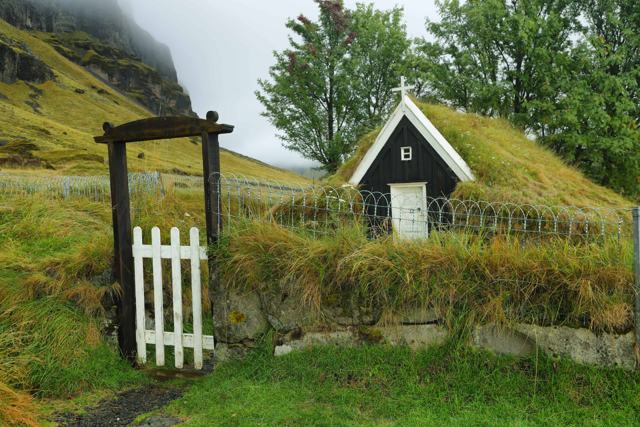
- Núpsstaður (south-east): closed inside for preservation, but you can walk around the farm buildings and enjoy the view towards Lómagnúpur.
- Hof (Öræfi, south-east): the outside can be visited at any time; the building itself is closed to visitors.
- Árbær (Reykjavík): a replica inside the Árbær Open Air Museum, about 8 kilometres from the centre.
Víðimýri: the most visited turf church
Built in 1834, Víðimýri has been looked after by the National Museum since 1936. It is often called the finest surviving turf church, and it is the easiest to see inside. The interior has a 1616 altarpiece, a 17th-century pulpit, and old bells. The seating shows how men and women once sat separately.
It is close to the Ring Road and near Varmahlíð. Most visitors pair it with the Glaumbær turf houses on the same day, which are open 10:00 to 18:00 daily from 20 May to 20 September (2,200 ISK in 2026, 2,400 ISK in 2027).
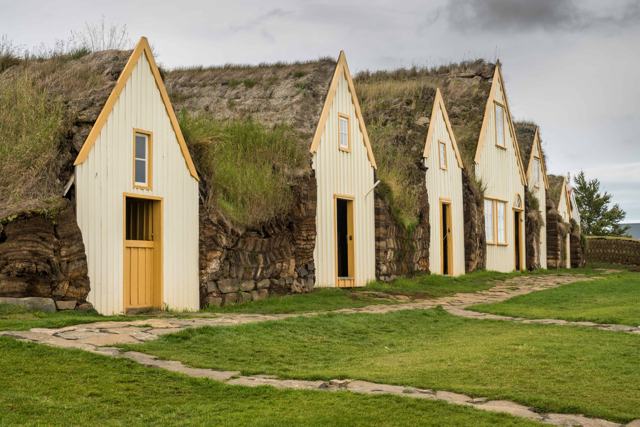
Saurbæjarkirkja in Eyjafjörður
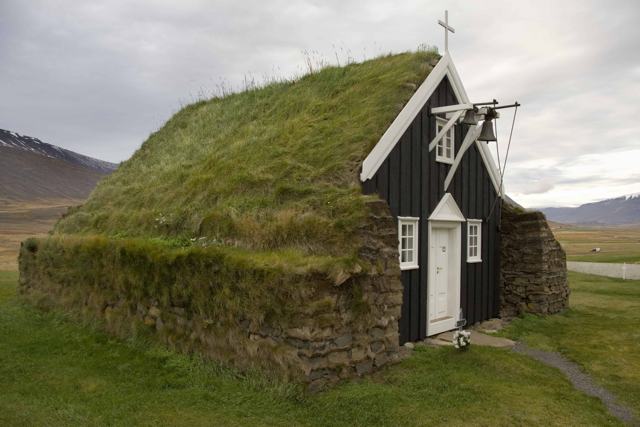
Built in 1858 by Ólafur Briem, Saurbær is the largest of the turf churches and has a distinctly wooden interior. From the outside it looks like a conventional farm church with turf and stone walls and a turf roof, with bells hung on the front gable. It is about 26 kilometres south of Akureyri, so it makes an easy half-day trip. See our Saurbæjarkirkja guide.
Akureyri is a good base for it; see our Akureyri guide for places to stay and eat. It also makes a good base for day trips such as our Diamond Circle tour from Akureyri.
Grafarkirkja on Höfðaströnd
Grafarkirkja stands near Hofsós in Skagafjörður. The National Museum says it was built in the late 17th century for Bishop Gísli Þorláksson of Hólar, deconsecrated in 1765 and rebuilt to its original form in 1953. It is still counted among the oldest turf churches, and its circular graveyard wall is a very old feature. It is closed inside, but the setting by the fjord is worth a photo. See Grafarkirkja.

Núpsstaður and Hof in the south-east
Núpsstaður is the smallest of the six. It sits with a group of old farm buildings beneath Lómagnúpur, and it was the first building in Iceland taken into the National Museum's care, in 1930. It is closed inside, but you can walk among the old barns and outhouses. It lies a short drive west of Kirkjubæjarklaustur on the Ring Road. See Núpsstaður.
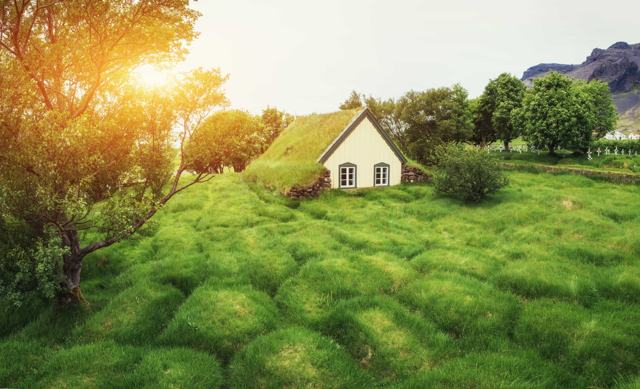
Hof in Öræfi was built in 1883 to 1885 by Páll Pálsson, with church records at the site going back to 1343. It is about 9.8 metres long, has stone walls and a turf roof, and is often called the last turf church built in Iceland. The National Museum rebuilt it in 1953 to 1954. It is still the parish church of Öræfi, and visitors can see it from outside at any time. Hof is close to Skaftafell, so it is an easy stop. See Hofskirkja. It pairs well with our Skaftafell glacier hike.
Árbæjarkirkja: a turf church in Reykjavík
If you are not leaving the capital, the Árbær Open Air Museum has a turf church among its historic buildings, alongside farms, workshops and houses moved from central Reykjavík. It is open 10:00 to 17:00 daily from June to August and 13:00 to 17:00 from September to May, with free guided tours daily at 13:00. Adult entry was listed at 2,350 ISK; check the museum site for current prices. Buses 5, 6, 15 and 18 stop nearby, or take a taxi.
Other turf buildings worth adding
If turf buildings interest you, several turf farms are open and give a fuller picture of how people lived. In the north, see the Glaumbær and Laufás turf houses. In the south, Keldur is one of the oldest farms in the country, and the Skógar Museum has turf farm buildings from the region. Together with the churches, they make a good theme for a Ring Road trip.

Planning a turf church trip
The churches are spread out, so combine them with the route rather than making special trips. Víðimýri, Glaumbær and Grafarkirkja fit into a day in Skagafjörður; Núpsstaður and Hof sit on the Ring Road between Kirkjubæjarklaustur and Höfn. Late May to early September is the best window, since the Skagafjörður sites are open then and the roads are easy.
As a local travel agency in Iceland, we can build this into a self-drive itinerary with the right nights on the road. Our 7-Day Self-Drive: South Coast & Glacier Lagoon follows the Ring Road past Núpsstaður and Hof, with car, hotels and a day-by-day plan. Start with our North Iceland tours or Ring Road tours. For a guided option in summer, our 6 Day Iceland Ring Road Tour goes around the island through the south-east and Akureyri, and our private Ring Road tours can be shaped around the churches.
Tours to book
These trips make it easy to add turf churches to your route.
- 7-Day Self-Drive: South Coast & Glacier Lagoon: a car, hotels and a plan along the stretch of Ring Road where Núpsstaður and Hof stand.
- 6 Day Iceland Ring Road Tour: a guided summer loop through the south-east and the north.
- Skaftafell Glacier Hike: a natural pairing with a stop at Hof in Öræfi.
Questions people ask
How many turf churches are there in Iceland?
Six historic turf churches survive: Víðimýri, Saurbær, Grafarkirkja, Núpsstaður, Hof and Árbær, which is a replica in an open-air museum in Reykjavík.
Can you go inside Icelandic turf churches?
Mostly no. Víðimýri is open inside from 1 June to 31 August (closed Mondays), and the Árbær church can be seen as part of the museum. Grafarkirkja, Núpsstaður and Hof are closed inside but can be seen from outside.
Which is the oldest turf church in Iceland?
Grafarkirkja and Núpsstaður are both described as among the oldest, dating from the 17th century, although older churches stood on these sites. Hof, built in 1883 to 1885, is the youngest.
What is the best turf church to visit?
Víðimýri in Skagafjörður, because you can go inside in summer and combine it with the Glaumbær turf farm nearby.
How much does Víðimýri church cost?
In 2026, 1,100 ISK for adults, free for children under 18, or 2,600 ISK on a combined ticket with Glaumbær.