Iceland Travel GuideLOCAL TRAVEL AGENCY IN ICELAND
My trip
Talk to a local
Iceland Travel GuideLOCAL TRAVEL AGENCY IN ICELAND
My trip
Talk to a local
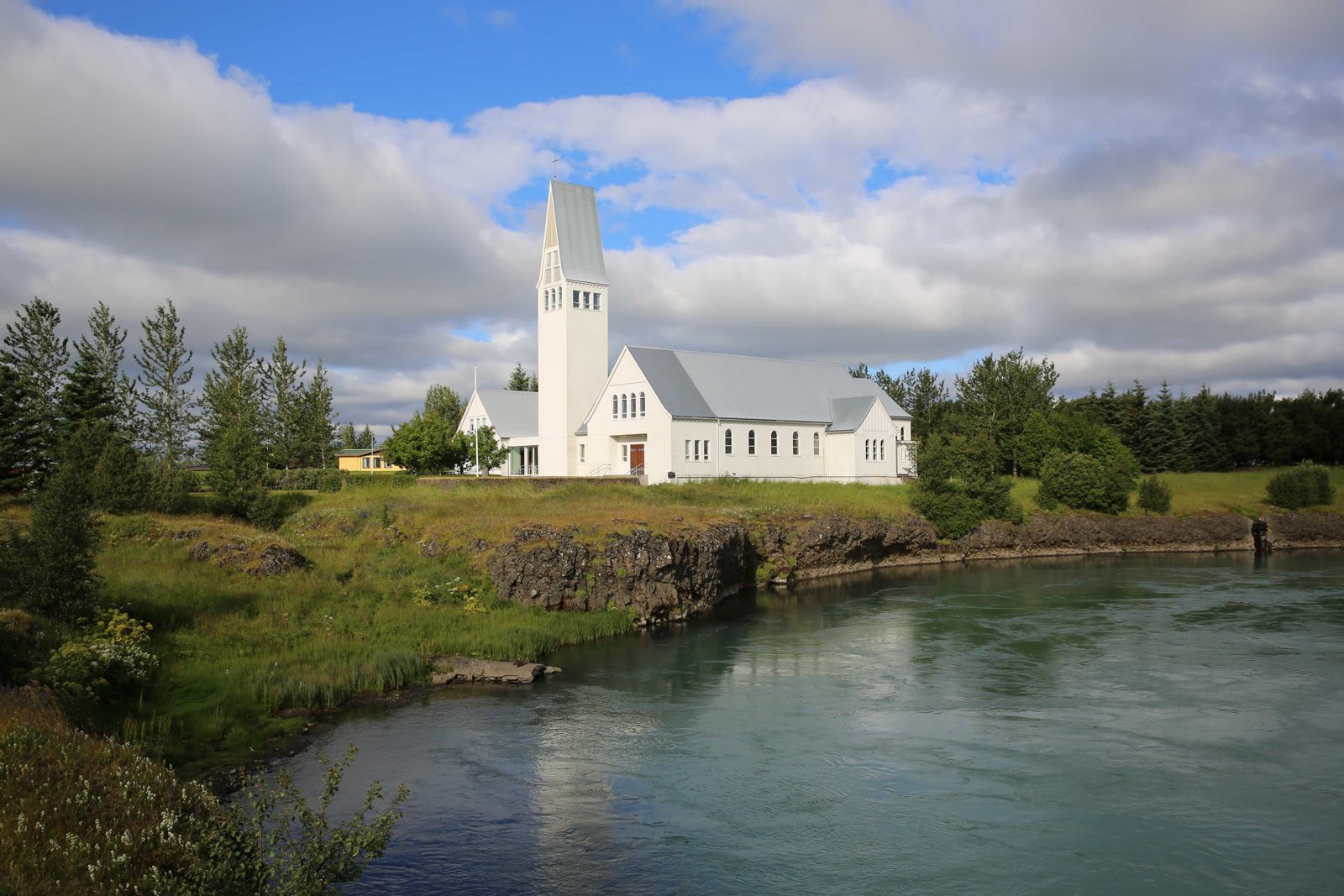
Selfoss is the largest town in South Iceland, on the banks of the Ölfusá river about 50 km (45–60 minutes) from Reykjavík, just off the Ring Road. It is free to visit, open all year, and most people stop for an hour or two to eat, shop or refuel before continuing on.
Selfoss grew up around a suspension bridge built over the Ölfusá river in 1891, which turned the area into a natural service centre for the farming region around it. That role has continued: today it is the largest town in South Iceland, with a population of around 10,000, and serves as the administrative and commercial hub for the wider region.
For travellers, Selfoss is usually a practical stop rather than a destination in itself, the first real town east of Reykjavík, with fuel, supermarkets, restaurants and a pedestrianised town centre opened in 2021 that includes a food hall in restored historic buildings. It sits close to the start of the Golden Circle route and the wider South Coast, making it a natural break on the way out of the capital.
Unlike most Icelandic towns of any size, Selfoss did not grow up around fishing. It is an inland farming and trading town, and the dairy and the co-operative store were its main employers for decades. Today the streets are lined with cafés, restaurants, shops, guesthouses and hotels, and the town swimming pool has outdoor pools, hot tubs and a sauna.
Selfoss is also closer to nature than its busy main road suggests. The Ölfusá, Iceland's most voluminous river, runs through the middle of town, Ingólfsfjall rises just to the north, and the lava fields, hot springs and summer house country of Grímsnes begin a few minutes up the road.
The sagas say that Ingólfur Arnarson, counted as Iceland's first permanent settler, spent the winter of 873–74 under Ingólfsfjall, the mountain that overlooks the town from across the river. The area itself was settled by Þórir Ásason some time after the year 1000, and for the next nine centuries it was farmland on either side of the Ölfusá.
That changed in 1891, when a suspension bridge was built over the river, pushed through by the member of parliament Tryggvi Gunnarsson. The crossing became a natural meeting point for the farming district. Tryggvaskáli, put up to house the bridge workers, is the oldest building in Selfoss and later held the town's first school, telephone exchange and bank. Even so, only about 40 people lived here in 1900.
Trade brought people. In 1931 the dairy Mjólkurbú Flóamanna and the general store Kaupfélag Árnesinga were founded, and they were the main employers for decades. During the Second World War British troops were stationed in Selfoss to guard the bridge, which was the key link between Reykjavík and the south.
The original bridge collapsed in 1944 and was replaced by the current structure, opened in December 1945. By 1950 the town had about 1,000 residents. Selfoss has kept growing since, more than doubling in population since 2000, helped by its easy commute to Reykjavík and lower cost of living. Cafés, restaurants, hotels and a college followed.
Hellisheiði is a mountain road at about 370 m and it is sometimes closed in winter storms. Check umferdin.is before you leave. When the heath is shut, the lower Þrengsli road (Route 39) is often the way round.
Selfoss has grown fast, but Icelanders still use it the way they always have: as the place to stock up before heading out into the countryside.
Supermarkets, bakeries, outdoor shops and fuel are all on or near the main road, so it is the obvious place to buy supplies before a night in a cabin or a tent. There are campsites in and around the town and further up the Þjórsá valley, and Þingvellir National Park is under an hour away.
The most popular summer house area in Iceland, Grímsnes, lies just north of Selfoss. Icelanders go to their cabins there all year round to relax and spend time outdoors, and on Friday afternoons the shops in Selfoss fill up with families on their way.
For a short walk without leaving town, follow the path along the Ölfusá from the bridge. The river is wide, fast and cold, so stay back from the banks.
Selfoss is a working town with a strong local life, and visitors are welcome to join in.
Selfoss has supermarkets, fuel stations, restaurants, cafés, a pedestrianised town centre with a food hall, and a range of accommodation.
Selfoss has a good range of hotels and guesthouses and works well as a base for both the Golden Circle and the start of the South Coast.
It is mainly a practical stop for fuel, food and supplies rather than a sightseeing destination, though the town centre food hall and riverside area are pleasant for a short break.
About 50 km, around 45–60 minutes by car.
Not one of the three main stops, but it sits close to the start of the route and is often used as a base for it.
The sagas place Ingólfur Arnarson under Ingólfsfjall in the winter of 873–74. The town itself dates from the suspension bridge built over the Ölfusá in 1891; it had about 40 inhabitants in 1900 and roughly 10,000 today.
Sumar á Selfossi is held in early August, from Thursday to Sunday on the weekend after the national bank holiday.
Usually, yes. Route 1 over Hellisheiði is kept clear but closes in bad storms. Check umferdin.is before you set off.
No. Selfoss waterfall is in North Iceland, next to Dettifoss. The town of Selfoss is in the south, on the Ölfusá river.
Tours and trips that include Selfoss, booked directly with a local travel agency in Iceland.