Iceland Travel GuideLOCAL TRAVEL AGENCY IN ICELAND
My trip
Talk to a local
Iceland Travel GuideLOCAL TRAVEL AGENCY IN ICELAND
My trip
Talk to a local
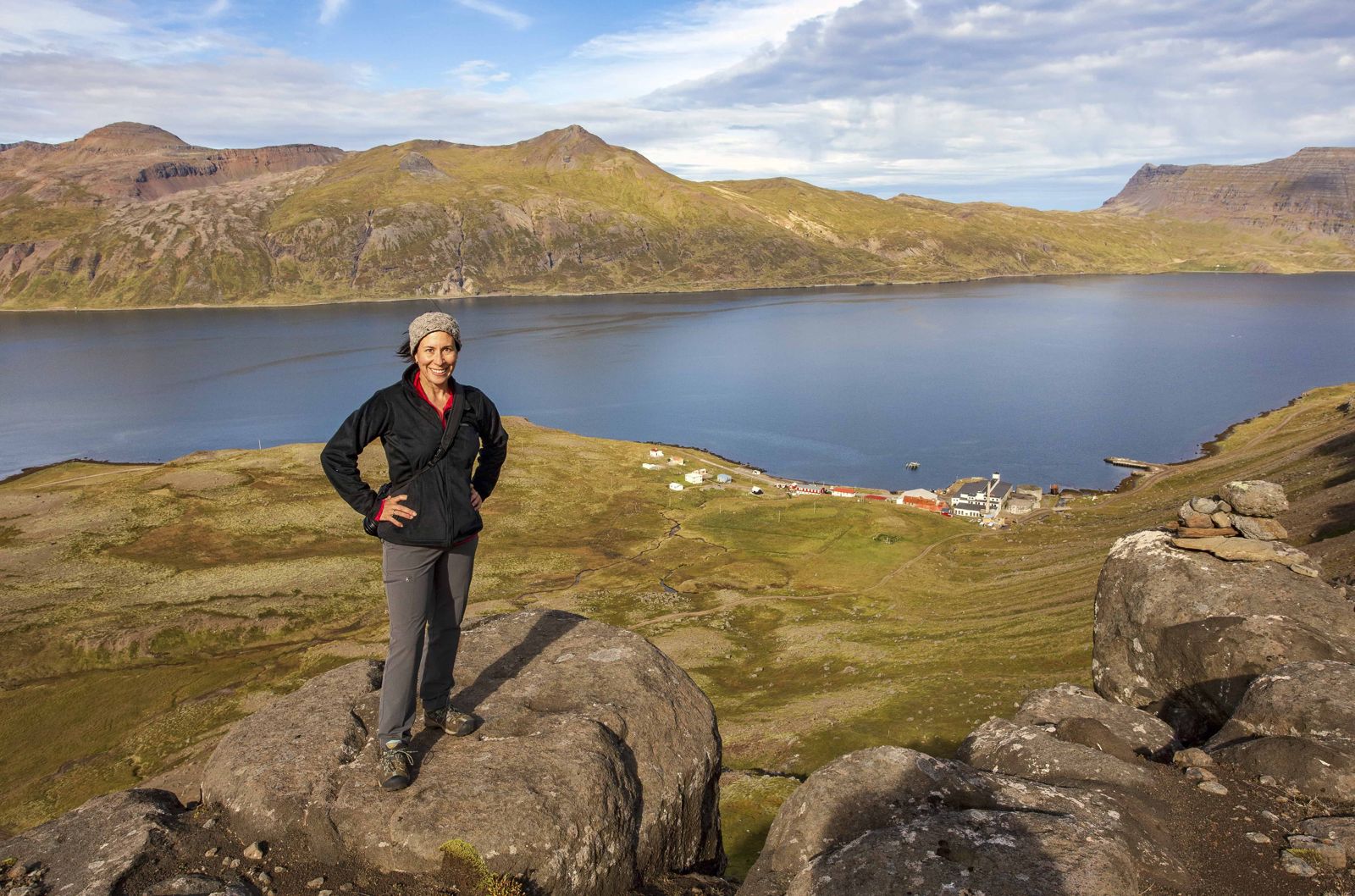
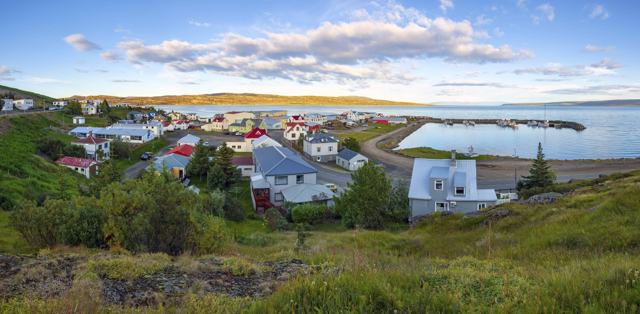
Djúpavík is a tiny village at the head of Reykjarfjörður on the Strandir coast in the Westfjords, built around a herring factory from the 1930s. It is about 70 km from Hólmavík on Road 643, free to visit, and best reached in summer. Most people stop for a few hours or stay a night.
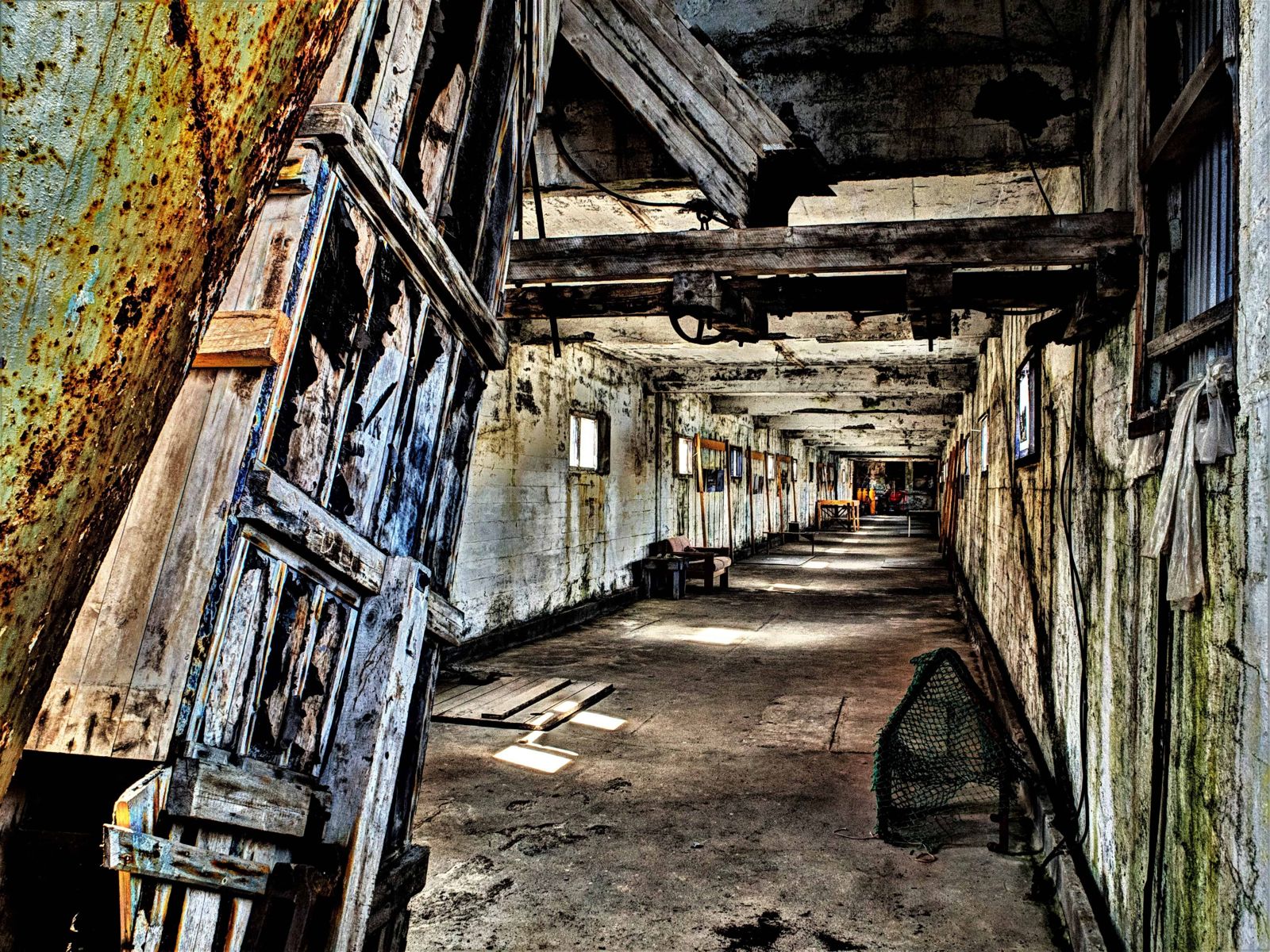
Djúpavík is one of the most remote places you can reach by car in Iceland. A handful of houses sit under steep mountains at the end of a long fjord, and the biggest building by far is the old herring factory, a long concrete structure that looks far too large for the place. It stopped working in 1954 and now serves as an exhibition building.
The village is part of Árneshreppur, the least populated municipality in Iceland, with only around 50 residents spread over roughly 780 square kilometres. There is no shop or crowd here. People come for the quiet, the industrial history, the waterfall behind the village and as a base for exploring the far north of Strandir. Only a few people stay through the winter. Most of the hotel staff and house owners arrive for the summer.
Hotel Djúpavík sits in the old buildings and is open all year. It runs a small programme of guided visits to the factory in season, and the village has a long tradition of hosting artists and filmmakers.
For centuries Djúpavík was farmland where a single family lived. The first herring salting station was built in 1917, but it failed within a couple of years. The village was really founded in the 1930s, when a company financed a large new factory in 1934. There was no road at the time, so everything, including the huge boilers, arrived by ship. The result was the most modern herring factory Iceland had seen.
For twenty years, the factory processed herring and employed hundreds of seasonal workers, many of them women who lived in the building that later became the hotel. When the herring stocks collapsed, the factory closed in 1954 and the village emptied. In the 1980s Ásbjörn Þorgilsson and Eva Sigurbjörnsdóttir, whose family had roots in Djúpavík, moved here from Reykjavík, bought the factory and turned the old women's quarters into a hotel, which is why people can stay here today. The buildings and their history have been looked after with care ever since.
In winter Road 643 is only cleared on certain days and can be closed by snow. Check umferdin.is and vedur.is before you set out, and ask the hotel about conditions.
There is no long list of attractions, and that is the point. These are the things people usually do.
Facilities up here are limited. Book accommodation and meals ahead in summer, and bring snacks and fuel.
Spring and autumn can be beautiful but the weather is unpredictable. Always have a backup plan.
Hotel Djúpavík has rooms and a restaurant, and there is a small guesthouse in the village. There is no shop or fuel station. The nearest services are in Hólmavík, about 70 km south.
Hotel Djúpavík has rooms in the old factory buildings, and there is a guesthouse in the village. For more choice, base yourself in Hólmavík or in Bjarnarfjörður, and do Djúpavík as a long day trip. Book early in summer.
If you like remote places, industrial history and quiet, yes. It is a long detour, so plan to stay at least a night in the area rather than rushing back.
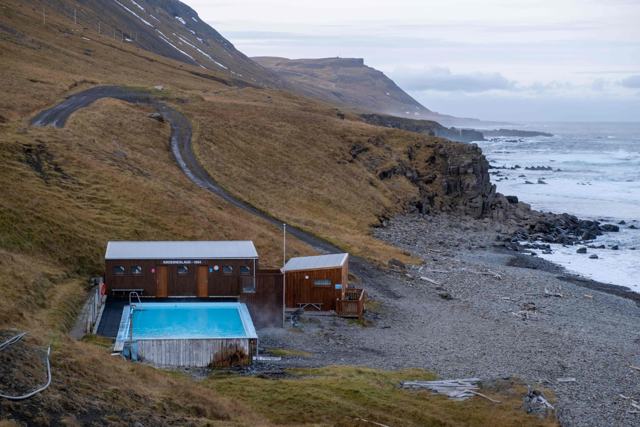
See the old herring factory and its exhibition, walk up to the waterfall behind the village, and drive north along Strandir to the Krossneslaug pool.
Over 300 km by road, so it is a full travel day. Most people split the trip with a stop in Hólmavík.
Road 643 is only cleared on certain days in winter and can be closed. Check umferdin.is before you drive.
Yes. Hotel Djúpavík is open all year, and there is a guesthouse. Book ahead in summer.
No. Buy supplies and fuel in Hólmavík.
Yes, walking around the village and to the waterfall is free. Guided factory visits and the museum may have a fee.