Iceland Travel GuideLOCAL TRAVEL AGENCY IN ICELAND
My trip
Talk to a local
Iceland Travel GuideLOCAL TRAVEL AGENCY IN ICELAND
My trip
Talk to a local
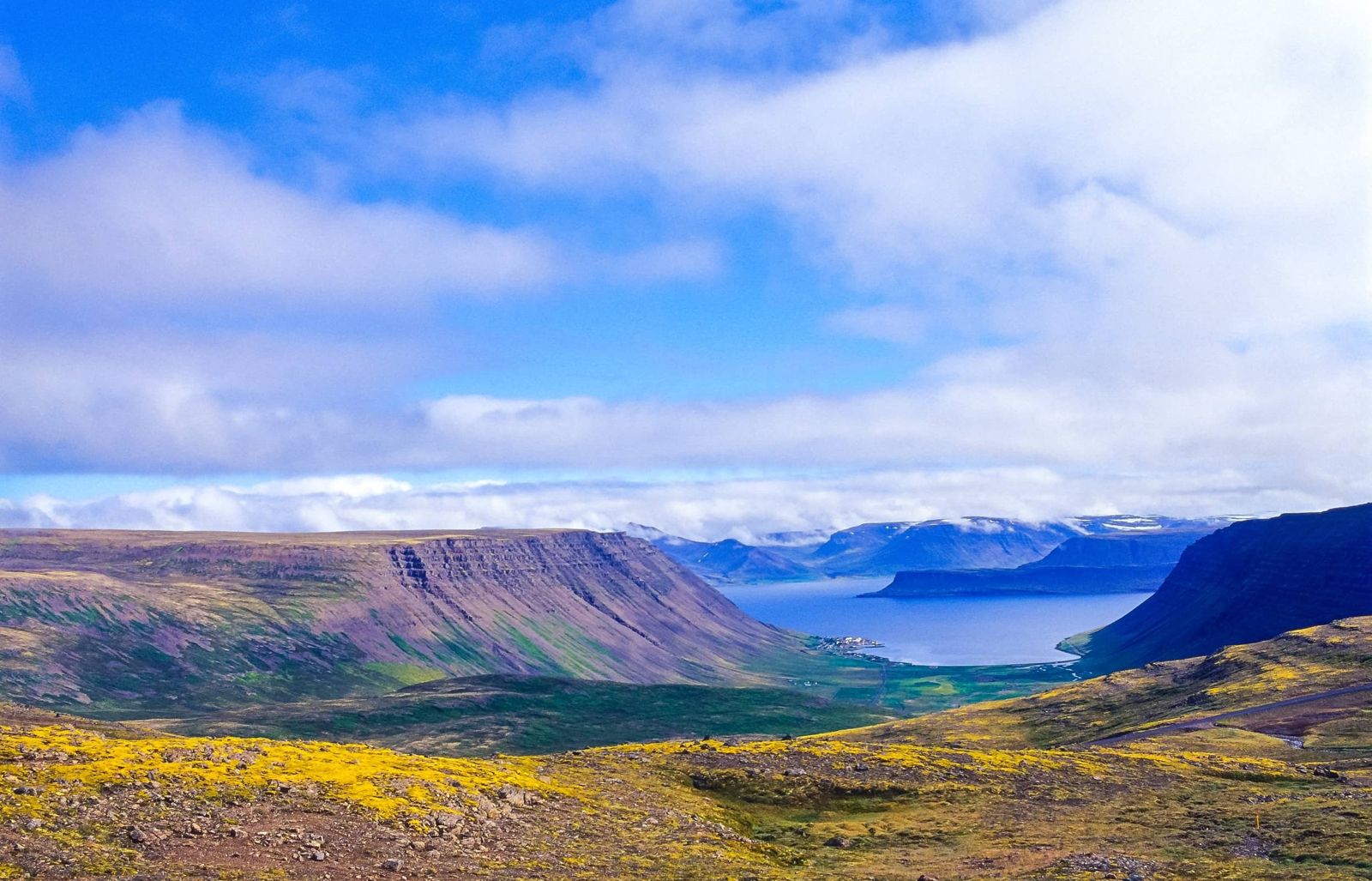
Tálknafjörður is a small fishing village of around 240 people on the south side of the Westfjords, between Patreksfjörður and Bíldudalur. It is roughly 400 km (about 6 hours) from Reykjavík by road, free to visit, open all year, and worth an hour or two for the swimming pool and a walk along the shore.
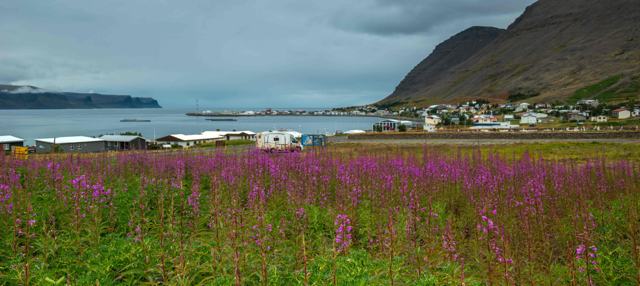
Tálknafjörður sits on its own small fjord in the southern Westfjords, a fishing village that has leaned into tourism without losing its working character. The fjord is named after Tálkni, one of the early settlers, and the village grew up around the herring and later groundfish industry that still supports it today.
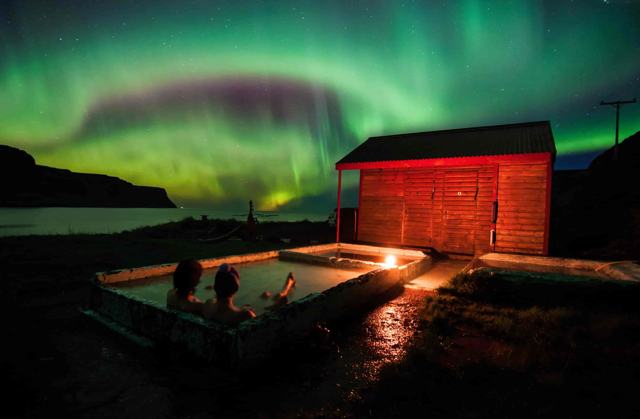
The main reason to stop is the community swimming pool, heated by the same geothermal water that once fed local fish farms, and the informal hot pools known locally as Pollurinn just outside the village, used by residents through the year. It is a quiet, working place rather than a sight in itself, and a good base for exploring the southern Westfjords at an easy pace.
Fishing has supported people here for centuries and is still the backbone of the local economy. For a village this size it is well served, with a shop, guesthouses and somewhere to eat, and sea angling brings visitors back year after year.
Next to the pool there is a campsite that suits tents and campervans. Old hiking routes lead out of the village in almost every direction, over the heaths to the neighbouring fjords.
Like most Westfjords settlements, Tálknafjörður grew from a scatter of farms into a fishing village in the early twentieth century, as boats got bigger and the harbour became the centre of local life. Sea angling is now one of the main draws for visitors, alongside the more everyday rhythm of a small working harbour.
Route 63 crosses Mikladalur between Patreksfjörður and Tálknafjörður, and the Hálfdán heath on the way to Bíldudalur. Both are paved but exposed to wind and snow, and mountain roads in this part of the Westfjords can close after heavy snow, so check umferdin.is before driving in winter.
The geothermal water at Tálknafjörður is put to work: it heats the swimming pool, has been used for fish farming, and fills the small hot pools that locals have bathed in for decades.
Wash before you get into Pollurinn, as you would at any Icelandic pool, and take everything you brought away with you.
There are trails on both sides of the fjord. Many are old routes that people used to cross the mountains and heaths before the roads were built, and walking trails lead from the village in almost every direction.
These are heath crossings, not short strolls. Fog comes down quickly, snow lies late into summer on the higher ground, and marking varies. Ask locally about conditions, carry a map and warm clothes, and tell someone your plan.
The village is a practical base for the best-known sights of the southern Westfjords.
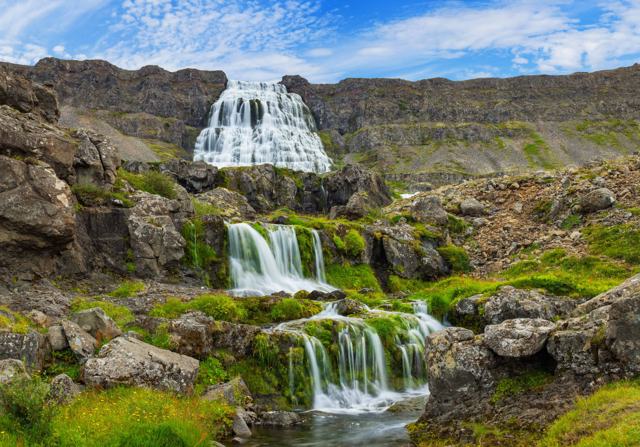
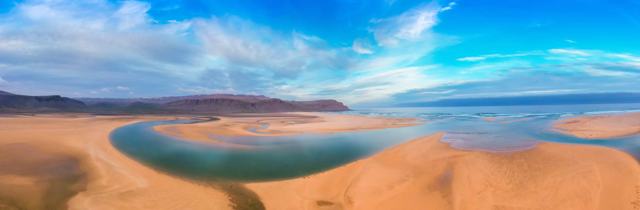
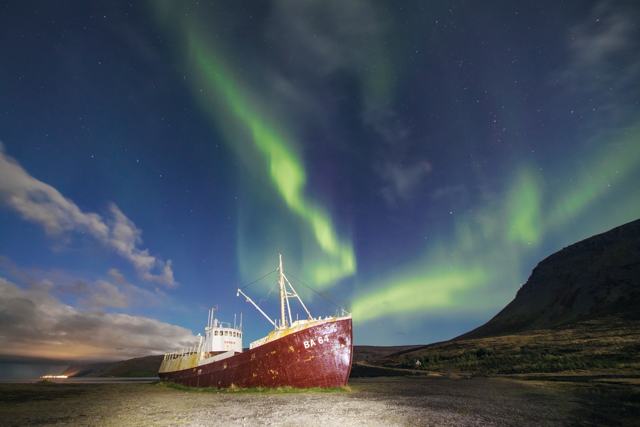
The biggest draw is Látrabjarg, a line of sea cliffs stretching 14 km and rising up to 441 m, at the westernmost point of Iceland. It is the largest sea cliff in the country and one of the most crowded bird cliffs anywhere, a favourite with birdwatchers in summer. On the way you pass the red sands of Rauðisandur, the museum at Örlygshöfn and the beached steel ship Garðar BA 64. Dynjandi waterfall is a day trip in the other direction.
The village has a supermarket, a fuel station, a guesthouse and the swimming pool. Toilets and services are limited outside the main settlement, so plan fuel and food stops in advance.
Tálknafjörður has a guesthouse and a summer campsite beside the swimming pool. Many visitors base themselves in nearby Patreksfjörður, which has more hotels and services, and make a short day trip here.
No, the village itself is free to visit. The swimming pool charges its own entry fee.
About 400 km, roughly 6 hours by car depending on the route and conditions.
The main draws are the geothermal swimming pool, informal hot pools nearby, sea angling and walking trails on the hillsides above the fjord.
Yes, the village is inhabited year-round, though mountain roads to reach it can be affected by snow and wind.
Just beyond Tálknafjörður village, above Road 617 on the north side of the fjord. It is free, with a donation box and a small changing cabin.
Yes, beside the swimming pool, with a kitchen, showers, toilets and laundry. It is open in summer, from about 1 June to 1 September.
Yes. Old routes lead to Bíldudalur over Hálfdán or Tunguheiði, and to Patreksfjörður over Mikladalur, Lambeyrarháls or Stórhæð.