Iceland Travel GuideLOCAL TRAVEL AGENCY IN ICELAND
My trip
Talk to a local
Iceland Travel GuideLOCAL TRAVEL AGENCY IN ICELAND
My trip
Talk to a local
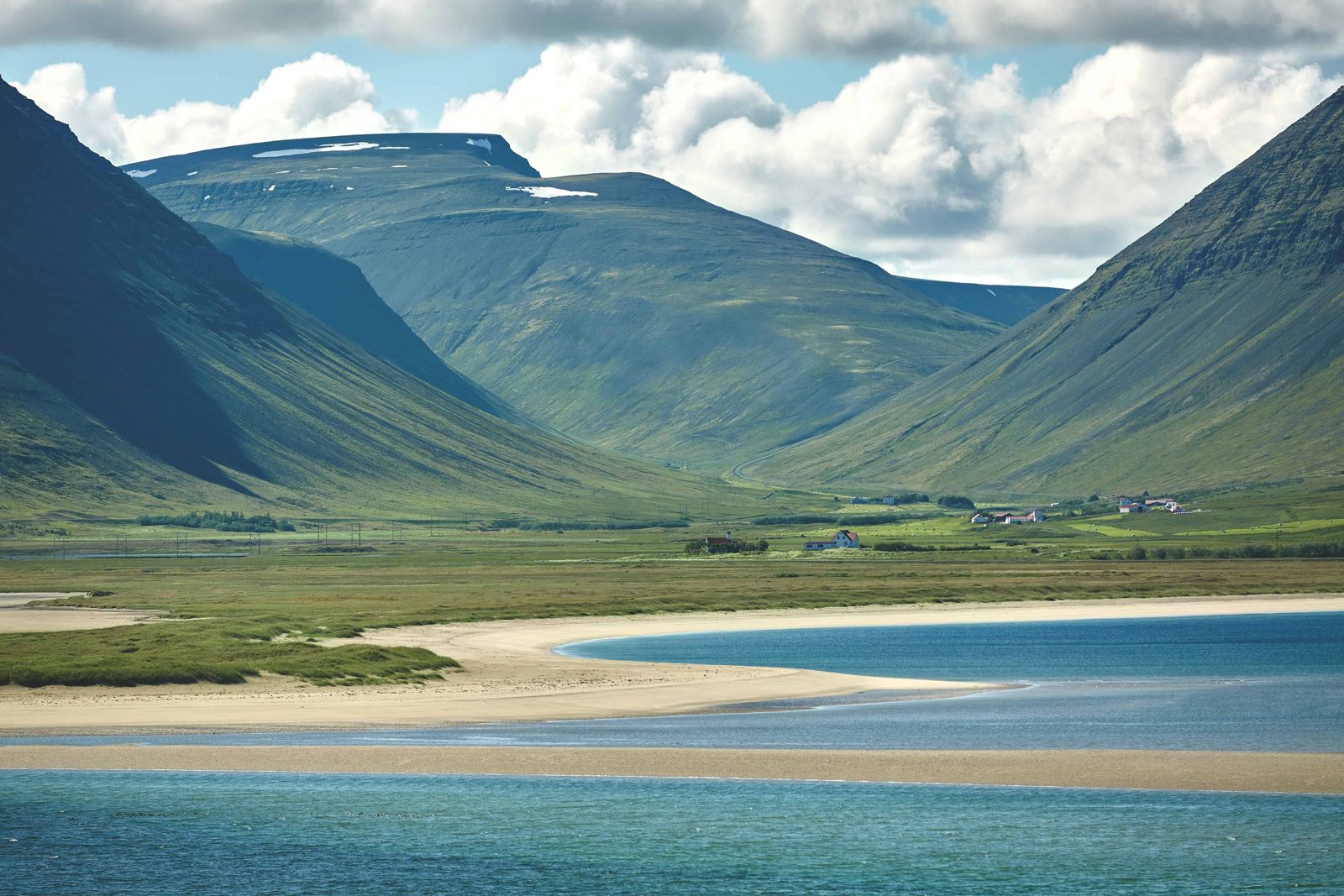
Flateyri is a small fishing village of around 200 people on Önundarfjörður in the Westfjords, a short drive from Ísafjörður through the Vestfjarðagöng tunnel. It's a place to walk among old wooden trading houses and see the avalanche defences above the town, free to visit and open all year.
Flateyri was founded as a trading post in 1792 and grew into a whaling and fishing centre through the 1800s, leaving behind a cluster of well-preserved wooden trading houses that still give the village its character. It sits on a narrow spit of land on Önundarfjörður, with steep mountains rising close behind the houses.
Those mountains brought tragedy in October 1995, when an avalanche struck the village, destroying homes and killing 20 people. Large defensive dams (called avalanche barriers) were built into the slope above the town afterwards, and they were tested again in January 2020 when two more avalanches came down, one of which reached the harbour and wrecked boats there. The dams are credited with limiting the damage that time, and the story is part of how the town explains itself to visitors today.
Flateyri is the largest settlement on Önundarfjörður. Today it is a quiet place, known for flat-topped mountains on every side, a handful of small and slightly eccentric museums, and a history with more ups and downs than its size suggests.
On 26 October 1995, an avalanche fell from the mountain above Flateyri without warning, destroying homes and killing 20 people in one of Iceland's worst natural disasters of the 20th century. In the years that followed, large earthen avalanche barriers were built into the slope to break up and redirect future slides.
The defences were tested in January 2020, when two large avalanches hit the barriers in quick succession; the second breached the dam and struck a house, though everyone inside was rescued safely. The barriers are a visible part of the landscape above the village today, a reminder of both the risk of living under these mountains and the engineering built to manage it.
The tunnel and roads around Ísafjörður are kept open in winter where possible, but can be affected by storms; check road.is before driving.
The village has gone from boom to near collapse and back to a quieter kind of life in a little over two centuries.
Flateyri has been a trading place since 1792. It began as a trading post, not as a fishing village, and fishing and fish processing grew up around the trade.
In the 19th century shark fishing became profitable, and Flateyri turned into the main base for shark fishermen in the area. Norwegian whalers followed: a whaling station ran at Sólbakki, just outside the village, from 1889 until it burned down in 1901. Merchants from Germany and other European countries did business here too, and at its busiest the village had close to 600 people.
The fishing quota system, brought in during the 1980s and early 1990s to stop overfishing, hit small harbours like this one hard. When the quota left, the jobs went with it, in the fish plant and in every small business that depended on it, and many families moved away. About 200 people live in Flateyri today, and visitors have become part of how the village makes its living.
Flateyri has opened its doors to visitors in recent years. An hour or two is enough for the village itself; add more for a walk or the beach.
Flateyri has a small shop, a café, a swimming pool, guesthouses and a campsite. Fuller services are in Ísafjörður.
Most visitors base themselves in Ísafjörður and visit Flateyri as a short day trip, though there are guesthouses and a campsite in the village itself if you want a quiet night by the fjord.
Yes, if you're in the Westfjords: it's a short detour from Ísafjörður with well-preserved old trading houses and a real sense of the region's history.
An avalanche struck the village and killed 20 people, one of Iceland's worst natural disasters of the 20th century. Large avalanche barriers were built above the town afterwards.
About 20 km, around 20–25 minutes by car through the Vestfjarðagöng tunnel.
No, Flateyri is a working village, free to visit and walk around.
Walk among the old trading houses, visit the Old Bookstore and the small museums, climb the avalanche barriers for the view, hike in the mountains around the fjord, and stop at the sandy beach by Holt.
The village had close to 600 people at its peak. After the fishing quota system came in during the 1980s and 1990s, fishing jobs left the village and many people moved away. About 200 live there now.