Iceland Travel GuideLOCAL TRAVEL AGENCY IN ICELAND
My trip
Talk to a local
Iceland Travel GuideLOCAL TRAVEL AGENCY IN ICELAND
My trip
Talk to a local
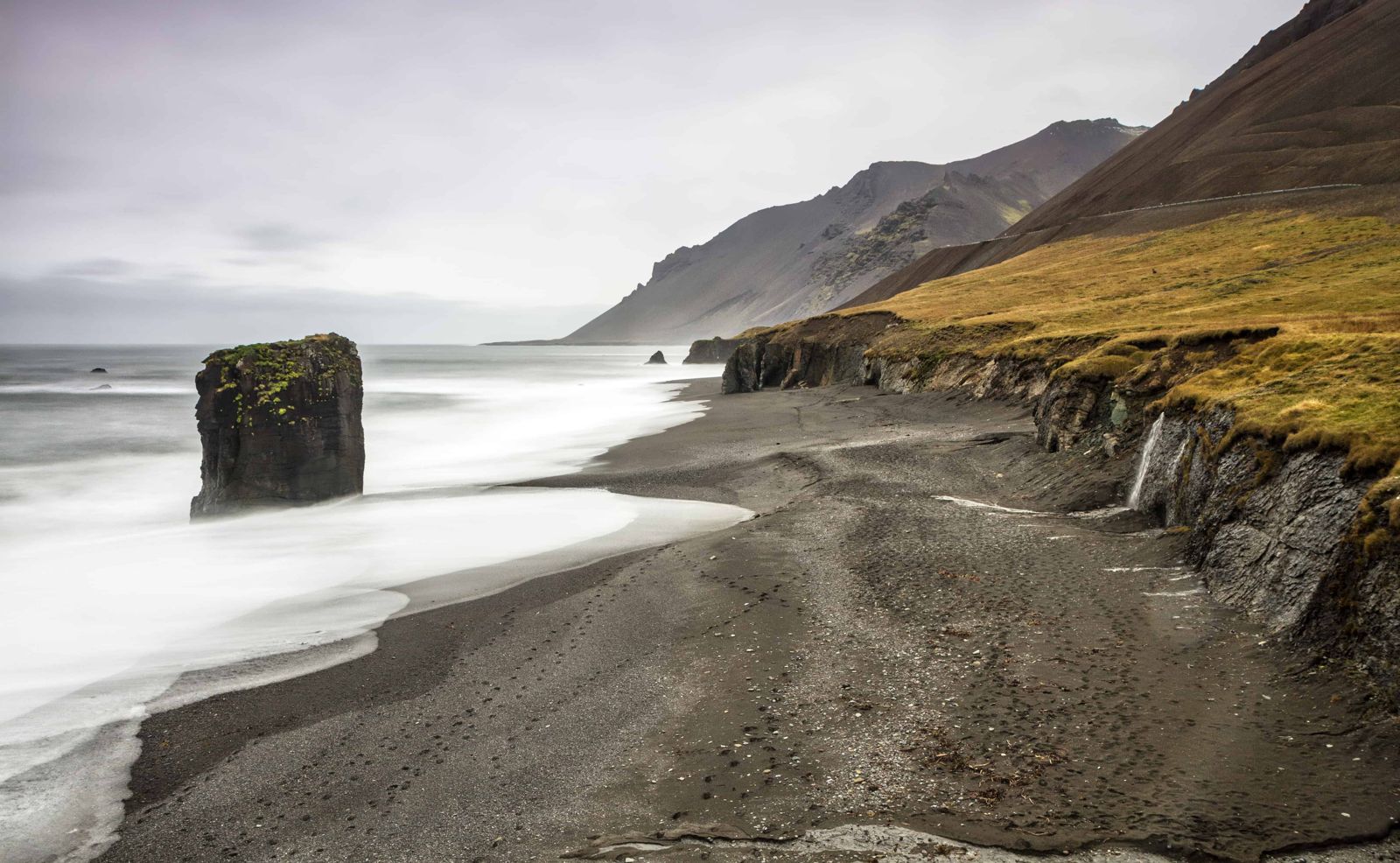
Fauskasandur is a black sand beach directly beside Route 1 in East Iceland, on the coast between Höfn and Djúpivogur, about 30 minutes' drive south of Djúpivogur. It is free to visit, open all year, and most people stop for 15–20 minutes on the way along the Ring Road.
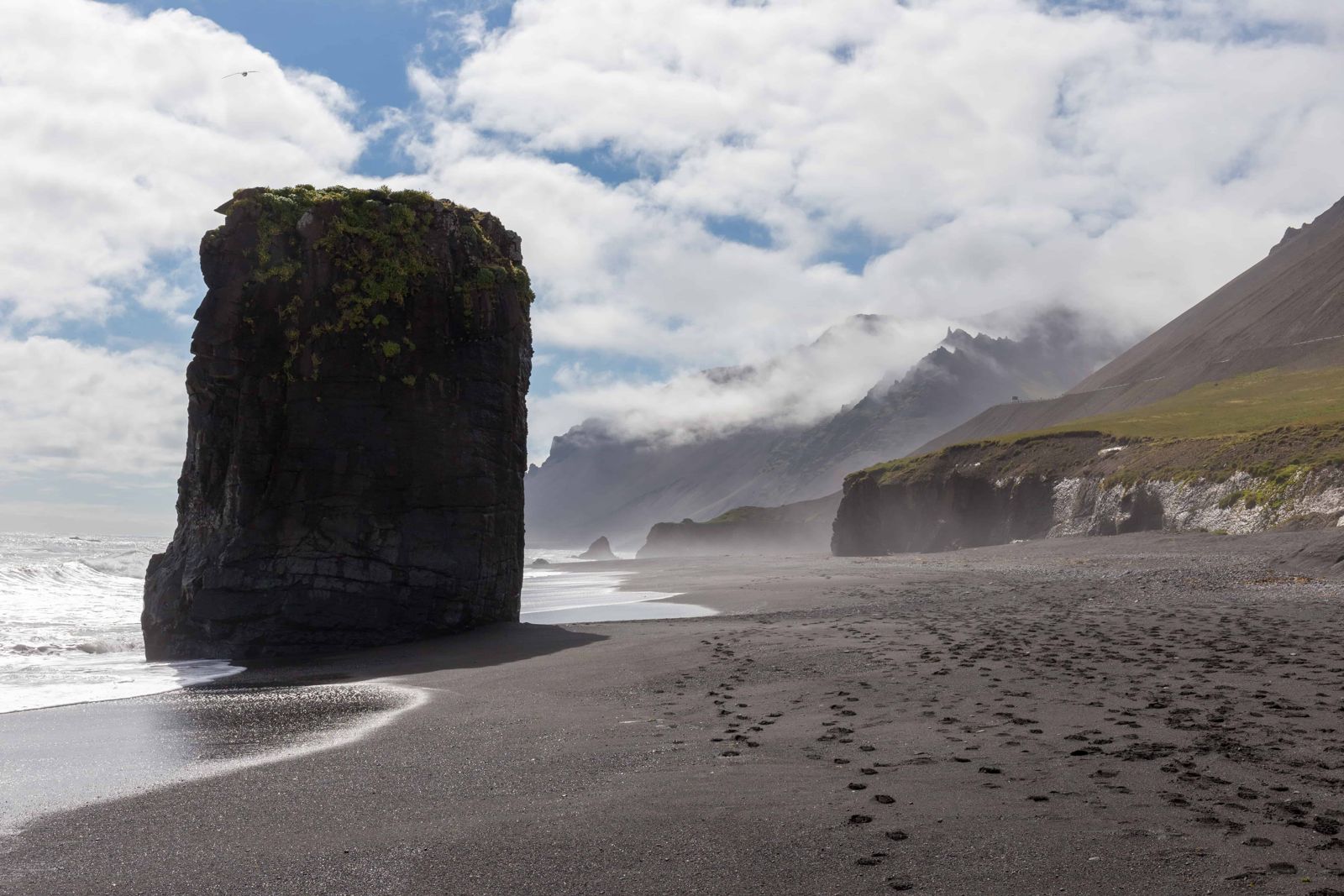
Fauskasandur is one of those East Iceland stops that most people never plan for, simply because it sits right on the Ring Road, on the open coast between Hvalnes and Álftafjörður. The beach is made of small, dark grains of basalt and andesite, ground down by the sea over a long time, and a single large, almost rectangular rock stands at the shoreline as the beach's main landmark.
The rock is what people remember. It is black, with a cap of green grass on top, and it rises straight out of the sand where the waves break. White surf, black sand and dark basalt cliffs on either side make a strong contrast, and with a steep mountain wall of scree behind the road the beach feels closed in and private.
Black sand beaches are common in Iceland, but the well-known ones are busy. Fauskasandur is one of the few where you may well have the sand to yourself. There is no marked path down, just a short, slightly steep scramble from the small parking area, which is enough to keep the beach quiet even in the busier summer months.
It is a good place to stretch your legs, look out over the open sea, and get a feel for the emptier, slower pace of the east compared with the south coast. It suits people who are driving themselves, since you can stop for as long or as little as you like.
This is an exposed stretch of coast road. In strong wind or winter weather, check road.is and vedur.is before you drive it.
The beach is small, and you can take it all in within a few minutes.
Black sand comes from dark volcanic rock. The three main sources are basalt, andesite and volcanic glass. In Iceland it is nearly always basalt, the rock that makes up most of the country.
It forms in two ways. Rivers and streams cut through the basalt and carry broken pieces towards the coast. The pieces grind smaller as they go and collect on the shore as dark sand. The other way is faster: when hot lava runs into the sea it cools at once, turns solid and shatters, and the waves then break the fragments down into grains.
At Fauskasandur, basalt rock surrounds the beach, and the sea has been wearing it down for a very long time.
Any time of year works for a short stop. What changes is the light and how much care the scramble down needs.
None. There are no toilets, shop or café at the beach itself; the nearest services are in Djúpivogur.
Djúpivogur has guesthouses and a hotel and is the natural base for this stretch of the East fjords, with Höfn also within reach for anyone continuing from the south coast.
On the east coast of Iceland, directly beside Route 1 between Höfn and Djúpivogur. It is about 30 minutes south of Djúpivogur, about 1 hour from Höfn and about 510 km from Reykjavík.
It is a quick, easy stop right on Route 1 rather than a major attraction, good for a short break and a look at the black sand coast of the east.
No, it is free to visit and the small car park has no charge.
Generally yes, but the short scramble down from the car park needs care, and you should keep a safe distance from the waterline as with any Icelandic beach.
About 30 minutes by car.
It is ground-down volcanic rock, mainly basalt. Rivers and waves break the rock into grains, and lava that meets the sea shatters into sand as well.
Any time of year. Summer has milder weather, green slopes and long light. Winter gives a black and white beach, but the way down can be icy and the days are short.