HVÍTSERKUR IN SHORTHvítserkur is a 15-metre basalt sea stack standing just off the coast of the Vatnsnes peninsula in North Iceland, with two holes at its base that give it the look of an animal drinking from the sea. It is free to visit, open all year, and most people spend 20-30 minutes at the viewpoint above the beach.
About Hvítserkur
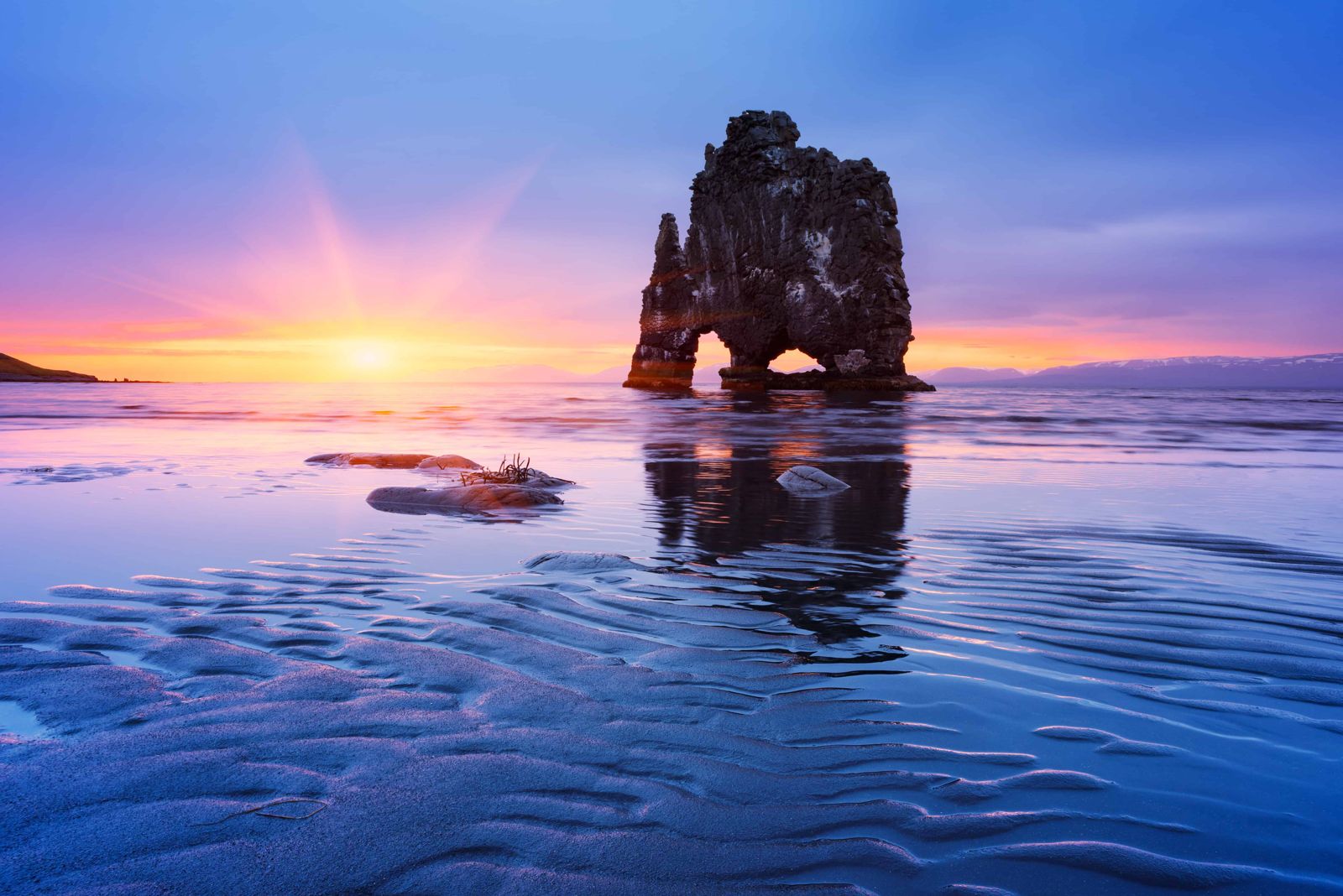
Hvítserkur rises out of the water just off the eastern shore of the Vatnsnes peninsula, a rugged stretch of coast better known for its seal colonies than its crowds. The rock's shape, an arch with two holes through its base, has earned it comparisons to a dragon or rhinoceros drinking from the sea, and it is one of the most photographed natural formations in North Iceland.
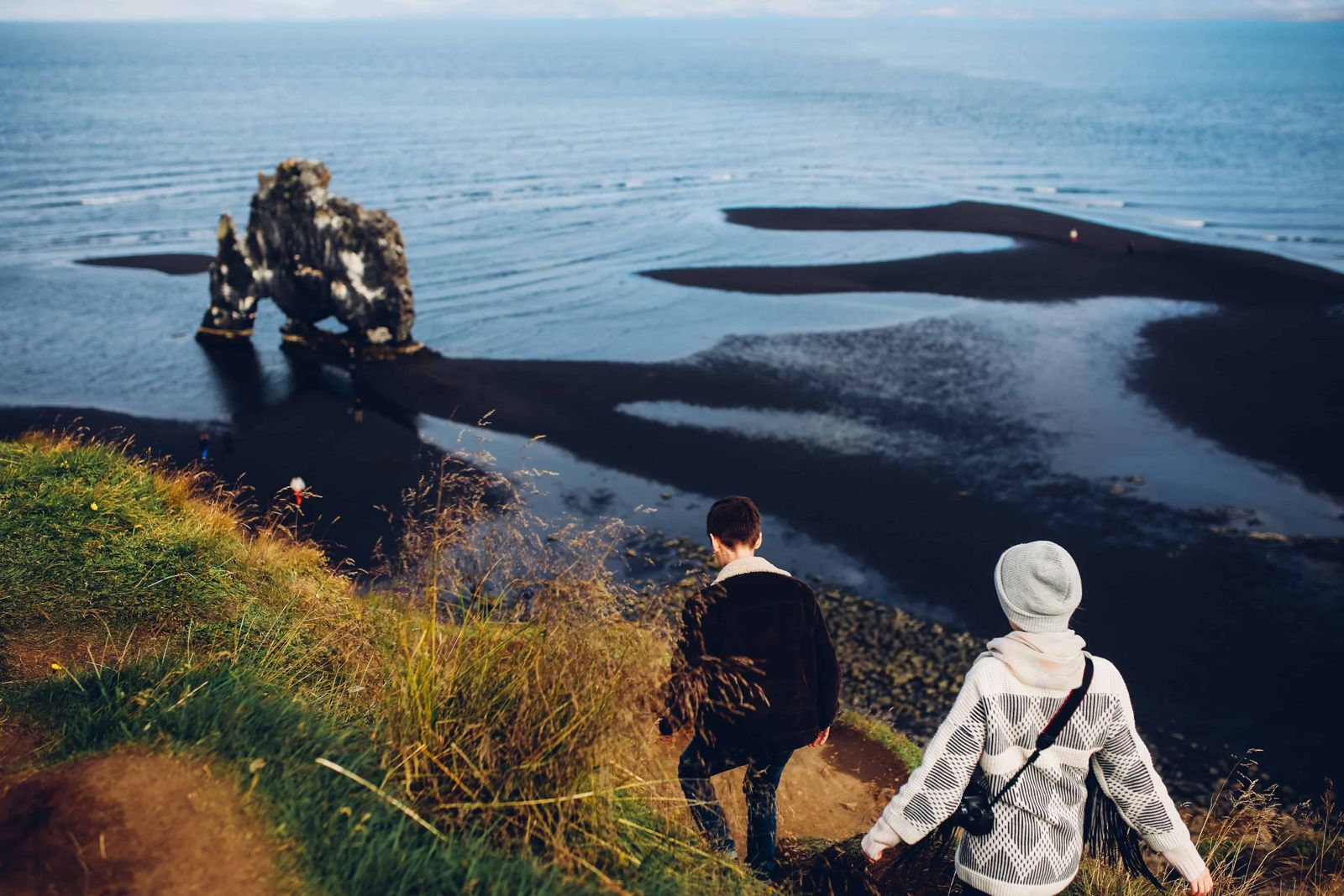
A viewpoint above a black sand beach gives a clear view of the stack from a safe distance. In calm weather and at low tide it is possible to walk down to the beach and get closer, though the path can be steep and slippery. Local farmers reinforced the base of the rock with concrete in the mid-20th century after erosion from the sea threatened to bring it down.
The name means "white shirt". Fulmars, shags and gulls nest on the rock, and their droppings have streaked the seaward side white, while the back is still black basalt. Geologically, Hvítserkur is what is left of a body of hard volcanic rock, usually described as a dyke or a plug; the softer rock around it has been worn away by the sea in Húnaflói bay. It is sometimes called the troll of the north-west.
Photographers come for the reflections: the rock mirrored in wet sand at low tide, under the midnight sun in summer or the Northern Lights in winter.
Quick facts
HeightAbout 15 m
Name"White shirt", from the bird droppings that streak the rock
BirdsFulmars, shags and gulls nest on the rock; Arctic terns in the dunes
RegionNorth Iceland, east shore of the Vatnsnes peninsula, in Húnaflói bay
From ReykjavíkAbout 228 km, around 3 hours by car
RoadRoute 711, gravel, about 30 km from the Ring Road by the eastern turn-off
EntryFree
Opening hoursOpen all year, unstaffed
Time needed20-30 minutes at the viewpoint; longer if walking down to the beach
The troll turned to stone
Local folklore says Hvítserkur was once a troll that tried to destroy the bells of the monastery at nearby Þingeyrar. Trolls in Icelandic stories cannot survive daylight, and as it worked through the night it stayed too long: the rising sun caught it in the act and turned it to stone, leaving the rock standing in the sea as it is today.
How to get to Hvítserkur
By carFrom Reykjavík, follow the Ring Road (Route 1) north for about 190 km, past the turning for Hvammstangi. A little further east, turn left onto Route 711 and follow it north for about 30 km to the signposted car park. Route 711 is an ordinary gravel road, not a mountain F-road, and a normal car manages it in summer, but it is bumpy and potholed in places, so drive slowly. You can also start at Hvammstangi and drive the whole way round the peninsula on 711, which is longer but takes in the seal beaches on the west side.
Hiking thereA short path leads from the car park to the clifftop viewpoint. A steeper trail continues down to the beach for a closer view, weather and tide permitting.
By public transportThere is no public bus to Hvítserkur; a rental car is the practical way to visit.
The Vatnsnes road is gravel and can be rough after rain or snow. North Iceland gets heavy snow in winter and the road can be icy, so check umferdin.is and take care.
The best view of Hvítserkur
You can see the rock from above or from the beach, and it is worth doing both if conditions allow.
From aboveA short track leads from the car park to a viewing platform on the clifftop. This is the easy option and the right one in wind, ice or a high tide.
Down on the beachThe trail continues steeply down to the black sand, where you can see the rock side-on and, at low tide, walk out towards it. The sea comes back in quickly over the flat sand, so keep an eye on it and do not linger on the beach.
Mind the Arctic ternsArctic terns nest in the dunes here from May to late August. They defend their nests by diving at your head and may peck. Keep to the path, move on calmly, and hold a hand or a hat above your head.
SealsHarbour seals and grey seals rest on the sandbanks and rocks along this shore, so bring binoculars.
Things to do around Hvítserkur
Hvítserkur is one stop on the loop around Vatnsnes. These are the others worth a few minutes.
IllugastaðirA farm on the west side of the peninsula known for seal-watching. It also has the nearest campsite, with electricity and toilets.
ÁnastaðastapiA sea stack on the west coast of Vatnsnes, north of Hvammstangi, a couple of minutes' walk from the road. It is more colourful than Hvítserkur, with the sea on one side and green fields on the other.
HamarsréttA little further along the same shore is Hamarsrétt, a sheep fold painted white and green, set right by the sea and used for the autumn round-up.
Northern LightsWith no settlement nearby, the coast is dark, and on clear winter nights the aurora can show above the rock. Only attempt the gravel road in the dark if conditions are good.
Best time to visit Hvítserkur
SummerEasiest driving and walking conditions, birds nesting on the rock, and a good chance to combine the visit with seal-watching along the peninsula.
WinterStill accessible, and many people think it is the best-looking season, with snow on the shore and a chance of Northern Lights. The path down to the beach can be icy and the gravel road slippery. The viewpoint above is usually manageable.
Safety and practical tips
- Check the tide before walking down to the beach; low tide gives the closest view, and high water covers the sand around the base of the rock.
- Do not stay long on the beach. The tide comes in fast here.
- The path down to the beach is steep in places; wear shoes with good grip.
- In summer, expect Arctic terns to dive at you near the dunes. Stay on the path.
- Vatnsnes is also a good spot for seal-watching along the shore, especially near Illugastaðir.
- Bring layers; the coast here is often windy.
Facilities and accessibility
There is a small car park at the viewpoint. There are no shops or cafés on site; the nearest services are in Hvammstangi, and the nearest campsite is at the farm Illugastaðir.
Nearby places worth a stop
Where to stay near Hvítserkur
Most visitors base themselves in Hvammstangi or one of the guesthouses on Vatnsnes, or stop at Hvítserkur while driving the Ring Road between West and North Iceland. Campers use the site at Illugastaðir.
Hvítserkur FAQ
How tall is Hvítserkur?
The rock stands about 15 metres above the sea.
What does Hvítserkur mean?
"White shirt". The name comes from the white bird droppings that cover the seaward side of the black rock.
Can I walk right up to Hvítserkur?
You can walk down to the beach in good conditions, and get close at low tide, but the safest and easiest view is from the clifftop viewpoint above.
How do I get to Hvítserkur?
Turn off the Ring Road onto Route 711 east of Hvammstangi and drive about 30 km north on gravel. It is about 228 km from Reykjavík.
Is it free to visit?
Yes, there is no entrance fee.
Is the road to Hvítserkur paved?
No, the Vatnsnes peninsula road is gravel. It is not an F-road and is passable by a normal car in good conditions.
Can you see the Northern Lights at Hvítserkur?
Yes, on clear, dark nights from autumn to spring, though the gravel road can be icy in winter.
 Iceland Travel GuideLOCAL TRAVEL AGENCY IN ICELAND
My trip
Talk to a local